After You Call
You call the number, you talk to someone who can tell you what a broken spring costs to fix and what a bad opener sounds like over the phone. Most of the houses we get called to went up somewhere between 1958 and 1999, with a lot of that stock clustered in the 1960s and 70s, so a good share of the springs, openers, and tracks we see are original or one replacement removed from original. That matters for the call itself: we ask the age of the house before we ask the age of the door, because in West Bend those two numbers usually track close together.
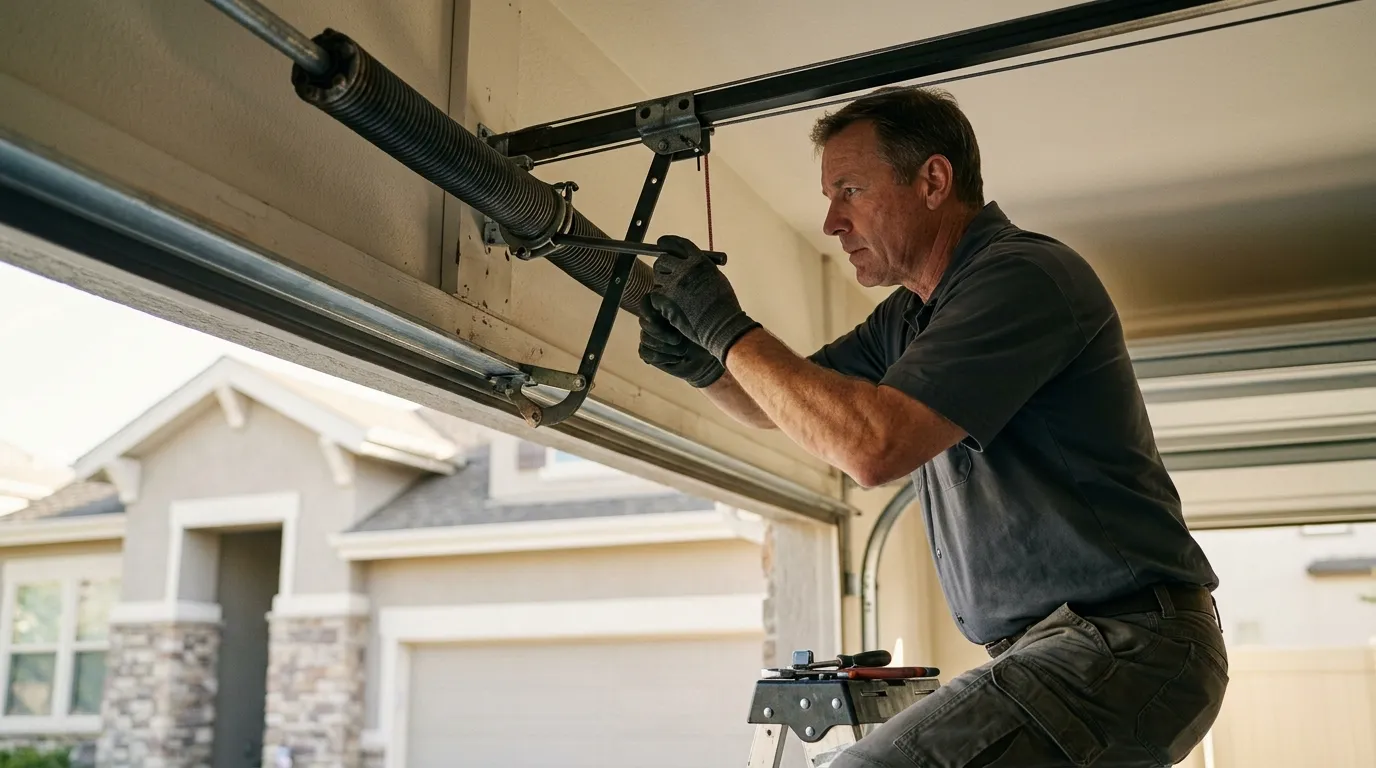
We don't quote a flat rate over the phone for anything we haven't seen, because a torsion spring job on a door from 1968 and a cable job on a door from 1994 are not the same job, even if they sound the same when you describe them. What we can tell you on the call is whether it's likely a spring, a cable, an opener board, or a track out of alignment, and roughly what that category of repair runs.
Winters here get cold enough that steel contracts, lift cables lose a little give, and openers that were fine in September start straining in December. If your call comes in on a night like that, we say so, and we tell you what we can actually get to that day versus the next one.
Who Turns Up
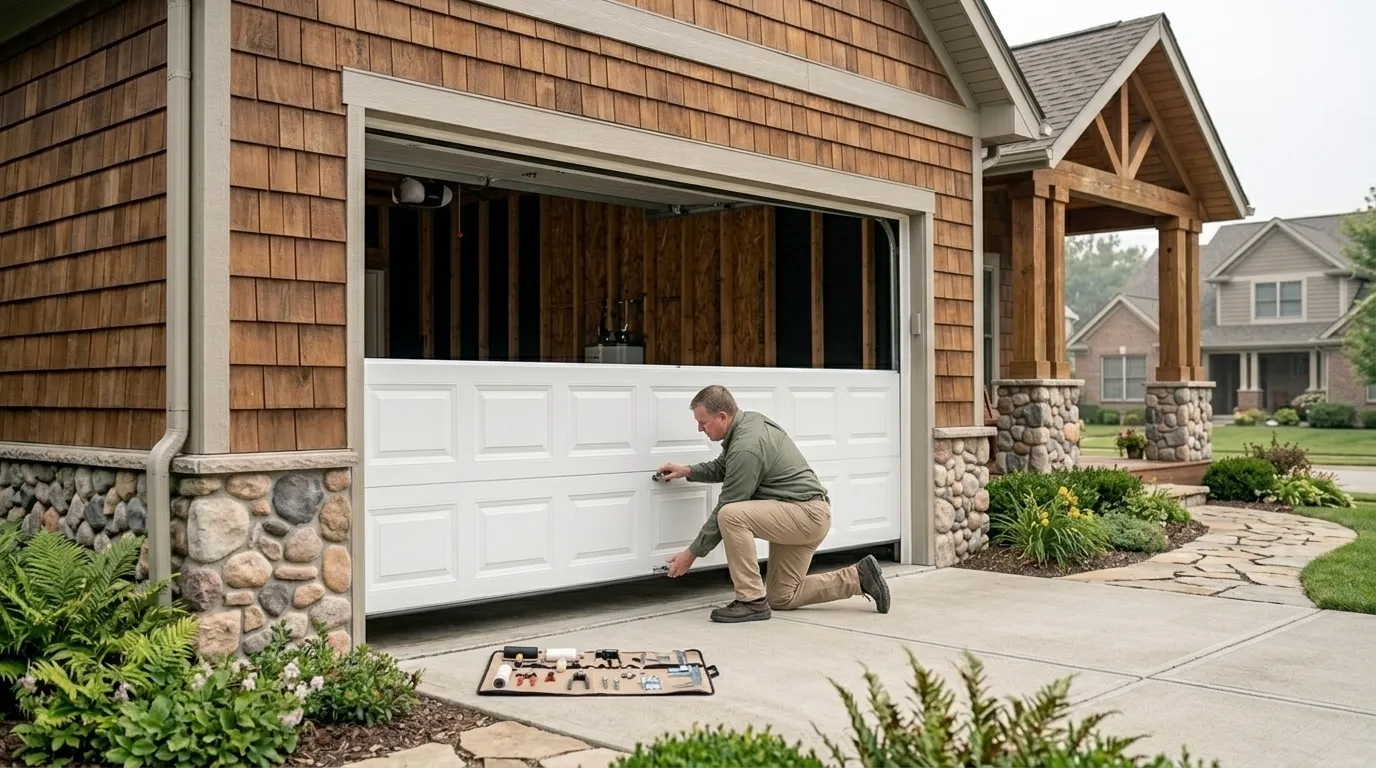
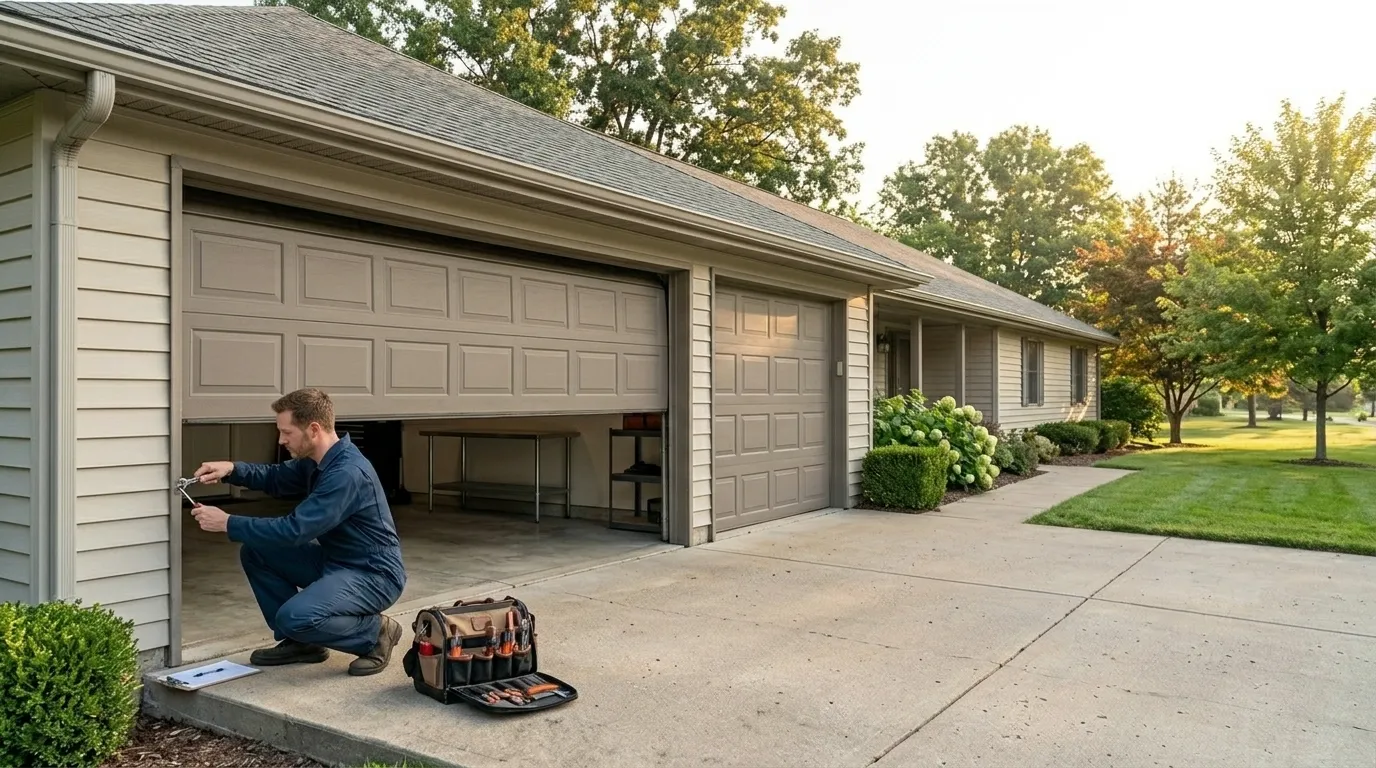
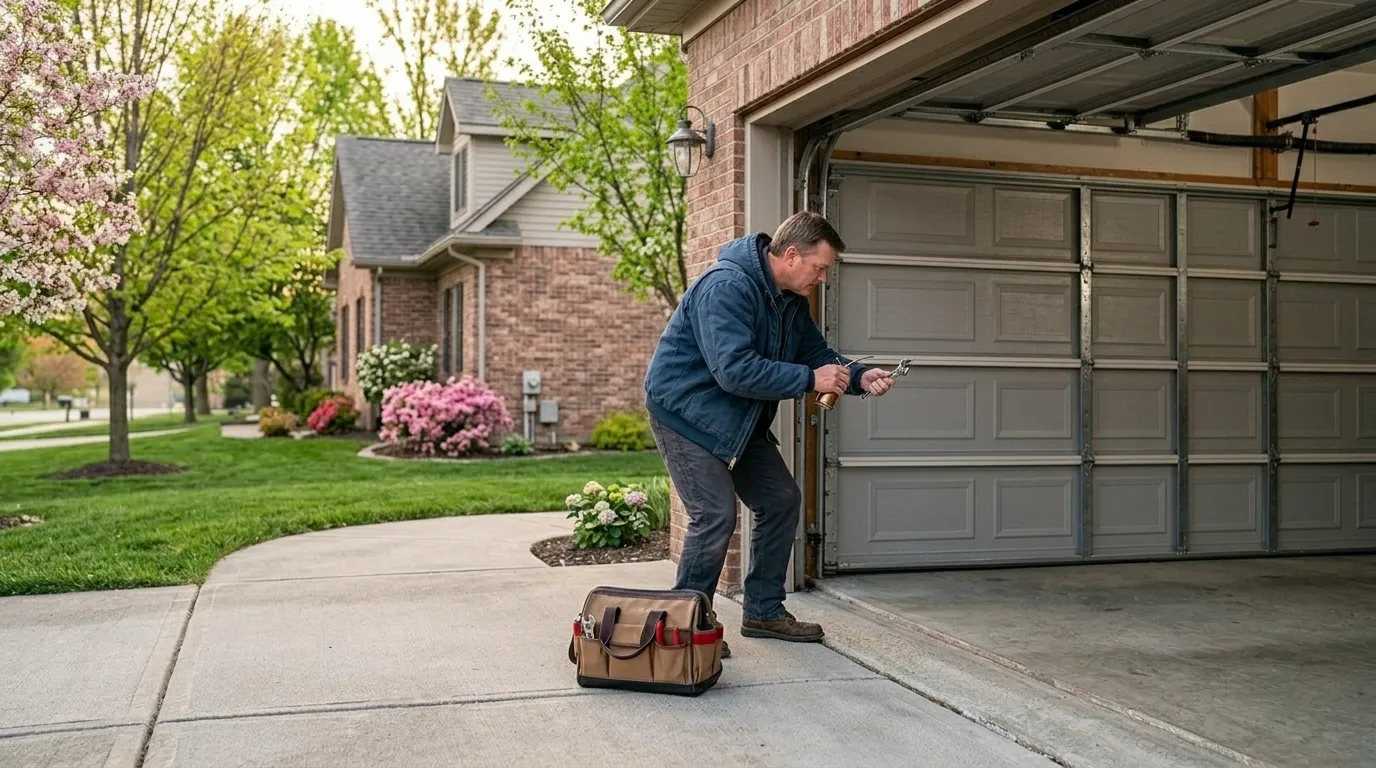
The person who comes to your door is who you talked to on the phone or someone working off the same notes. We don't run a call center that hands your job to a subcontractor you've never heard from. We show up with the parts that fit the doors common to this area - the older torsion spring sizes, the drum styles that went out of production years ago but are still on half the garages between here and Kewaskum.
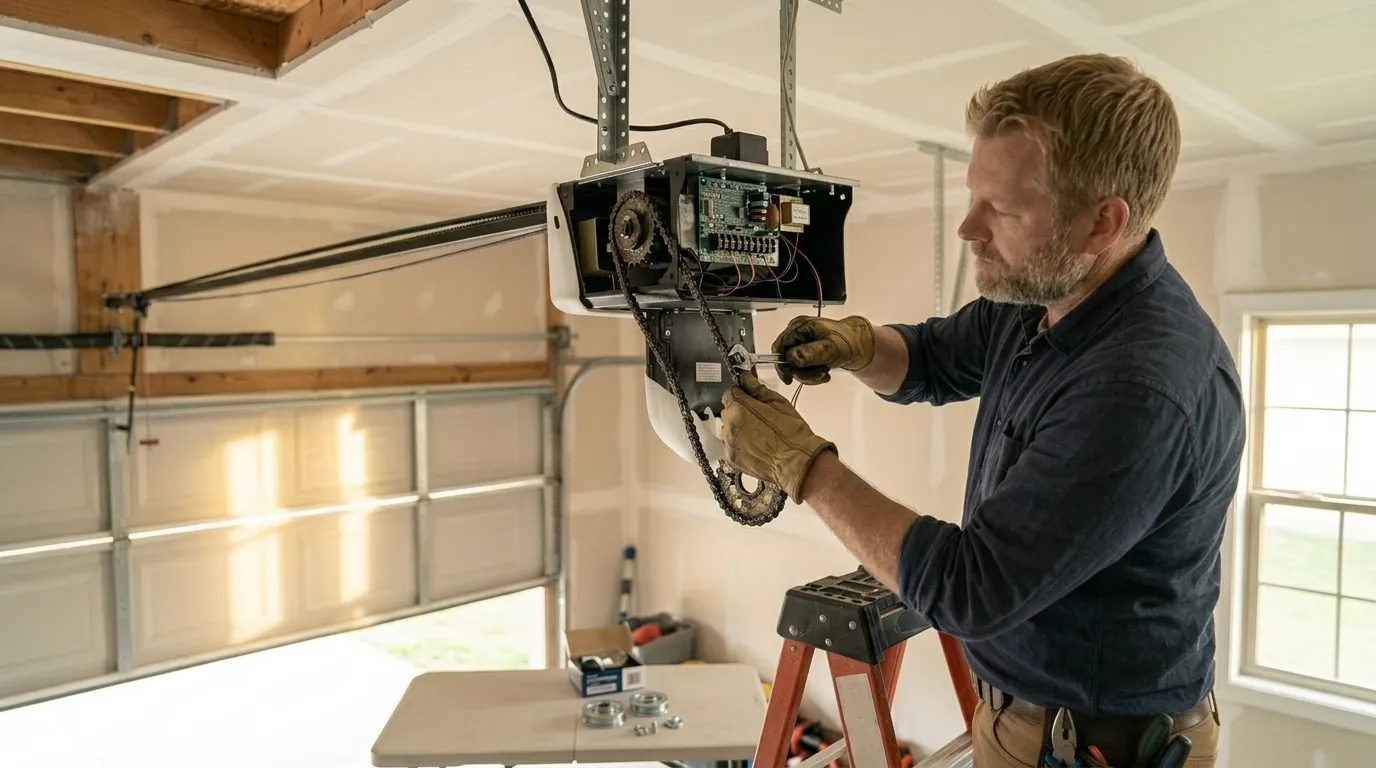
We're not going to tell you every truck carries every part for every door ever made; that's not true anywhere. What we carry reflects what actually breaks on the housing stock in this area: mid-century torsion setups, aging extension springs on older detached garages, and openers old enough that the circuit board itself is the failure point, not the motor.
If a job needs a part we don't have on hand - an odd-width panel or a discontinued opener board - we say that up front instead of guessing at a return visit. That's the honest limit of a same-day operation: some parts take a day or two to get in, and we'd rather tell you that than promise a fix we can't deliver that afternoon.
What We Actually Do
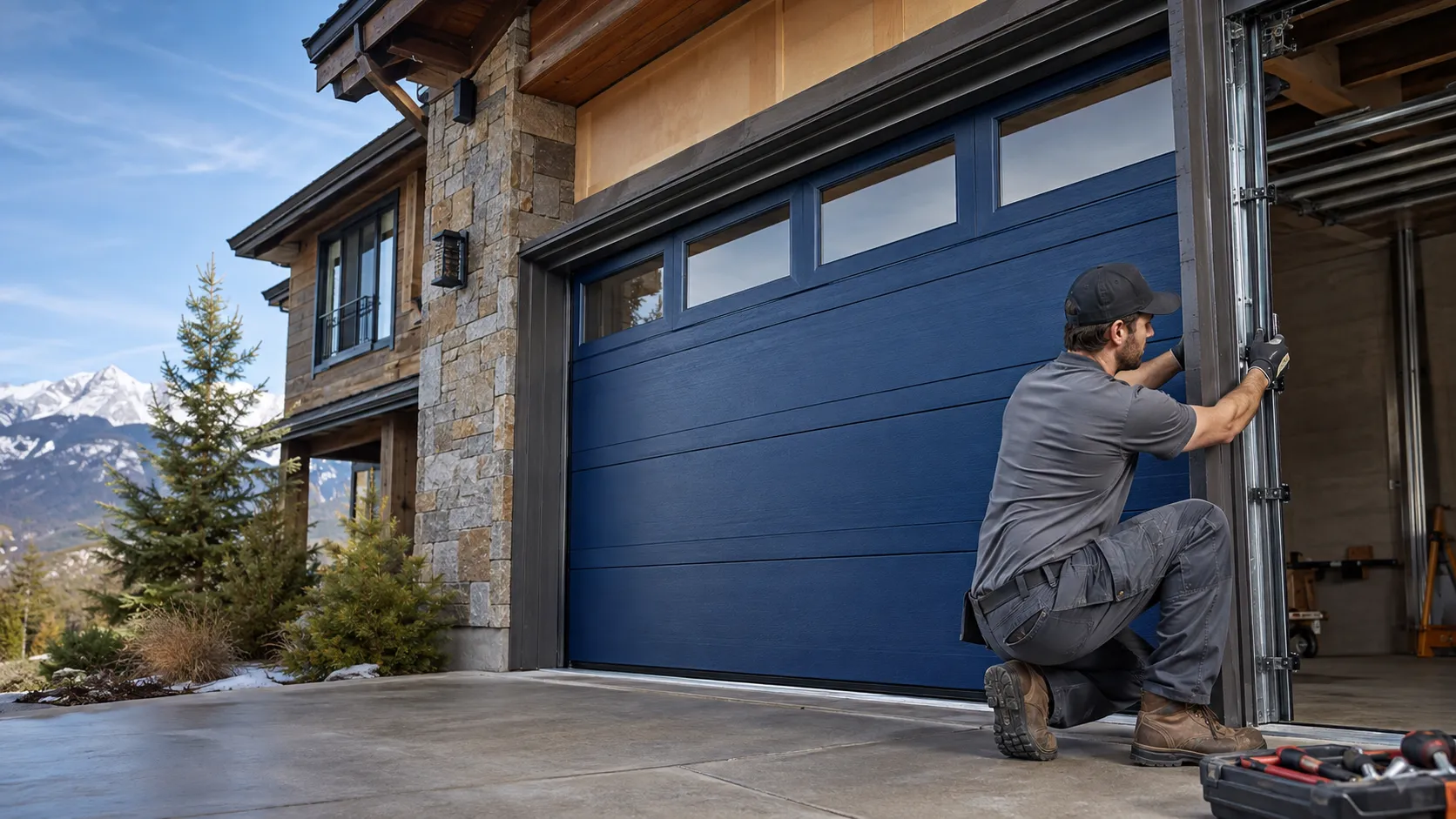
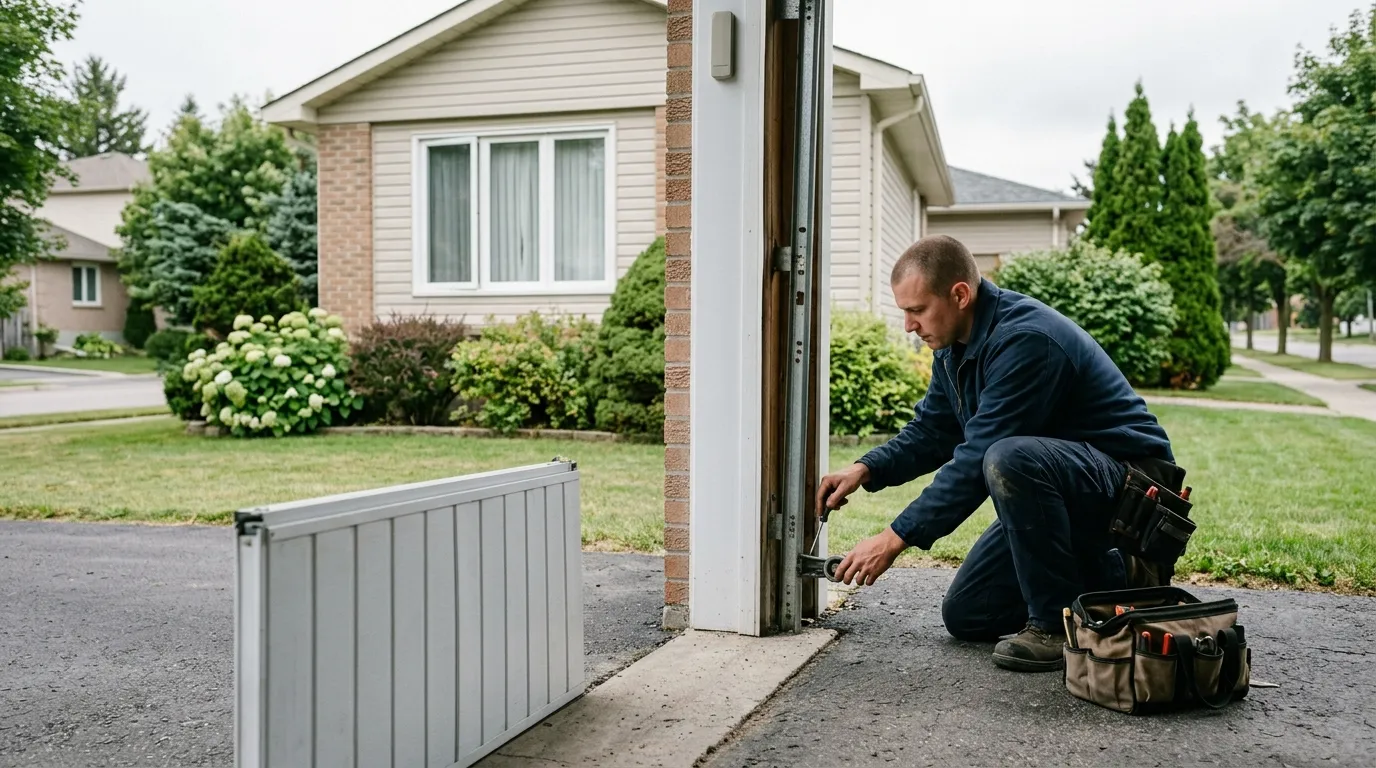
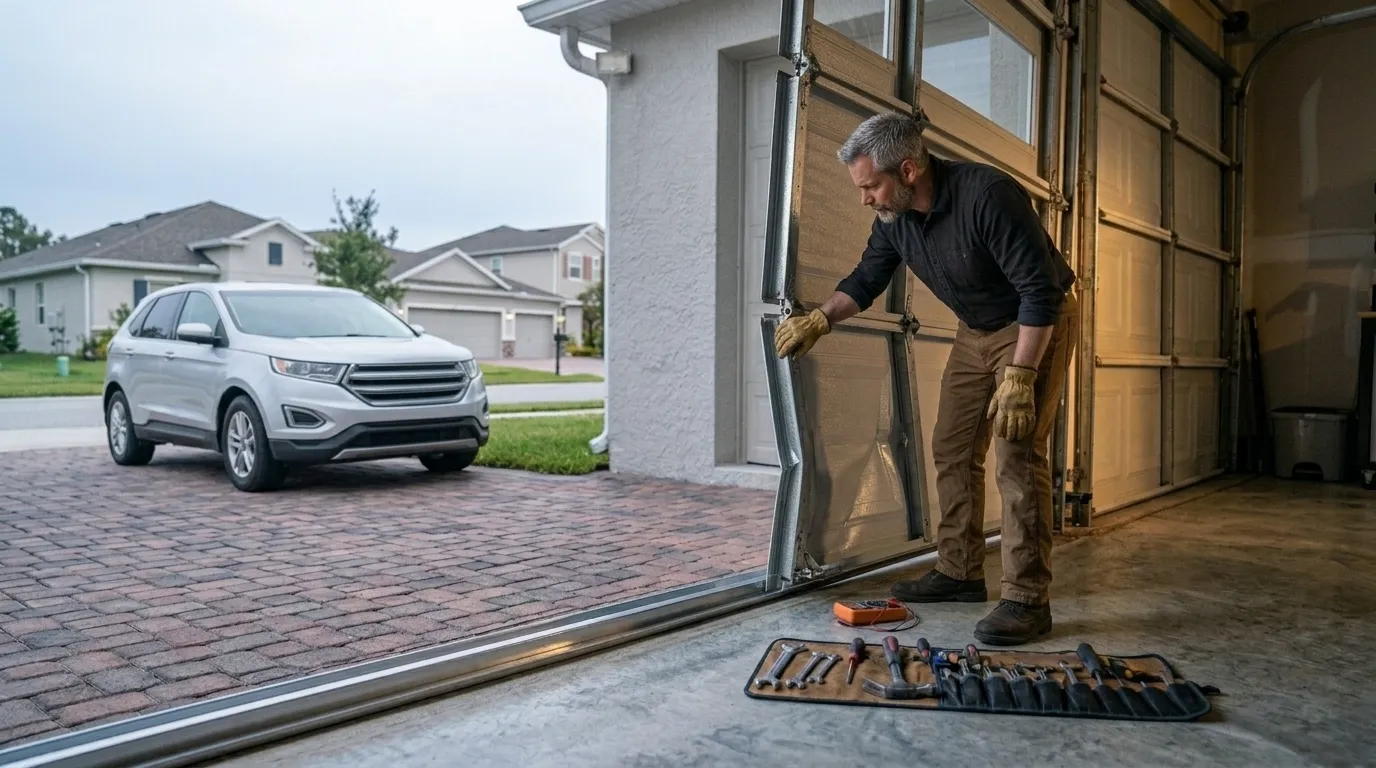
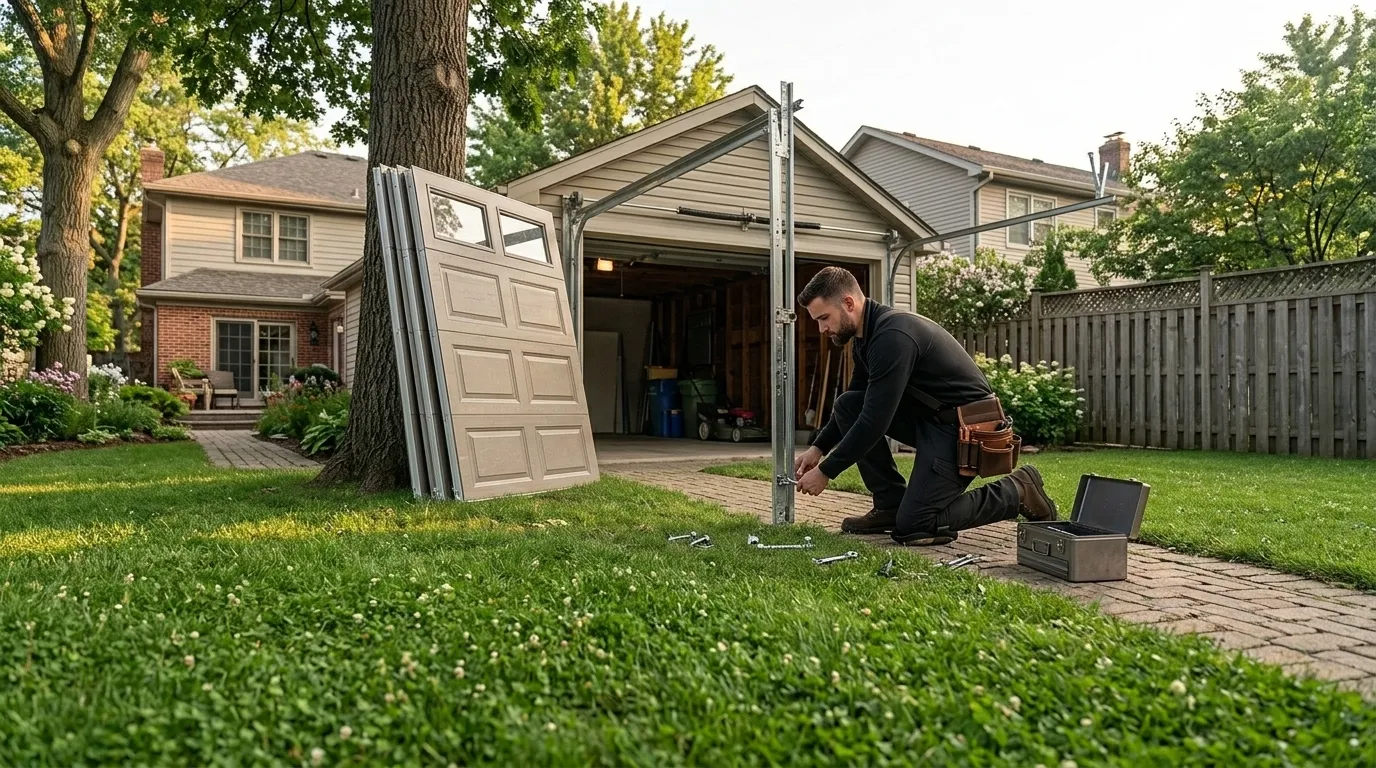
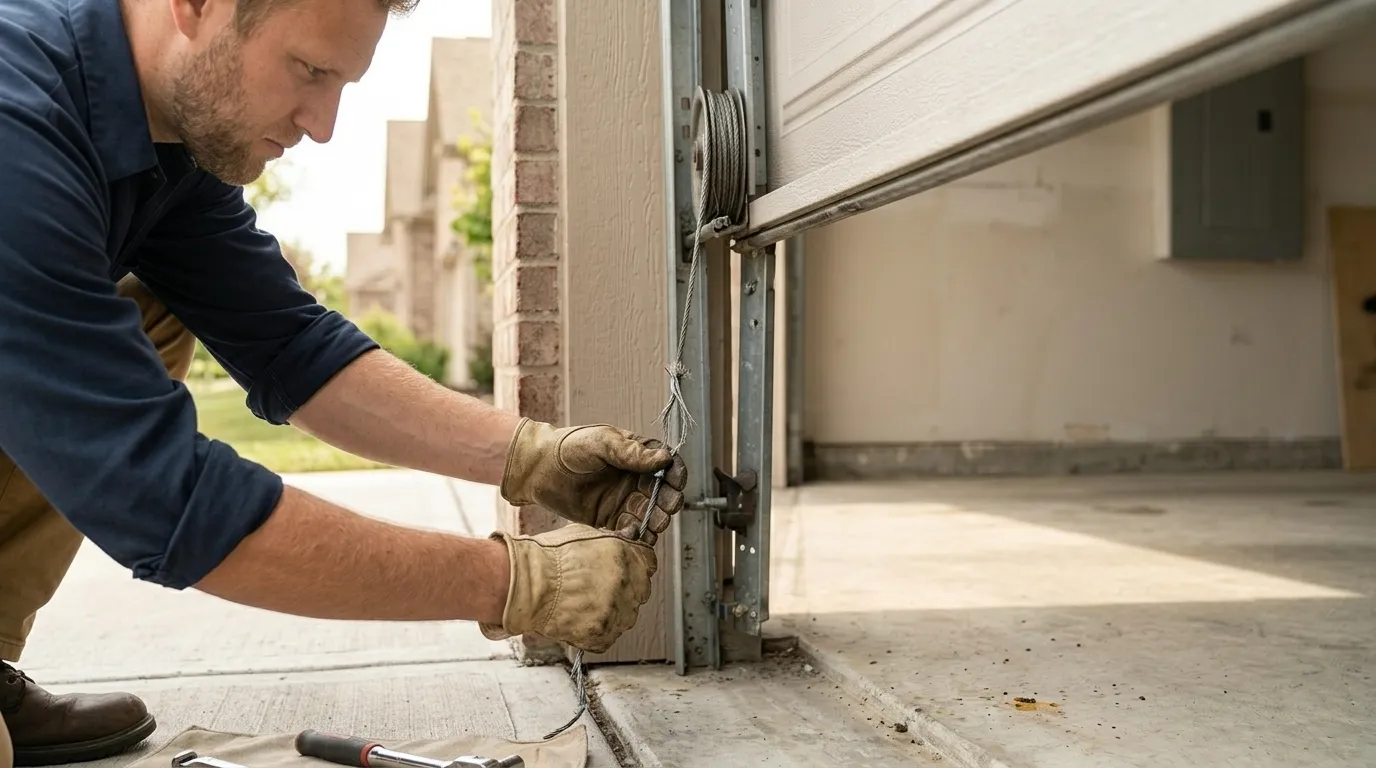
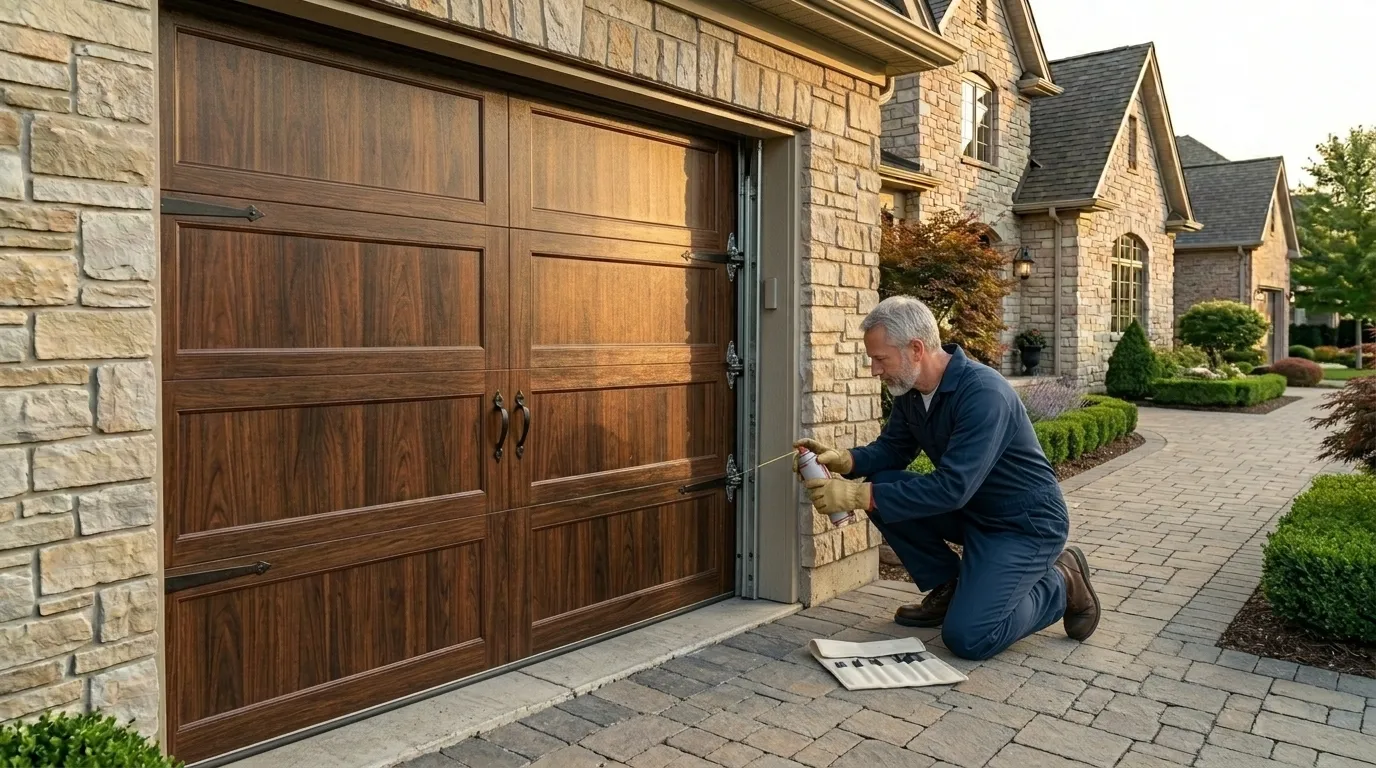
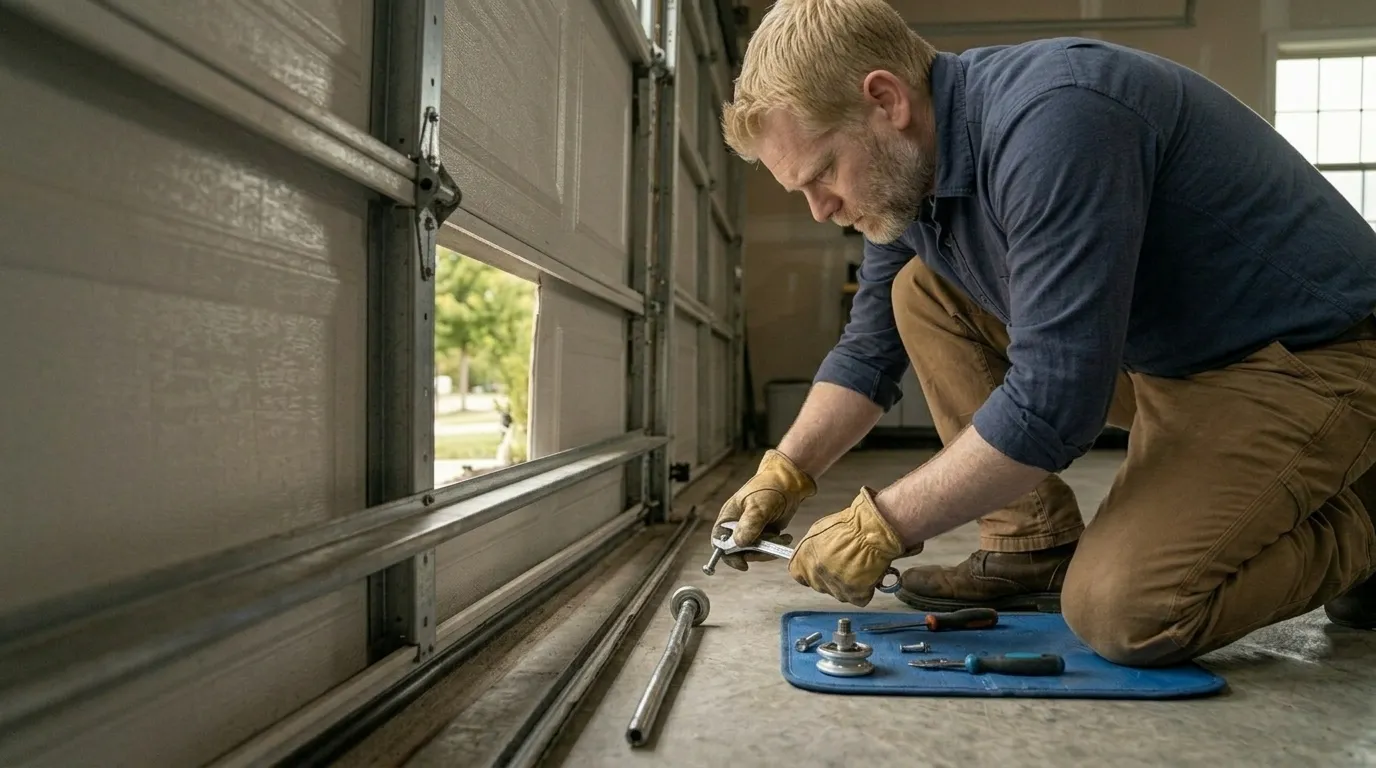
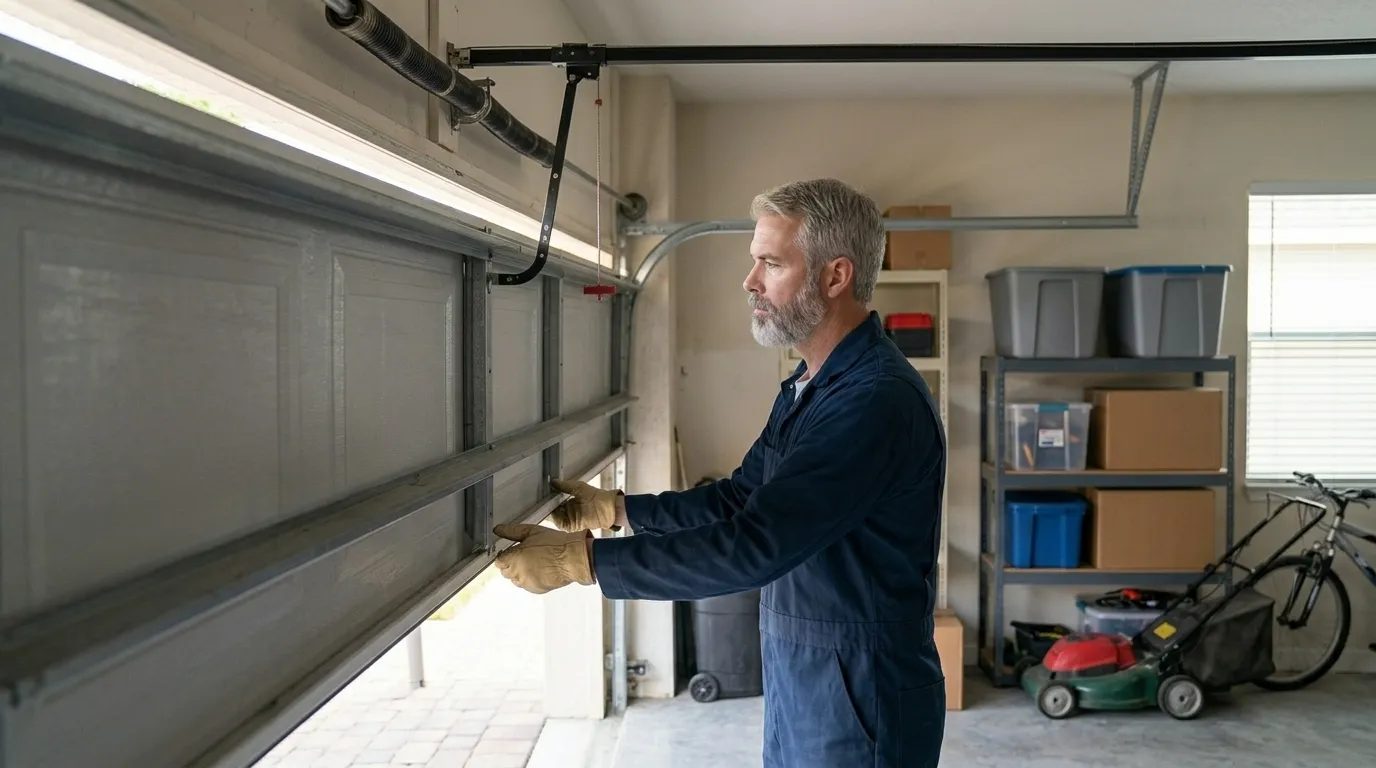
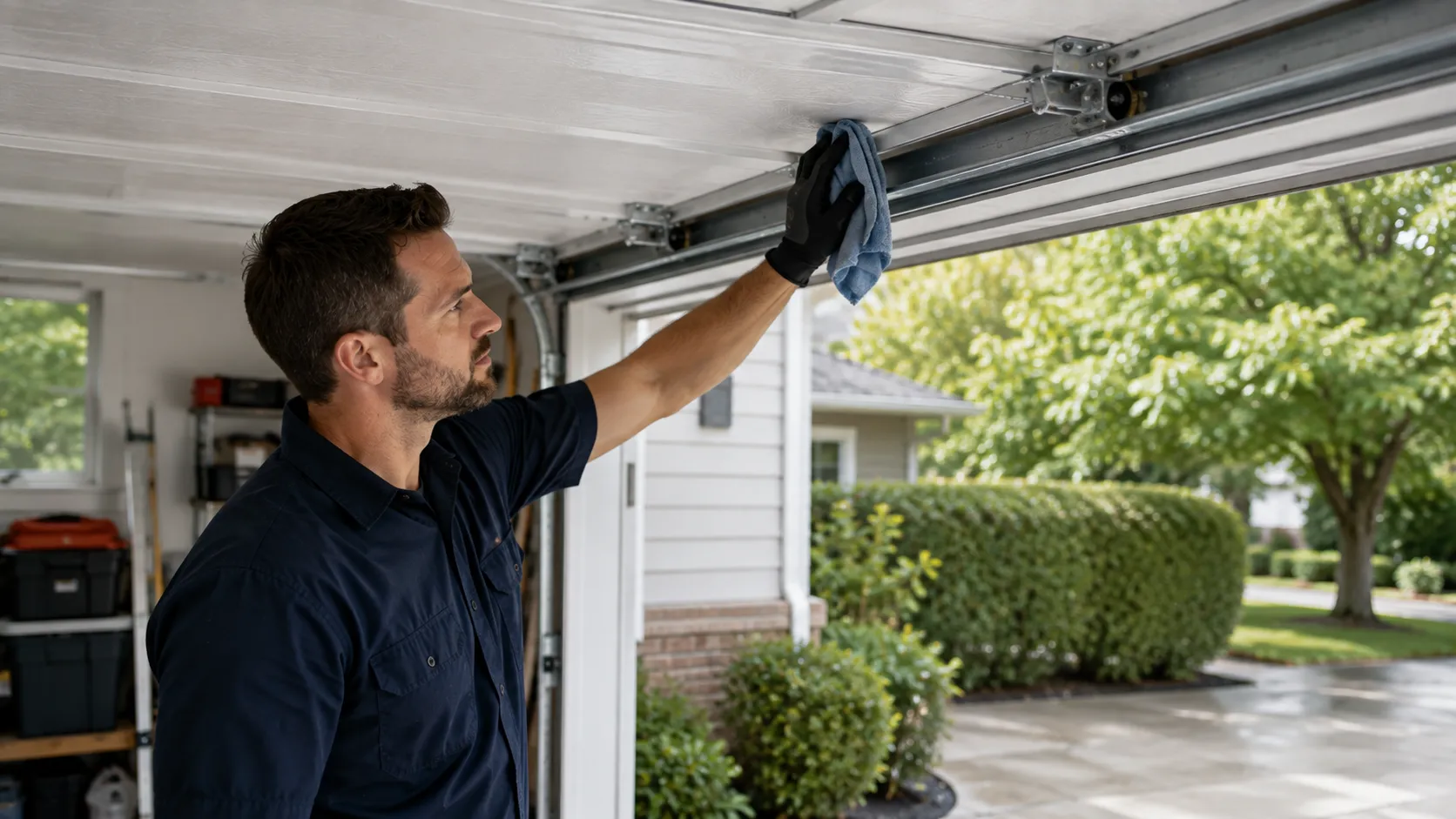
Broken torsion and extension springs, snapped cables, bent tracks, worn rollers, opener repair and replacement, and full door replacement when a repair isn't worth it anymore. On a door old enough to match the 1958-1999 housing stock around here, that last call comes up more than people expect - sometimes the panels are so far gone, or the track so bent from age, that putting more money into the old hardware just delays the same decision.
Winters in this part of Wisconsin are cold and hard on doors. Steel torsion springs lose tension faster in sustained cold, nylon rollers crack, and openers with weak circuit boards tend to fail right when you need the door most. We see more spring and opener calls in the cold months than any other kind, and we plan our stock around that pattern rather than around a generic parts list.
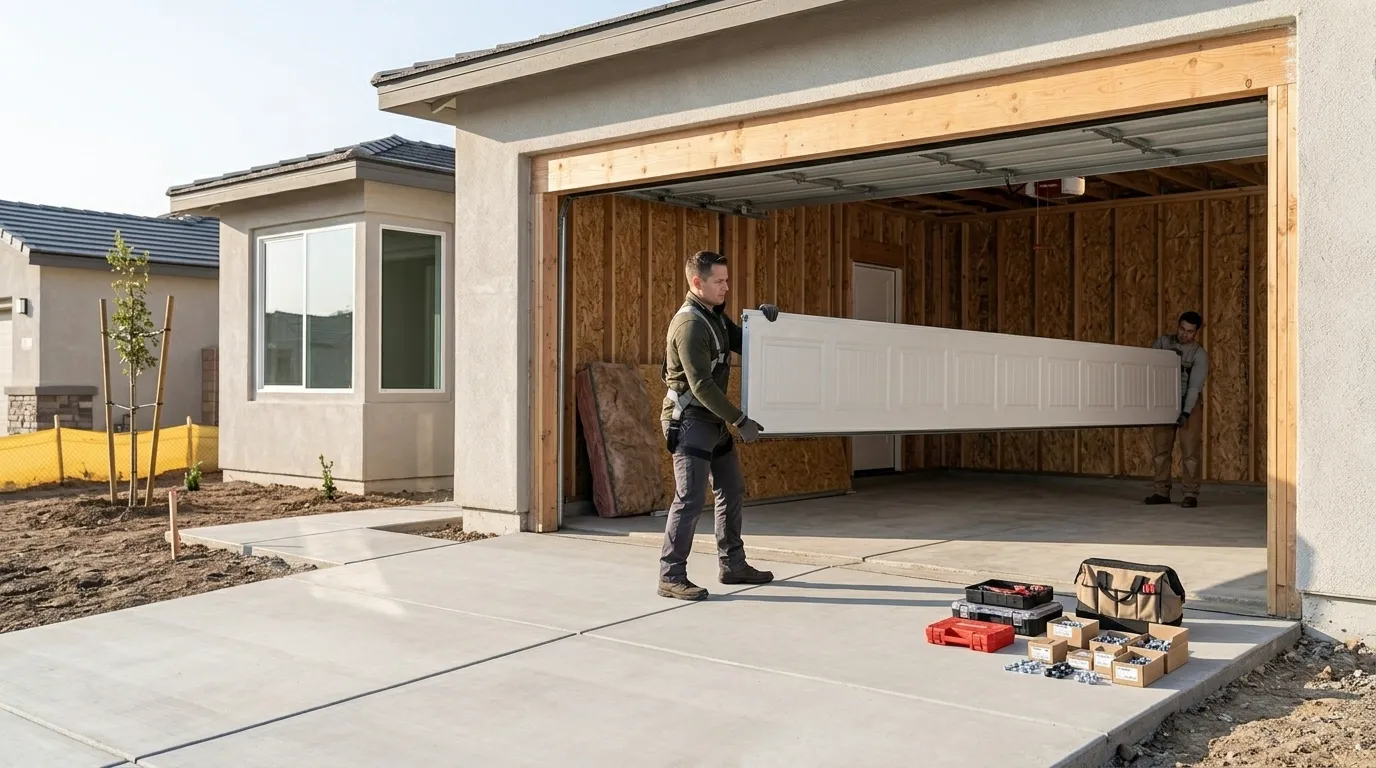
What we don't do: we're not a new-construction installer building doors into homes that don't exist yet, and we're not going to sell you a full replacement when a $200 spring job solves the actual problem. If the fix is smaller than the sales pitch, we tell you that on-site, not after the invoice.