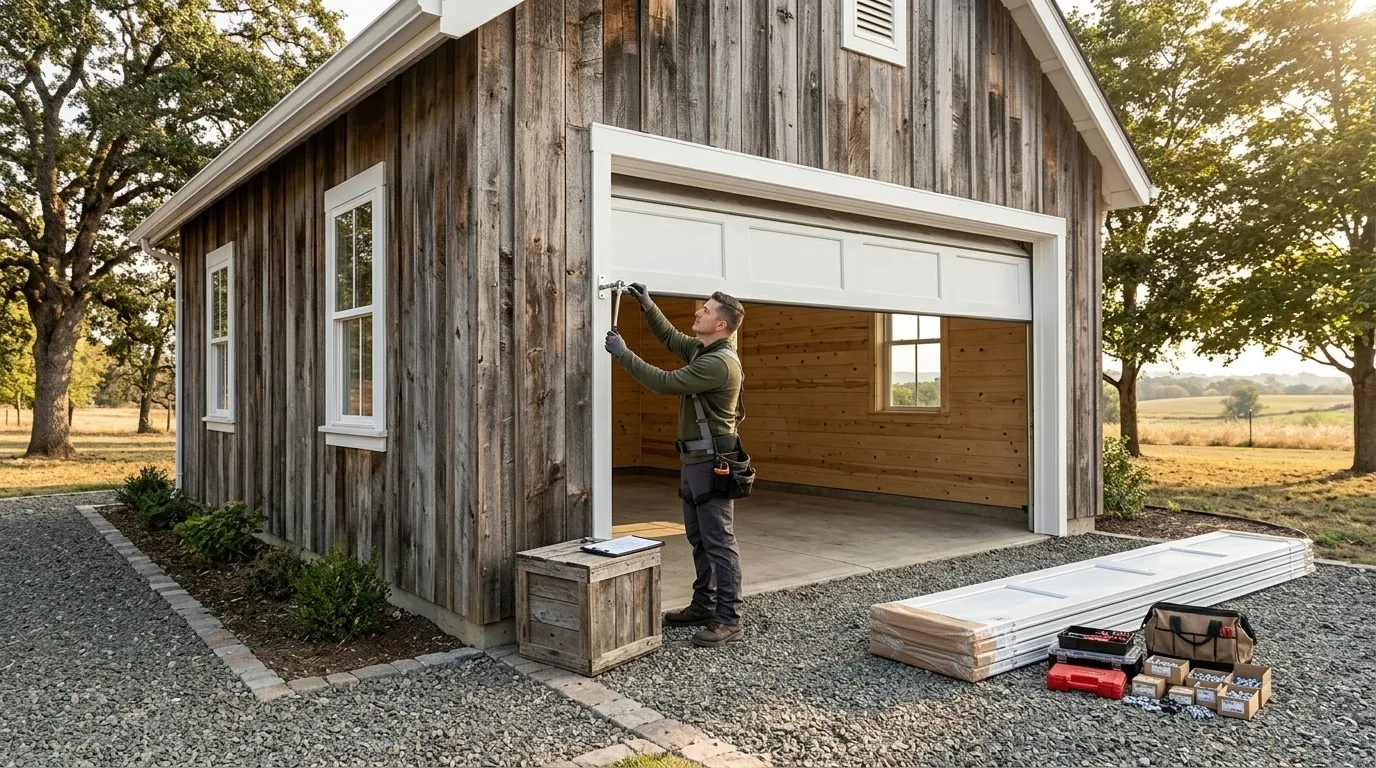
Why This Fails Locally
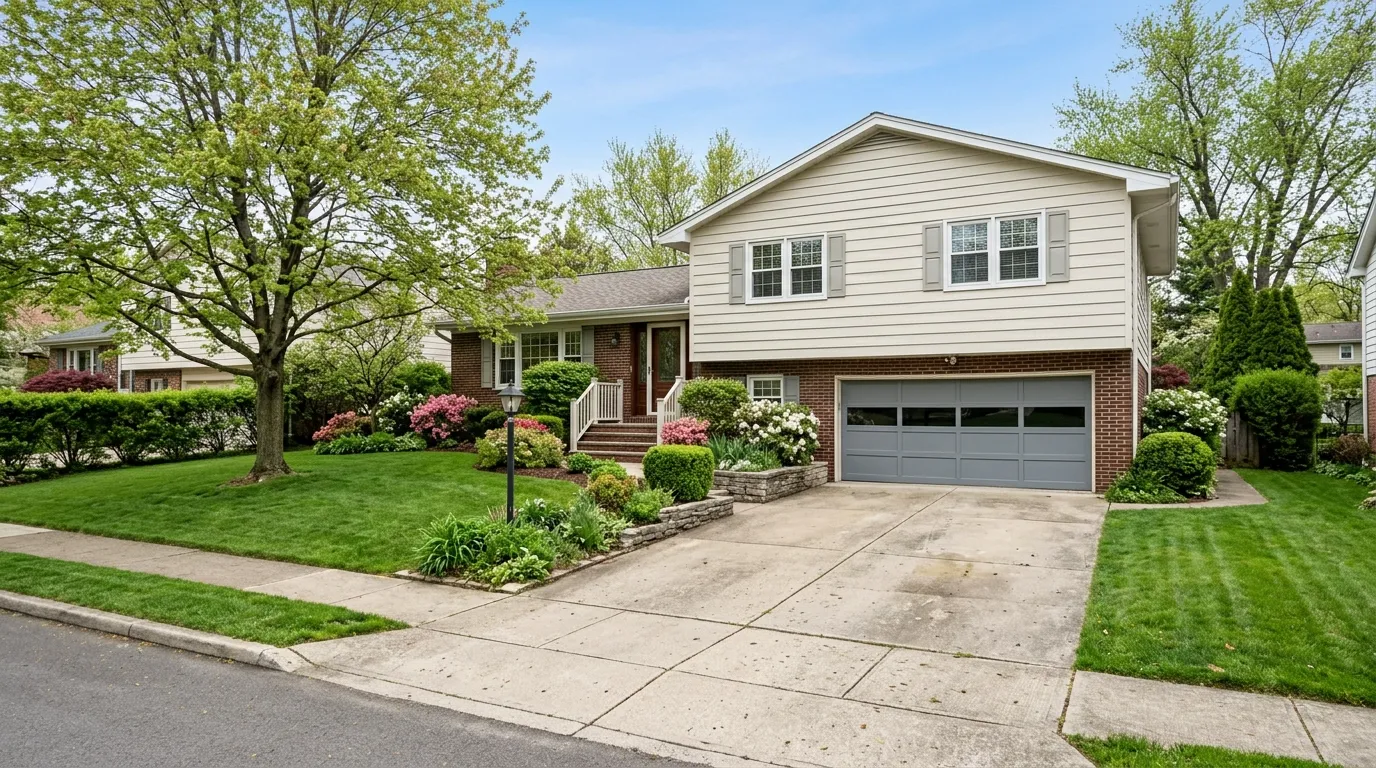
Most houses in this service area were built between 1958 and 1999, with the median landing right around 1976. That's a specific problem for garage doors, because a door installed in that window was almost always matched to the standard steel hardware of its decade - a torsion spring sized for a lighter panel, rollers on tracks that were never rated for today's insulated doors if an owner upgraded later without swapping the spring. Across the 37 named communities in this service area, the stock skews heavily 1960s-70s, which means a lot of original or near-original hardware is still doing daily work.
Then there's the climate. This area sits in a cold-severe band, and that matters more for a garage door than people expect. Steel contracts in the cold. A torsion spring that's already fatigued from decades of cycles loses tension faster once temperatures drop and stay down for weeks at a stretch. Track alignment that was fine in August can bind in January because the slab shifts slightly with frost. None of this is a design flaw - it's just what happens to 1970s-era steel hardware after fifty winters. Maintenance exists to catch it before the spring lets go or the door jumps the track, not to fix a failure that's already happened.
The Symptom
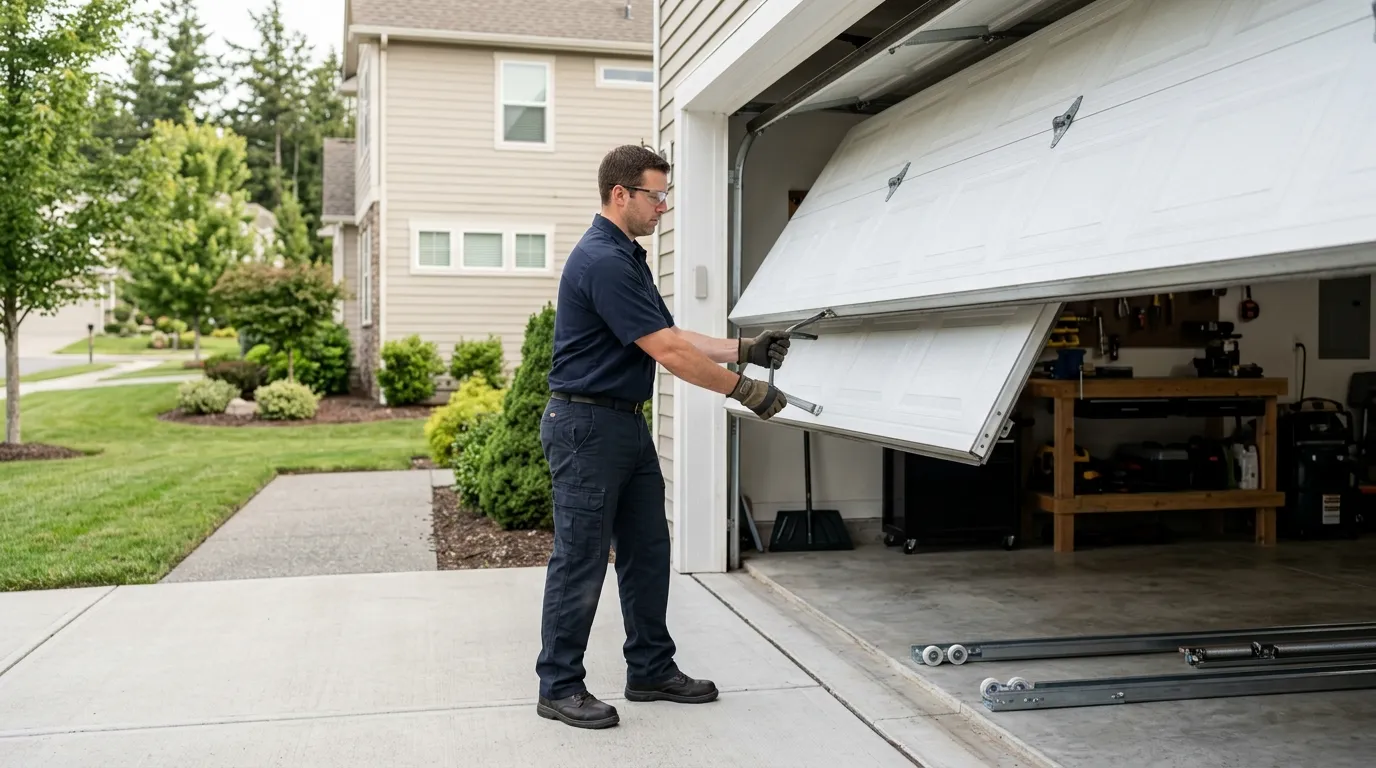
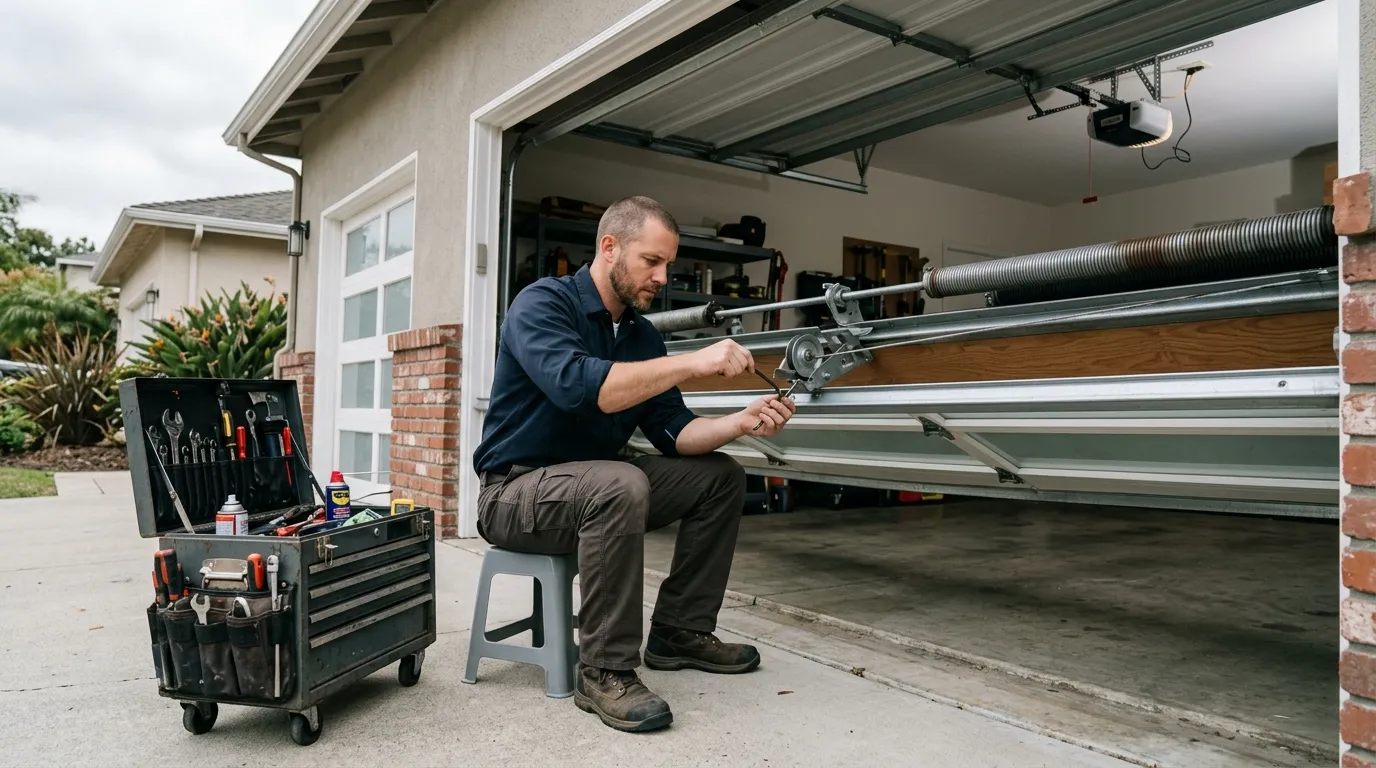
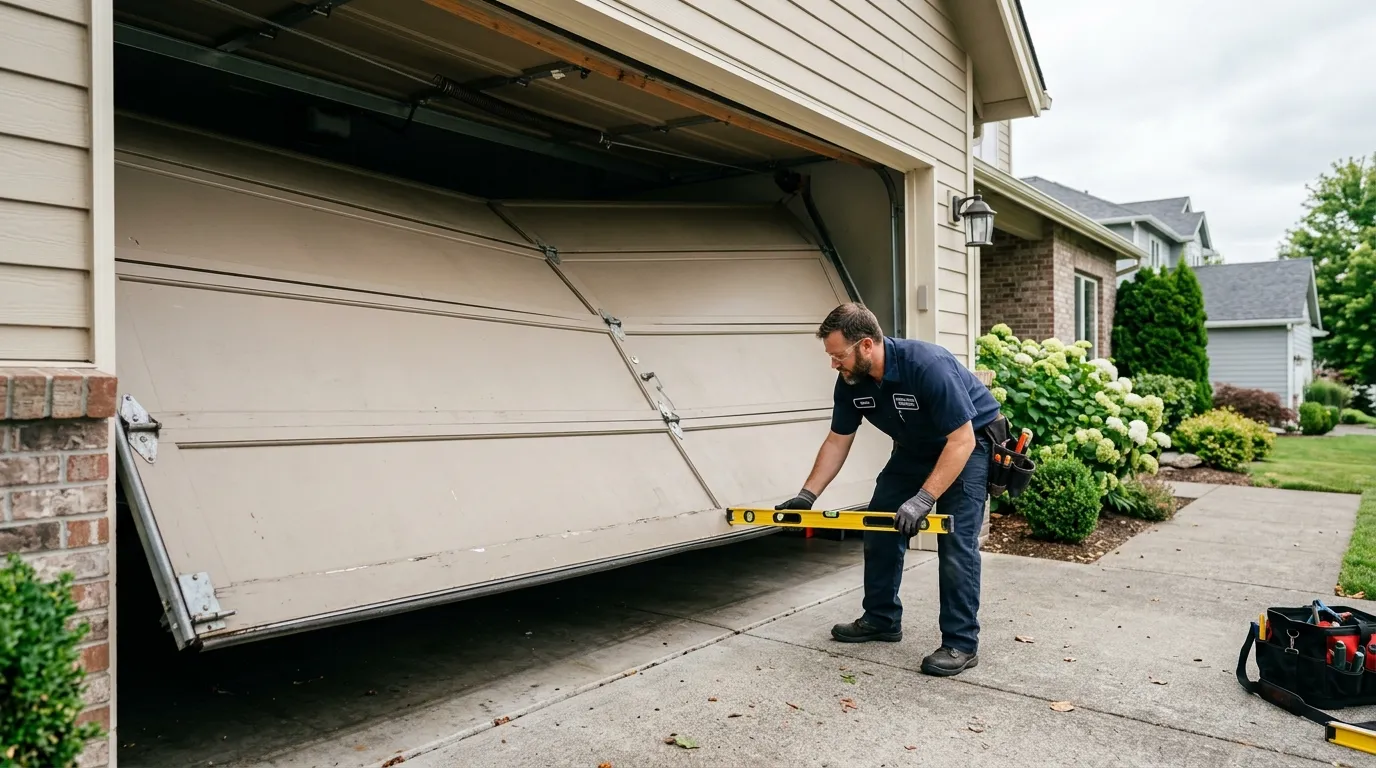
The complaint we hear most is that the door feels heavier than it used to, or the opener strains and makes a grinding sound partway through the cycle. Sometimes it's one corner dropping faster than the other on the way down, which points to a spring or cable that isn't carrying its share of the load anymore. Other times it's a door that reverses on its own a few inches off the floor, which usually means the travel limits or the force settings on the opener have drifted, often because the springs are no longer balancing the door the way they were set up to.
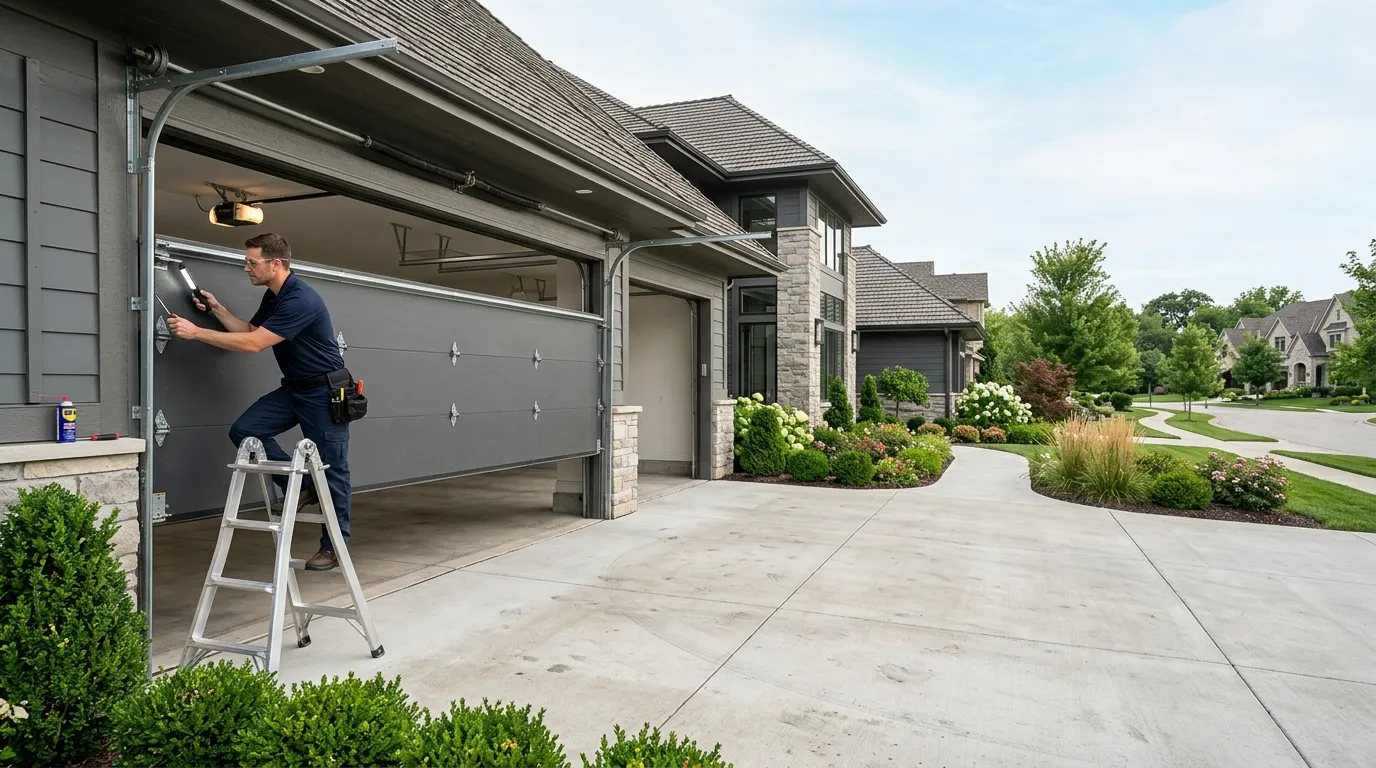
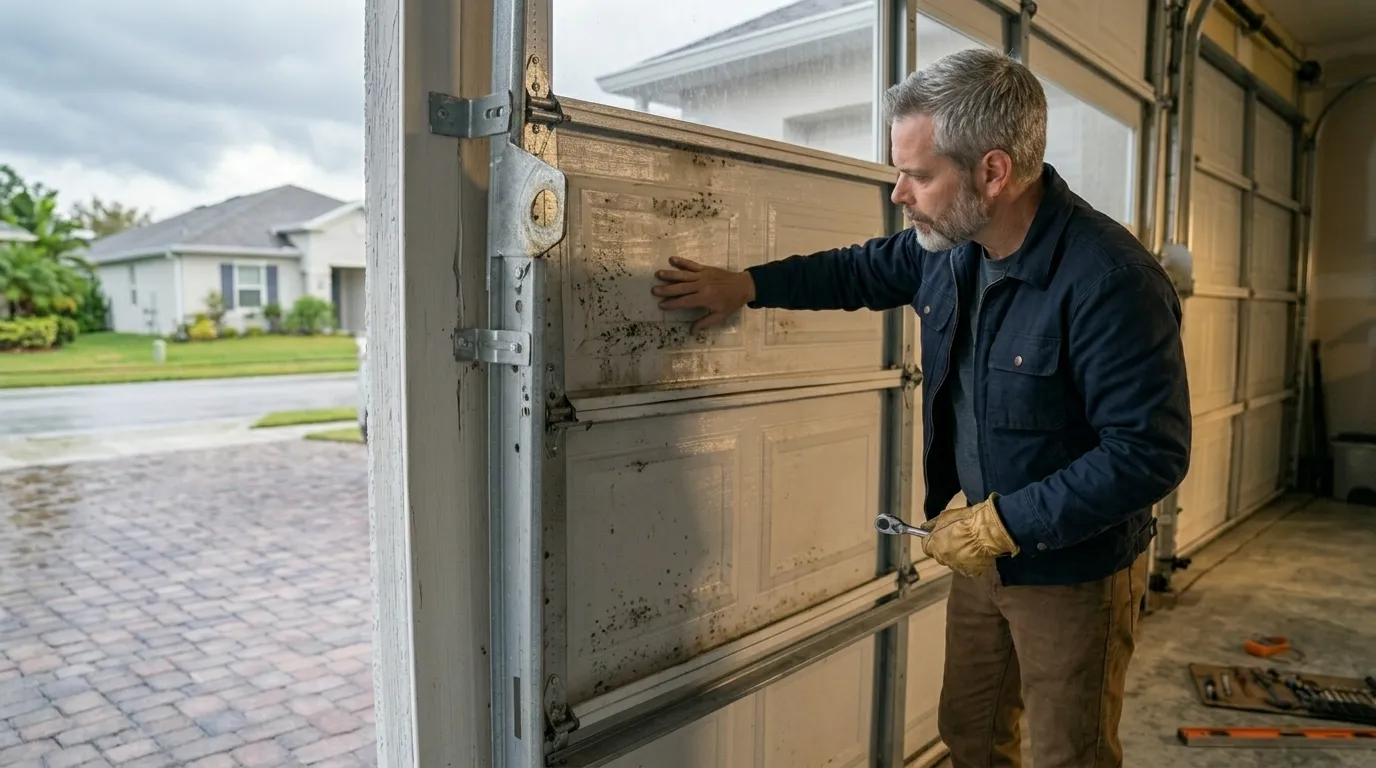
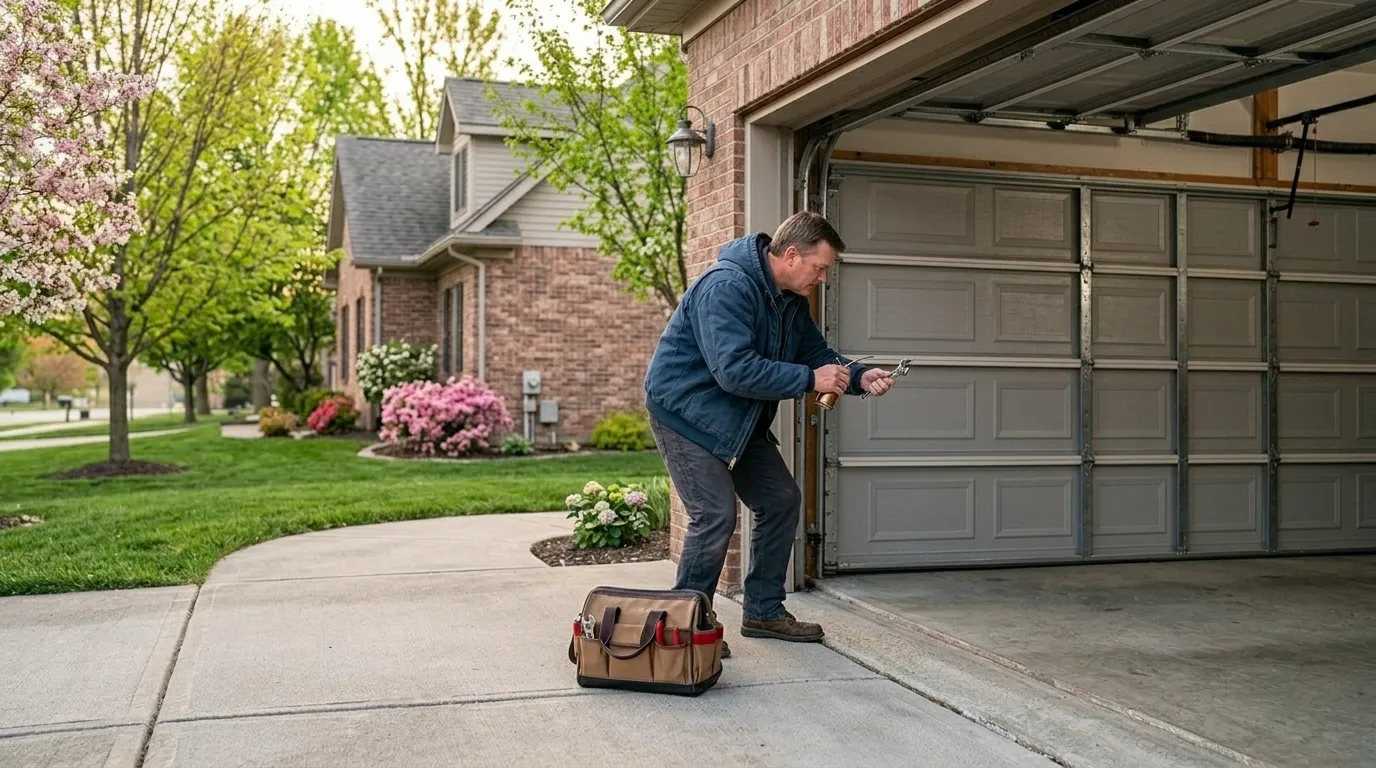
On older hardware - the kind common in homes from the 1960s and 70s in this area - the symptom is often just noise. A dry roller in a metal track, or a hinge that's never been lubricated, will announce itself long before it fails outright. That's the useful part: these doors tend to complain before they quit. A maintenance visit is mostly about listening to what the door is already telling you and adjusting tension, alignment, and lubrication before a complaint becomes a call for an emergency repair.
What the Repair Takes
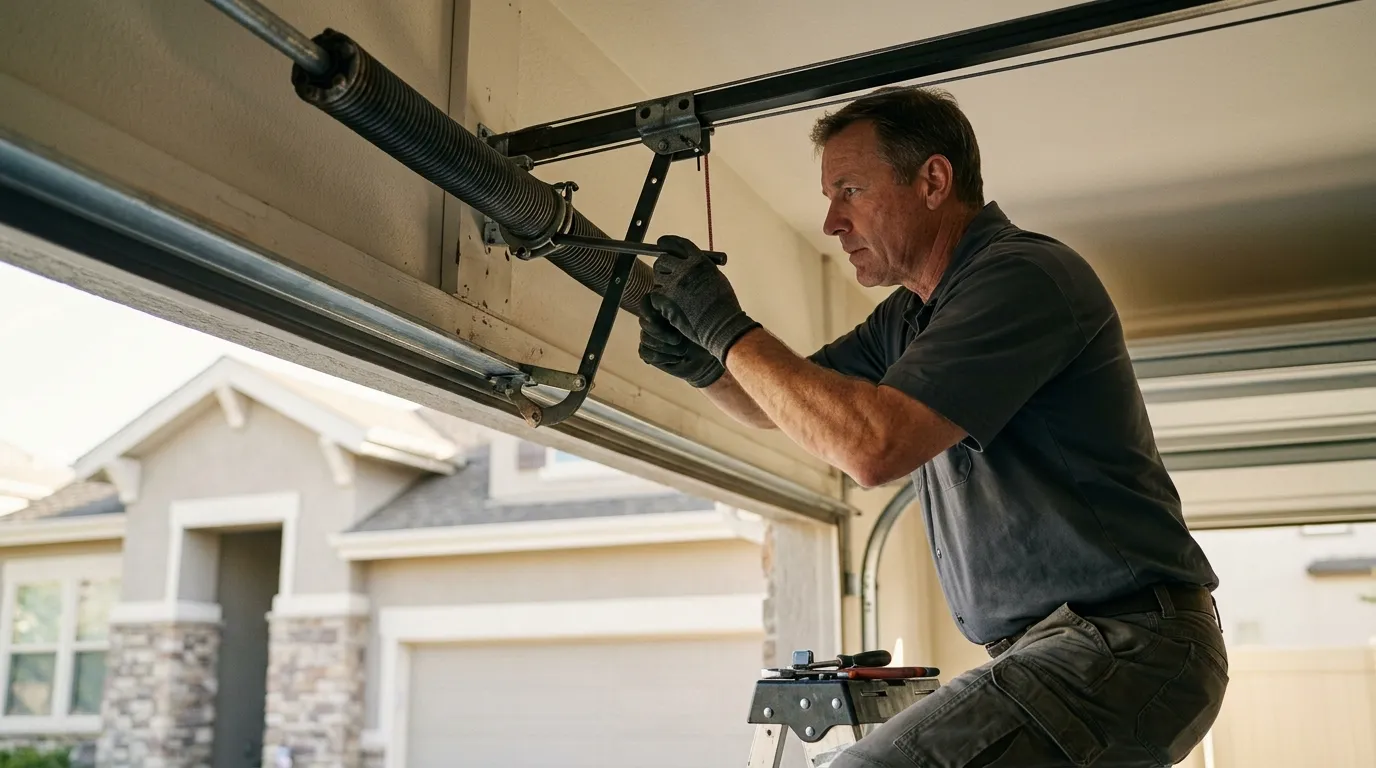
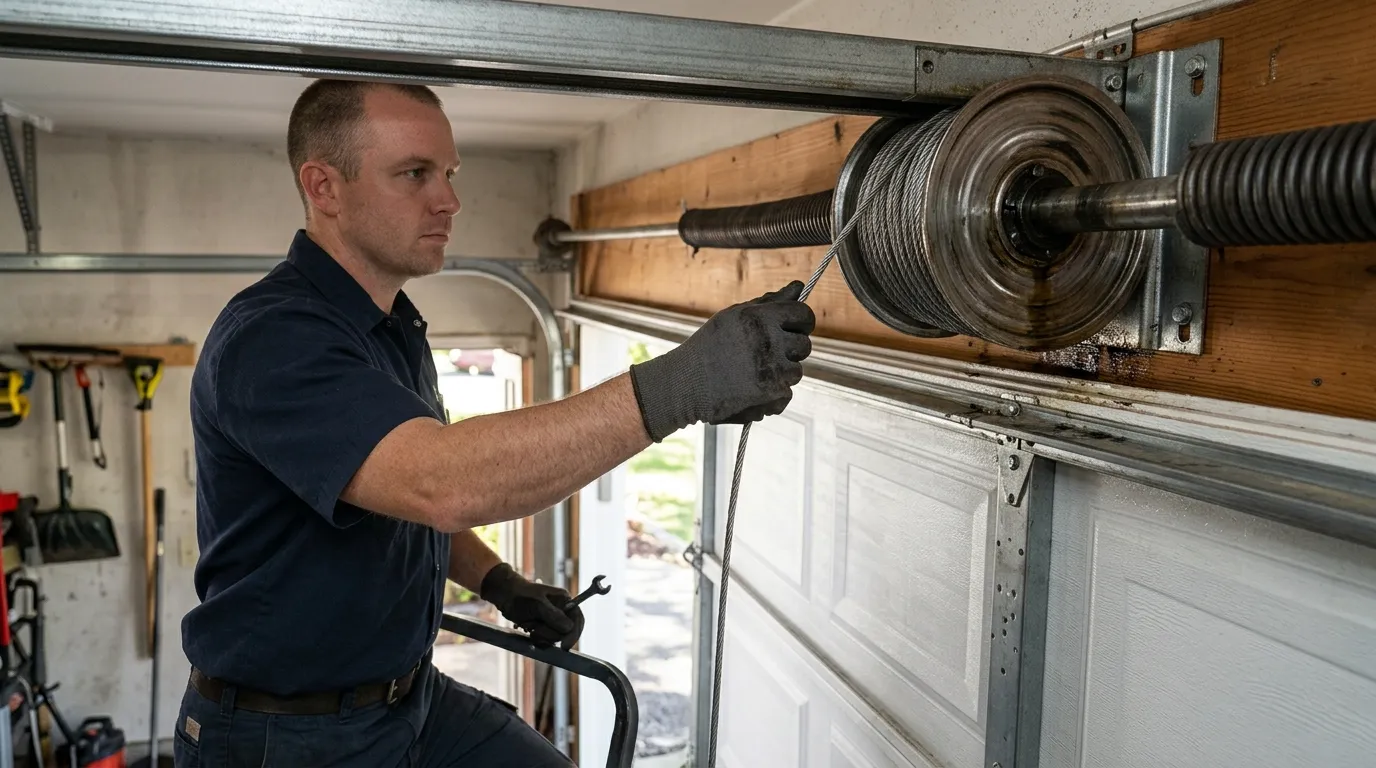
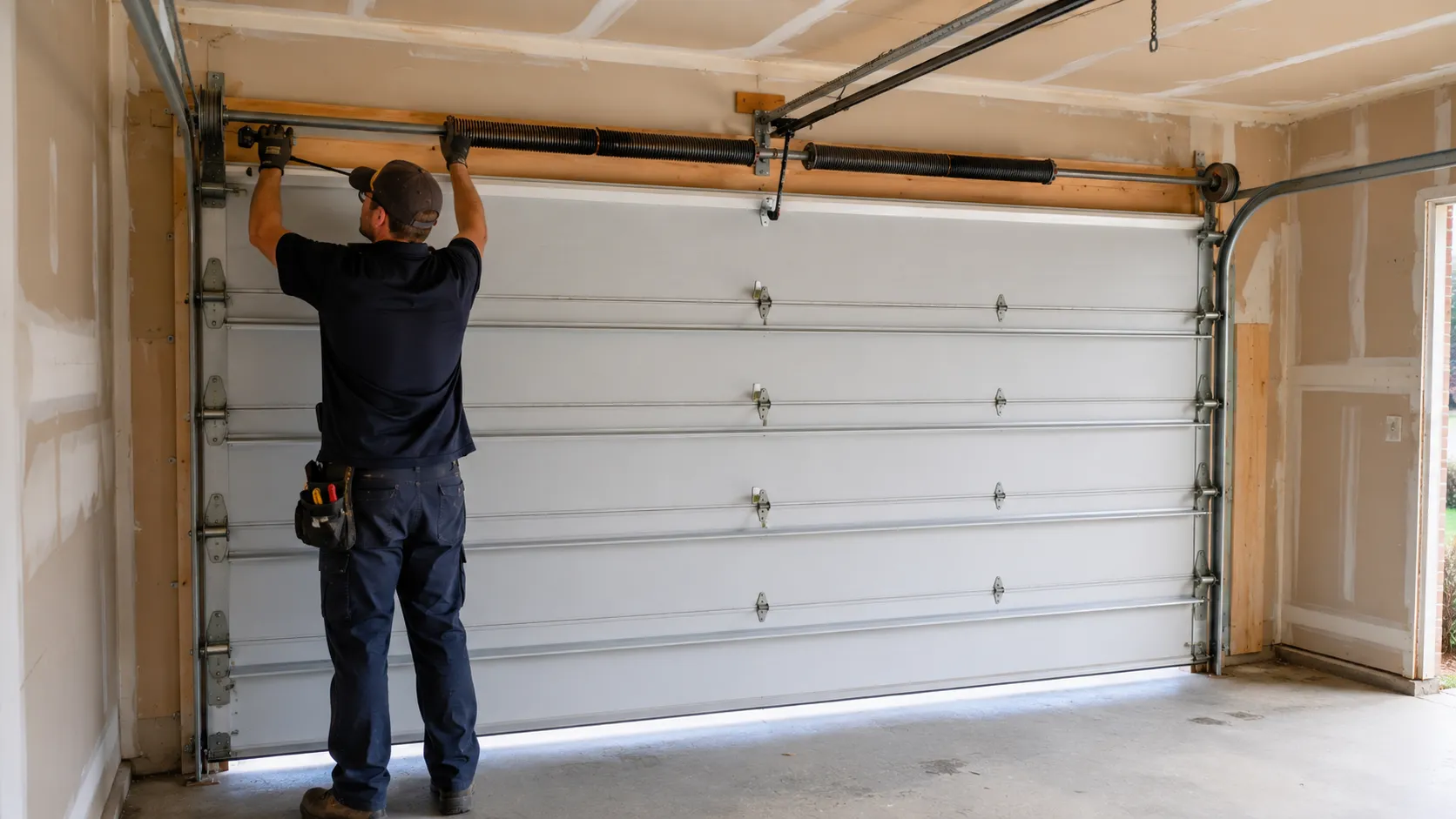
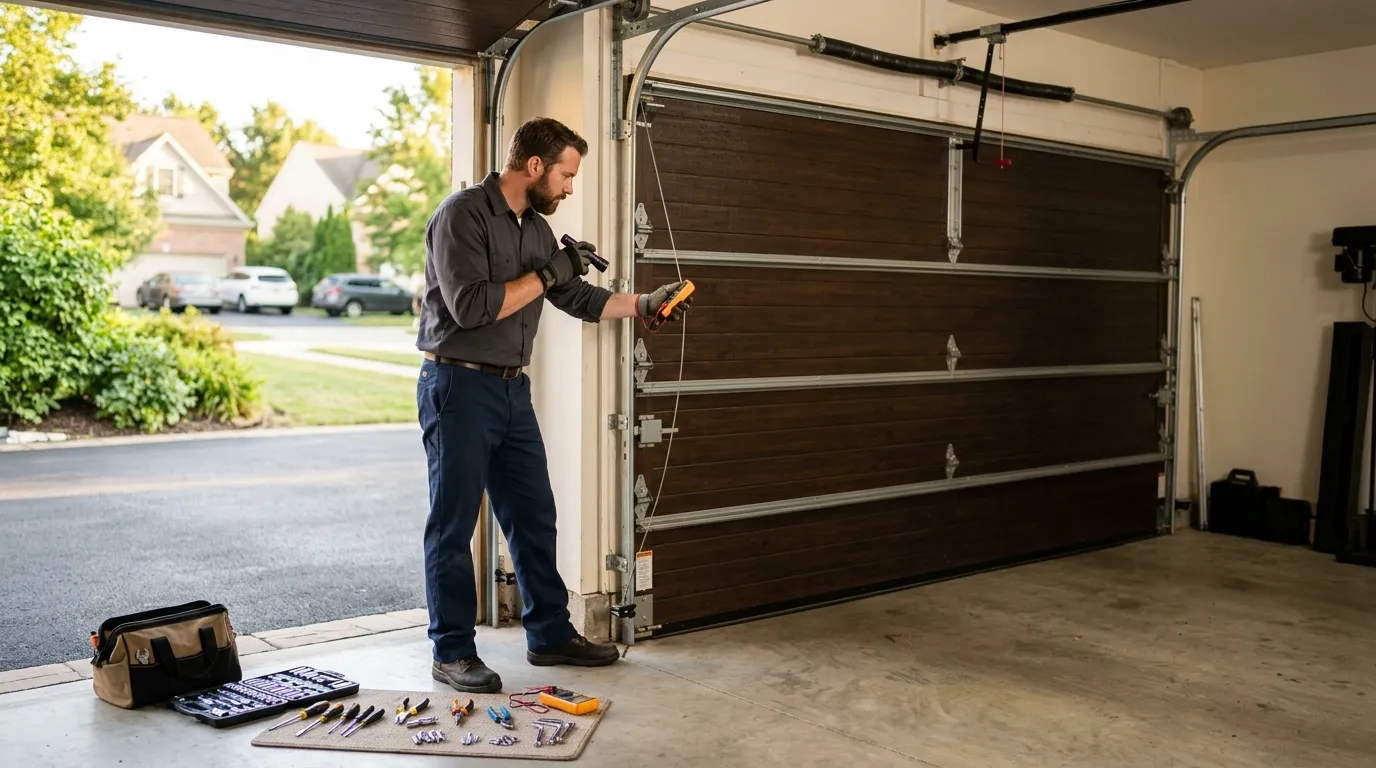
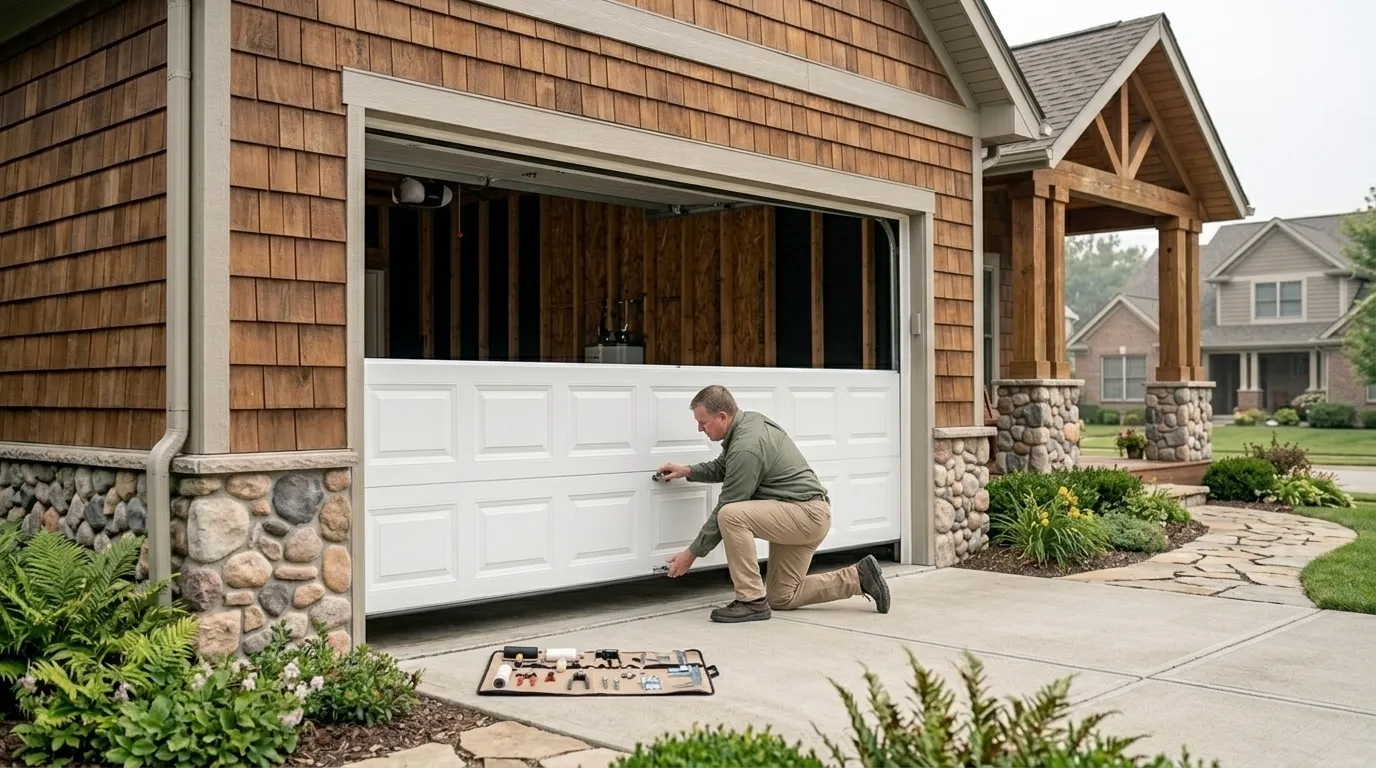
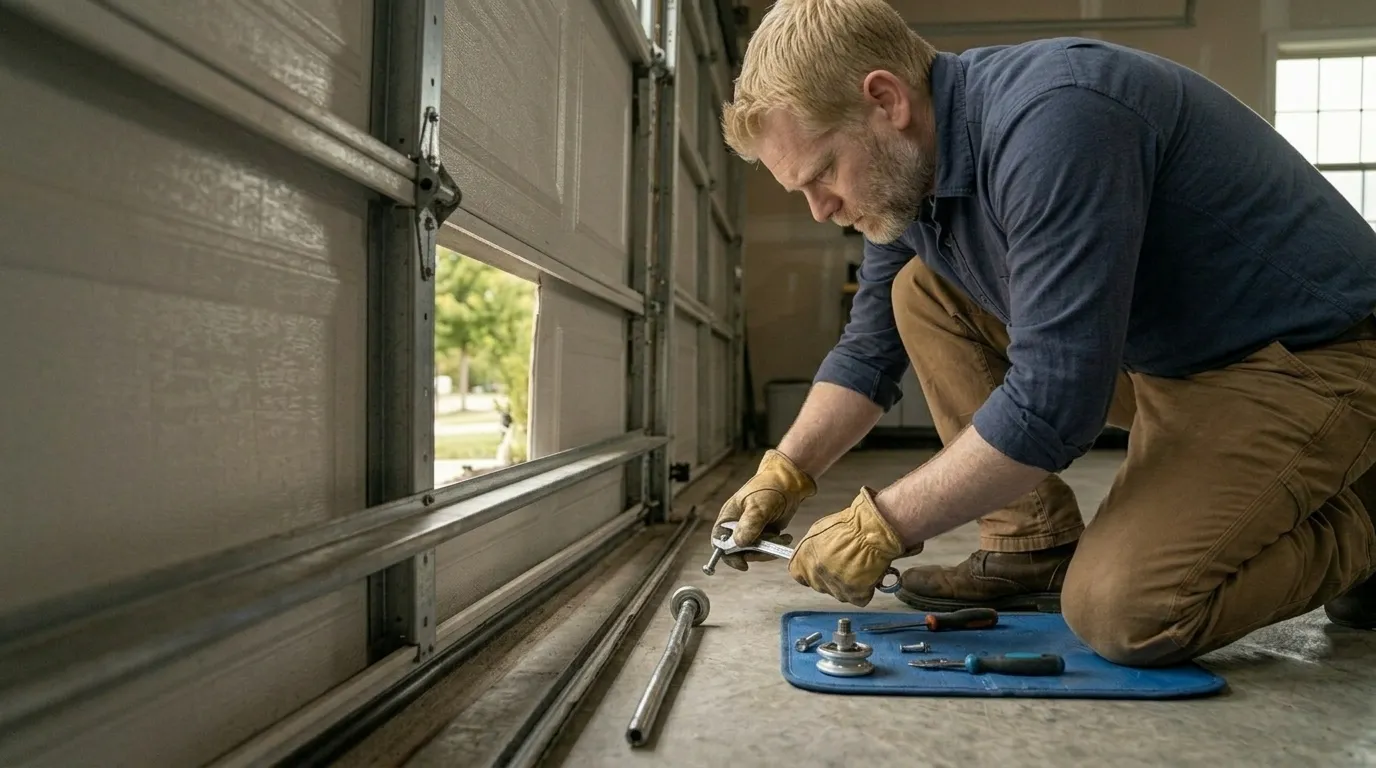
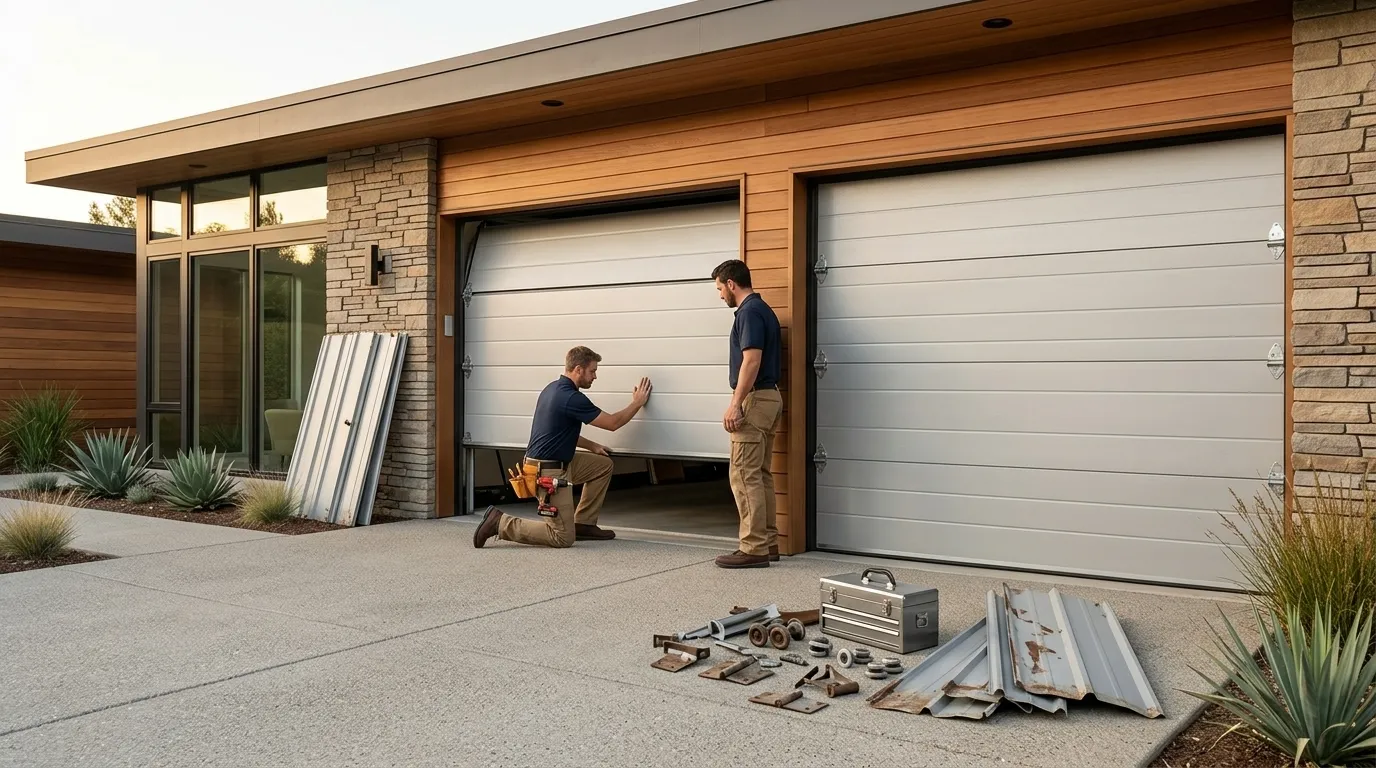
A standard maintenance visit covers the mechanical parts that carry load and see friction: torsion spring tension, cable condition, roller and hinge lubrication, track alignment, and the opener's force and travel-limit settings. On a lot of the older stock in this area - doors and openers dating back toward that 1958-1999 build window - we're also checking whether the hardware has been upgraded piecemeal over the years, since a heavier replacement panel on an old spring is a common mismatch we find.
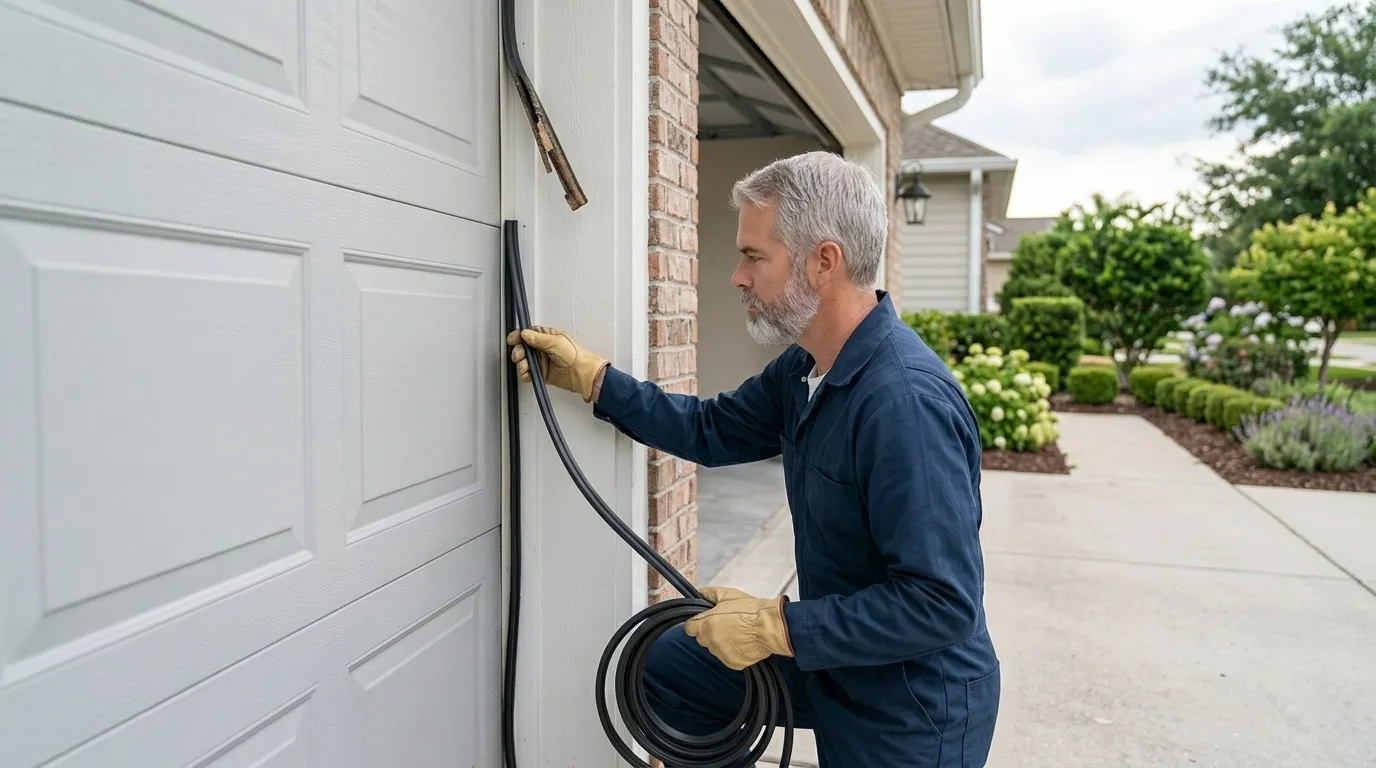
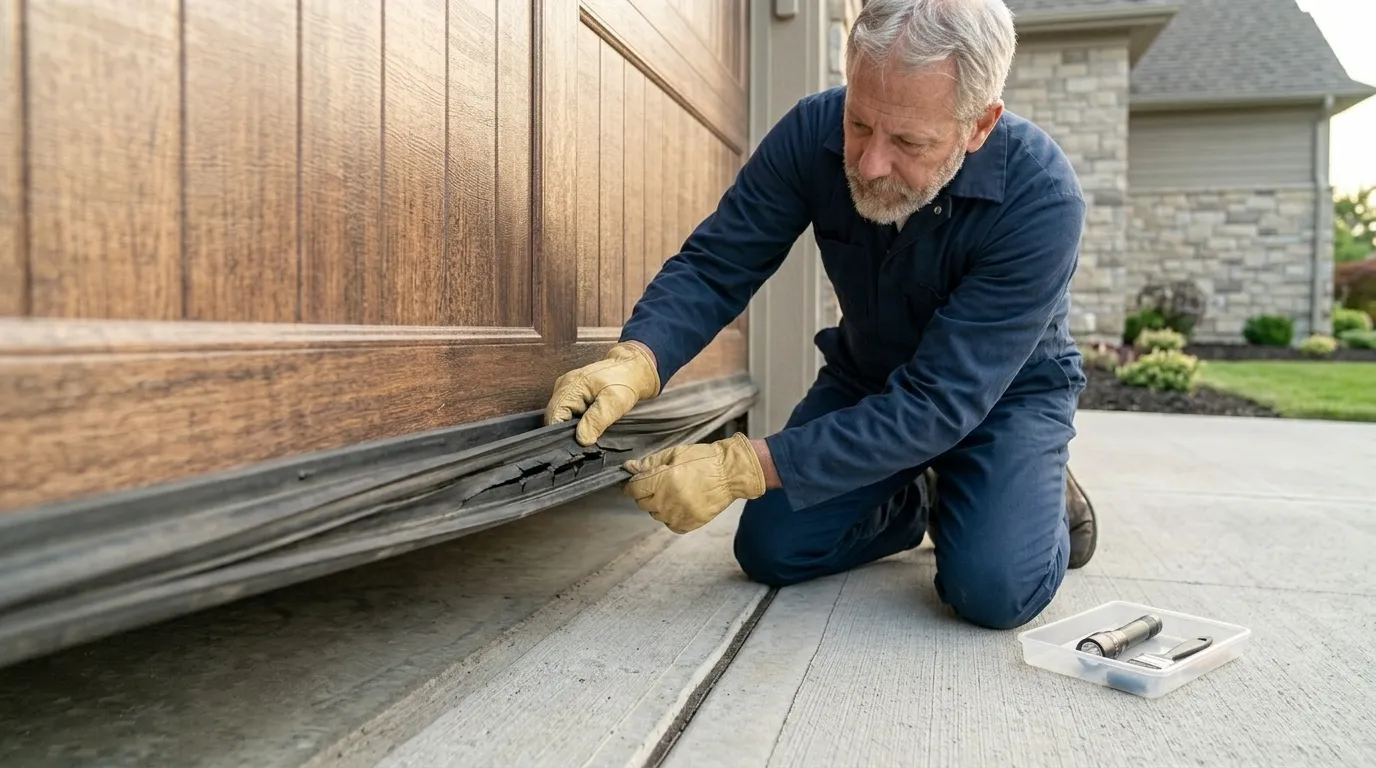
What maintenance doesn't do is replace a spring that's already failed or a cable that's already frayed through - at that point you're into a repair, not a tune-up, and we'll tell you plainly when that's the case rather than stretch a maintenance visit to cover it. Weatherstripping and seal checks matter more here than in a mild climate, since a gap at the bottom panel lets cold air and moisture into the space above a garage, which can affect anything stored or built against that wall. We're straightforward about which of these are worth doing every year and which can wait a season.