Why This Fails Locally
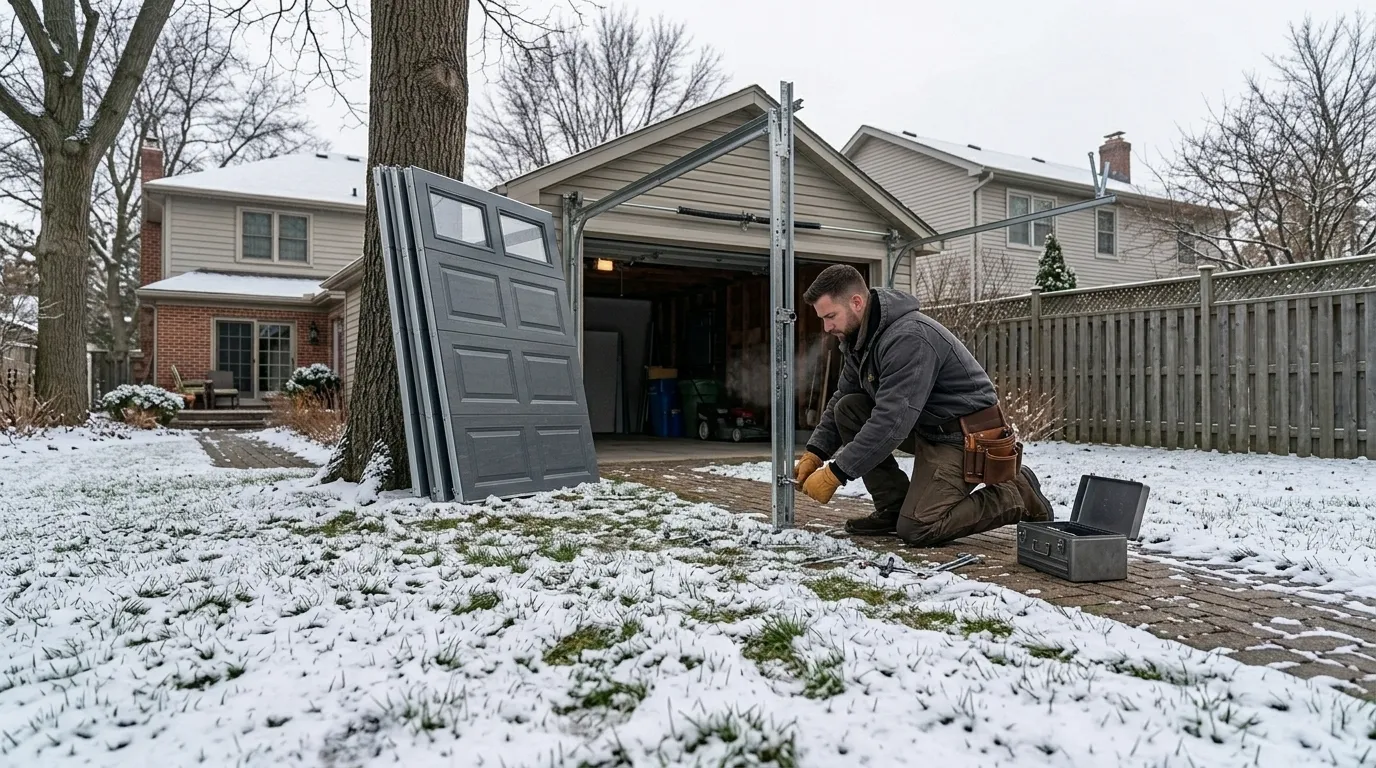
Most of the housing across this service area went up between 1958 and 1999, with the typical home dating to 1976. That matters because a steel torsion spring has a working life measured in cycles, not years, and springs installed when a house was built are now well past due whether anyone's touched them or not. Across the 37 communities we cover, the bulk of the stock is 1960s and 70s construction, which means original hardware sized for a lighter, uninsulated door than the heavier replacements a lot of owners have since put in without upgrading the spring to match. Add in a severe cold climate band and you get the failure mode that actually shows up on the truck: a spring that's held fine through a mild fall snaps outright the first hard overnight temperature drop, because cold steel loses flex right when the door gets used the most. This isn't a defect in any one door. It's the predictable result of era-appropriate hardware meeting decades of weather cycles it wasn't built to survive forever. Newer builds in the area don't see this nearly as often - it's the older stock doing the work.
The Symptom
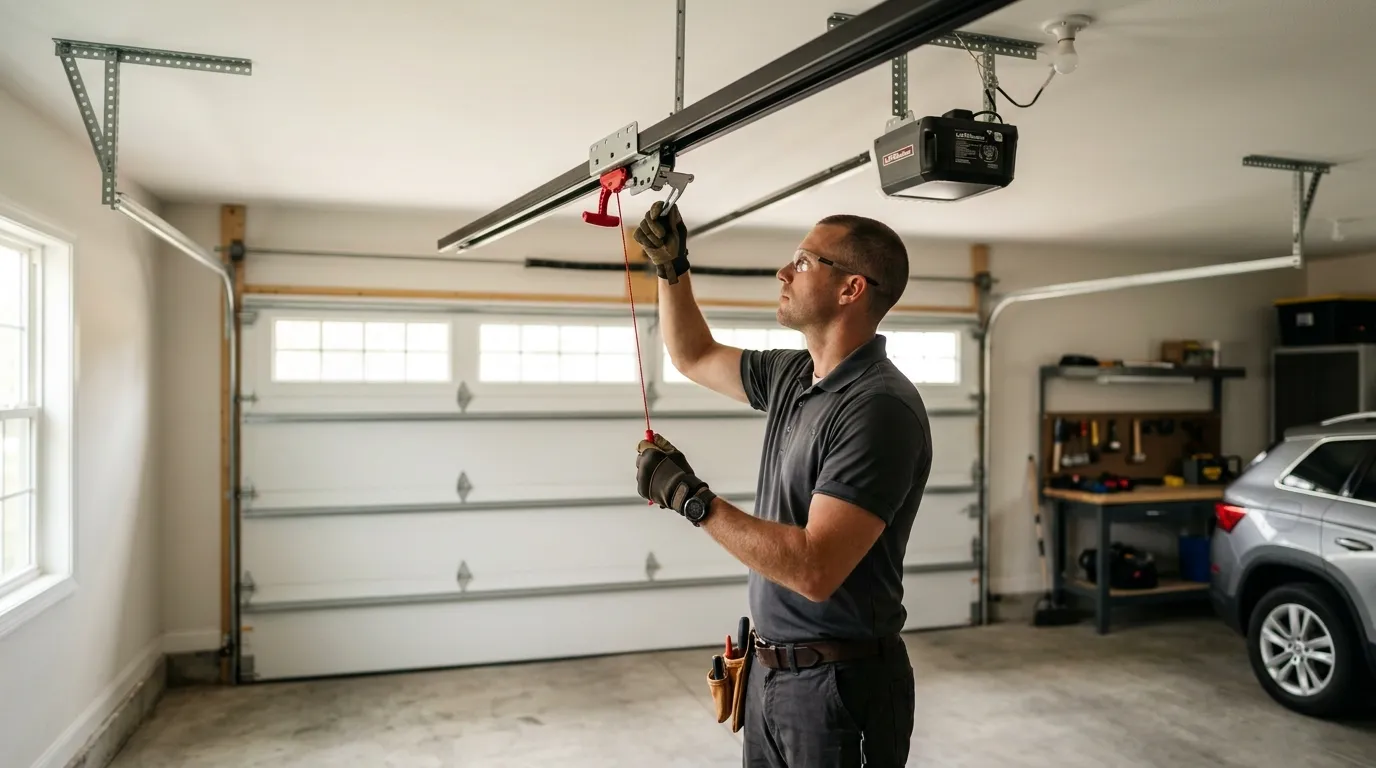
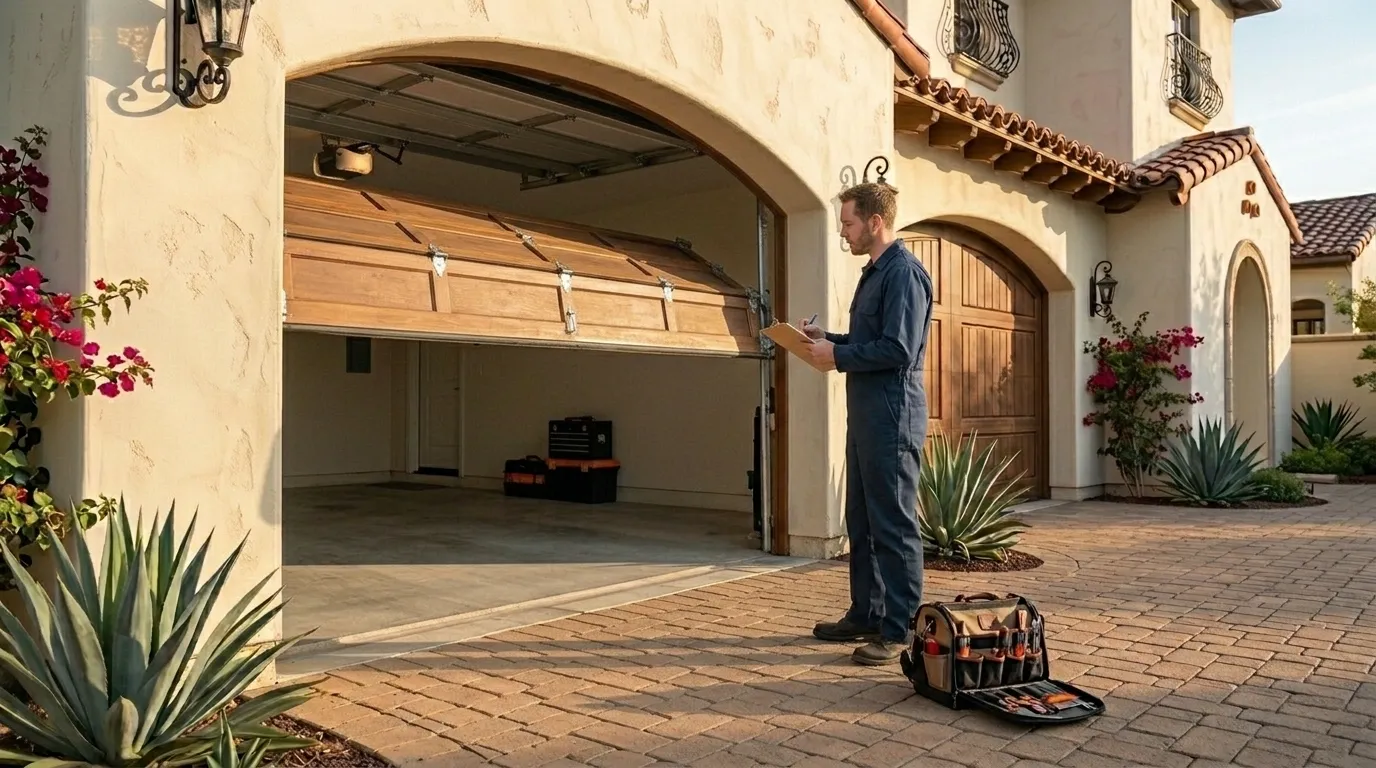
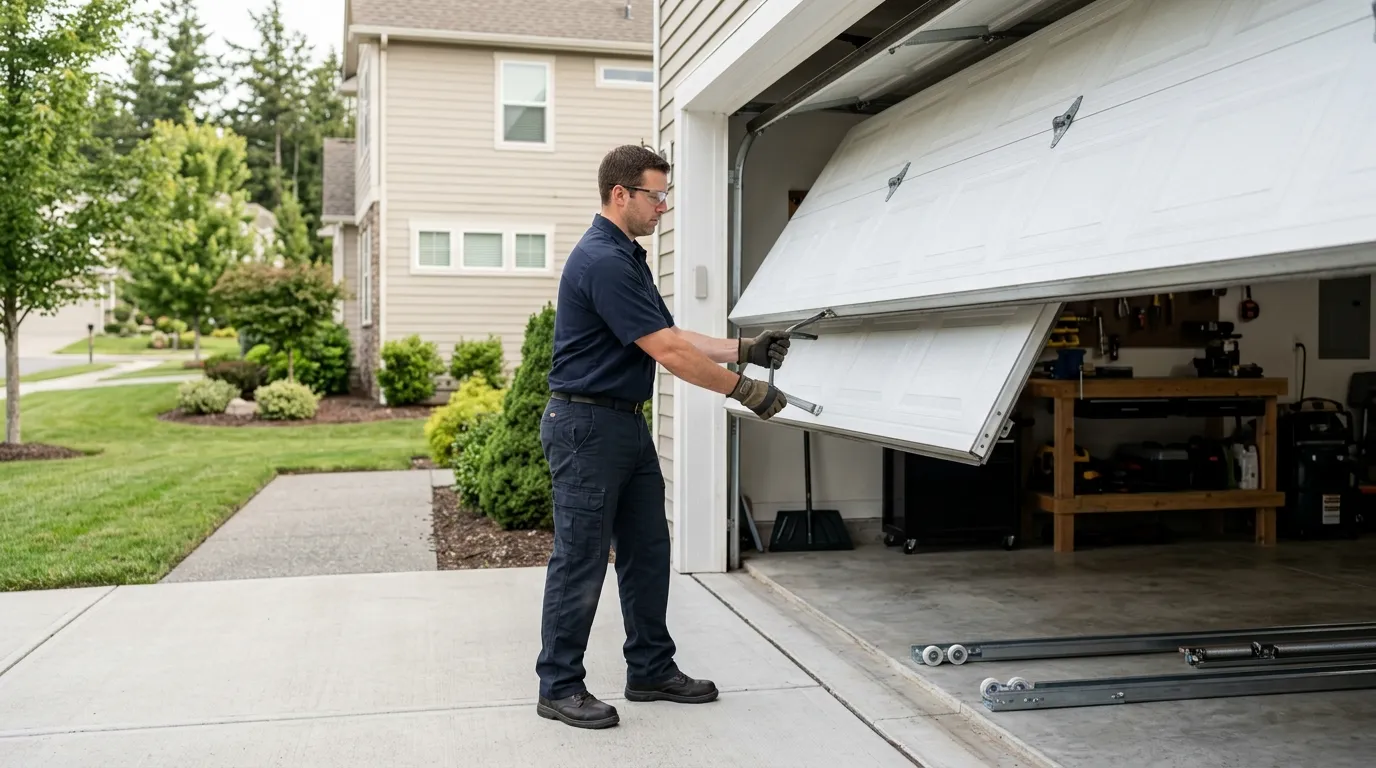
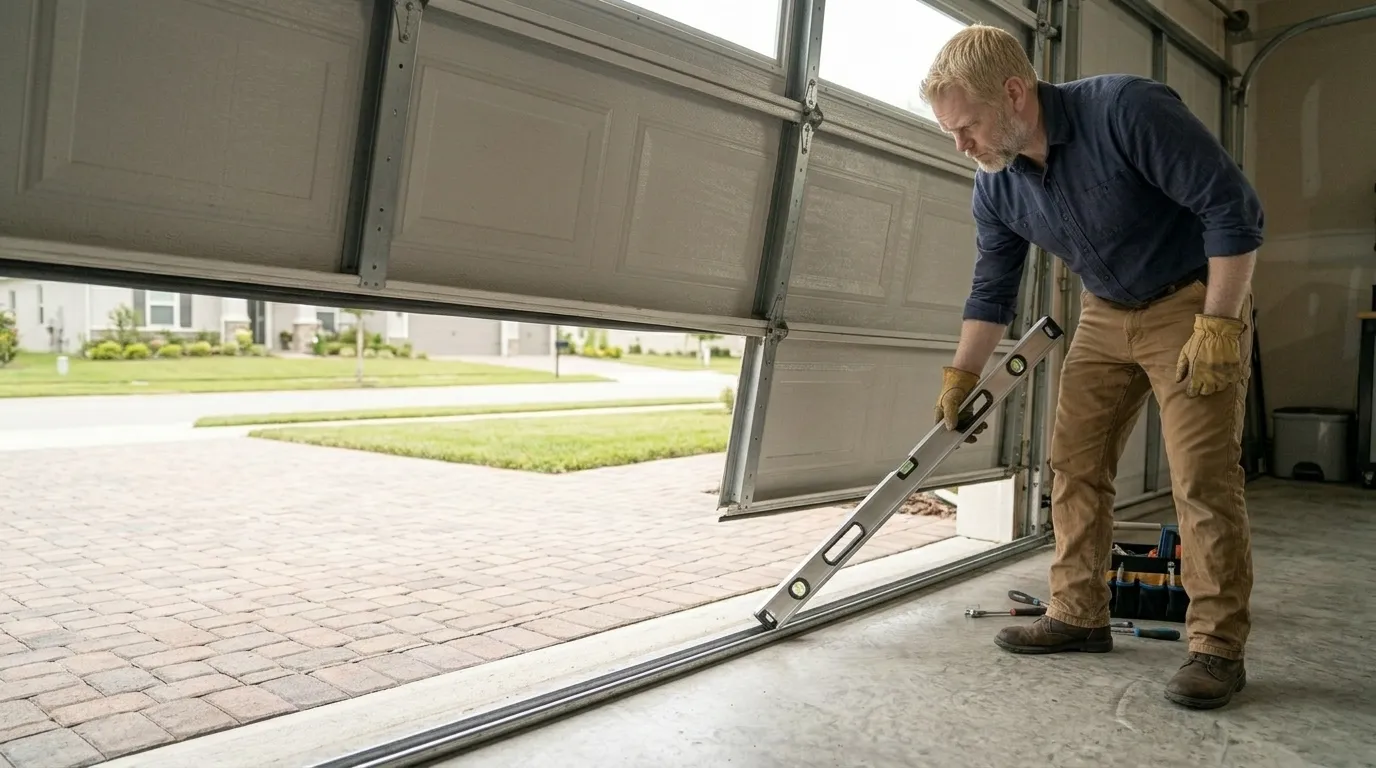
The call usually starts one of a few ways. The door won't budge and the opener motor just hums or clicks without moving the panel - that's a broken spring taking the load off the cable system, not a motor problem. Or one side of the door hangs lower than the other, sometimes with a visible gap, which points to a snapped cable or a spring that's let go on one side of a two-spring setup. Sometimes it's a loud bang from the garage first, then nothing works - that bang is very often the spring itself failing under tension. Less dramatic but just as common: the door starts moving, jerks, and stops partway, which usually means a cable has come off a drum or a roller has left the track. None of these are cosmetic. A door under uneven spring tension is heavy, unpredictable, and not something to force open by hand or with the opener's manual release while you wait.
What the Repair Takes
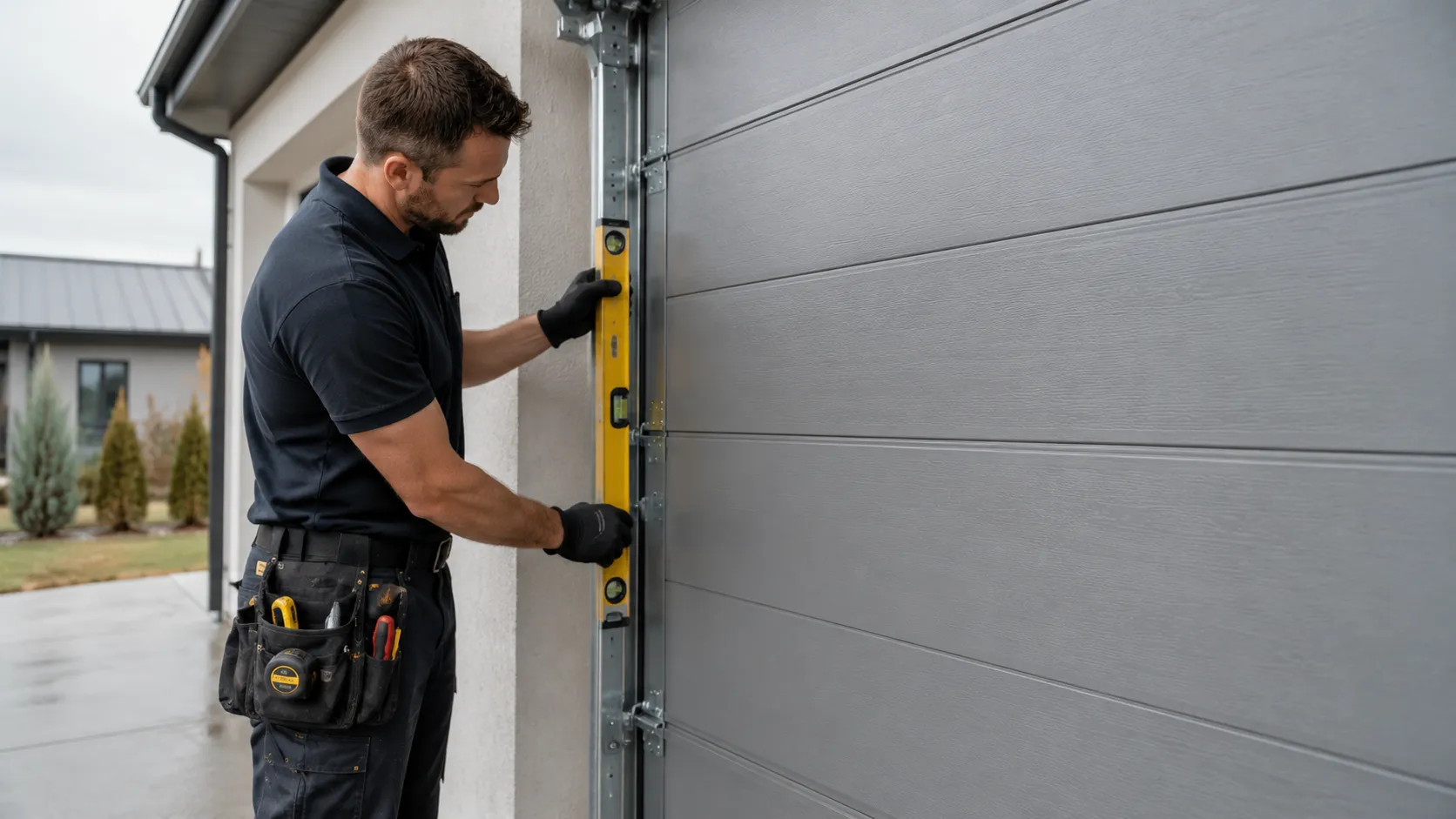
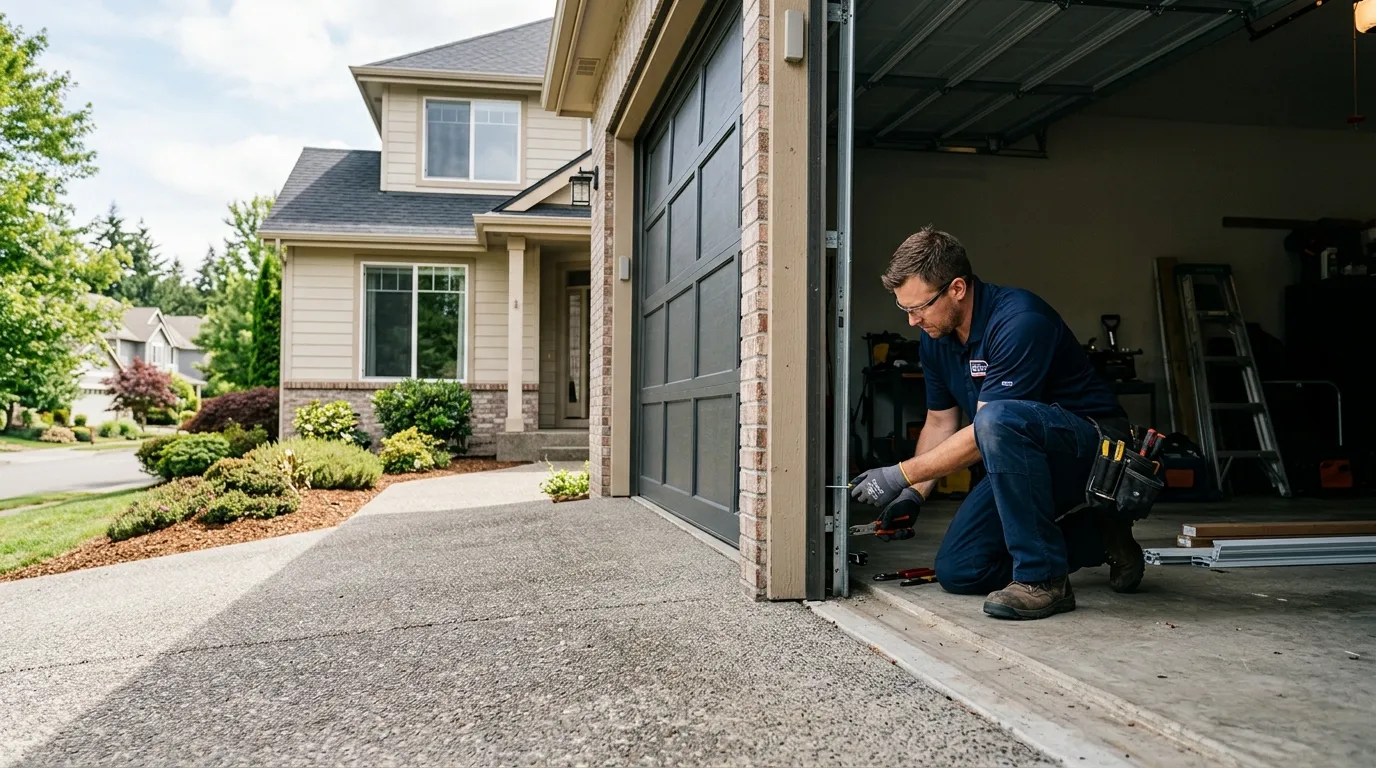
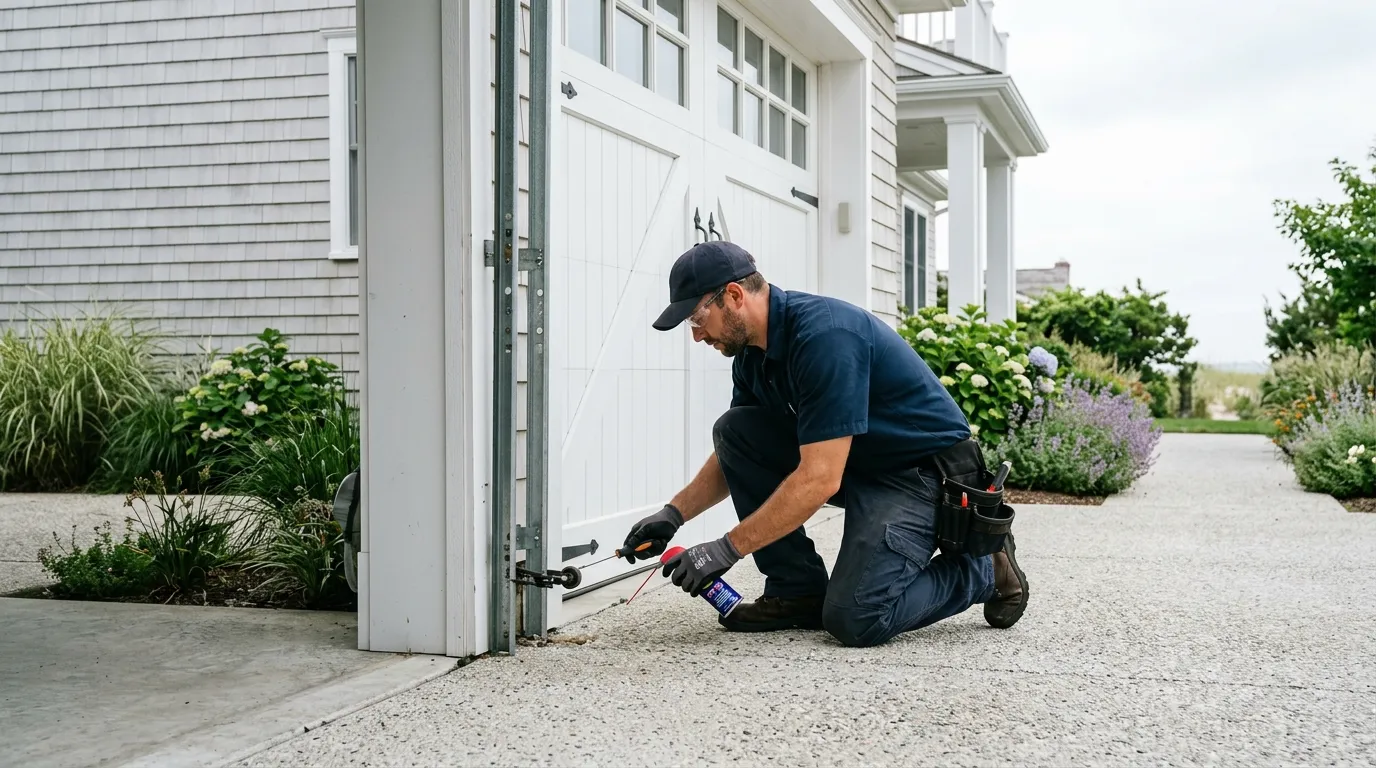
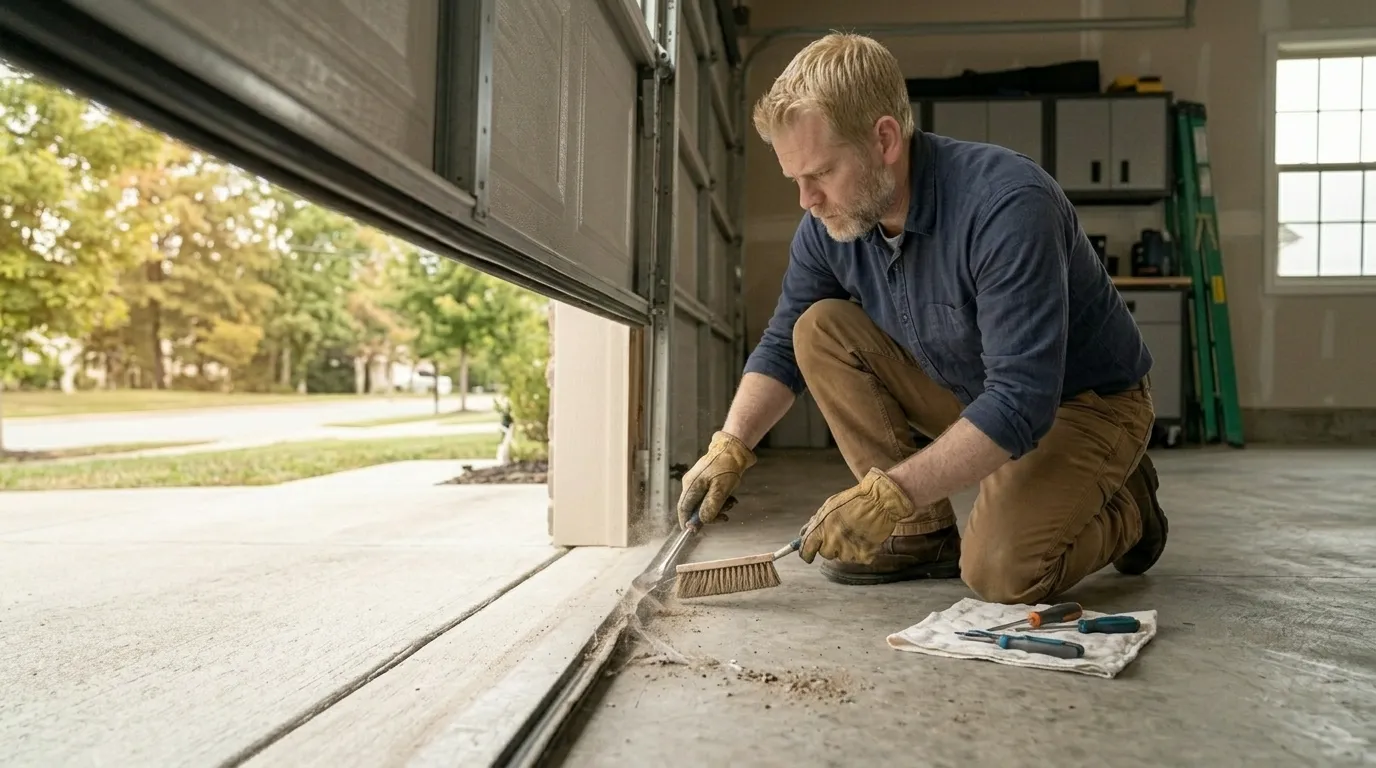
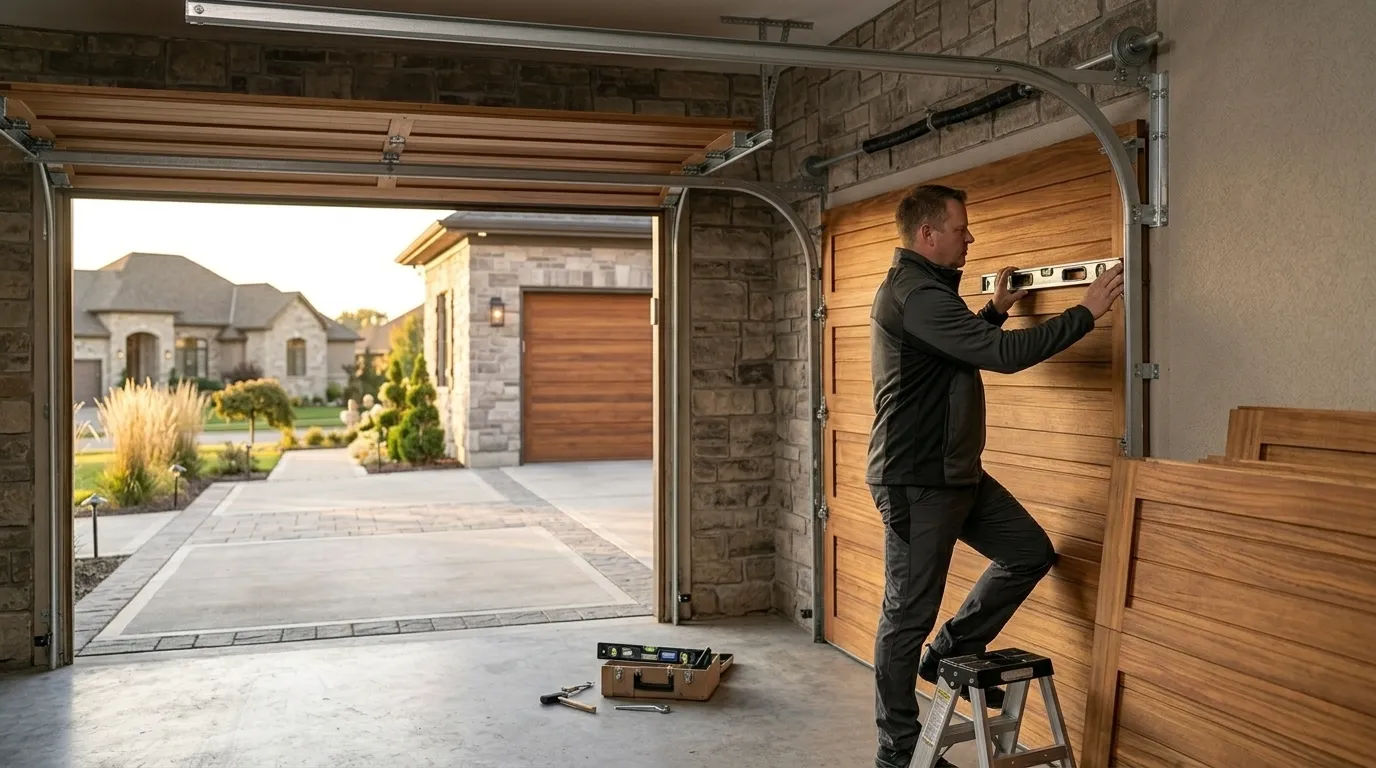
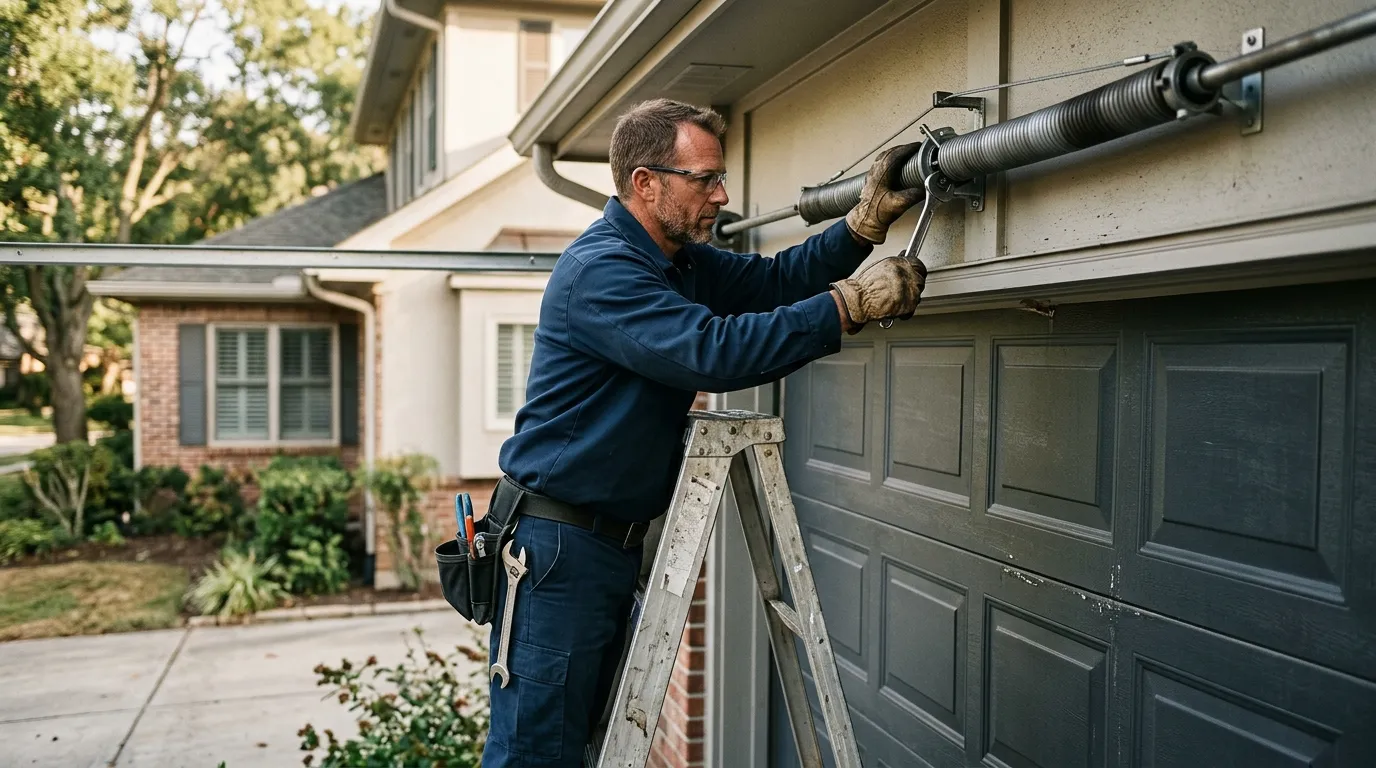
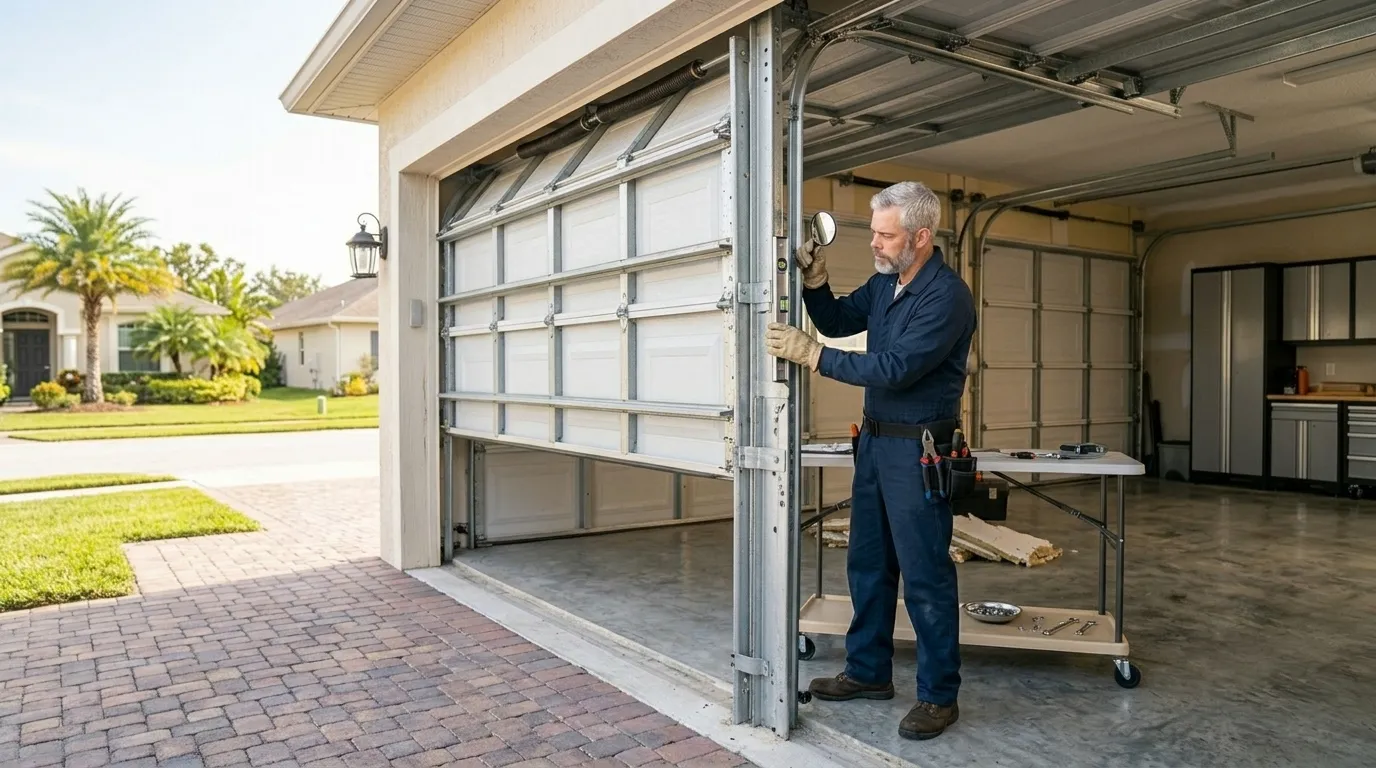
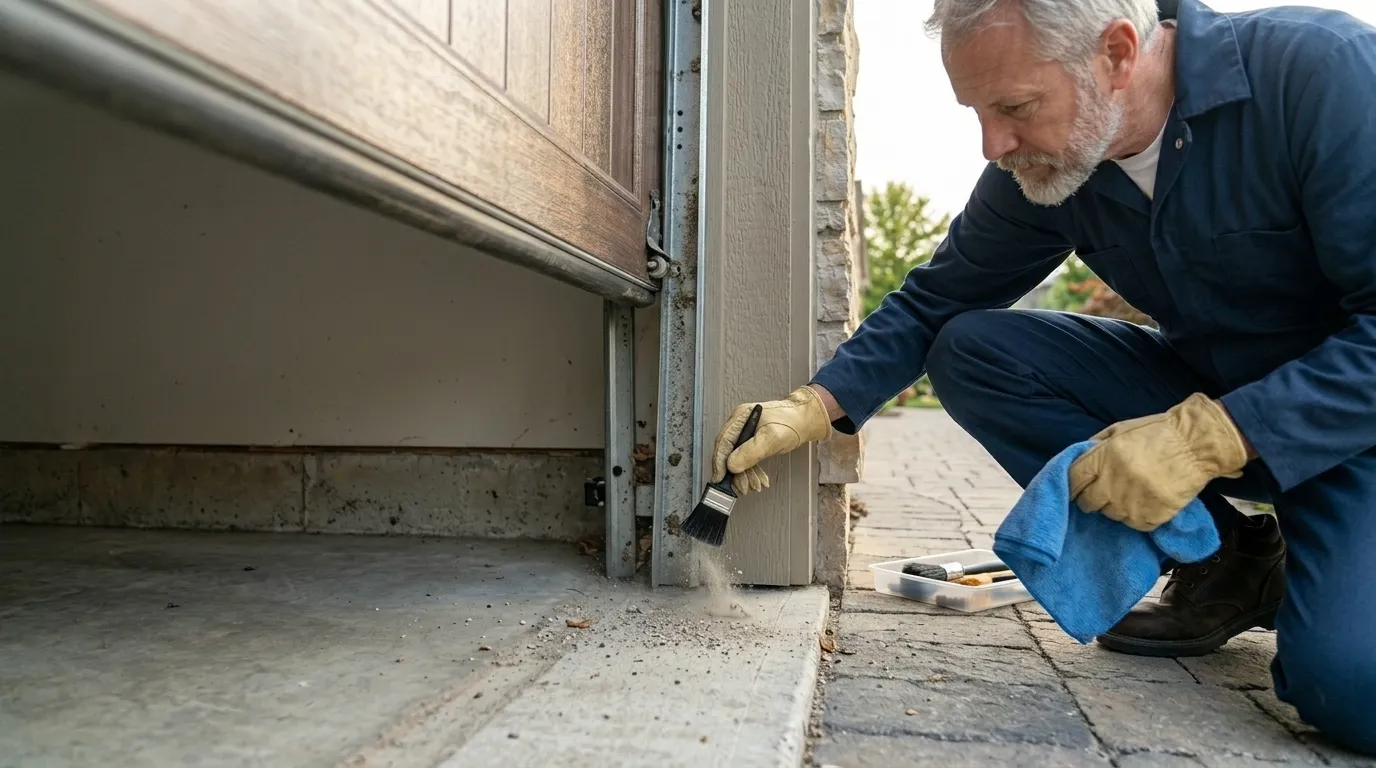
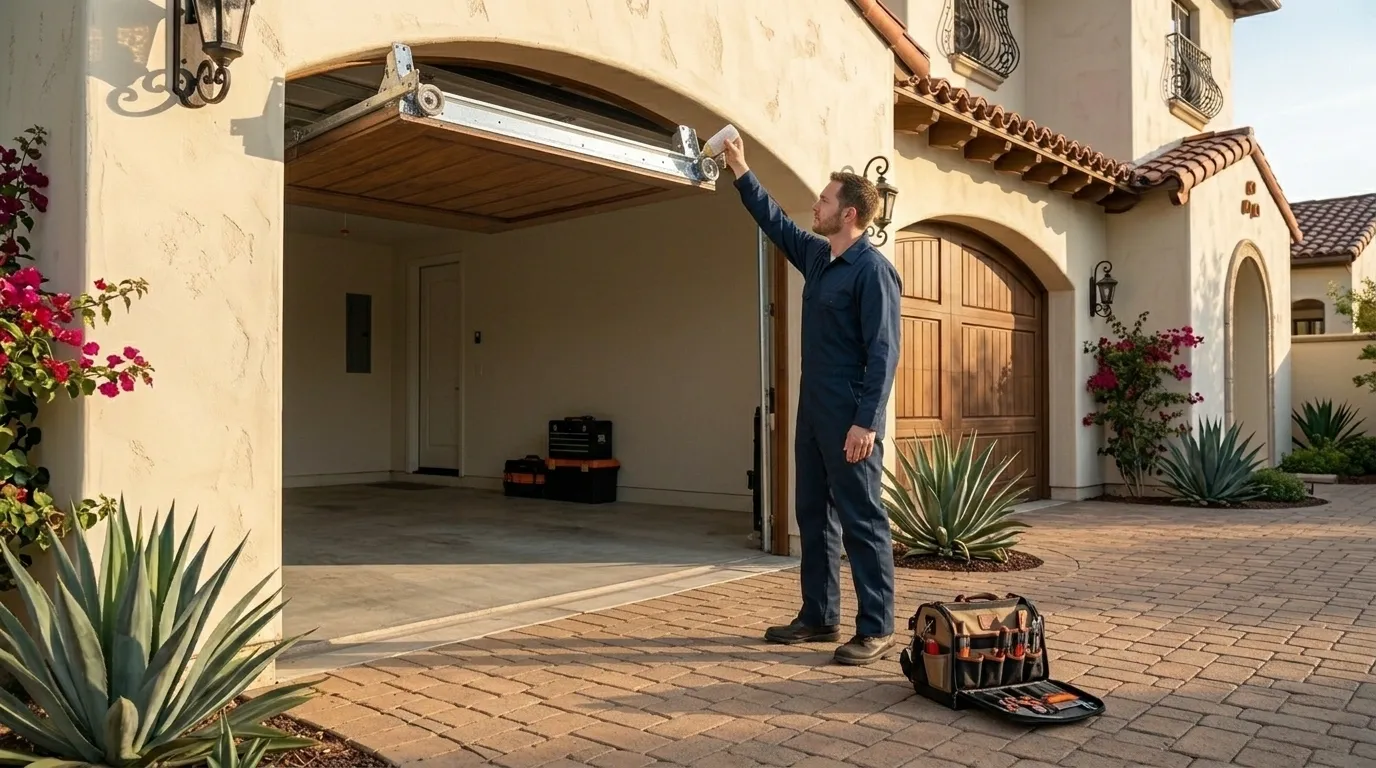
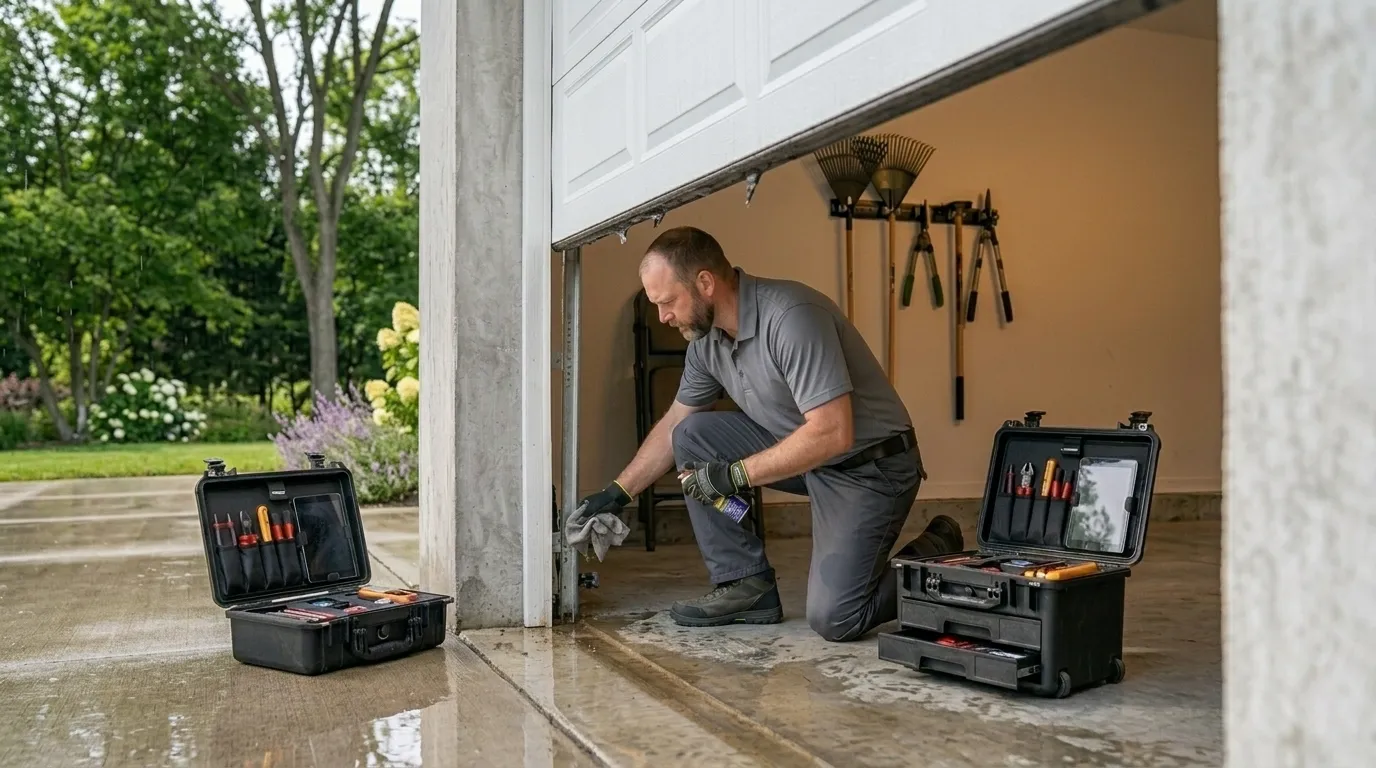
A standard torsion spring replacement means unwinding the broken spring safely under tension, swapping both springs as a pair even if only one failed, and checking the cable, drums, and rollers while the door's already open for that. If a cable snapped, it gets replaced along with an inspection of the drum it ran on, since a frayed cable often means the drum has a burr causing the wear. For a door that's jumped track, the fix is re-seating the rollers and checking the track alignment - bent track from a hard jolt sometimes needs straightening or a section swapped rather than just re-hung. Given the climate band this area sits in, we size replacement springs for the temperature swings the door actually sees here, not just what matches the broken one, since a spring rated thin for summer use is the same one that snaps first on a cold night. None of this is a guess-and-check job - torsion springs under load are dangerous to handle without the right winding bars and clamps, which is the honest reason this isn't a weekend DIY fix for most owners.