Why This Fails Locally
Most houses in the West Bend service area went up between 1958 and 1999, with the median build year sitting around 1976. That means a lot of openers out there are either original units nobody's touched since installation, or first-generation replacements put in during the 1990s remodel wave. Either way, the chain drives, capacitors, and logic boards inside them were built for a different era of hardware tolerances.
Pile on a climate band that runs severe cold for a real chunk of the year, and you get a specific failure pattern: grease inside the drive gear housing stiffens, start capacitors lose their kick trying to push a cold-stiffened spring system, and photo-eye sensors drift out of alignment as slab and header settle with the freeze-thaw cycle. This isn't a hypothetical - it's the mechanical reality of pairing 40-to-60-year-old housing with hard winters. A door that worked fine in September starts hesitating, then grinding, then quitting outright by January.
Across the 37 named communities this service area covers, the pattern repeats because the housing timeline repeats. It's not one bad batch of openers - it's the age of the stock plus the climate doing what age and climate do.
The Symptom
The complaint we hear most is some version of: the opener motor runs, you hear it humming or clicking, but the door doesn't move - or it moves an inch and stops. Sometimes the light blinks a set number of times and nothing else happens. Sometimes the remote works from ten feet away but not from the driveway, which usually points to a receiver going bad rather than the remote itself.
In colder stretches, a common variant shows up: the door works fine by afternoon but won't budge on the first cold try of the morning. That's a start capacitor or a gear set that's lost its tolerance for cold-stiffened lubricant - not a spring problem, and not something WD-40 fixes for more than a day.
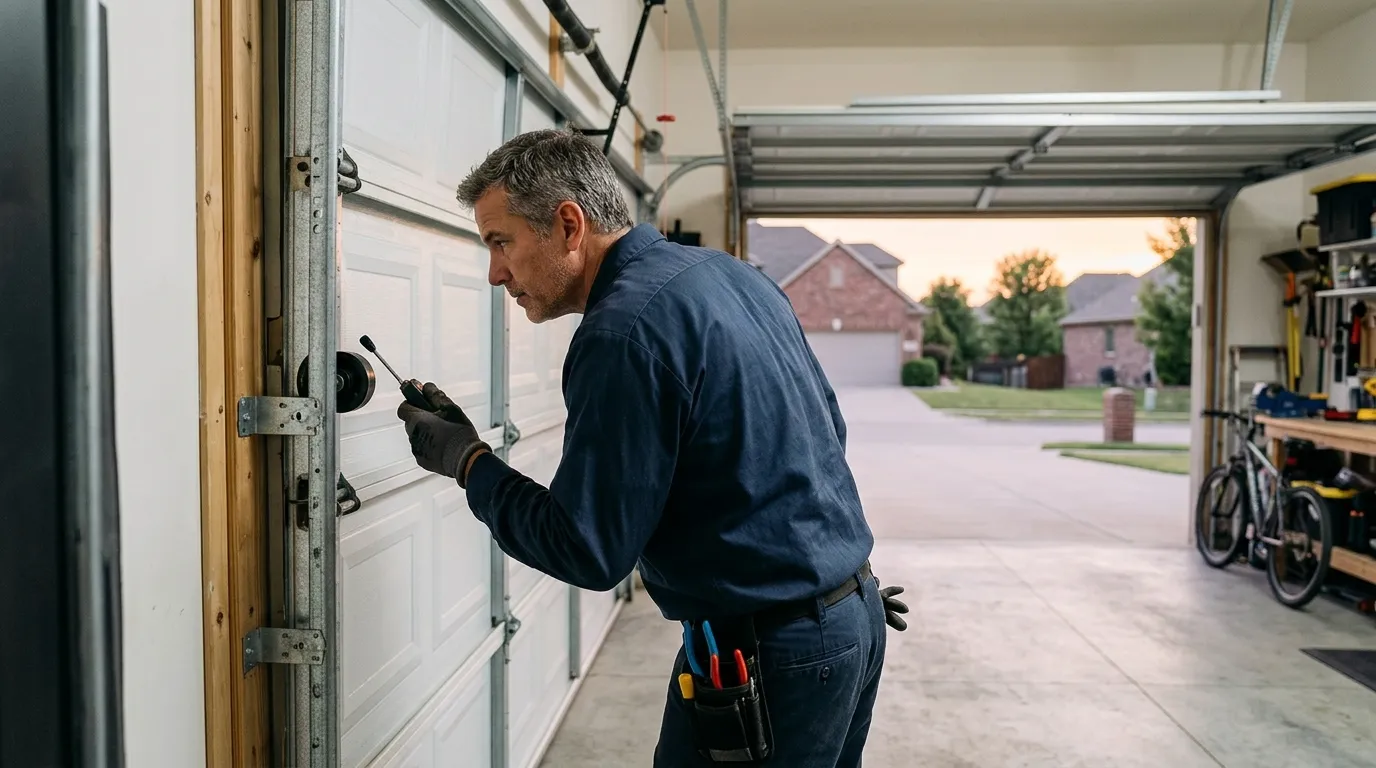
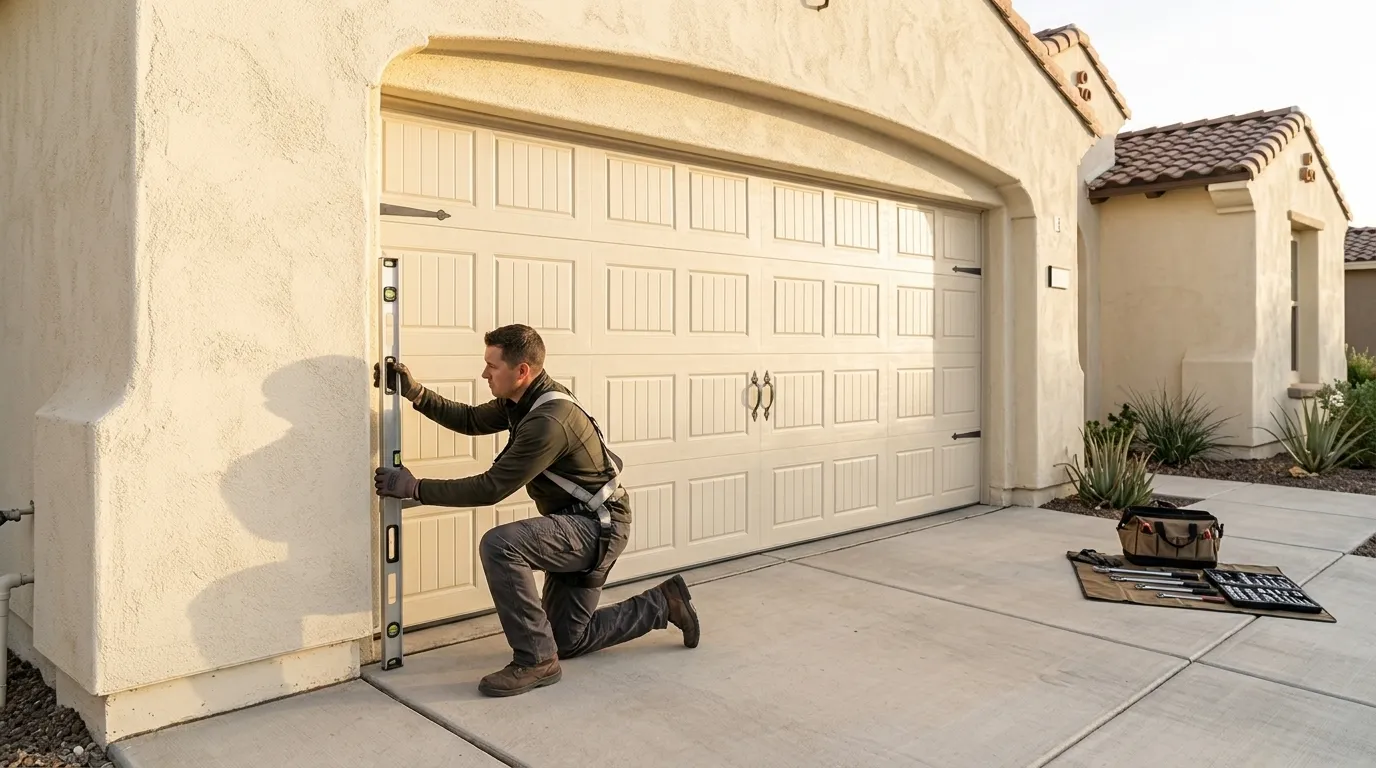
Another pattern on older units: the door reverses immediately after closing, like it hit something, even with a clear threshold. That's almost always a misaligned or fouled photo-eye sensor, and on houses with settled slabs, alignment drifts over years, not overnight.
What the Repair Takes
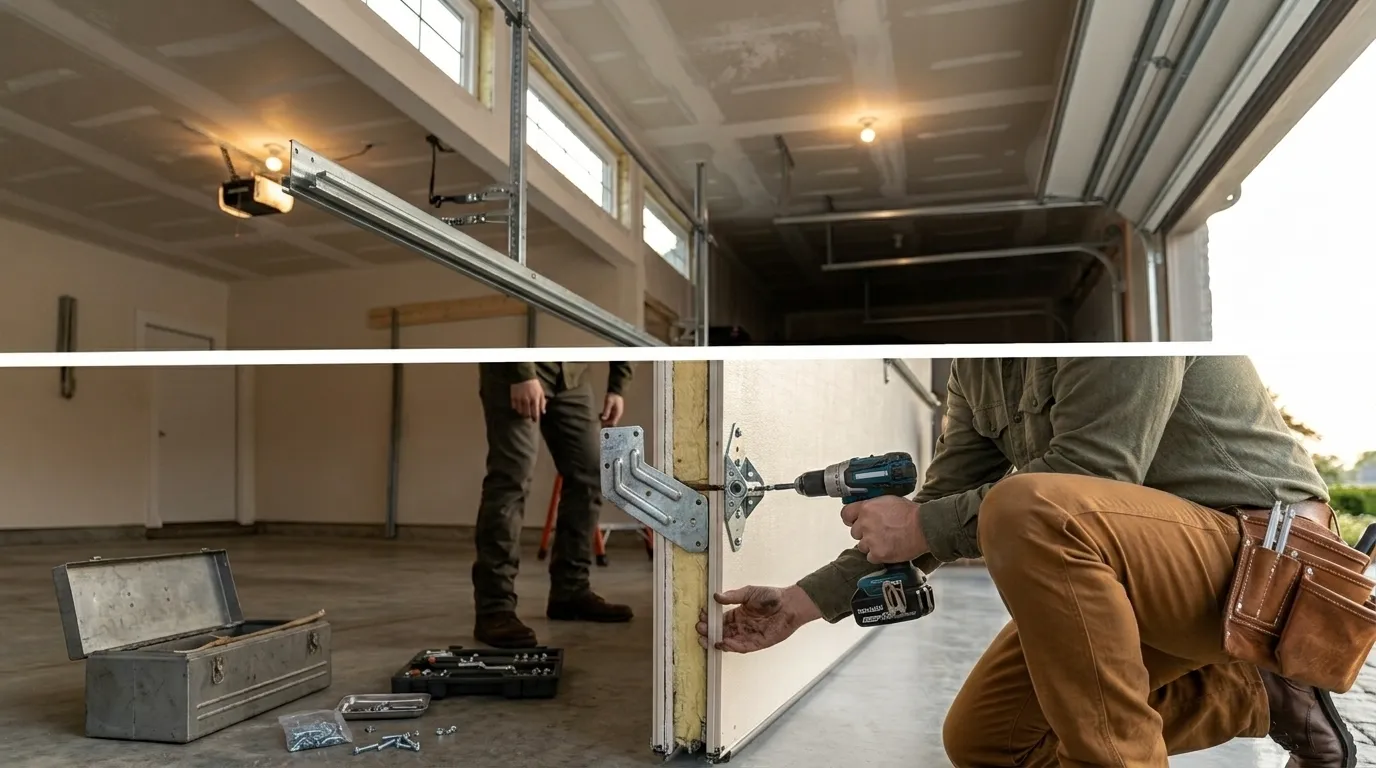
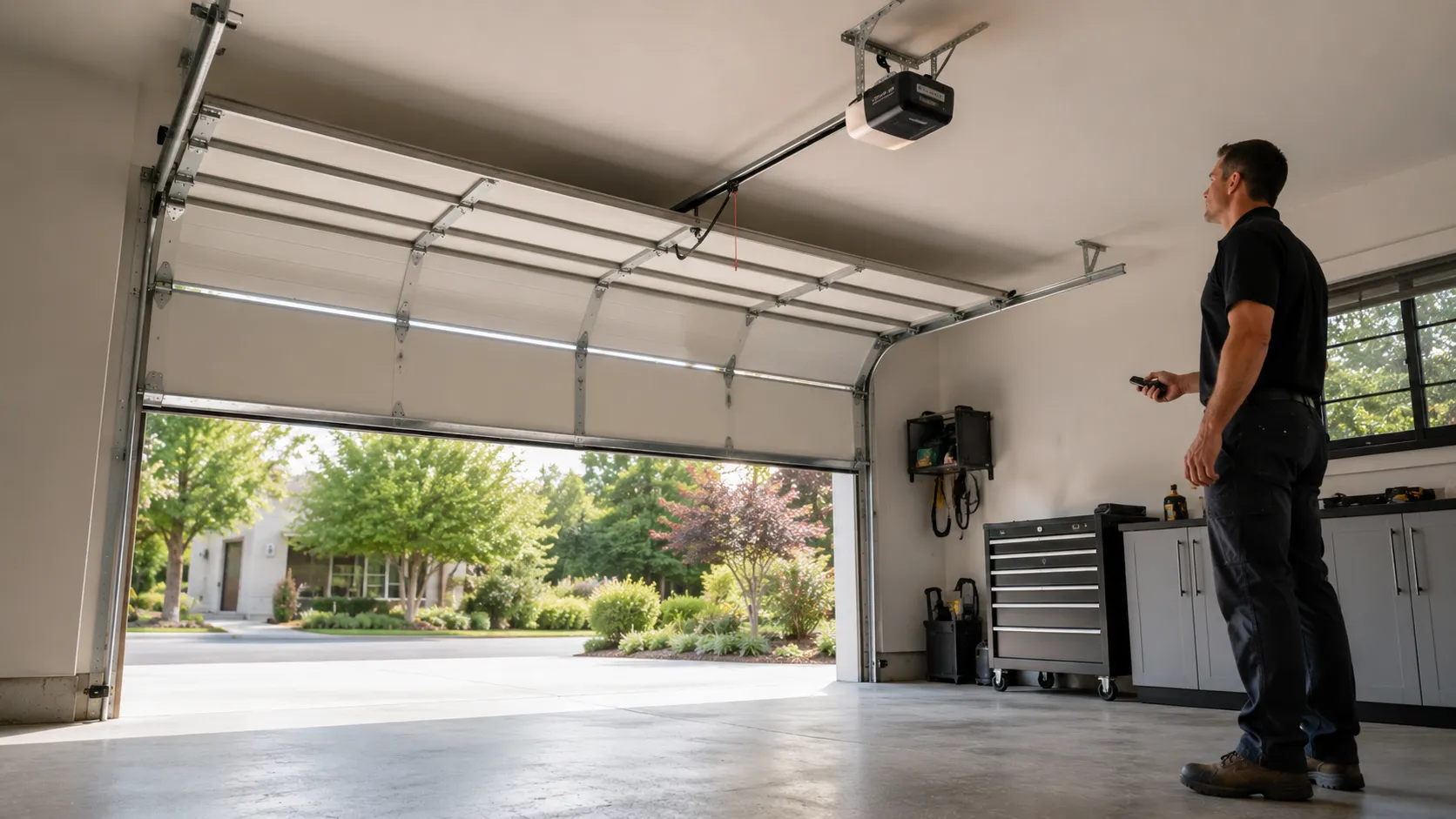
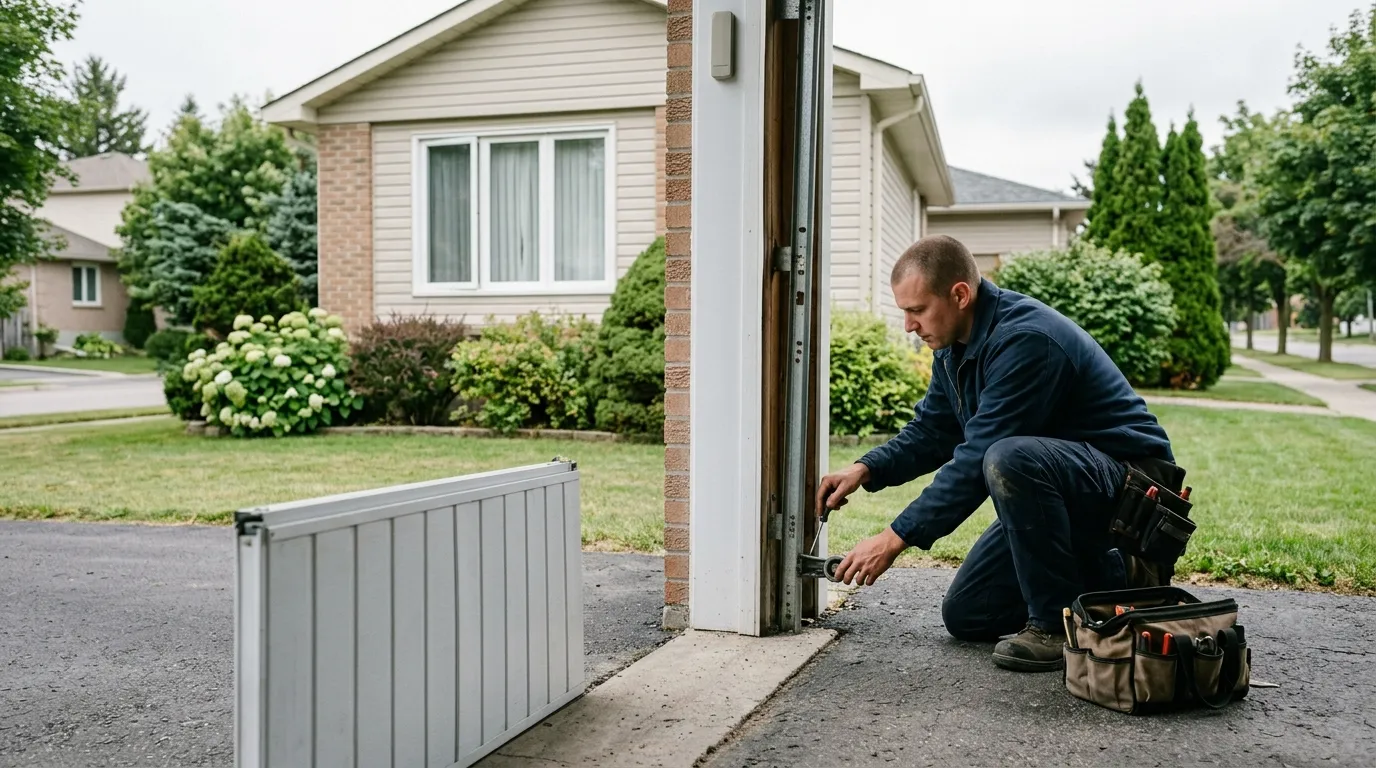
A proper opener repair starts with running the unit through its full cycle and watching where it stalls - motor engagement, drive gear travel, limit switch contact, sensor beam. That tells us whether we're dealing with a mechanical failure (stripped gear, worn drive belt or chain), an electrical one (capacitor, logic board, wiring), or a sensing one (photo-eye alignment, wiring to the eyes).
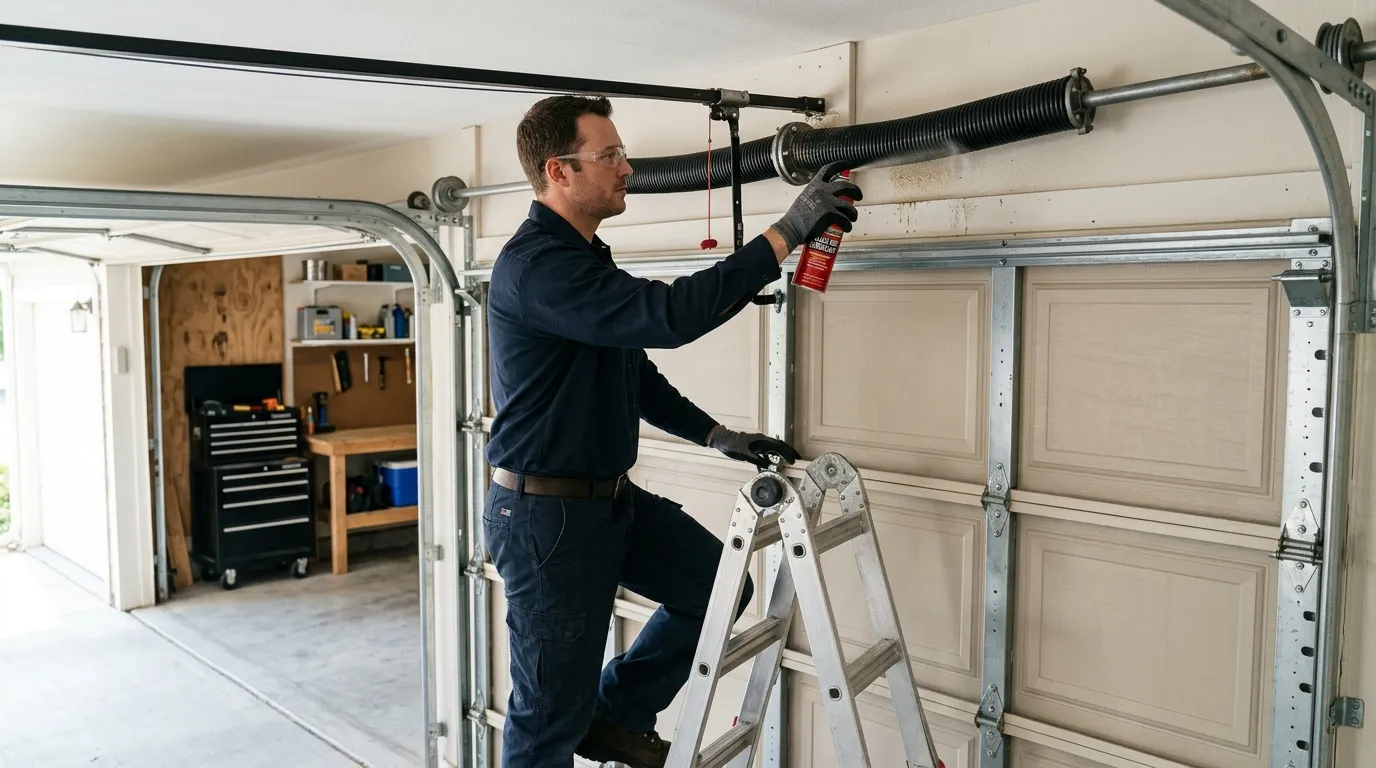
On the older openers common in this service area's housing stock, the drive gear and capacitor are the two parts that fail most, and both are straightforward swaps once we've confirmed that's the actual fault rather than a symptom of something upstream, like a spring that's making the opener work harder than it should. We check spring tension as part of any opener call, because an opener straining against an out-of-balance door will burn through replacement parts at the same rate as the one it replaced.
We don't guess and swap parts hoping one fixes it. We diagnose first, quote what we find, and only replace what's actually failed.