Why This Fails Locally
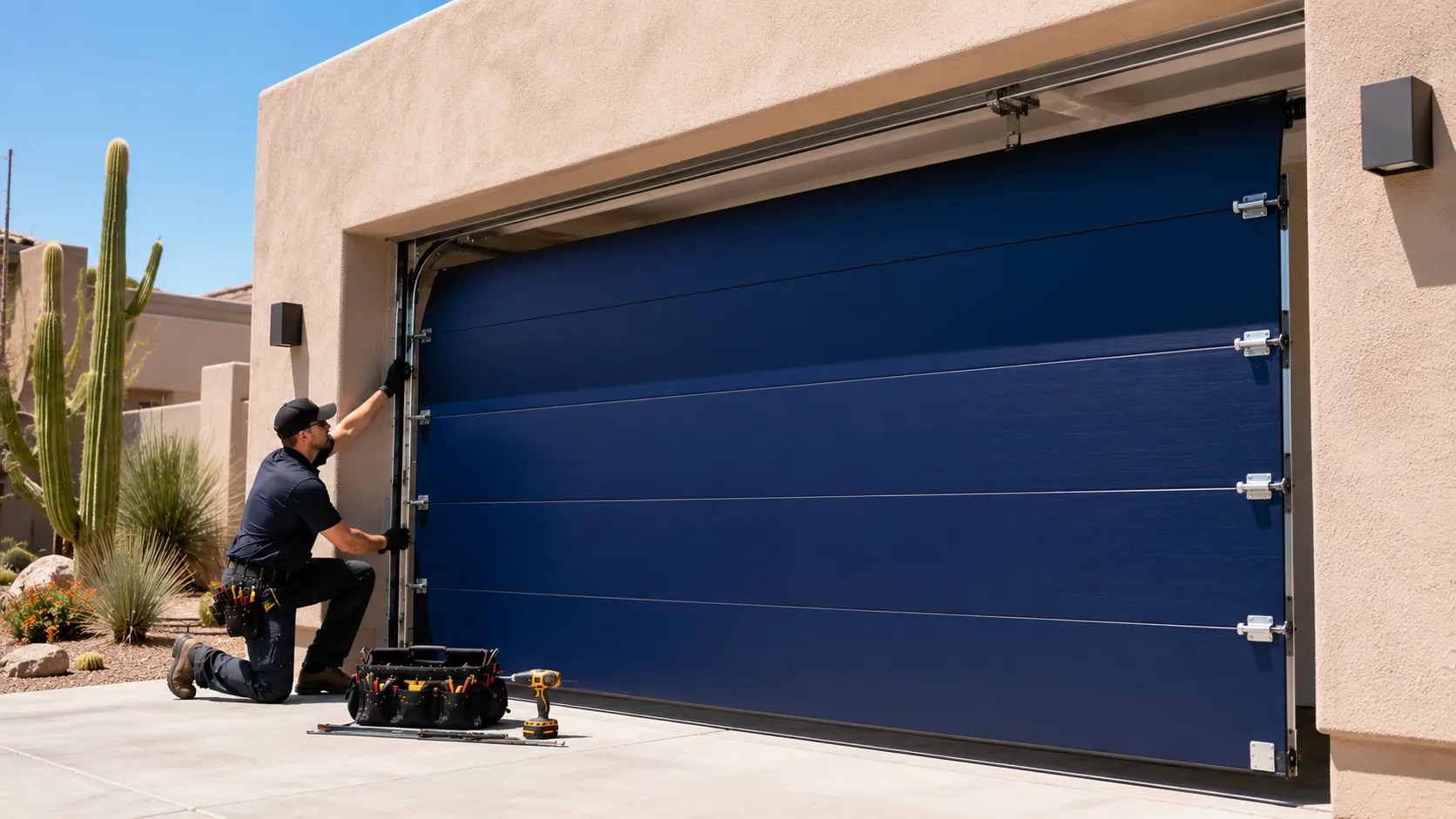
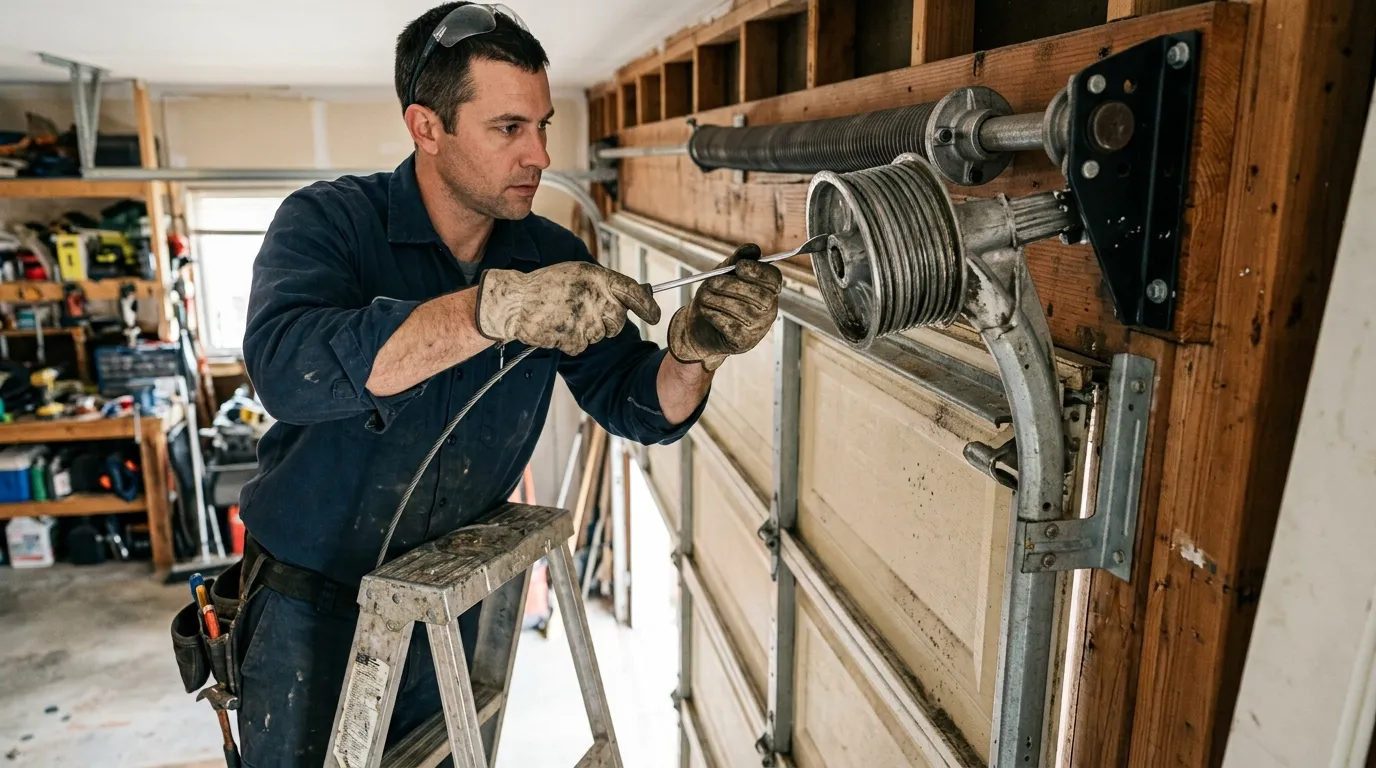
Slinger sits seven miles out from our West Bend shop, and that drive shapes how we schedule the job, not how fast we get there. What actually matters is what's behind the door once we arrive. The median home here was built around 1993, a good fifteen to twenty years newer than the typical house across the wider service area. That gap matters. Houses from the early '90s came with steel doors on wound-drum or torsion setups paired with chain-drive or early screw-drive openers, plenty of which are original equipment still running on 30-year-old capacitors and worn nylon gears. The failures we see here skew toward tired opener logic boards and drum cable stretch rather than the ancient one-piece doors and side-mount hardware we find on older stock elsewhere in the area. Add in a cold, severe winter climate, and steel panels this age start showing bottom-section rust and hardened weatherseal that cracks instead of flexing. None of that is a Slinger-specific defect - it's just what a 30-year-old door does in this climate when nobody's touched the hardware since it was installed.
How to Book
Call and tell us it's Slinger - that's enough for us to plan the truck for the drive out. We don't keep a branch or drop-off counter in town; every job here is dispatched from West Bend, so give us a clear description of what the door is doing (won't open, off track, loud on the way down) so we can bring the right springs and cable stock the first trip instead of a second one. If you can, have the model plate off the opener motor ready - most of the openers we replace out here are 1990s chain-drive units, and knowing the model saves us a return visit for the wrong bracket. You can also start the request through our Slinger service page.
Can You Do This Yourself
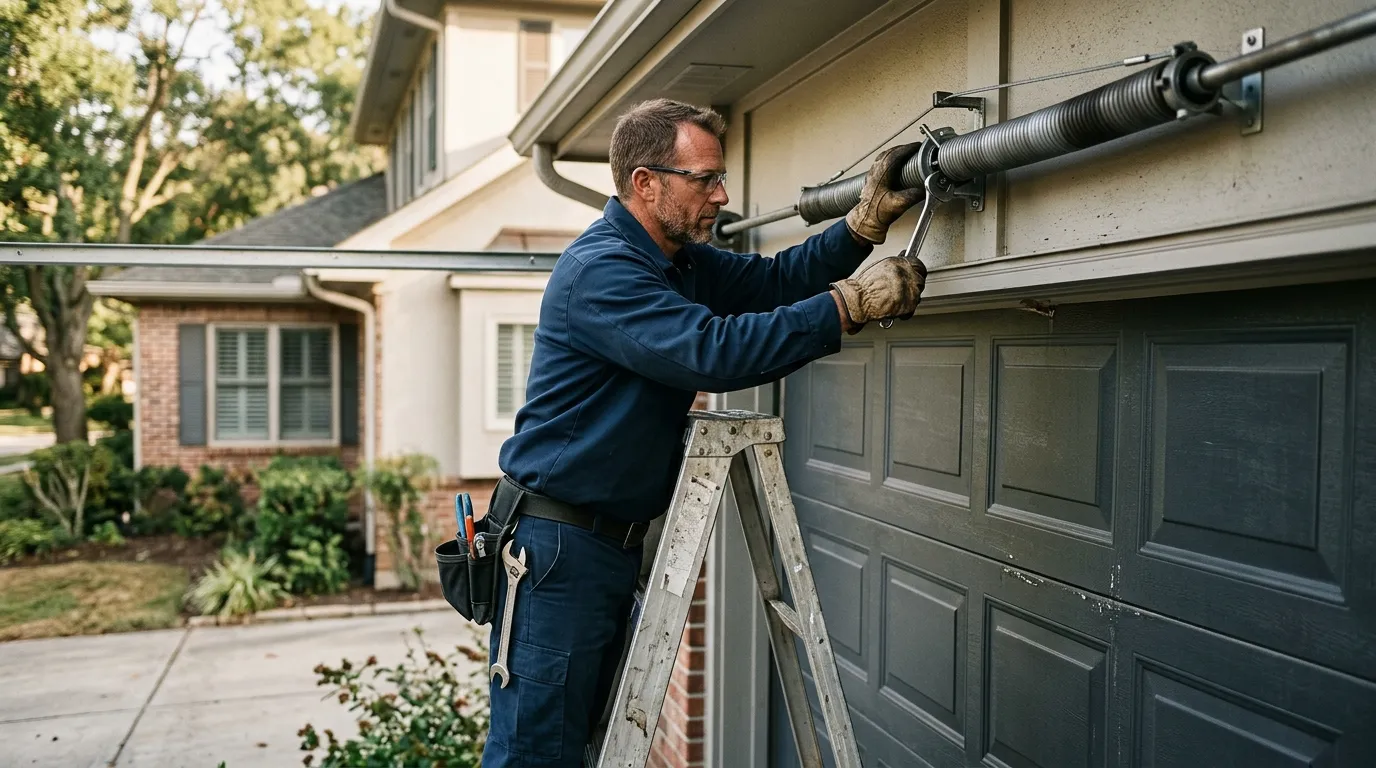
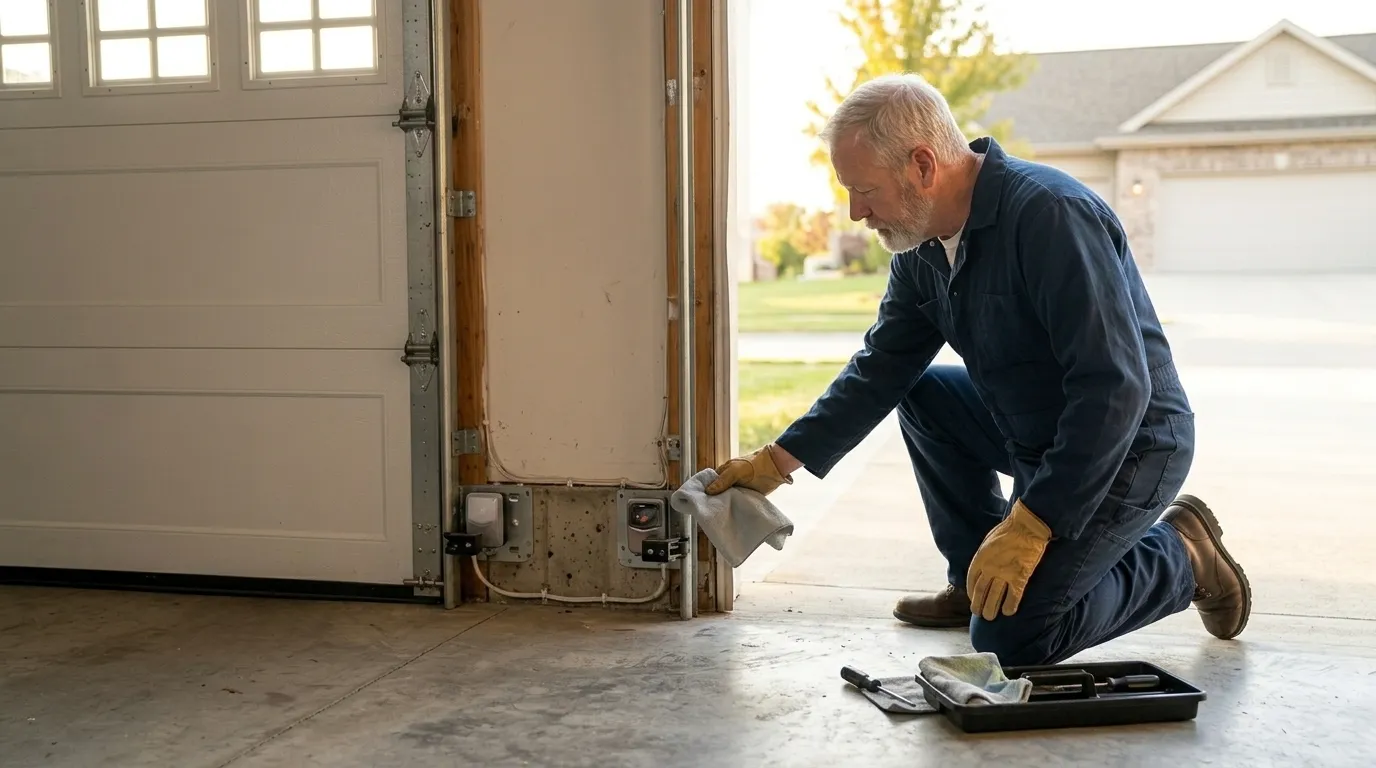
Lubricating hinges, tightening loose track bolts, and swapping worn weatherseal are reasonable weekend jobs on a door this age, and we'd rather you do those than call us for them. Torsion springs are a different matter - the spring is under enough stored tension to break a wrist or worse, and it takes the right winding bars and a correctly sized replacement spring, not a universal one off a shelf. If the opener itself is dead, checking the wall switch, the wall outlet, and the safety sensors first can save you a trip charge; a lot of