Why This Fails Locally
Slinger's median household income sits at $99,457, well above the wider service area's $88,634, and that number matters more here than in most of the towns we cover from West Bend. At that income level, the math on a failing door tips toward replacement faster than it does elsewhere - homeowners here aren't stretching a $400 repair budget, they're deciding whether a patch job is worth the hassle at all.
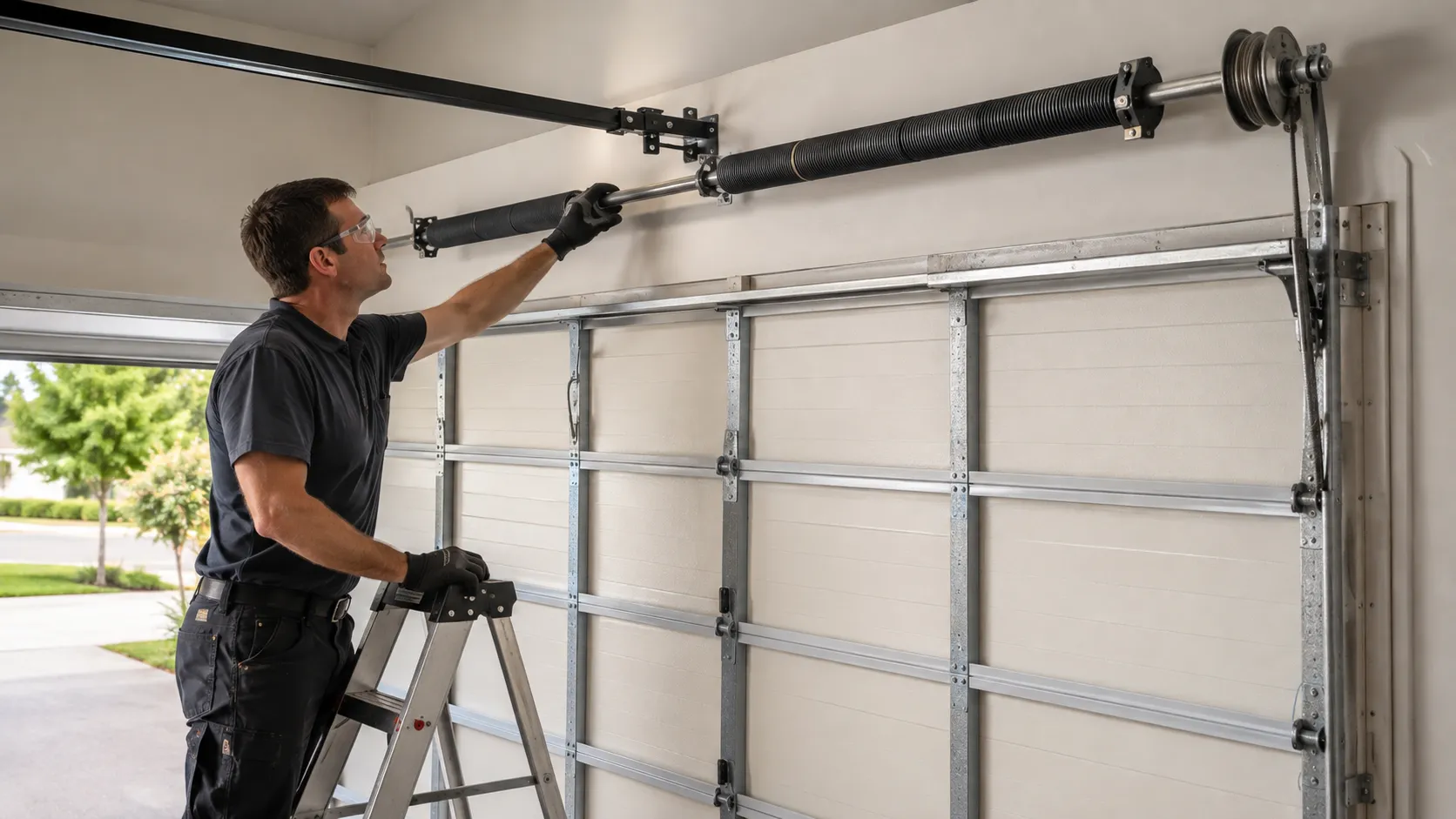
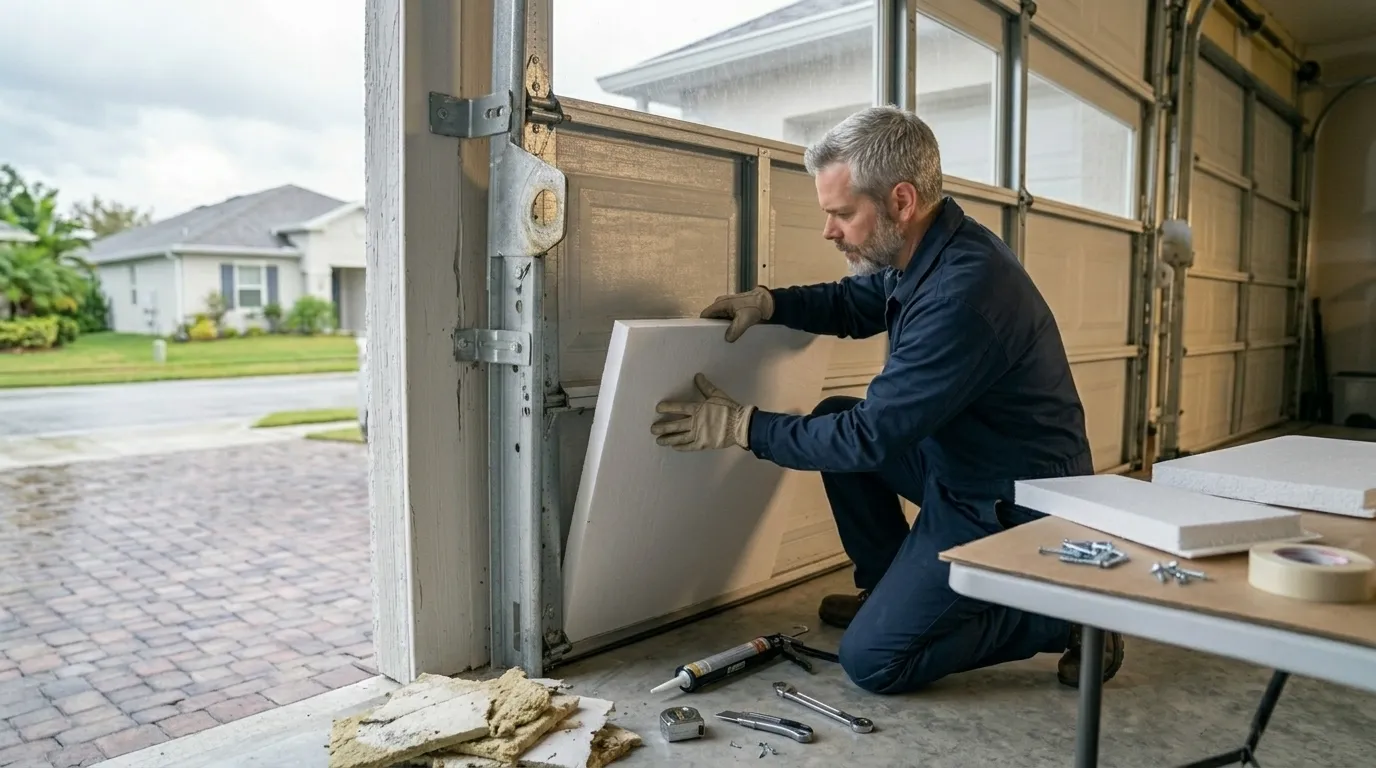
The housing stock backs this up. Slinger's median build year is 1993, a good seventeen years newer than the 1976 median across the rest of the service area, where most stock dates 1958-1999. A door built in the early '90s is usually still the original steel sectional door on a factory torsion setup - not the one-piece or wood-panel doors you find on older stock elsewhere. The failure mode here is less about obsolete hardware and more about wear finally catching up to a 30-year-old door: bent tracks, a spring that's done its last cycle, an opener logic board that's simply old.
We come out from West Bend, 7 miles away, for this work. That's a short haul, but it means we're not sitting on a shelf of parts in Slinger - anything unusual gets ordered before the job, not after.
How to Book
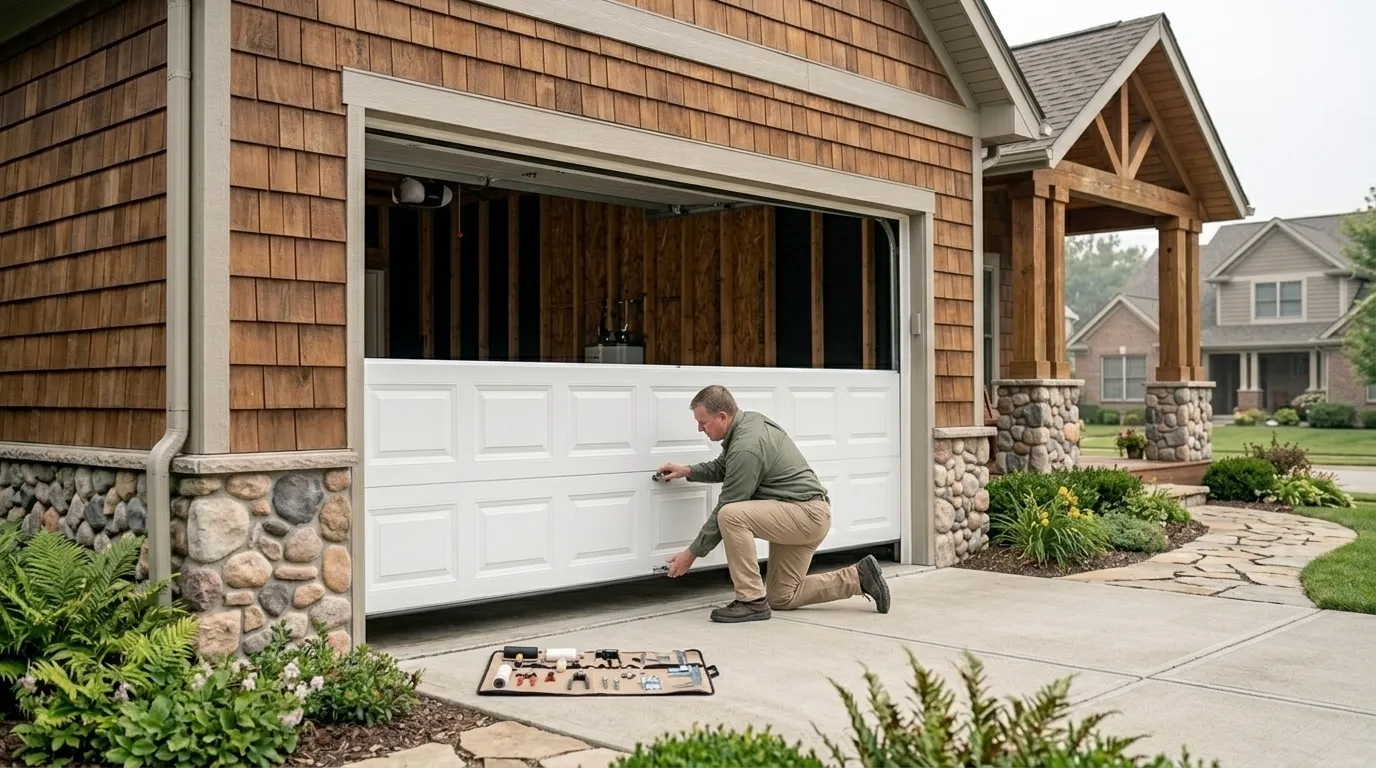
Call or use the Slinger garage door service page to set up a look at the opening. For a full install, we need to see the opening in person - width, headroom, and what's left of the old door and track - before we can quote a number that holds. Photos help us plan the visit, but they don't replace a measurement.
Because we travel from West Bend for every job here, we schedule installs rather than treat them as walk-up work. If your current door is still operating, even roughly, that's fine - we can look at it before it fails completely and plan the swap on your timeline instead of an emergency one.
Can You Do This Yourself
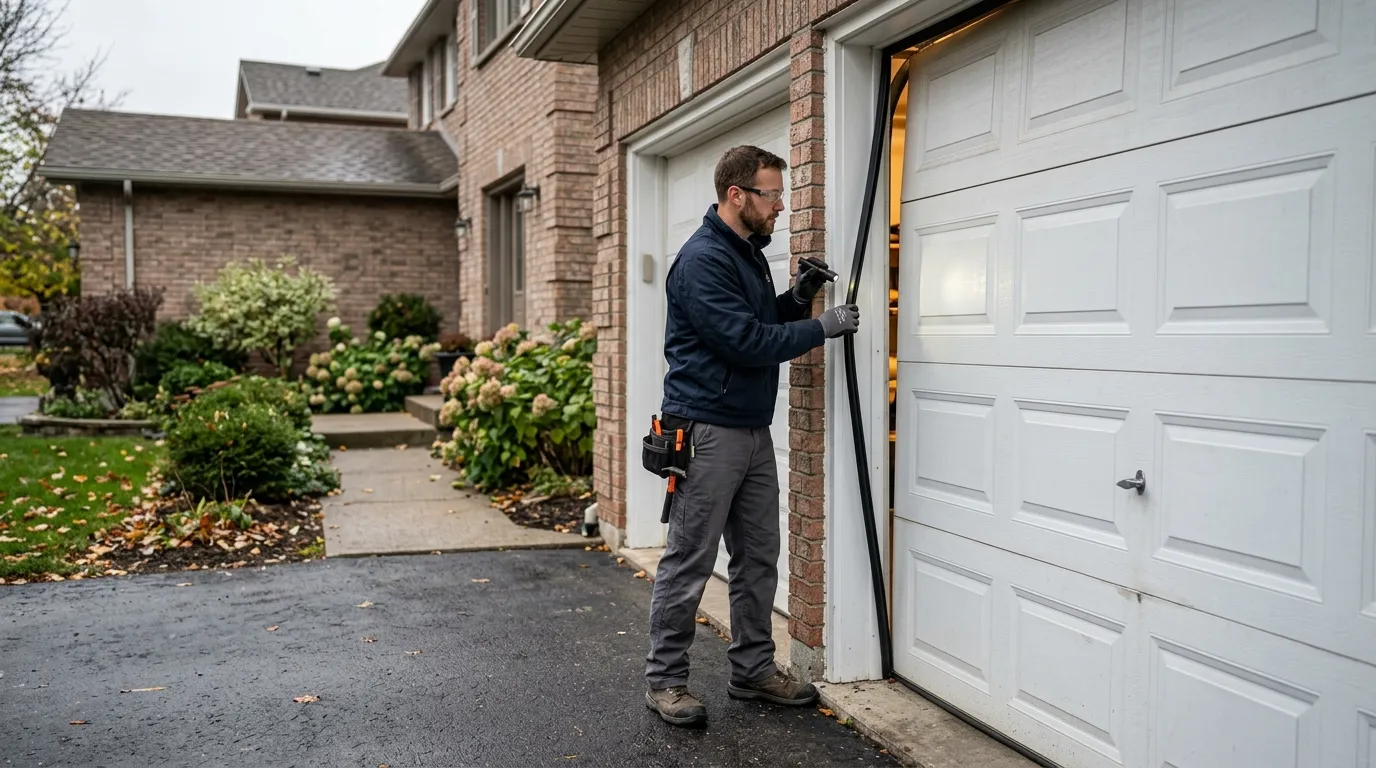
Swapping panels, aligning track, or setting spring tension on a torsion system is not a safe do-it-yourself job - torsion springs store enough energy to cause serious injury, and that doesn't change based on income bracket or house age. Where a homeowner can reasonably do their own work is the small stuff: replacing worn weatherstripping, tightening loose hardware, lubricating rollers and hinges, or swapping a remote battery.
Full installation involves setting new track plumb, torquing springs to the right tension for the door's weight, and wiring an opener to current safety standards. Get any of that wrong and you've got a door that either won't open evenly or, worse, comes down on someone. If you're set on doing some of it yourself, ask us which parts of the job we'd let a homeowner handle - we'll tell you straight, even if the honest answer is