The Cost of This Job
Start with what's actually hanging in the opening. Jackson's housing and commercial stock runs newer than most of the towns around it - the median year built here is 1999, a couple decades past the 1958-1999 span with a 1976 median that covers a lot of the rest of the service area. That matters for cost, because a building put up after 1990 almost never has an old wood-panel door bolted to mismatched hardware. It has a steel sectional door, likely insulated, on torsion springs sized for a wider commercial opening - loading bay or drive-in service door, not a residential double.
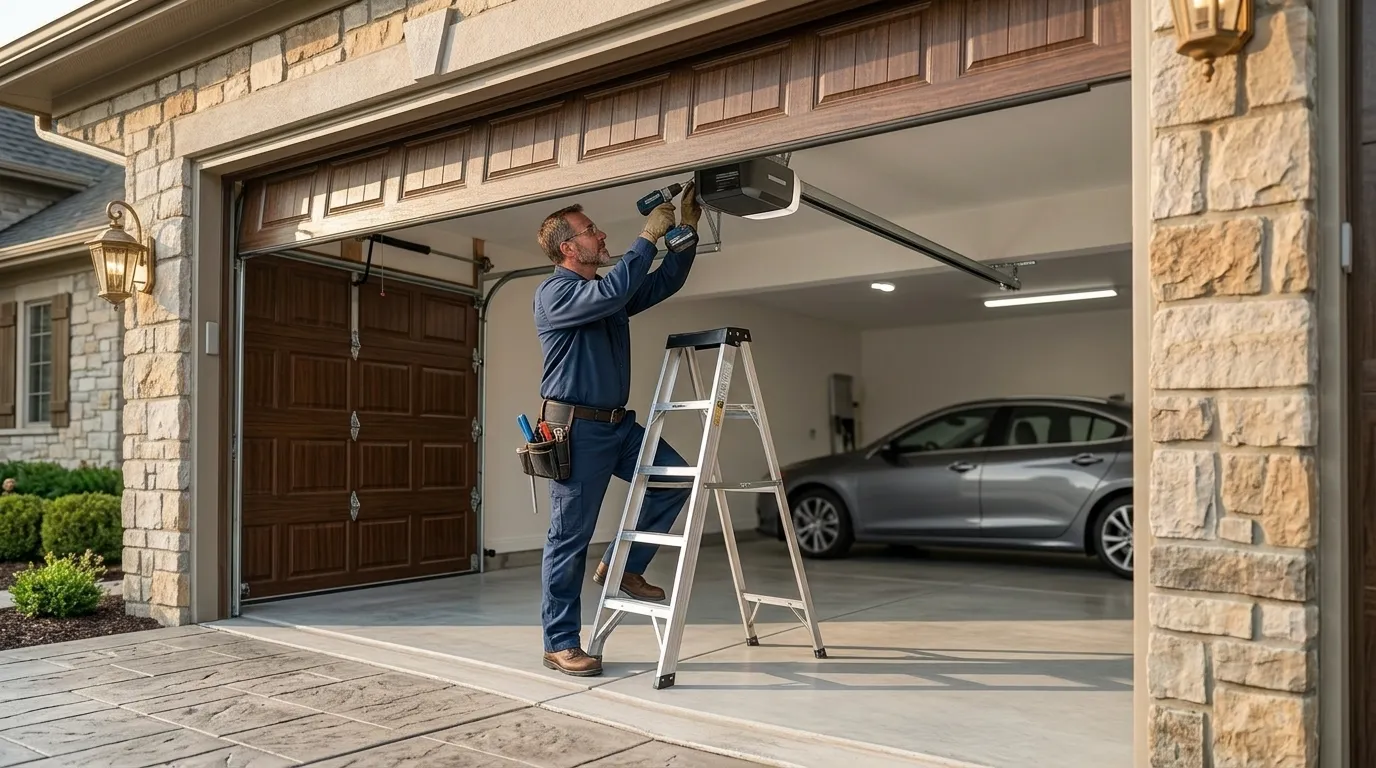
Cost on this job comes down to panel width, insulation R-value, spring count on a wide door, and whether the opener is a chain-drive commercial unit or something with a logic board that needs programming. Jackson's median household income, $95,960, runs above the area-wide $88,634, and in practice that tracks with more owners choosing insulated panels and battery-backup openers over the bare minimum. We don't quote a number here without seeing the door - a single 10-foot torsion spring job and a full opener swap on a 16-foot loading door are not the same invoice.
What Can Go Wrong
The service area sits in a cold, severe climate band, and steel doors handle that differently than wood ever did. Condensation forms on the inside face of an uninsulated or poorly sealed panel and drips onto the floor and the bottom seal. Torsion springs contract in hard cold and can bind slightly on the shaft, which shows up as a door that groans or hesitates on the first cycle of the morning. Photo-eye sensors fog over and throw false safety stops, which on a commercial door means a crew standing around waiting.
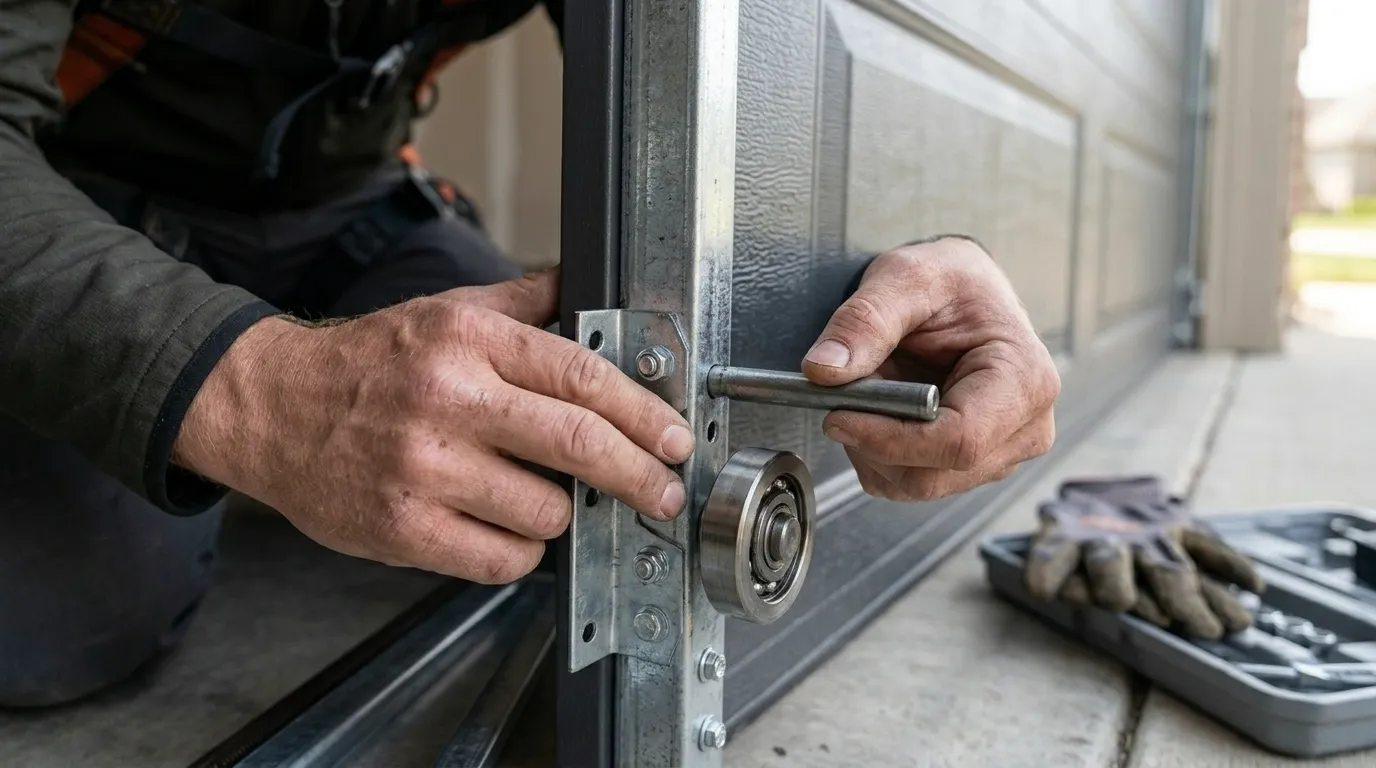
Because most of Jackson's commercial stock dates after 1990, the common failures skew toward wear items rather than rot: roller bearings going dry, lift cables fraying at the drum, and opener control boards failing after years of temperature swings. You don't see the rotted bottom panel or hand-me-down torsion conversion that shows up on an older building - the door itself is newer, but it's still steel and springs and a motor, and all three age.
How Long You Are Without the Door
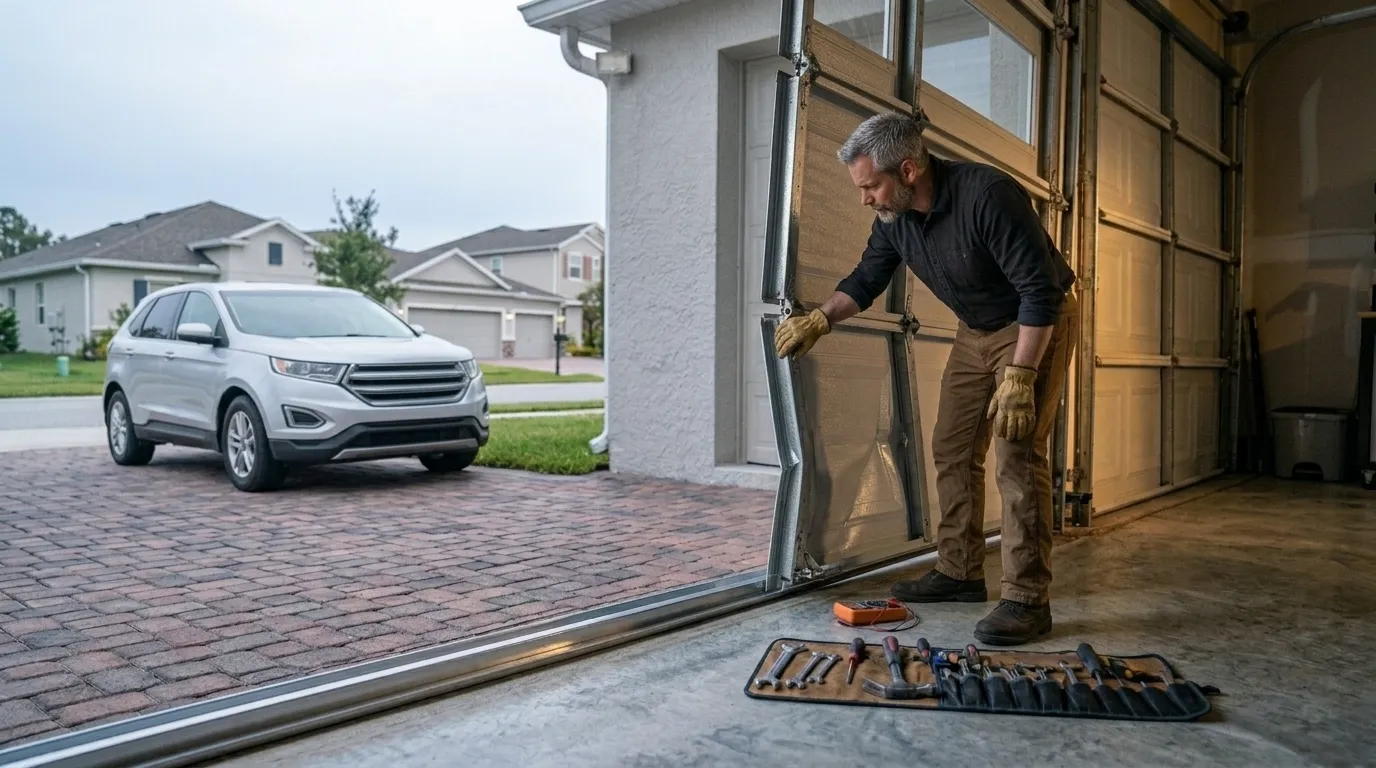
We don't post a fixed number here because it depends on what's actually broken and what's on the truck versus what has to be ordered. A worn roller or a frayed cable is usually a same-visit fix. A control board on a less common commercial opener, or a wide insulated panel that has to be matched to the rest of the door, sometimes means the door sits down until the part arrives - that's the honest limitation, not every commercial part is something we carry stock of.
Jackson sits seven miles from West Bend, which keeps the drive itself short, but drive time was never the bottleneck on a parts-dependent repair. If your business runs one bay and that bay is down, tell us that up front, because it changes whether we patch something temporary to get you through the day or wait for the right part to do it once.
What the Repair Takes
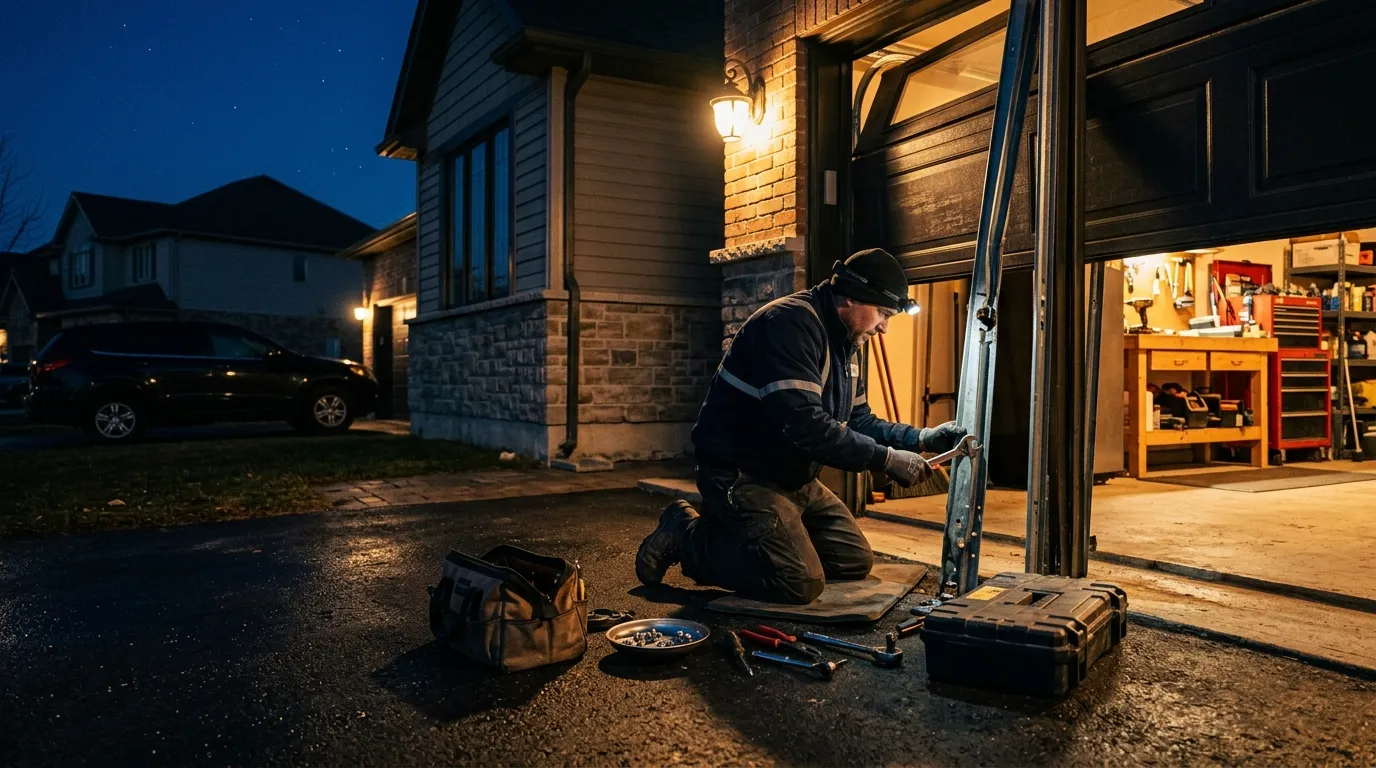
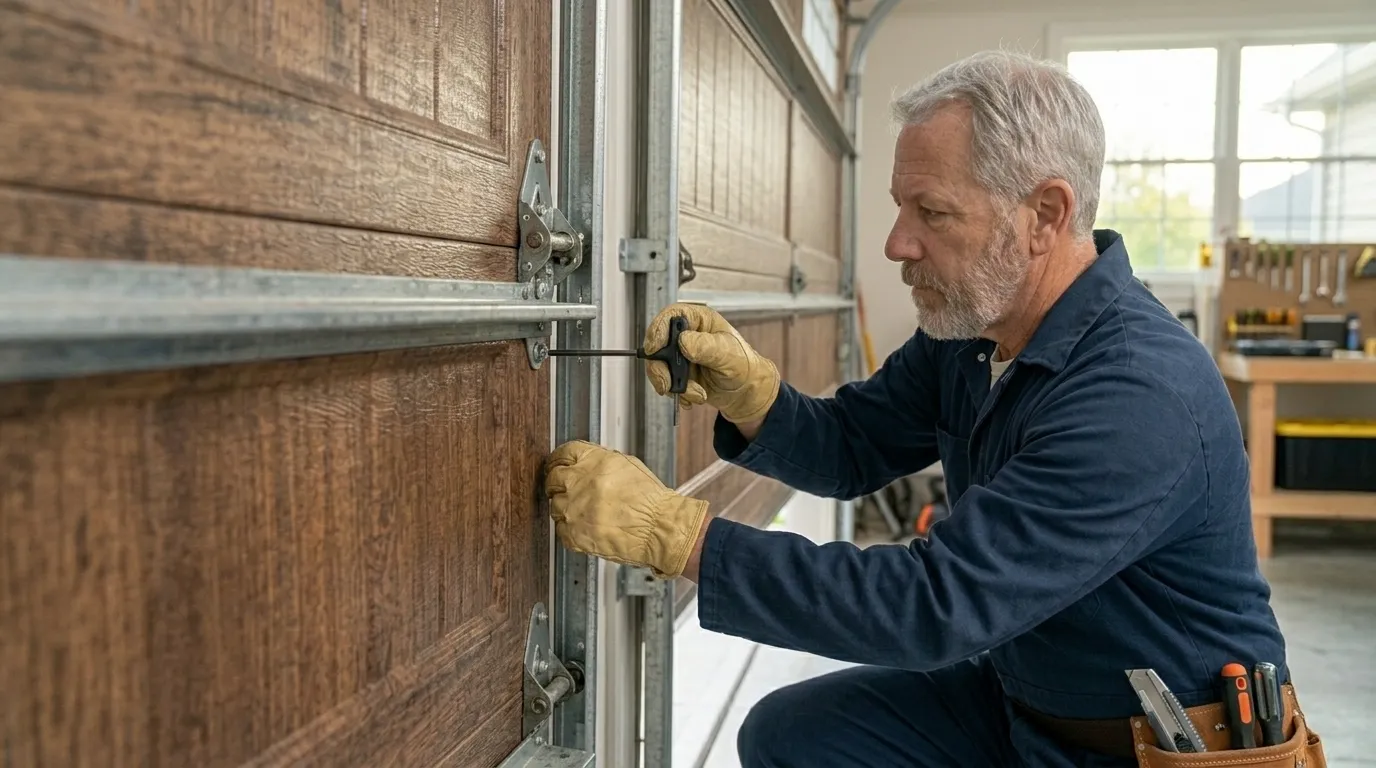
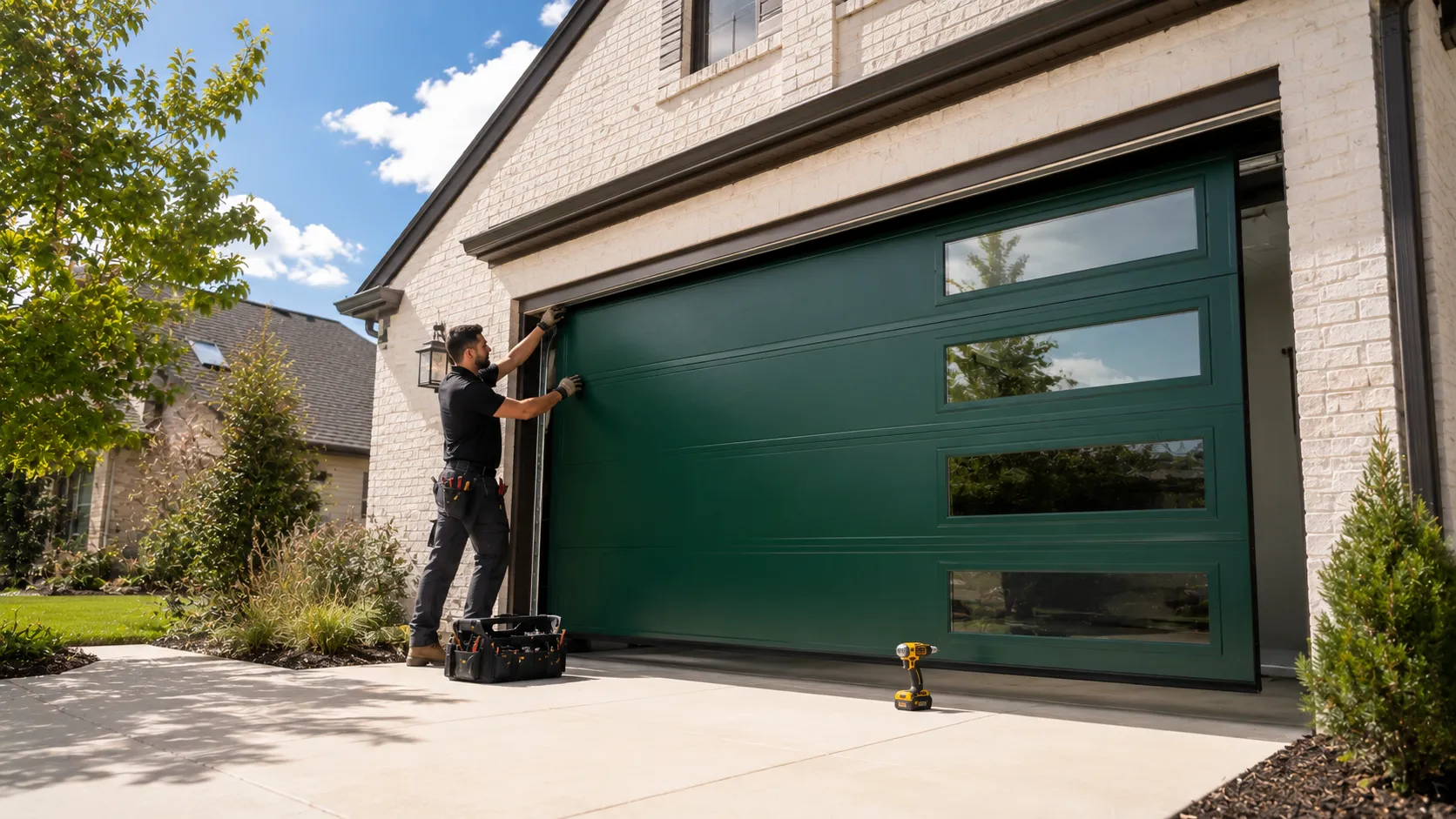
On a commercial door built to the newer standard common in Jackson, the work usually starts the same way: check track alignment top to bottom, since a door that's out of plumb wears rollers and cables faster than any other single cause. From there we check spring tension and cycle wear - torsion springs on a wide door are rated for a certain number of open-close cycles, and a business door that runs several times a day burns through that rating faster than a house door ever does.
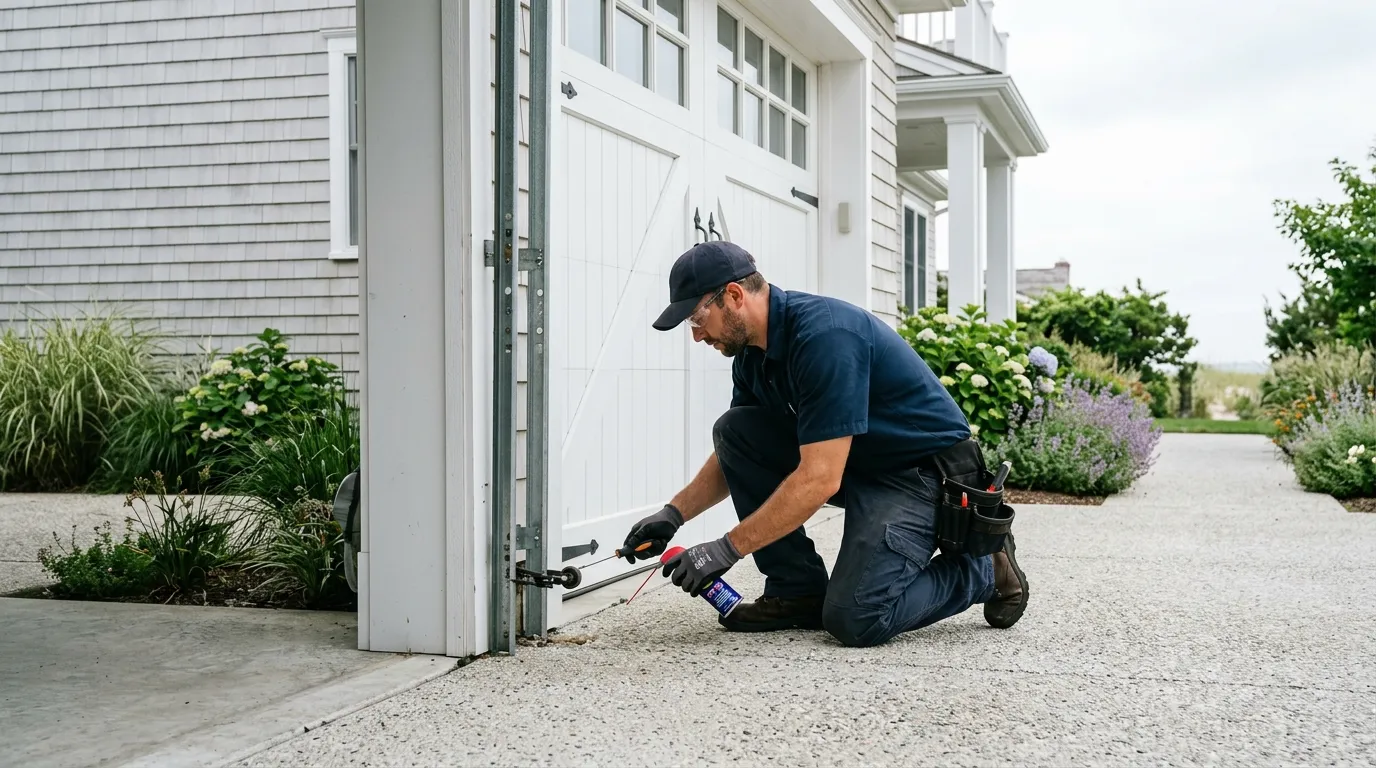
Rollers and cables get replaced if they're worn rather than patched, because a cable that's starting to fray on a commercial door under daily use is not a good place to save money. The opener gets tested on its limits and force settings, and the bottom seal gets checked against the cold-climate exposure this area gets every winter. None of that changes because the building is in Jackson specifically, but the fact that the building is more likely built after 1990 changes what parts we expect to find when we open the panel up.