The Cost of This Job
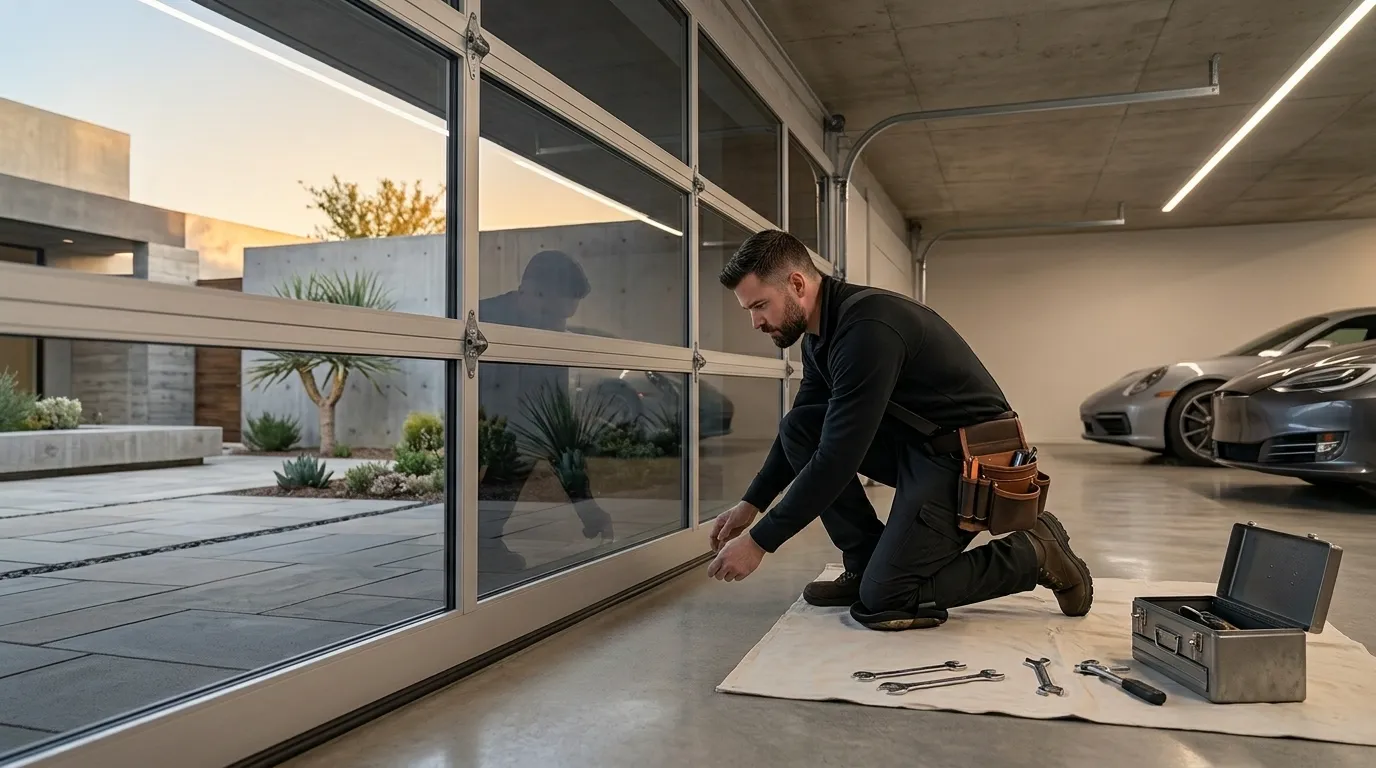
Jackson skews newer than the rest of the territory we cover out of West Bend. Median build year across our broader service area lands around 1976, but Jackson's own median is 1999 - two decades later. That gap matters for what you pay. A house built in 1999 almost always has a factory steel door on a standard-width torsion spring setup with a chain or belt-drive opener from that era, not the older extension-spring, one-piece doors common in the 1960s stock nearby. Parts for late-90s hardware are still made. You're not paying a premium for obsolete springs or a discontinued track profile. Most jobs here are a spring swap, a roller set, or an opener board replacement rather than a full teardown because the drum, track, and header clearance are all built to specs that are still current. Jackson also carries a higher median household income than the surrounding area - $95,960 versus the wider service area's $88,634 - which doesn't change what a job costs, but it does mean fewer homeowners here are stretching a repair past the point it should've been done.
What Can Go Wrong
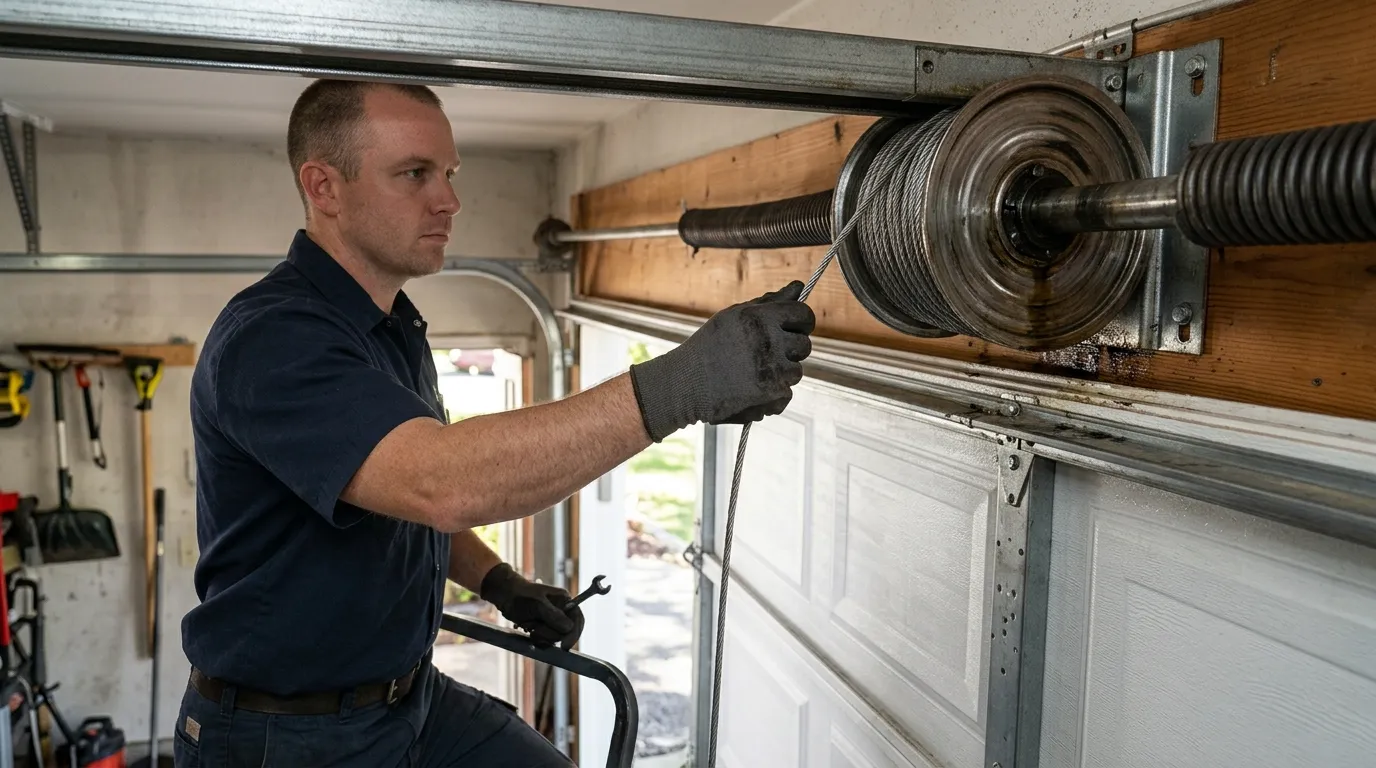
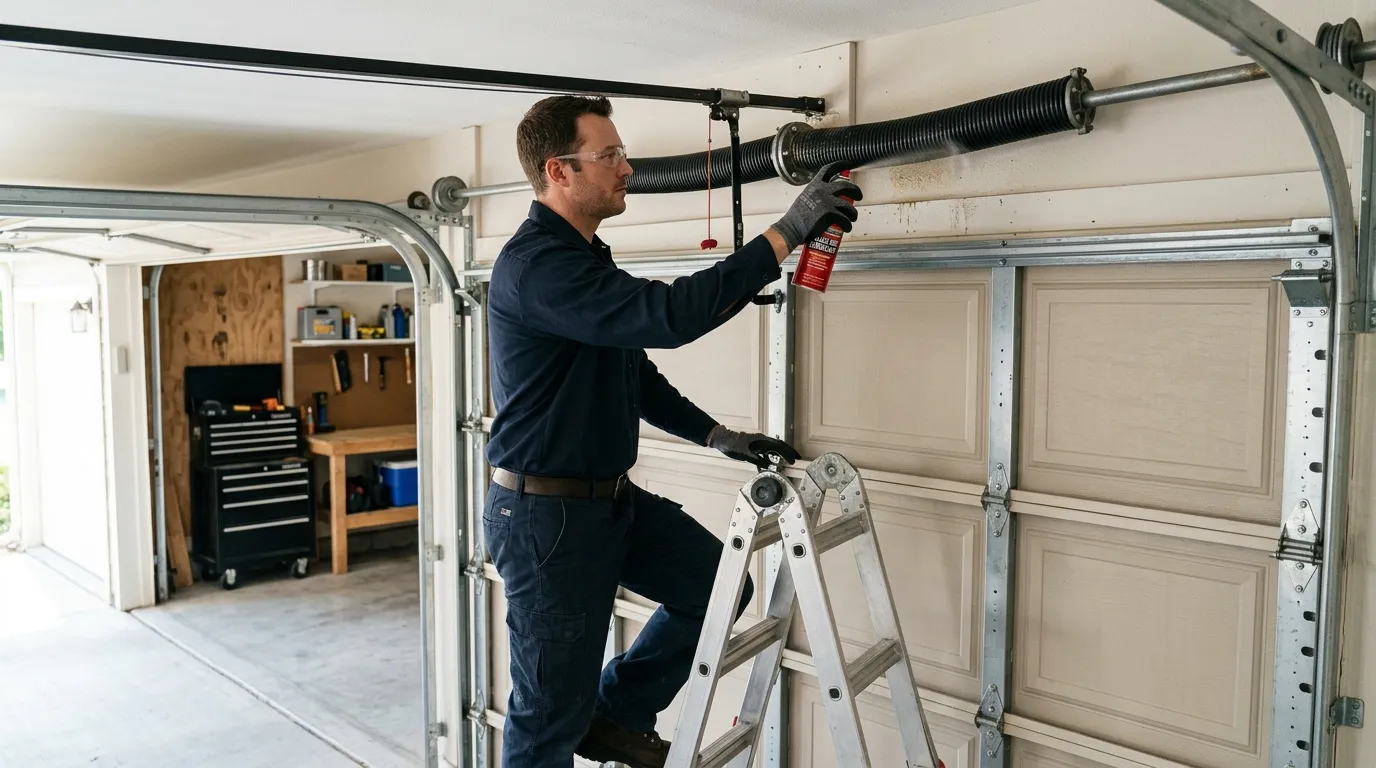
Because most Jackson garage doors date to the late 1990s through the 2000s, the common failures are wear failures, not design failures. Torsion springs rated for a 20-25 year cycle count are hitting the end of that window right about now if the house was built near the 1999 median. Nylon rollers from that era are original in a lot of these garages and they're the part most likely to bind a track before anything else fails. Openers from the same window are usually chain-drive units nearing the end of their gear life - the motor still runs, but the drive gear strips and the door stops moving. What you won't find as often here as in the older 1960s-70s stock nearby is the mismatched, jury-rigged hardware from decades of prior owners swapping parts. Jackson's newer stock tends to still have its original setup, for better or worse. The winter matters too - this is a cold-climate region, and a spring that's already fatigued will usually let go on the first hard cold snap of the season, not gradually.
How Long You Are Without the Door
Since we run out of West Bend, about 7 miles from Jackson, there's drive time built into any call - we don't keep a branch or truck stationed in town. Once we're on site, a spring or roller job on a standard 1990s-2000s door usually wraps in under two hours since parts for this hardware era are common stock, not special order. Opener board or logic replacements can run longer if the exact board isn't on the truck, which happens more with mid-2000s electronic openers than with the mechanical drive systems from earlier in that build window. We won't pretend to give you a set number - that's not a fact we have - but the newer, more standardized hardware in Jackson generally means less time waiting on parts than a repair on an older door elsewhere in the territory.
What the Repair Takes
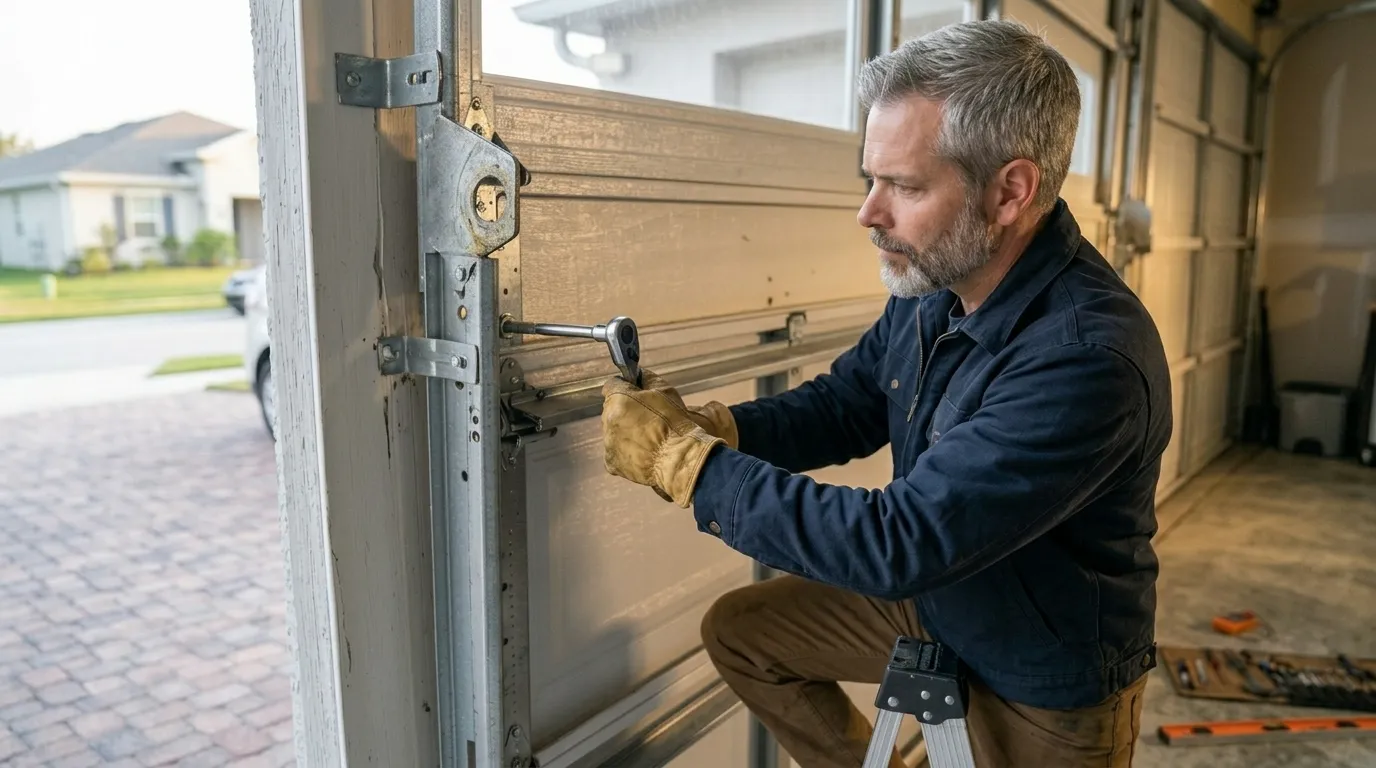
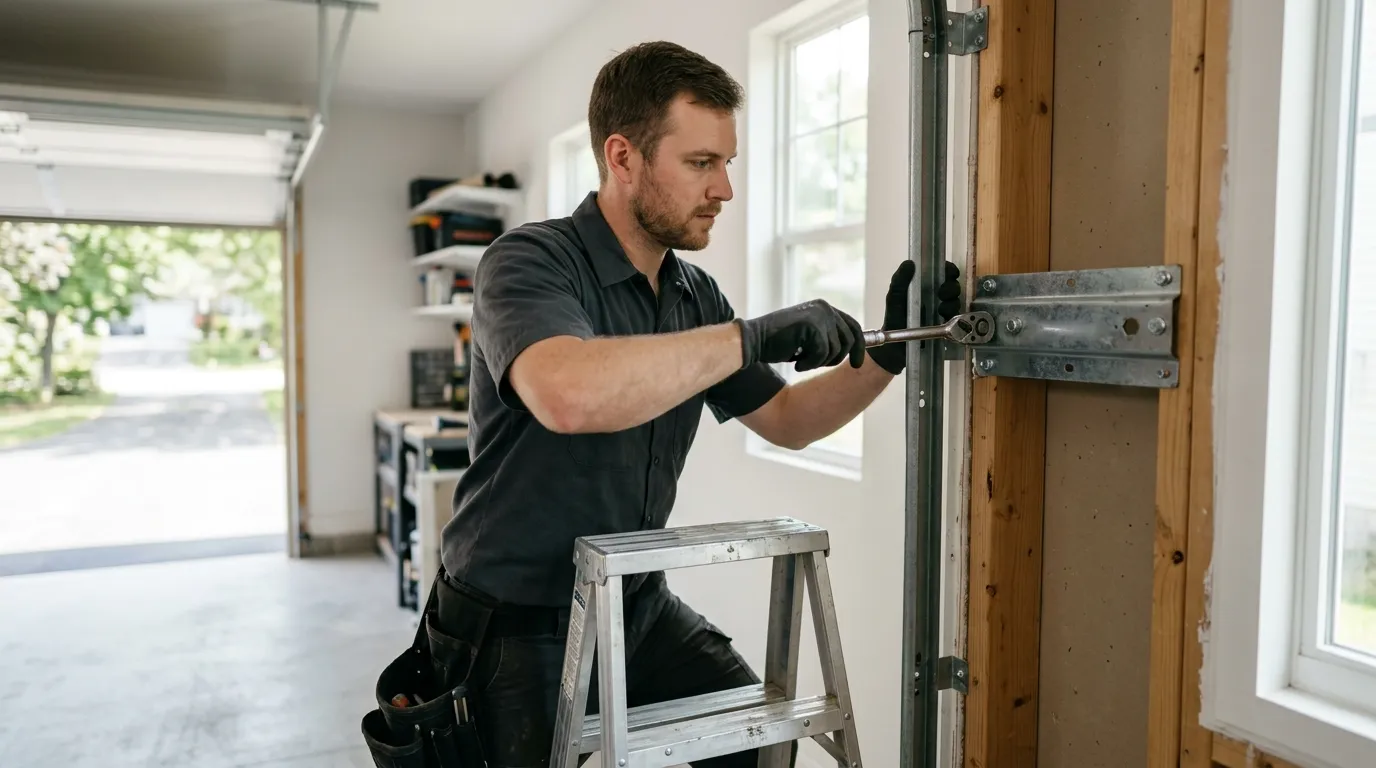
A torsion spring job on a Jackson door built near 1999 typically means matching wire size and wind direction to the original spring, which is usually stamped or color-coded if it hasn't been replaced before. Roller replacement is straightforward on this era of track - standard 2-inch radius, no odd retrofits. Opener work is where the newer stock actually helps: circuit boards and drive gears for chain and belt units from the late 90s through 2000s are still widely available, so we're not sourcing a part for a door nobody makes hardware for anymore. The one limitation worth saying plainly - if a panel is damaged rather than the hardware, and the door is an off-brand builder-grade model from that era, matching the exact panel profile isn't always possible. In that case replacement of the section, or the whole door, is usually the honest answer rather than a patch that won't match.