The Cost of This Job
Jackson is a smaller town, about 3,509 households, which means fewer openers on the road than in the bigger suburbs nearby. That's not a knock on the town - it just means the fault pattern here looks different from what a crew sees in an older neighborhood. With a median year built around 1999, most garage doors in Jackson came with an opener already installed by the builder, usually a chain or belt drive unit with a circuit board, a wall control, and photo-eye safety sensors at the bottom of the track. Those systems fail differently than the older mechanical openers common in housing built before 1980. You're less likely to be dealing with worn-out gear sets and more likely to be dealing with a bad logic board, a dead capacitor, or safety sensors that have drifted out of alignment. Pricing on a job like this depends on whether the fix is a sensor realignment, a board swap, or a full opener replacement, and we can't quote a number without seeing the unit. What we can say is that a household income around $95,960 in this area often means owners lean toward replacing an aging board-and-motor unit rather than nursing along a fifteen-year-old circuit board, once the repair cost starts creeping toward half of what a new opener runs.
What Can Go Wrong
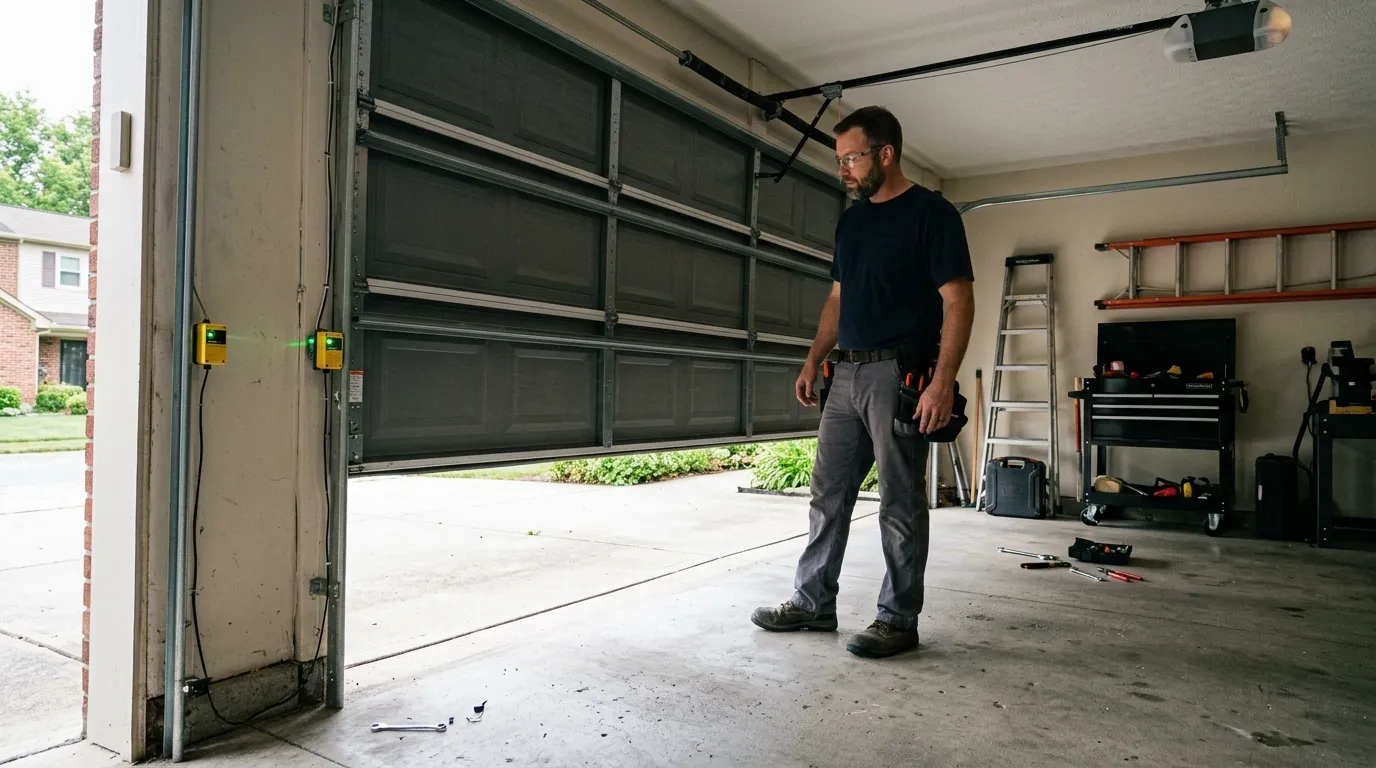
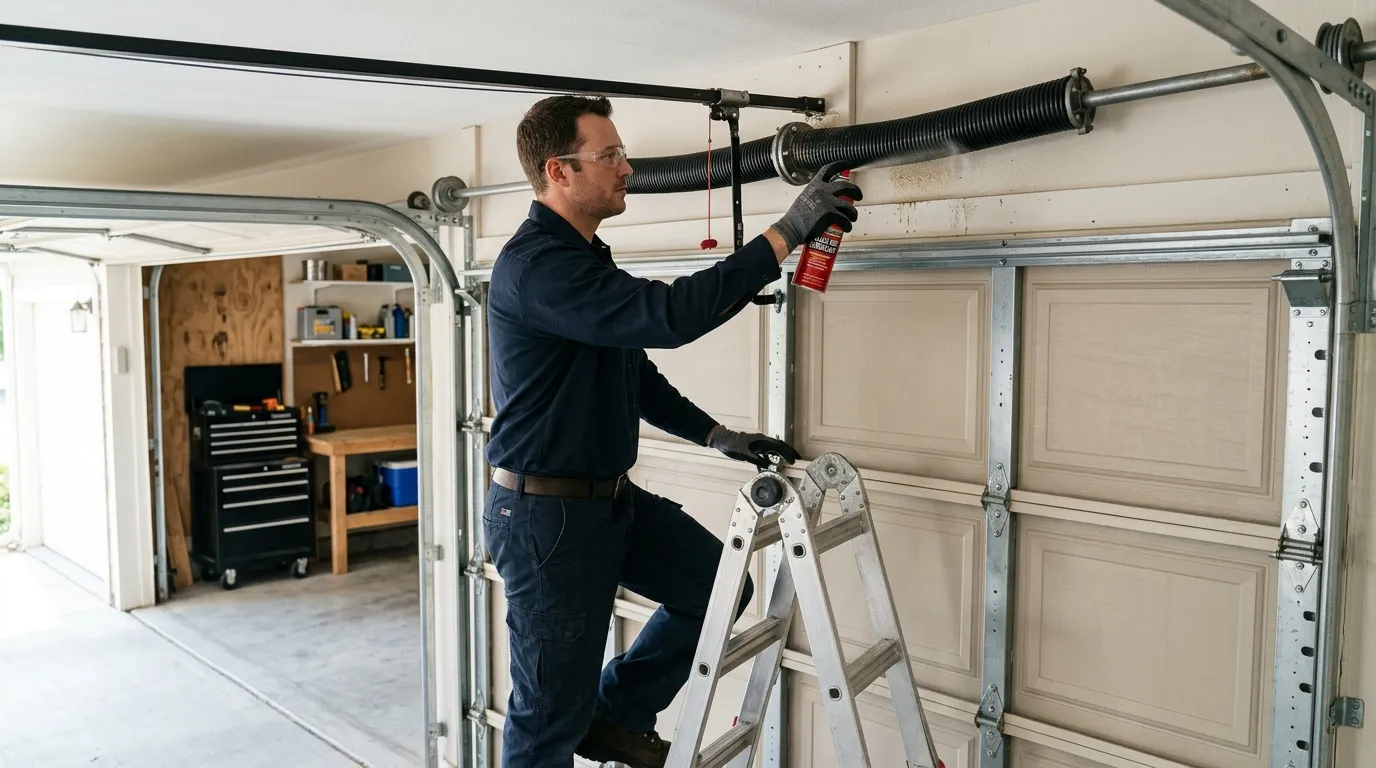
Openers installed in the late 1990s and early 2000s in a town like Jackson are old enough now that original circuit boards are starting to fail outright, not just glitch. Capacitors dry out, relays stick, and the logic board stops talking to the wall button or the remote even though the motor itself still runs fine. The other common complaint is safety sensors - the two small eyes low on the track - going out of alignment or getting fogged with dust, which makes the door refuse to close and just reverse partway down. Because this area sits in a cold-climate band with real winter severity, cold snaps make weak capacitors and marginal relays fail outright rather than just act flaky; a board that limped through October can die hard by January. We also see drive gears stripped on chain and belt units from that era, since plastic gear sets in openers from the late '90s were not built to last twenty-five-plus years.
How Long You Are Without the Door
A sensor realignment is done in the time it takes to check both eyes and test the door a few cycles - you're not without use of the garage for that. A board replacement, once we've got the right part in hand, generally runs the door again the same visit. Where it stretches out is parts availability: an opener original to a house from around 1999 may need a board or sensor kit ordered in, since manufacturers stop stocking parts for units that old. We're driving in from West Bend, about 7 miles out, so travel time isn't the bottleneck here - part sourcing is. If your opener needs a part we don't carry on the truck, we'll tell you that up front rather than have you wait around for a fix that isn't coming that day.
What the Repair Takes
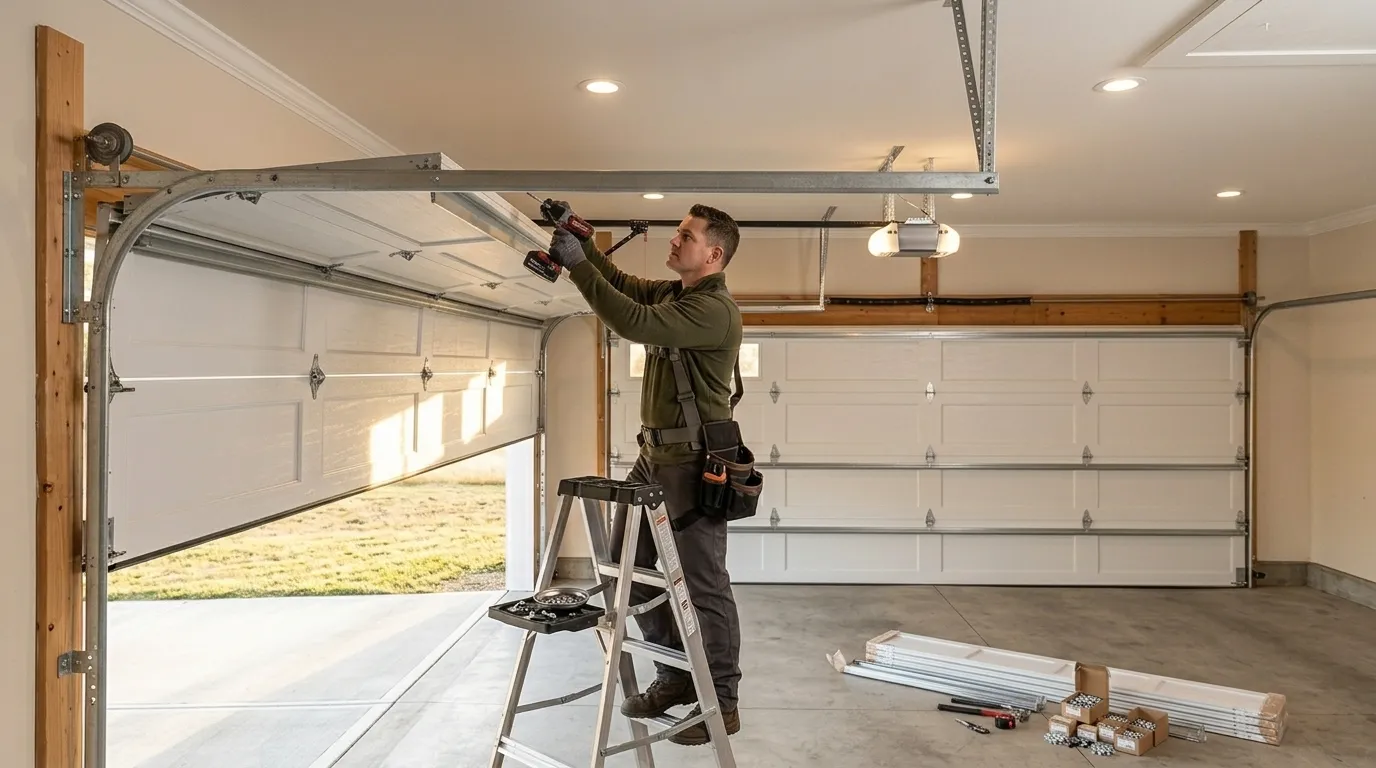
Diagnosing an opener built around the same era as most Jackson houses starts with the basics: power to the unit, the wall button, the remote, and then the safety sensors, since a blinking light on the motor head almost always traces back to one of those. From there it's a matter of whether the board itself has failed, in which case it gets replaced with a compatible unit, or whether the whole opener has reached the point - usually somewhere past fifteen to twenty years old - where replacing the motor head outright makes more sense than chasing individual parts for a discontinued board. We test full open-close cycles, check the auto-reverse safety function, and confirm the wall control and any remotes are paired correctly before we call the job done. For homes in this area with owner-occupied houses and a median income near $95,960, we find most owners choose a clean opener swap over a patchwork repair once the original unit is past the fifteen-year mark, simply because parts for it are getting hard to find.