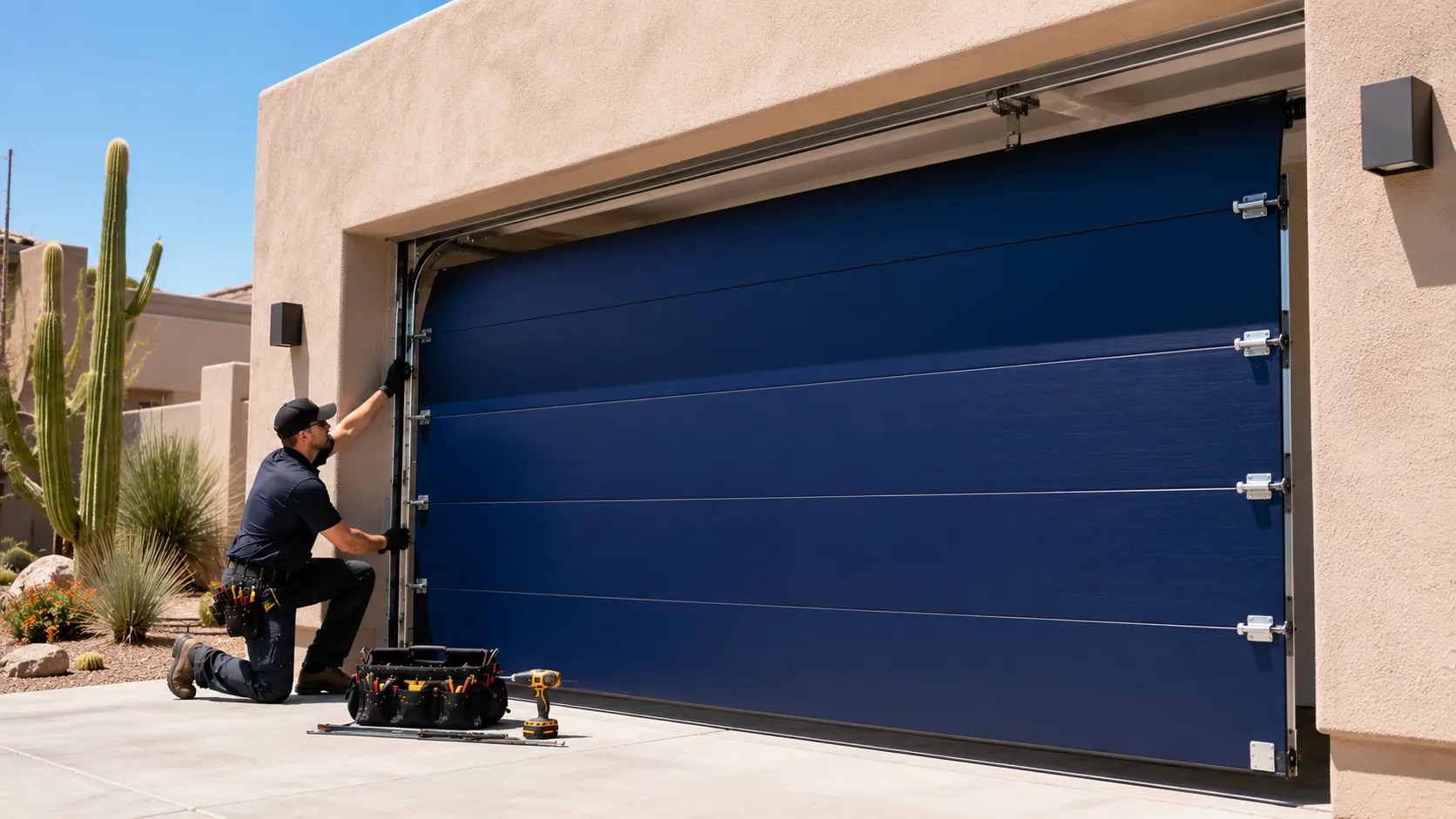
What Can Go Wrong
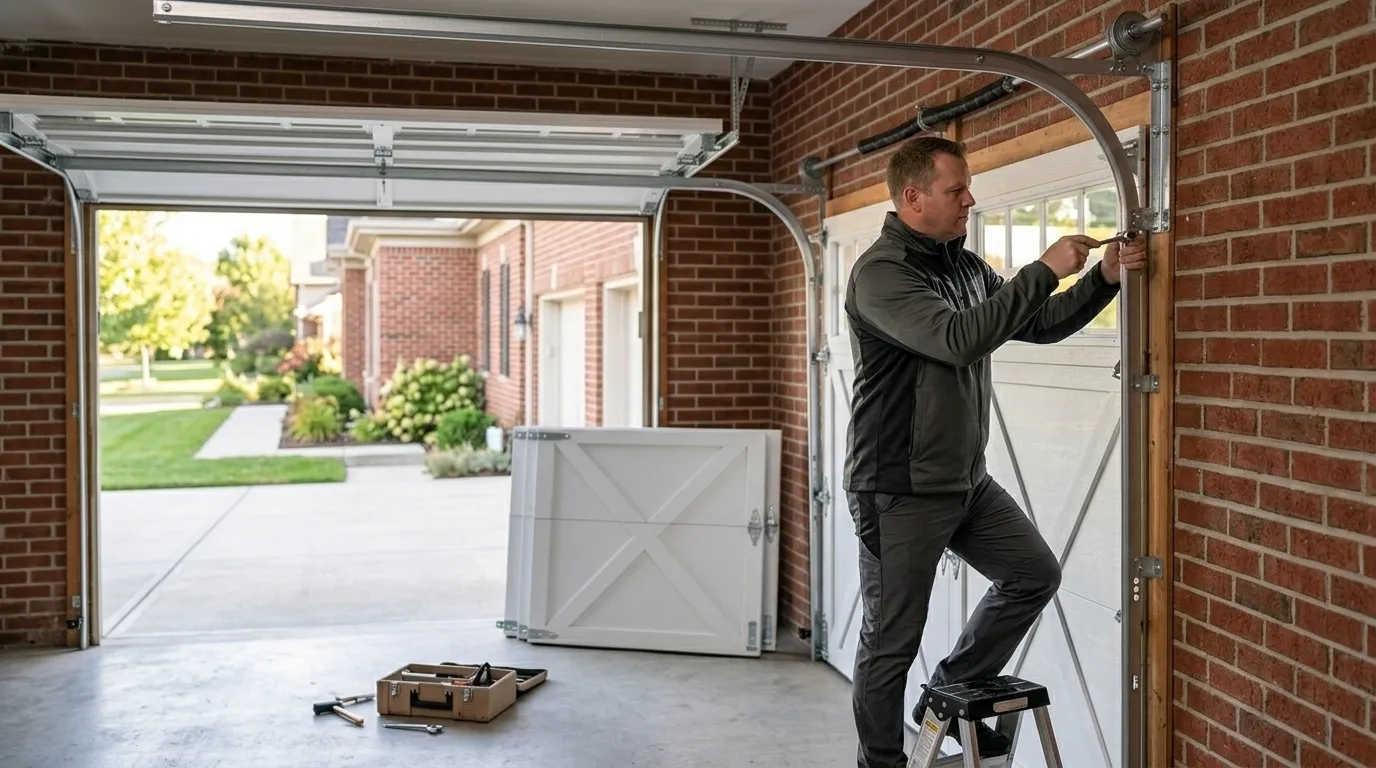
Most of the houses we cover run 1958 to 1999, with a median around 1976. Grafton sits well past that midpoint, closer to 1986. That decade matters more than it sounds like it should. A door built in the mid-80s is a steel sectional panel on a torsion spring, factory-matched to a standard drum and cable length. A door from the 1960s stock common elsewhere in the service area is more likely an older panel style on hardware that's already been swapped once or twice by whoever owned the house before.
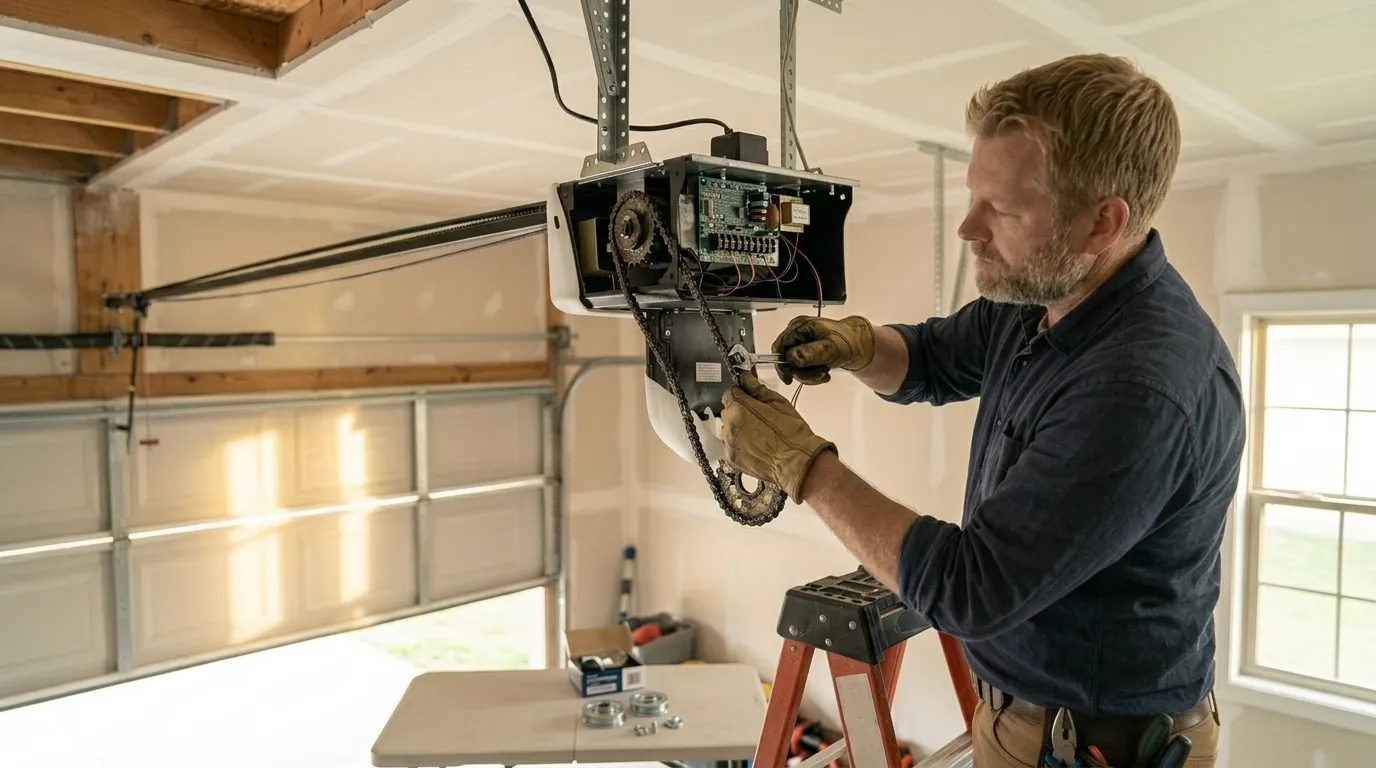
What goes wrong on a newer Grafton door tends to be more mechanical than structural: a torsion spring that's simply worn out after three decades of cycles, a cable that's frayed at the drum, an opener logic board or belt that's reached the end of its run. You don't see as much of the panel rot or track warp that shows up on the oldest homes in the broader area, because the wood and steel from the mid-80s held up better than the earlier stuff.
We still see the occasional roller failure or off-track door here, same as anywhere. The difference is what's behind the panel when we open it up.
The Symptom
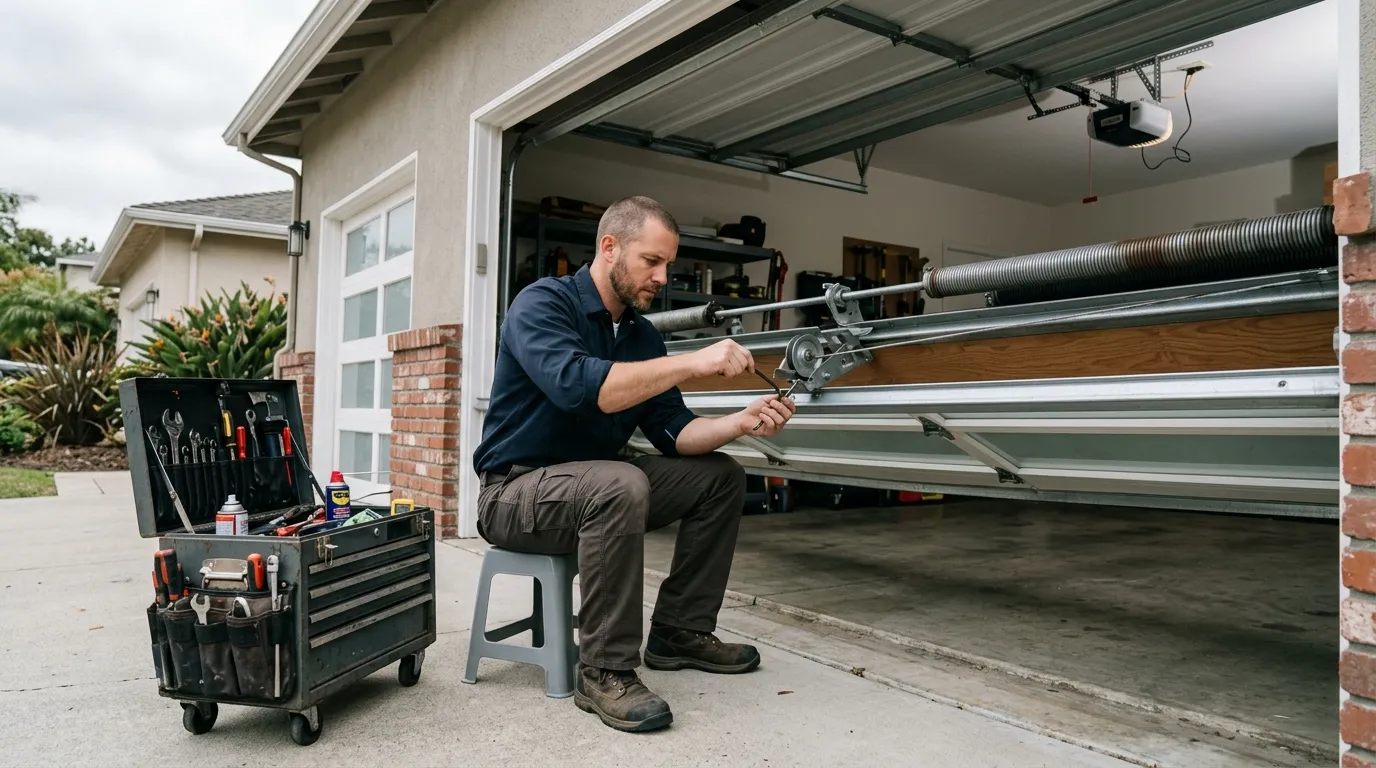
The call we get most from this area is a door that won't move at all, or one that lurches partway up and stops. On a 1986-era door, that's usually a broken torsion spring - the coil snaps clean, and the door goes dead weight on the opener, which isn't built to lift it alone. Sometimes it's a slipped cable off the drum, which looks similar from the driveway: door up an inch, then nothing.
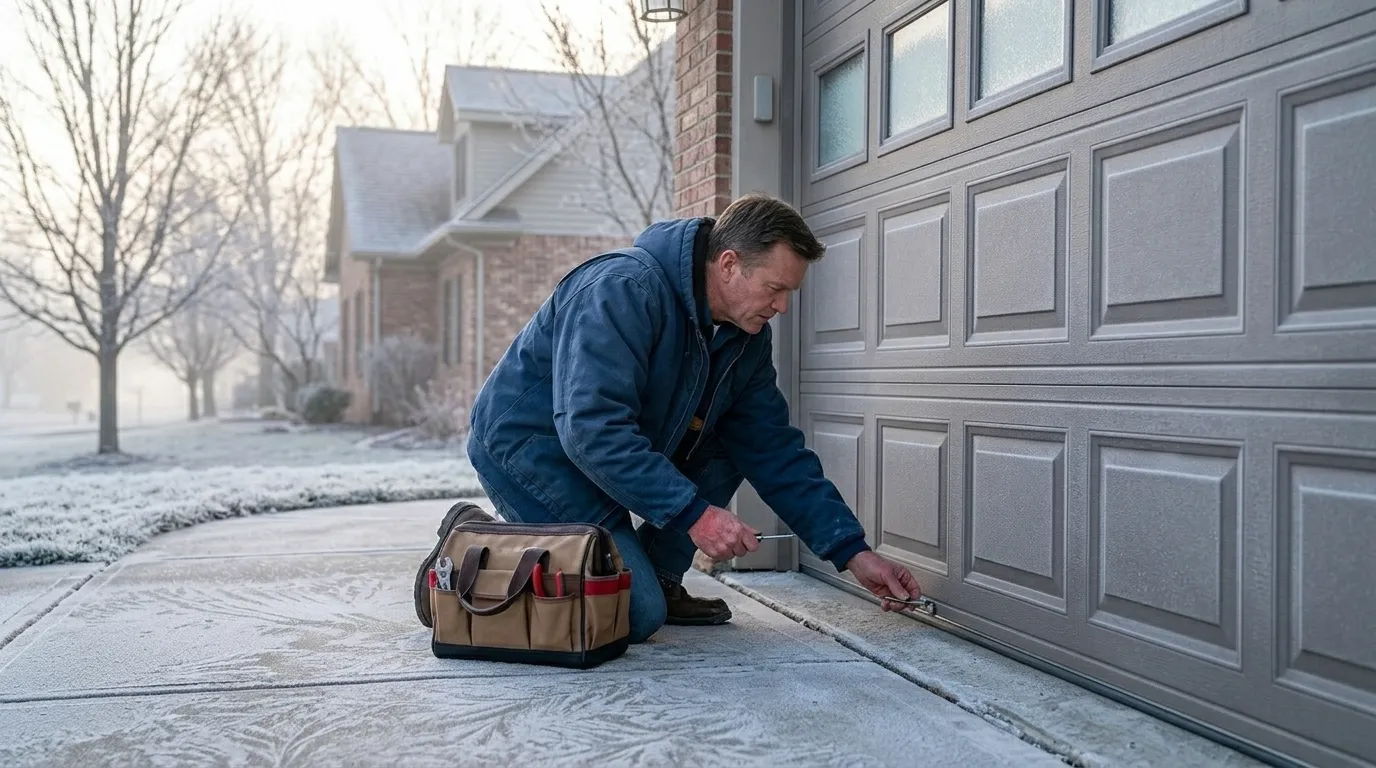
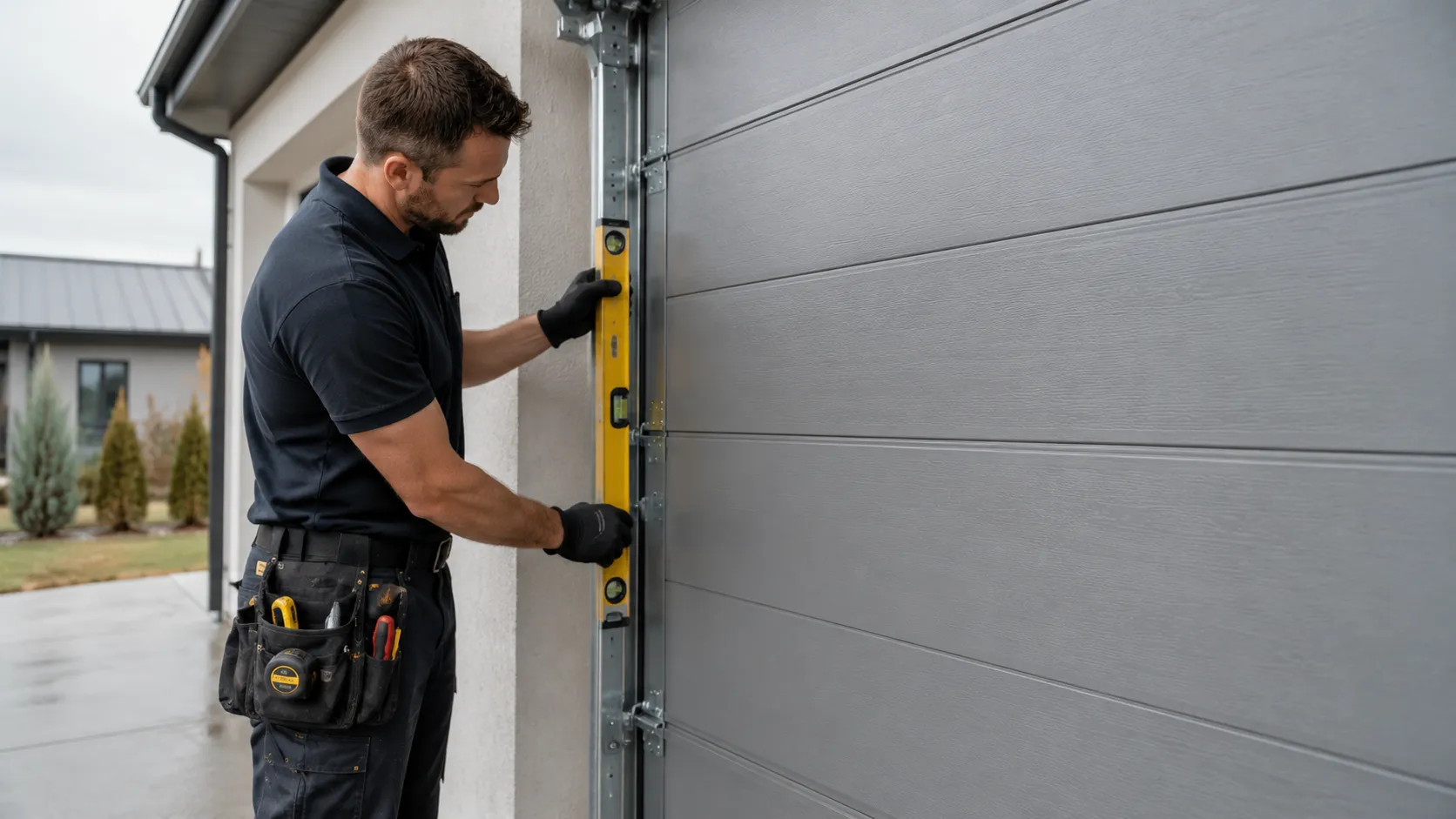
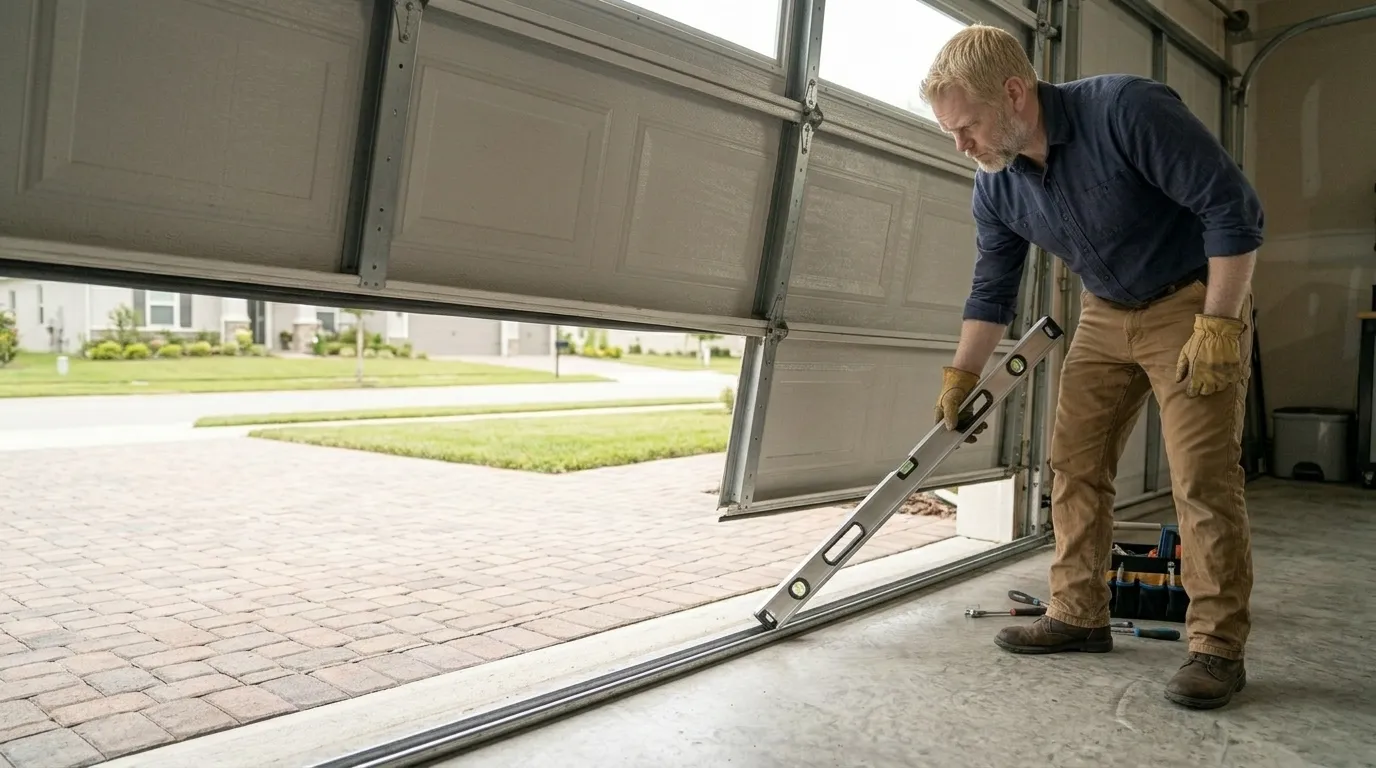
A door that reverses right after it touches the floor, or won't close past halfway, points more at the opener's sensors or a misaligned track than the spring. Cold mornings make all of this worse. A stiff spring or a dry roller that would limp along in July can seize outright once the temperature drops hard, which happens plenty in a cold-band winter like the one this whole region gets.
If the door is making a bang, then dead silence, that's almost always the spring. If it's a slow grinding stop, look at the rollers or the track first.
Why This Fails Locally
The West Bend service area covers 37 named areas across a 1958-1999 build spread, and that range is the whole reason a truck stocked for "garage doors" has to carry more than one era of parts. Grafton's own housing leans to the newer end of that spread, median 1986, which means the hardware on a typical call here is more standardized than what we run into on the oldest homes in the territory.
Grafton sits about 14 miles from West Bend, which is on the far side of the service area rather than next door. That's not a response-time claim - we don't quote times here - but it does mean a truck rolling out for a five-minute fix costs more in drive time than the same call closer to base. It's part of why we try to get the make and rough age of the door up front when someone calls, so the truck leaves with the right spring size rather than a guess.
Cold-band winters hit every build year the same way: metal contracts, lubricant stiffens, and whatever was already marginal fails on the coldest morning of the stretch. A newer door doesn't get a pass on that.
Stocked Parts
Because Grafton's stock leans toward that 1986 median, the torsion springs and standard-width cables sized for that generation of steel sectional door are parts we're likely to already have on the truck rather than order in. Nylon rollers and standard drums for that era are common enough across the region that they're a stock item too.
What we don't carry as routine stock: openers old enough to run circuit boards from the original mid-80s install, and any panel or track hardware specific to a custom or oversized door. Those get ordered once we've seen the job, which means a same-visit fix isn't guaranteed on every call - another reason to describe the door's age and symptom clearly when you call, so we know before the truck leaves West Bend whether this is a one-trip job or a two-trip job.