What Can Go Wrong
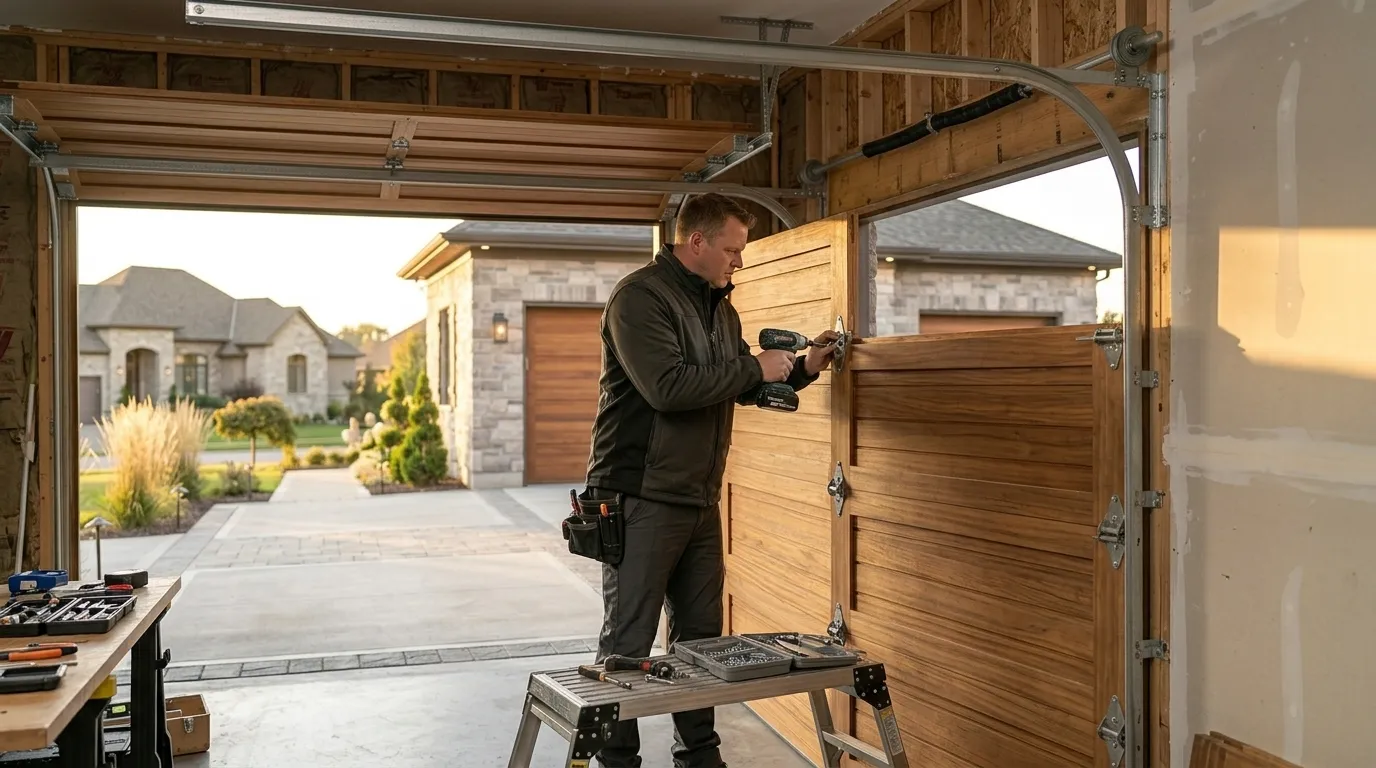
Grafton's median home dates to about 1986, which puts a big share of the town's garage doors and openers right at the edge of a rule that changed the industry. Federal law didn't require photo-eye reversing sensors on residential openers until 1993, so a house built in the mid-80s that still has its original opener may have no auto-reverse safety sensor at all, or a bolted-on retrofit unit added later by a previous owner. That's not a hypothetical - it's what we find when we open the housing on an 80s-built Grafton opener. Beyond the opener, doors from this era commonly shipped with steel torsion springs sized for lighter door panels than what's on the market now, and galvanized cable that's had close to 40 years to fatigue. None of this is exotic. It's just old enough to be a different generation of parts than what a hardware store carries off the shelf today.
The Symptom
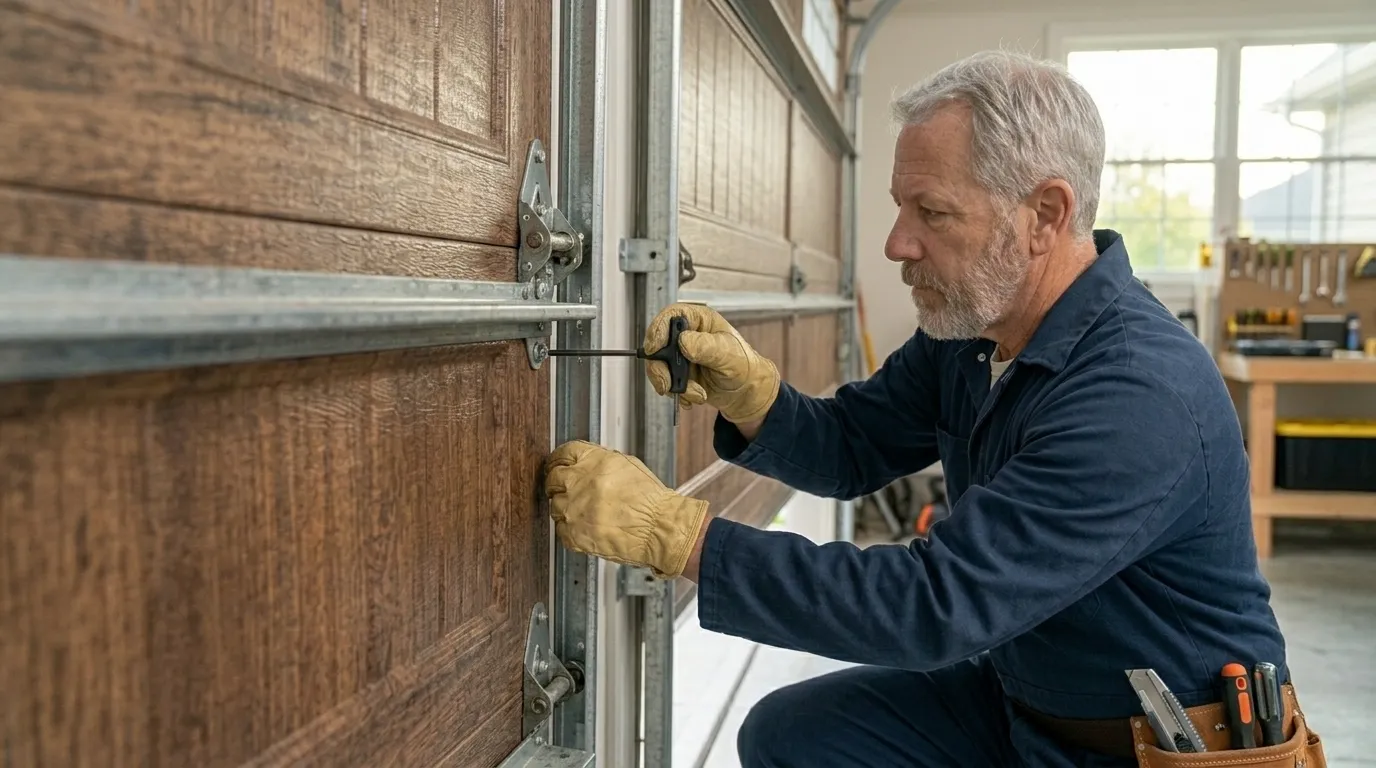
The most common call we get from this stretch of town isn't a door that won't open - it's a door that reverses for no reason, or an opener light that blinks a code nobody can read. Both point back to the same 1986-era gap: an original opener with a worn or missing sensor pair struggling to do a job it was never built to do reliably. The second most common symptom is a door that slams the last six inches on the way down, which on a house this age usually means the torsion spring has lost tension faster than the door's weight has changed, especially if a heavier insulated replacement panel went in at some point without a spring adjustment to match.
Why This Fails Locally
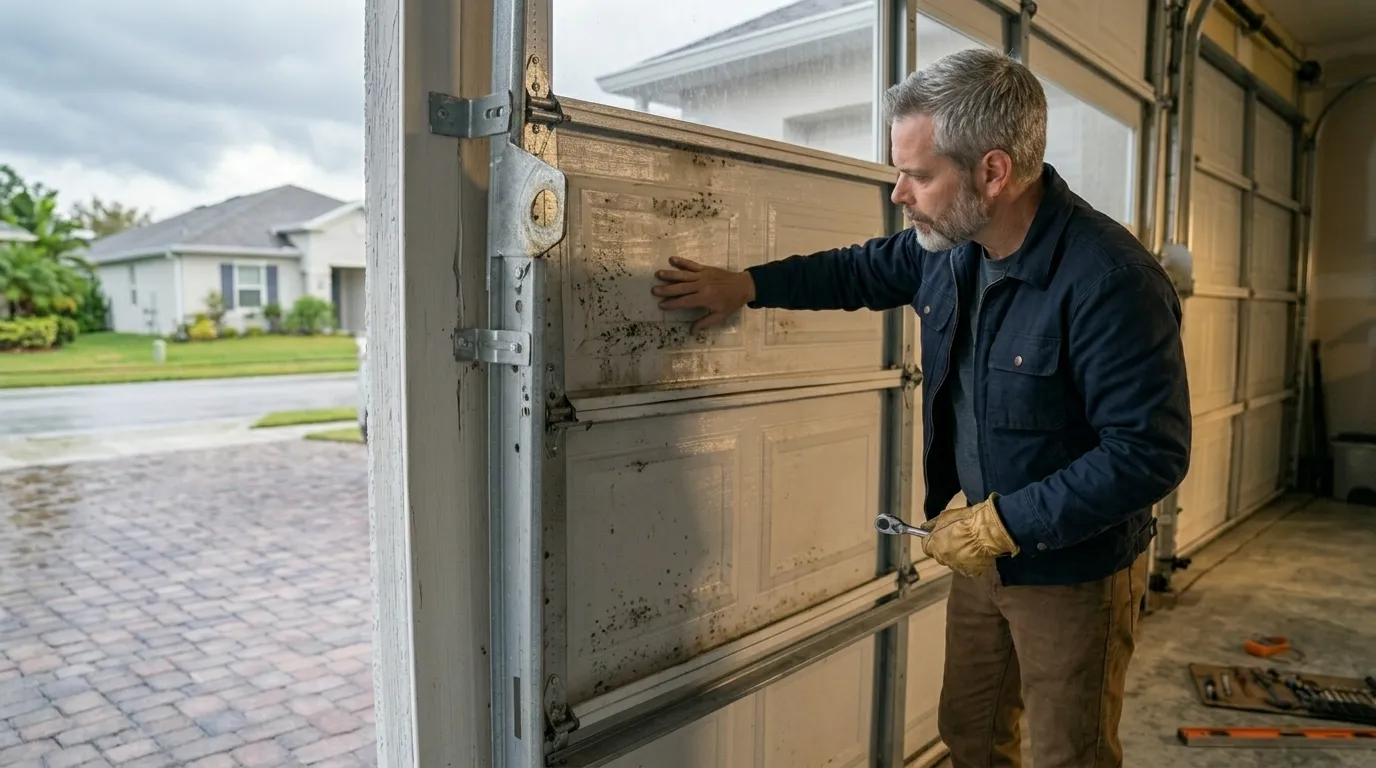
Grafton sits about 14 miles from our West Bend shop, inside a climate zone rated cold and severe, which matters more for a house this age than it would for new construction. A door and track set installed in 1986 has been through roughly four decades of Wisconsin winters - freeze-thaw cycling that swells wood jambs, pulls track brackets a fraction of an inch out of plumb, and stiffens lubricant on hardware nobody's serviced since the house was built. Add a median household income of $88,634 across the area, which tends to mean owners maintain rather than replace at the first sign of trouble, and you get a lot of doors in Grafton running original springs and openers well past when a newer subdivision would have already swapped them out.
Stocked Parts
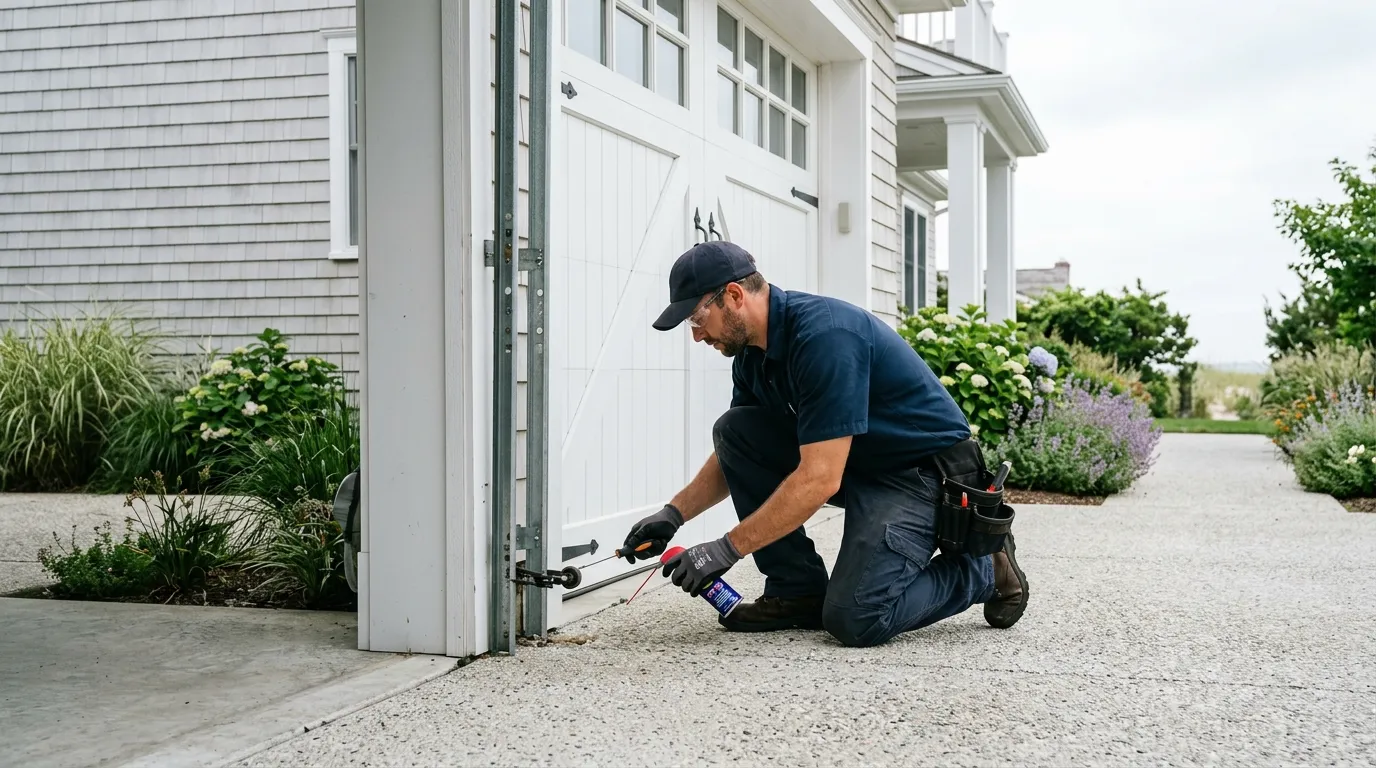
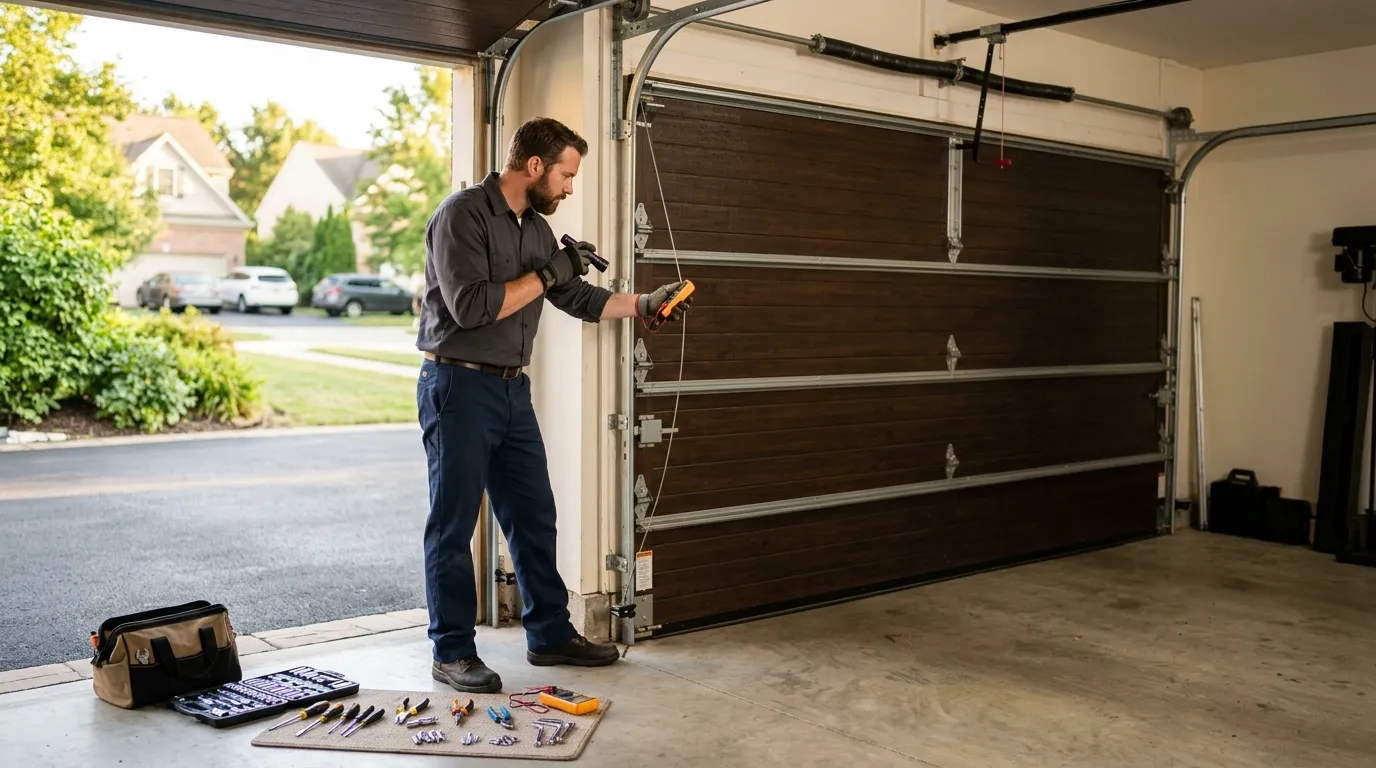
We keep photo-eye sensor kits, standard torsion springs in the sizes common to 1980s door weights, and galvanized lift cable on the truck, because those three cover most of what a call to Grafton turns into. What we don't stock is every discontinued panel style from that era - if a single warped section needs matching and the manufacturer doesn't make that profile anymore, we'll tell you honestly that a full door replacement is the faster and often cheaper path, rather than hunting for a panel that may not exist. We travel from West Bend for every Grafton call; there's no branch stocked separately in town, so the parts on the truck that day are what's available.