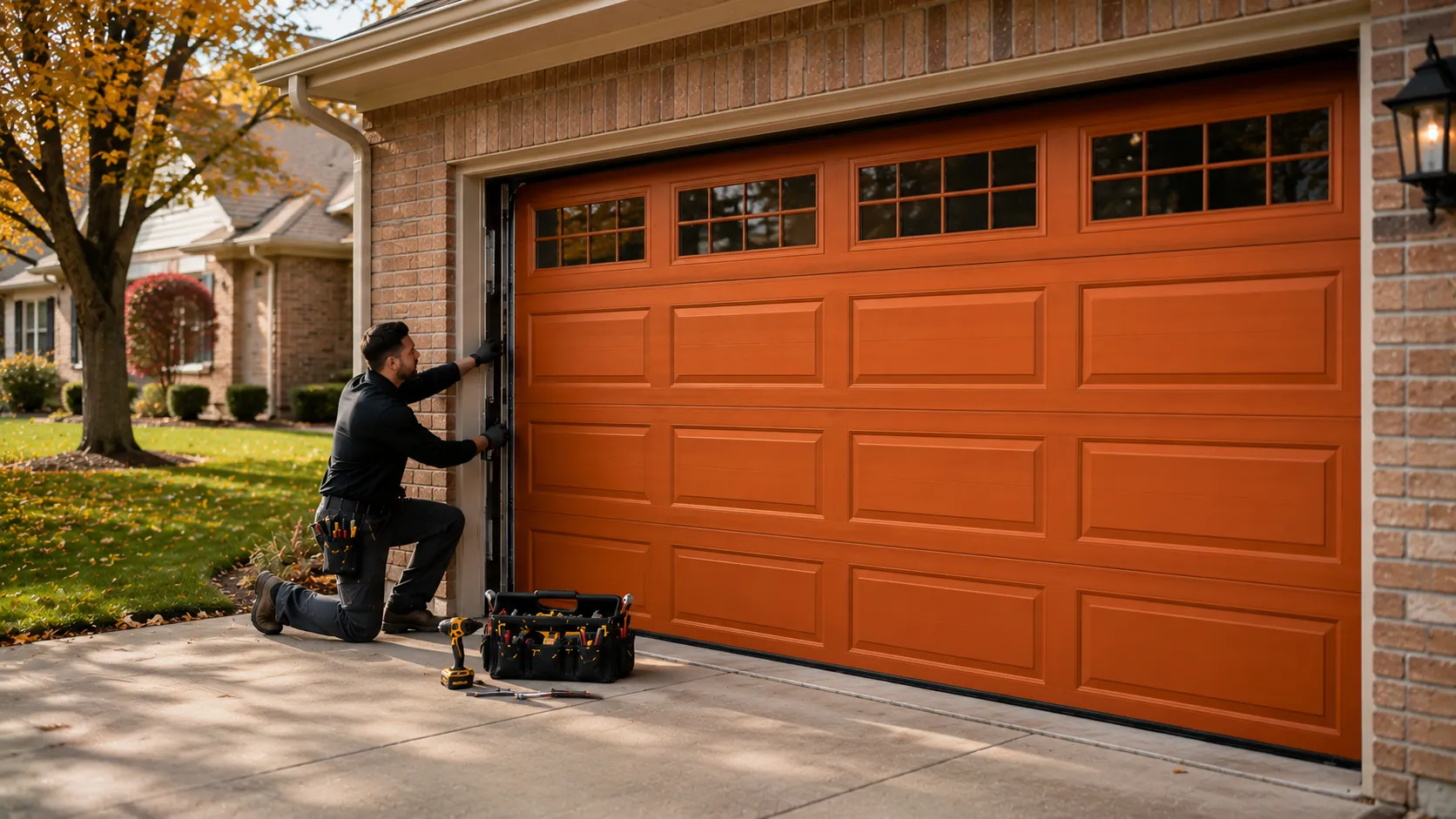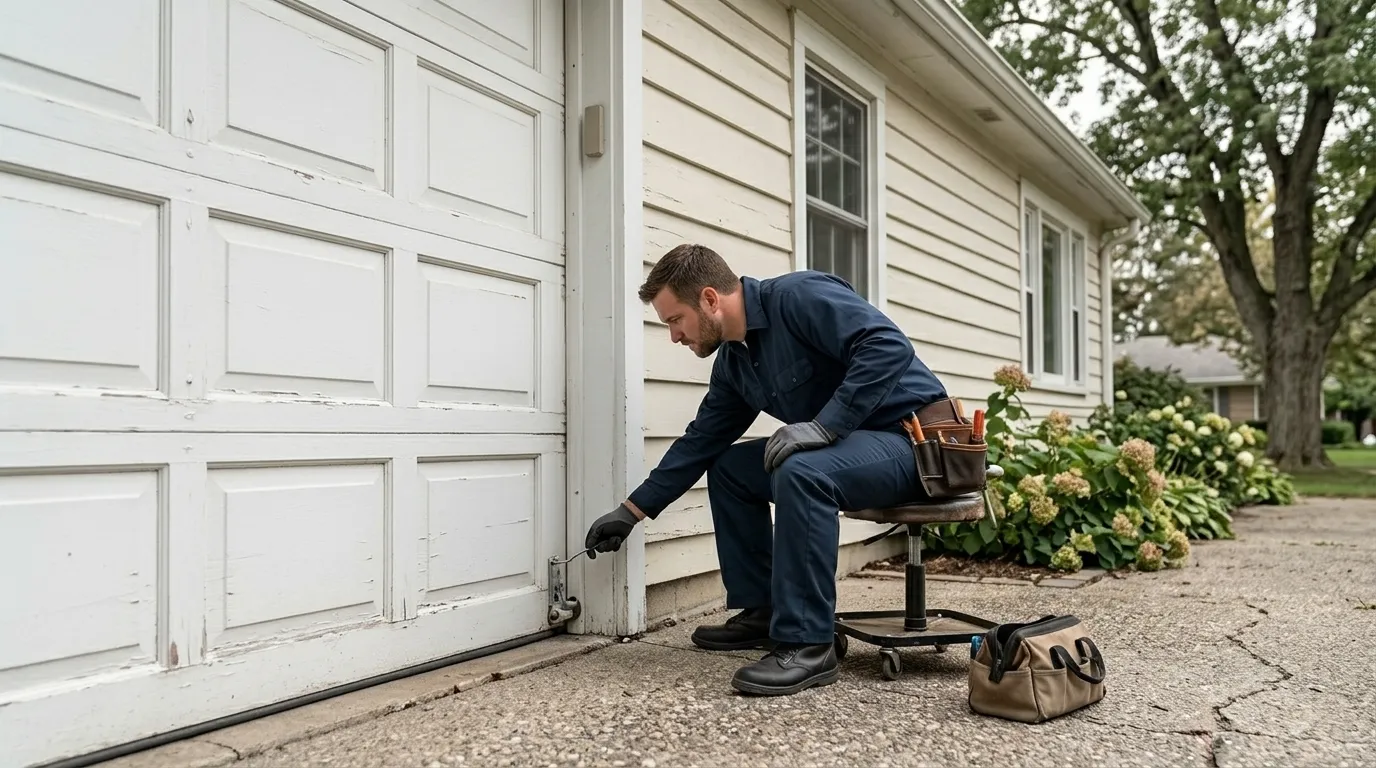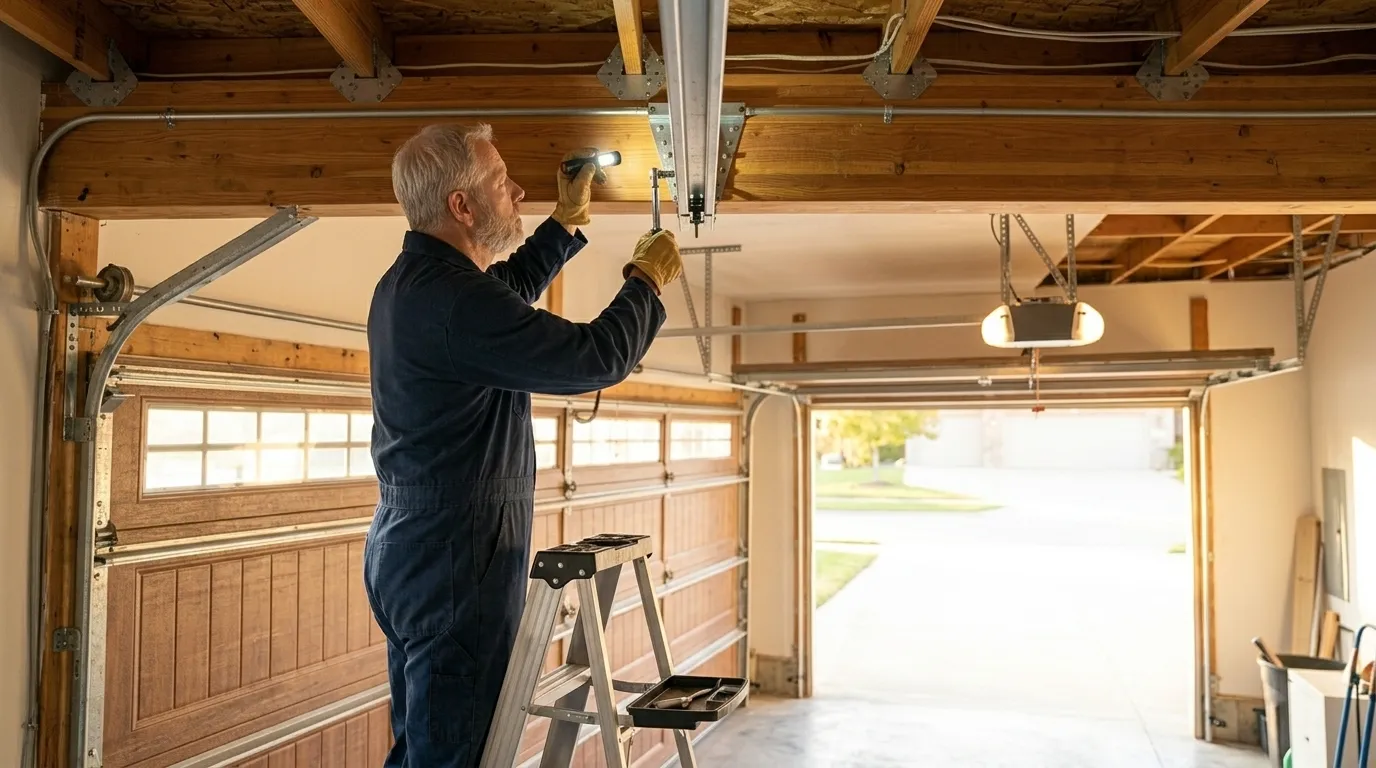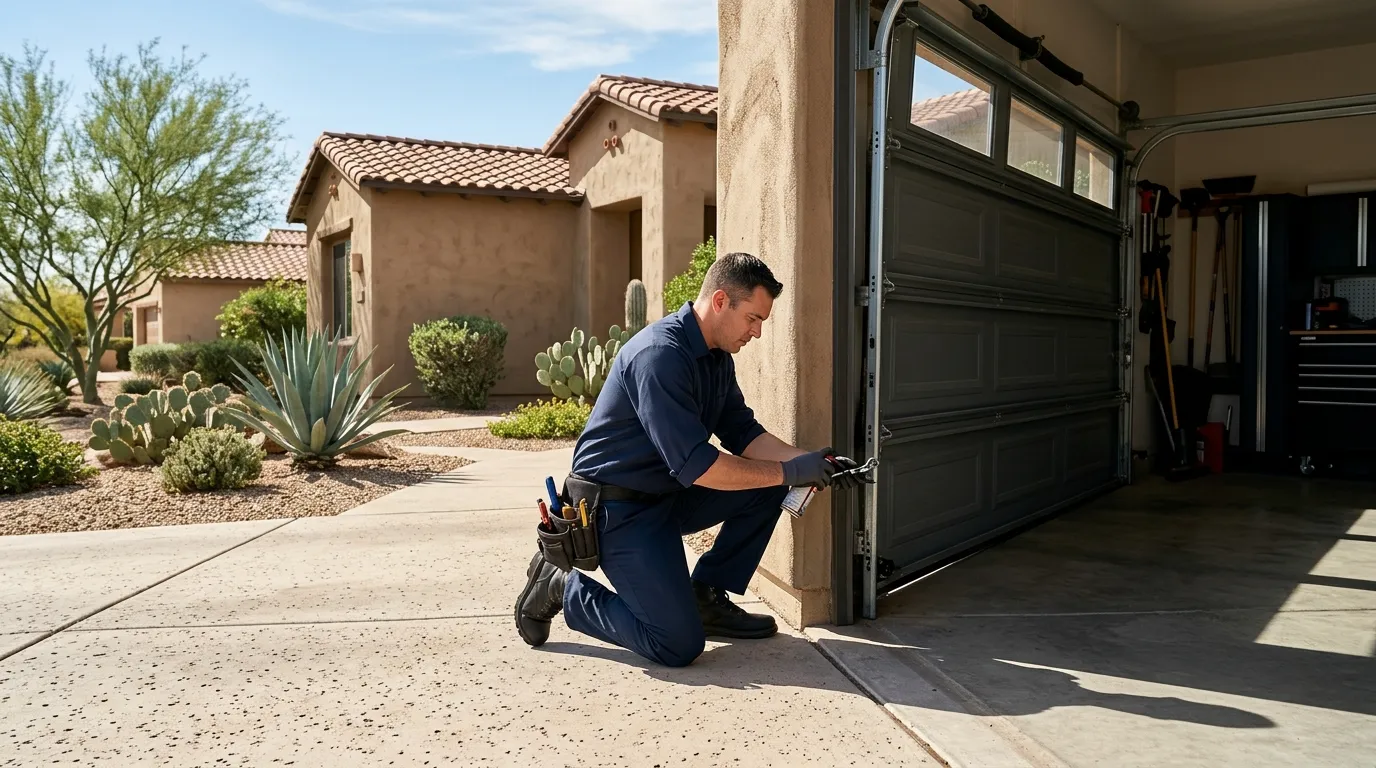
What Can Go Wrong
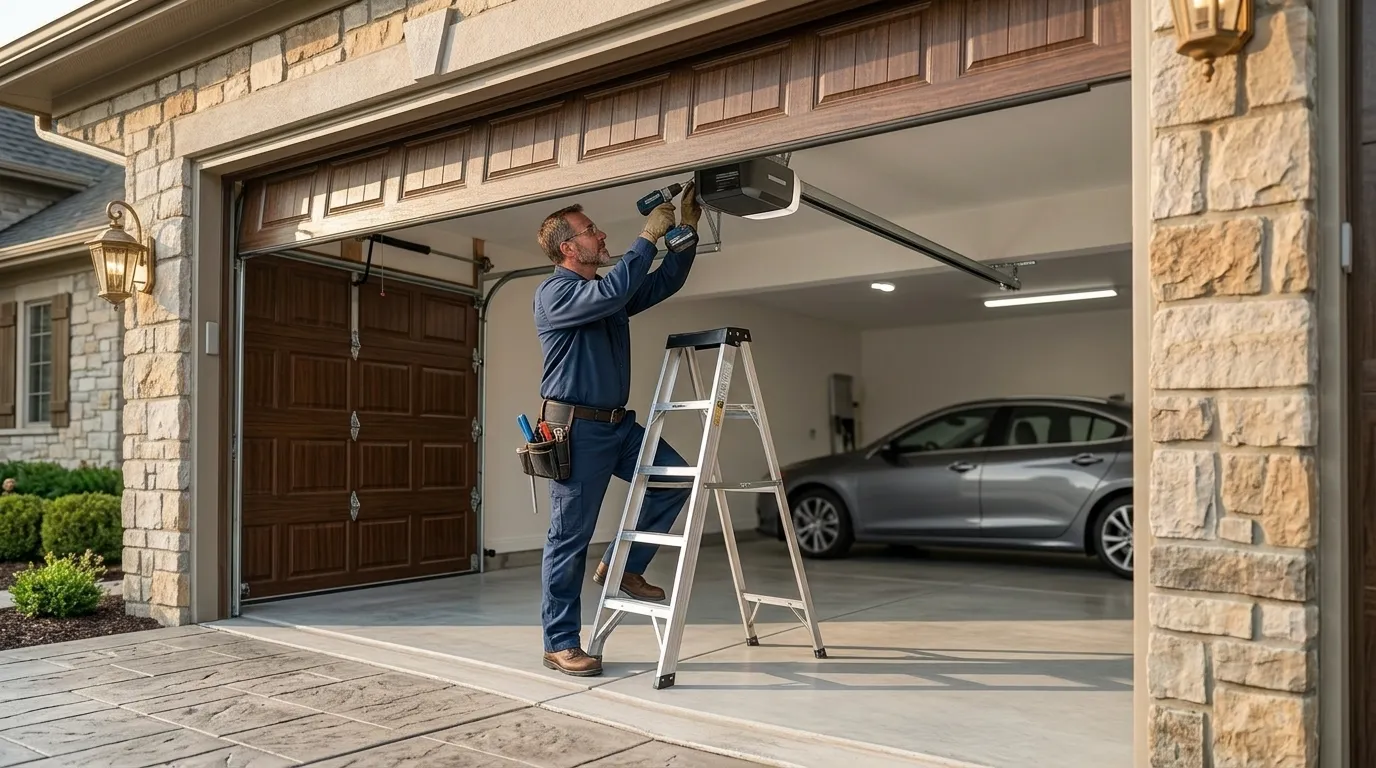
A lot of Grafton went up starting around 1986, and that matters more than most homeowners realize. An opener installed the year the house was built is now well past the age where gears, drive belts, and circuit boards are expected to hold up. If nobody's swapped it, you're running on original hardware pushing four decades old. The gear that turns the drive screw or chain sprocket is usually nylon, and nylon this old cracks and strips teeth quietly, one cycle at a time, until the motor spins and the door doesn't move. Circuit boards from this era used capacitors that dry out with age; you'll see the light blink, hear a click, and get nothing. Wall buttons wear their contacts smooth. None of this is dramatic - it's just decades of use catching up with parts that were never meant to outlast the roof.
We don't guess at what's original. If the opener still has the manufacturer's install date sticker inside the housing, or a chain-drive setup with a keyed manual release lever from that generation, that tells us plenty before we open the case.
The Symptom
The door reverses on its own before it's fully open, or it only closes partway and pops back up. Sometimes the motor hums but the carriage doesn't travel down the rail - a sign the belt or chain has slipped its sprocket. Other times the remote works but the wall button doesn't, or vice versa, which usually points to failing contacts rather than the motor itself. If you're hearing a grinding or clicking that wasn't there last month, that's the gear train giving notice before it fails outright, often on a night when the temperature has dropped hard - cold makes brittle nylon parts more likely to shatter under load rather than just wear.
Why This Fails Locally
Grafton sits about 14 miles from our shop in West Bend, inside the same cold-climate zone that puts real stress on opener hardware region-wide - hard freezes make plastic gears and belt material brittle, and that's when a marginal part finally lets go. What sets Grafton's calls apart is the age curve: with houses here built mostly from 1986 forward, the openers we pull are consistently newer than what we see in the older 1958-1999 stock across the wider service area, but they're also often the same unit that shipped with the house, never replaced. That means less of the truly ancient chain-drive gear you'd find in an older-stock town, and more units sitting right at the edge of a normal service life with parts that were built to 1980s-90s tolerances, not today's.
Stocked Parts
We carry gear kits, drive belts, and safety sensor pairs that fit most of the openers common to houses built in Grafton's era, so a straightforward gear or sensor failure is usually a same-visit repair. What we don't stock is every logic board for every discontinued model - some of those are special-order, and if yours is one of them, we'll tell you the lead time before you commit to the repair rather than the replacement. Given the median household income in this service area sits well above $85,000, most owners here choose to replace rather than wait on a board for a unit already past its expected life, but that's your call to make, not ours to push.