The Problem
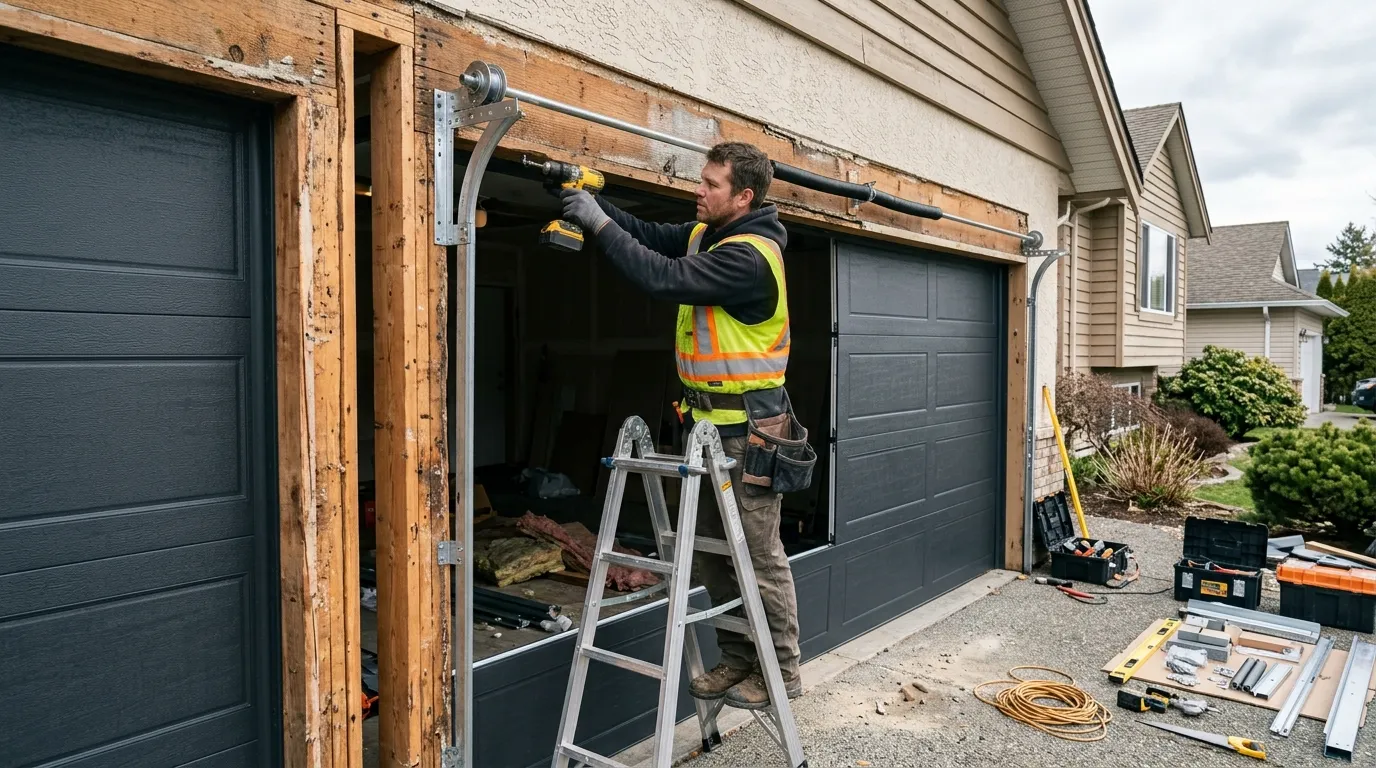
Walk through most of West Bend's older neighborhoods and you're looking at houses built between 1958 and 1999, with the typical home dating to around 1976. Across the 37 named areas we work in, the bulk of that stock is 1960s and 70s construction - ranch and split-level houses that went up fast during a building boom, with garage doors that were never built to any insulation standard because none existed yet. That single-layer steel panel with no thermal break wasn't a cost-cutting choice by the builder. It was just what a garage door was in 1970. Nobody expected it to still be hanging in 2024, but a lot of them are. The steel is thinner than what ships today, the bottom seal channel is a shape manufacturers stopped making a decade ago, and the hardware is sized for a door that weighed less than its modern replacement. When one of these doors finally gives out, it's rarely one thing. It's the whole system aging out at once - spring, rollers, seal, and panel all past their working life together.
The Common Mistake
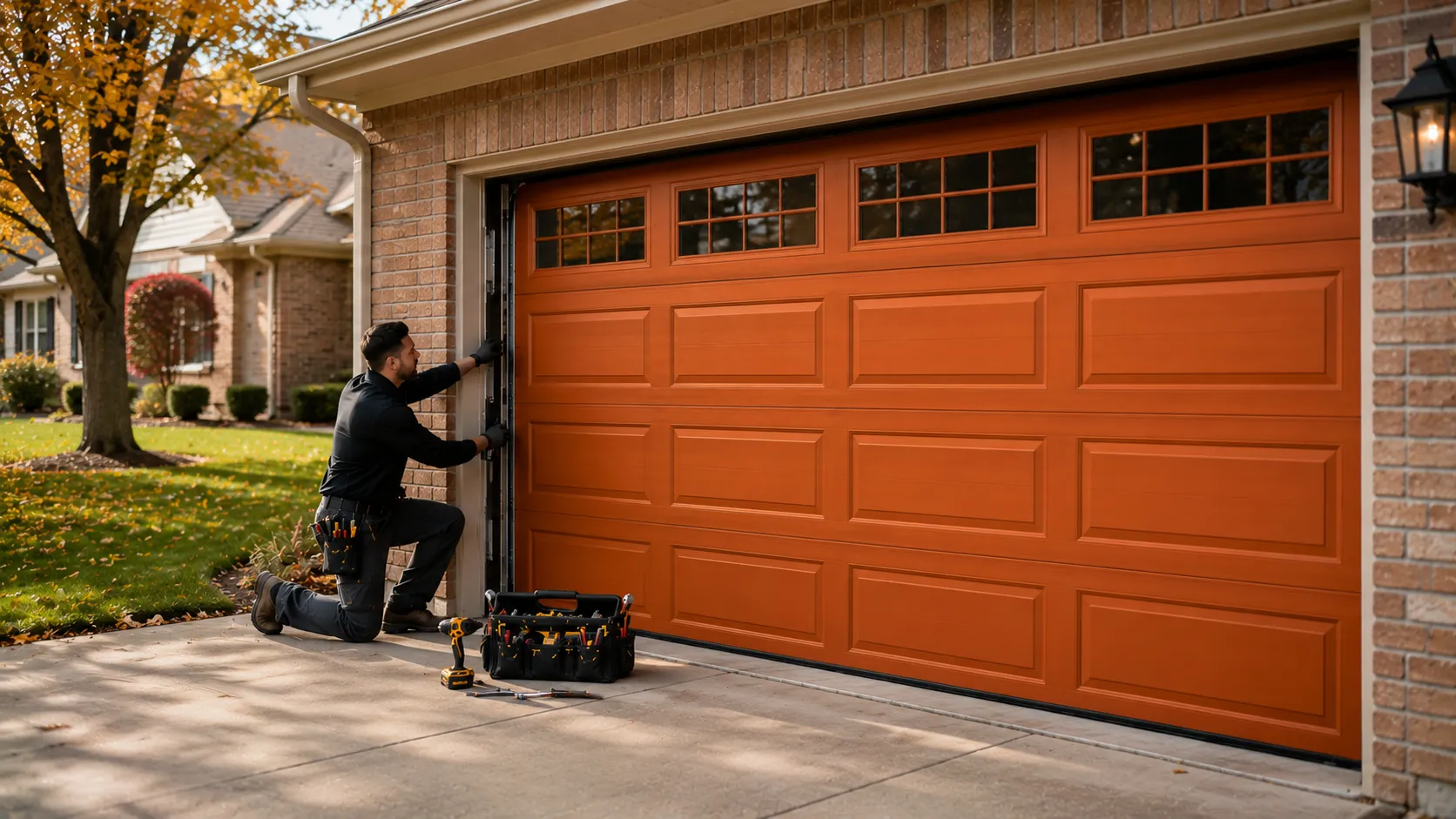
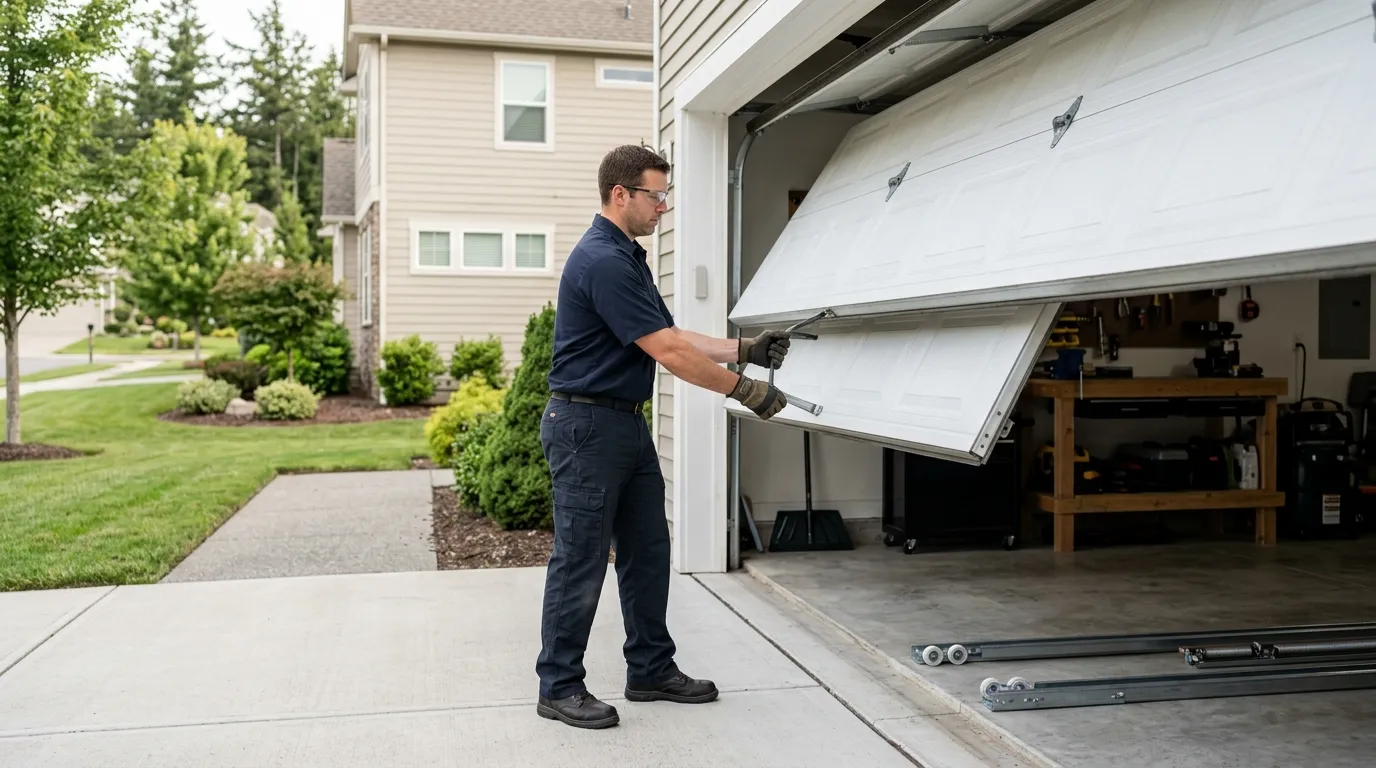
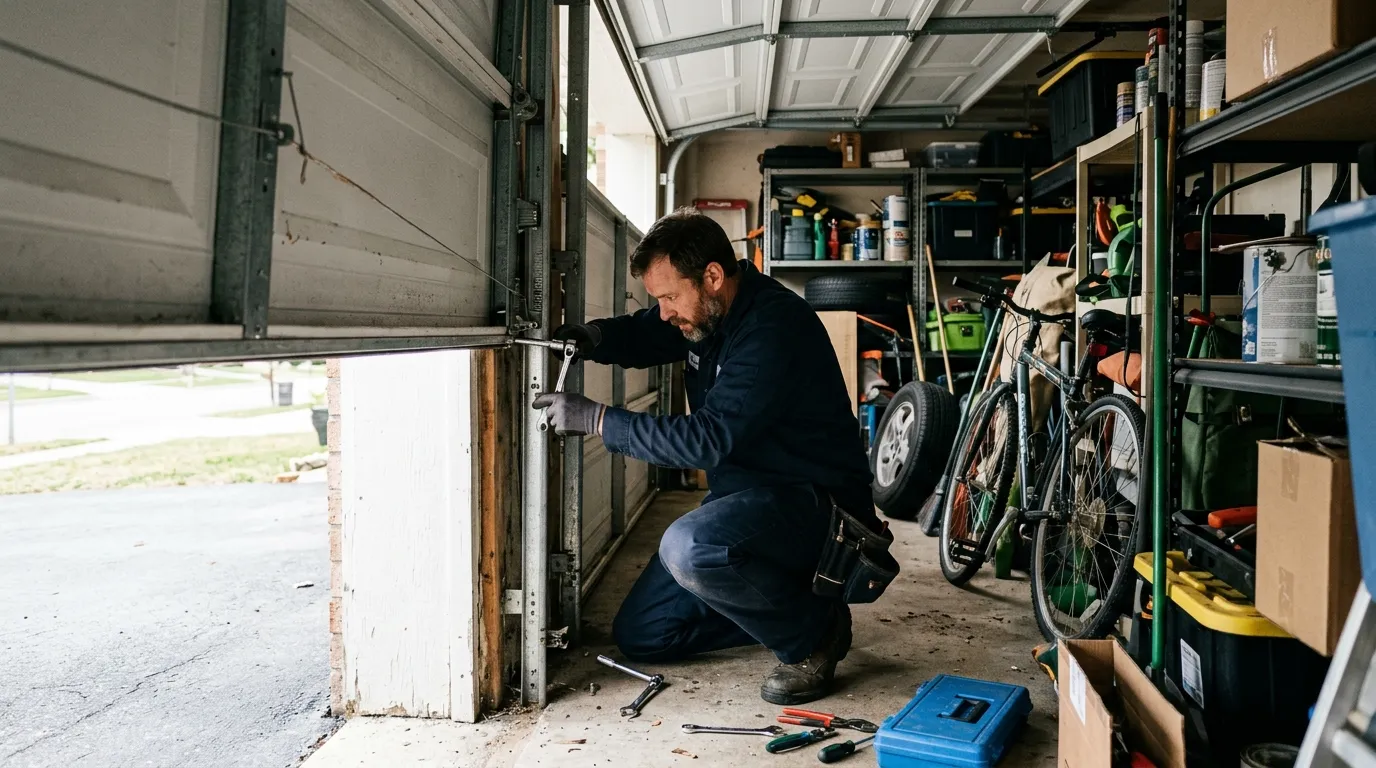
The mistake we see most in houses from this era is treating the door like a weatherstripping problem. Someone notices cold air coming in around the bottom, buys a new vinyl seal or a foam insulation kit, and tacks it onto a door that was never engineered to hold heat in the first place. It helps a little. It doesn't fix anything. A single-layer steel skin with no thermal break still transfers cold straight through the panel regardless of what you glue to the edges. The bigger issue on 1960s and 70s doors is usually the track alignment and the spring sizing, both of which drift over 50-plus years of use and get worse once the original hardware starts fatiguing. Bolting insulation onto a door with a bent track or an undersized spring just means you've spent money without addressing why the door struggles in the first place. If your house falls in that median 1976 build window, the honest move is to have someone check the frame and hardware before spending on cosmetic fixes.
What the Weather Here Does to It
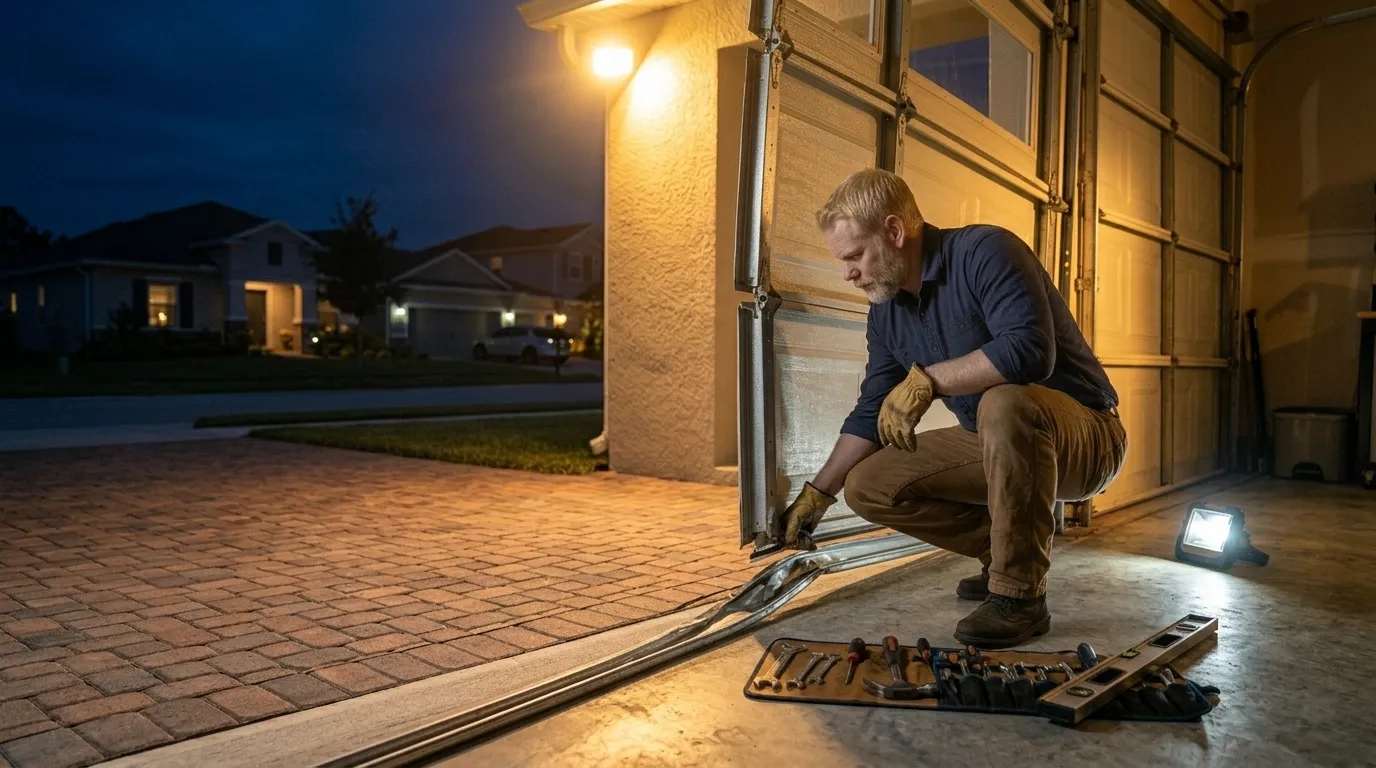
West Bend sits in a cold-and-severe climate band, and that's hard on a door that predates modern insulation standards. Every winter, the temperature swings that come with a severe cold climate put stress on old steel panels - contraction overnight, expansion during a thaw, over and over across a season. On a door built in the 1960s or 70s, that cycle works on metal that's already fatigued from decades of the same abuse. The bottom seal hardens and cracks in the cold faster than a newer rubber compound would. Track brackets that were fine in summer pull loose as the wood jamb behind them shrinks in dry winter air. None of this is unique to any one house - it's what happens to original hardware from that era once it's been through fifty-some West Bend winters. A door built after insulation codes existed handles that cycling better, which is really the core difference between an old single-layer door and a current one.