What Was Built Here
Hartford's housing stock skews newer than a lot of the towns we cover out of West Bend. The median build year here lands around 1993, which puts a big share of the neighborhoods into the 1980s-through-2000s window rather than the older 1960s-70s wave you see closer to the lake. That gap matters for garage doors, because it's roughly a twenty-year jump in what came standard from the builder.
Across the wider service area, median build year sits closer to 1976, with most stock dating 1958 to 1999. Hartford sits on the newer end of that range. Houses built here in the 90s and 2000s came with steel sectional doors on extension or torsion springs that are still reasonably common parts today, not the one-piece slab doors or oddball hardware you find on a 1962 build. That's the starting point for everything else on this page: fewer legacy-hardware calls, more wear-and-failure calls on doors that are 20 to 30 years into their service life and due for springs, rollers, or an opener swap.
With about 6,578 households in Hartford, there's a good volume of these newer garage systems now reaching the age where the original spring set and rollers are worn out, even if the door itself still looks fine.
How That Shows Up in the Door
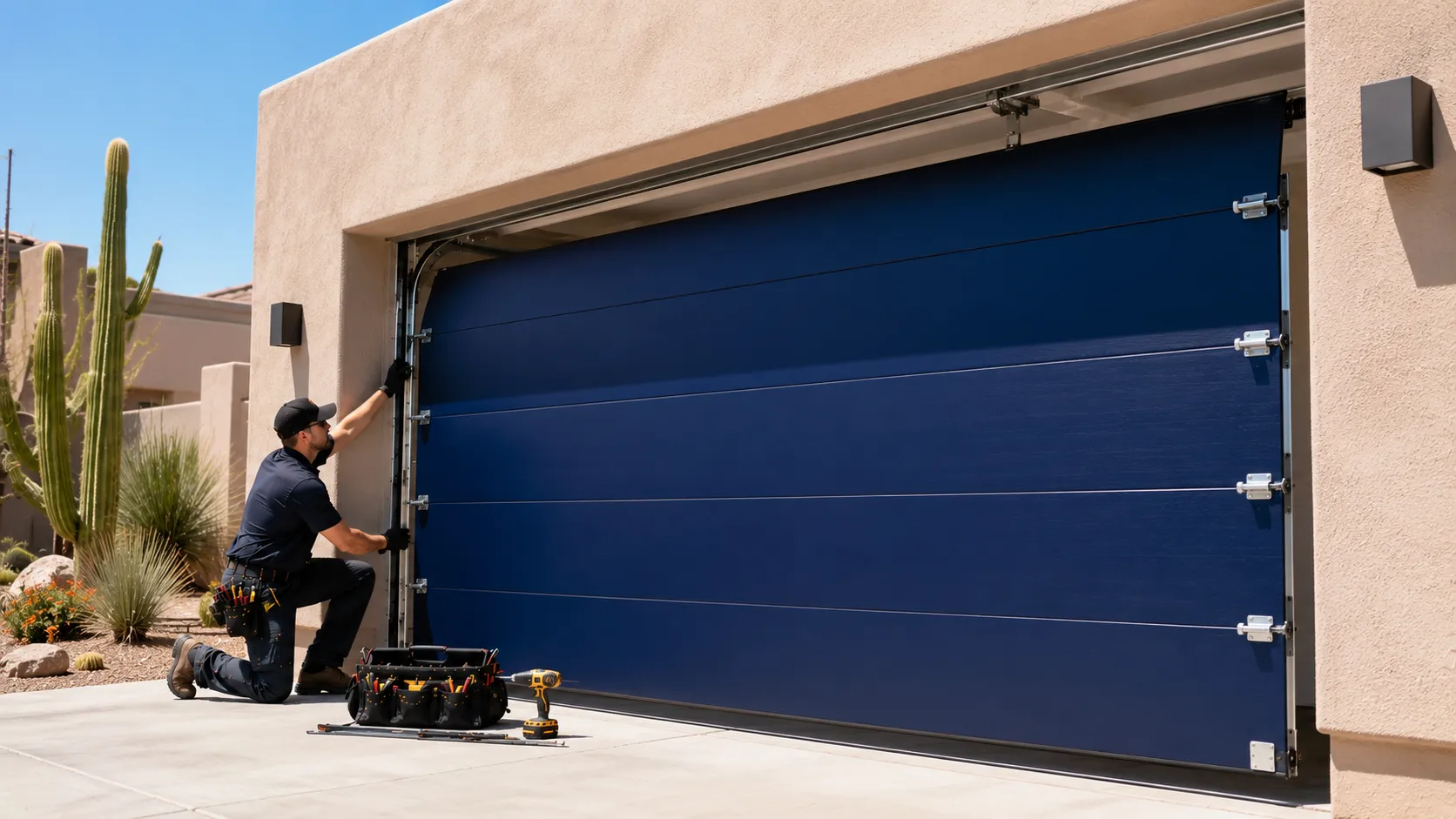
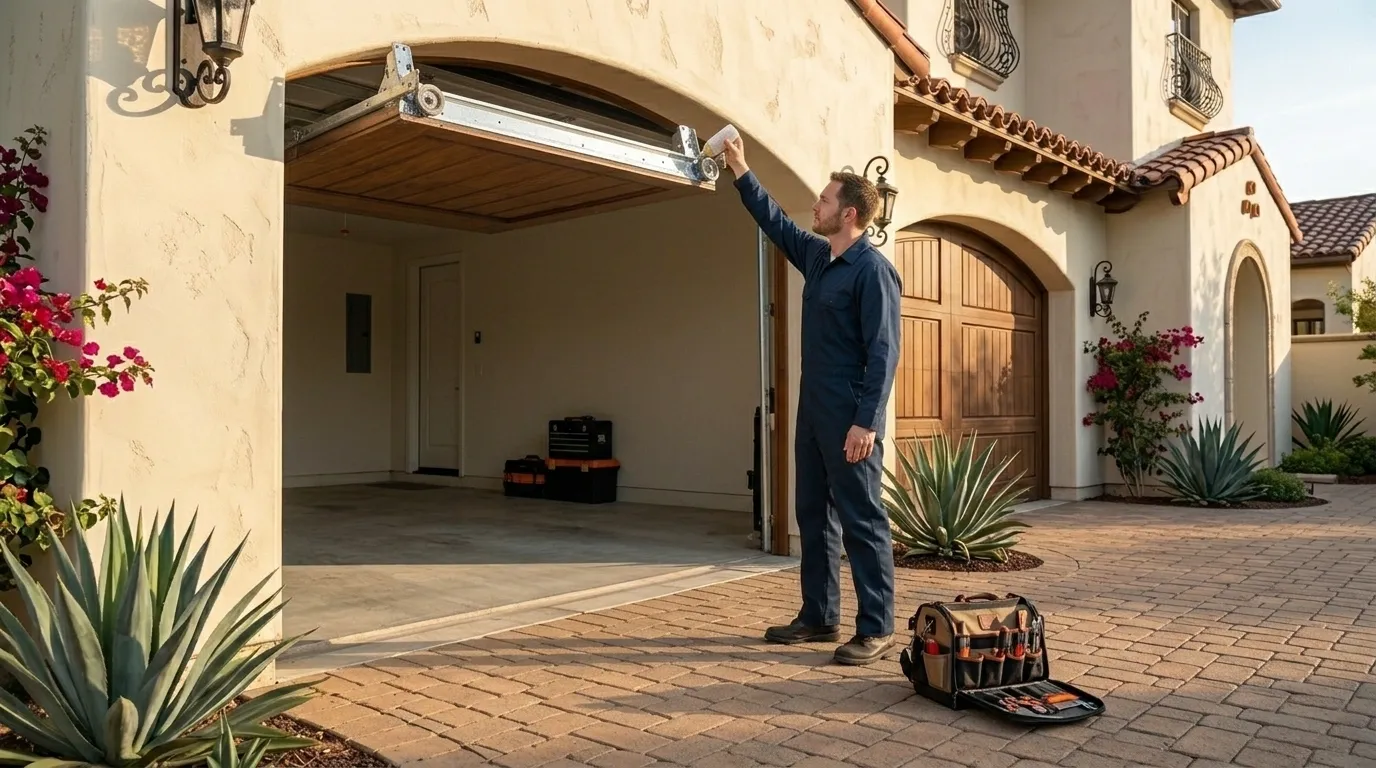
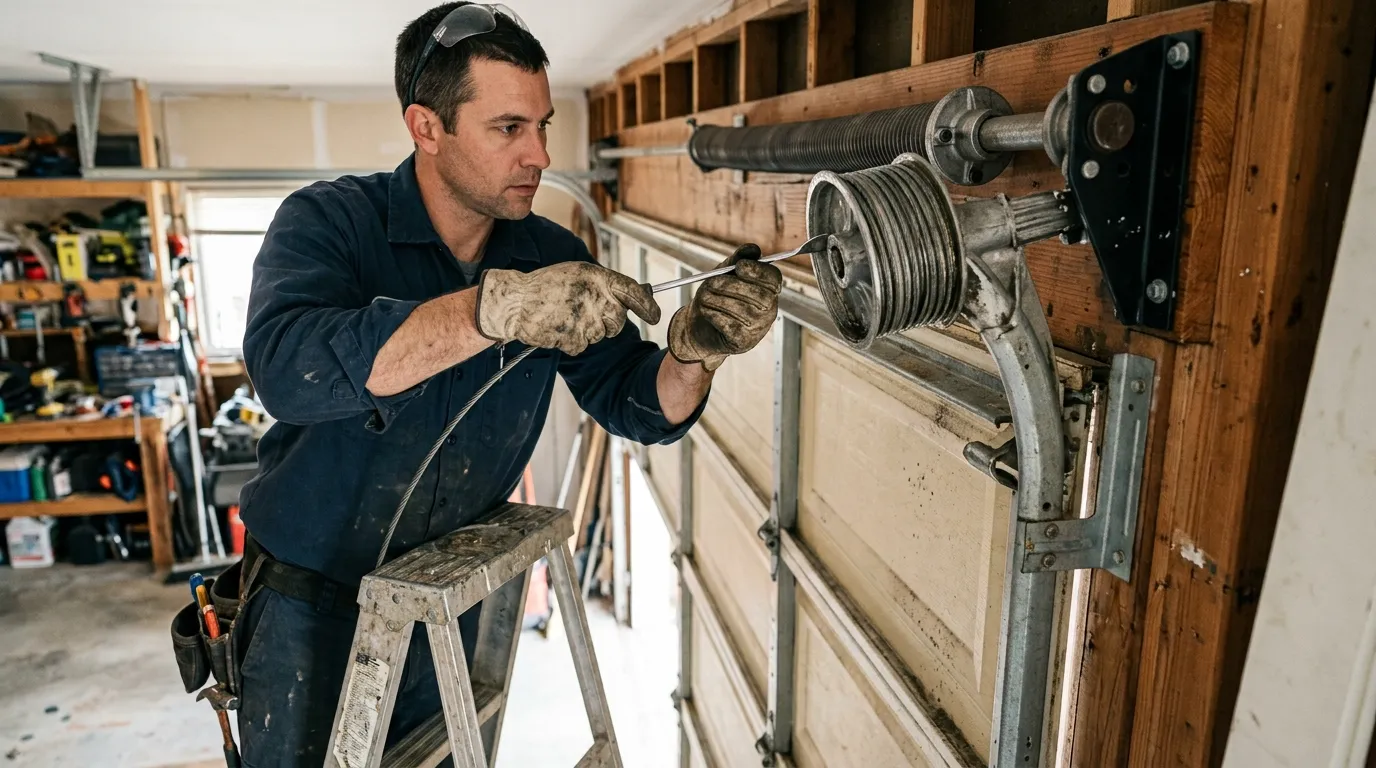
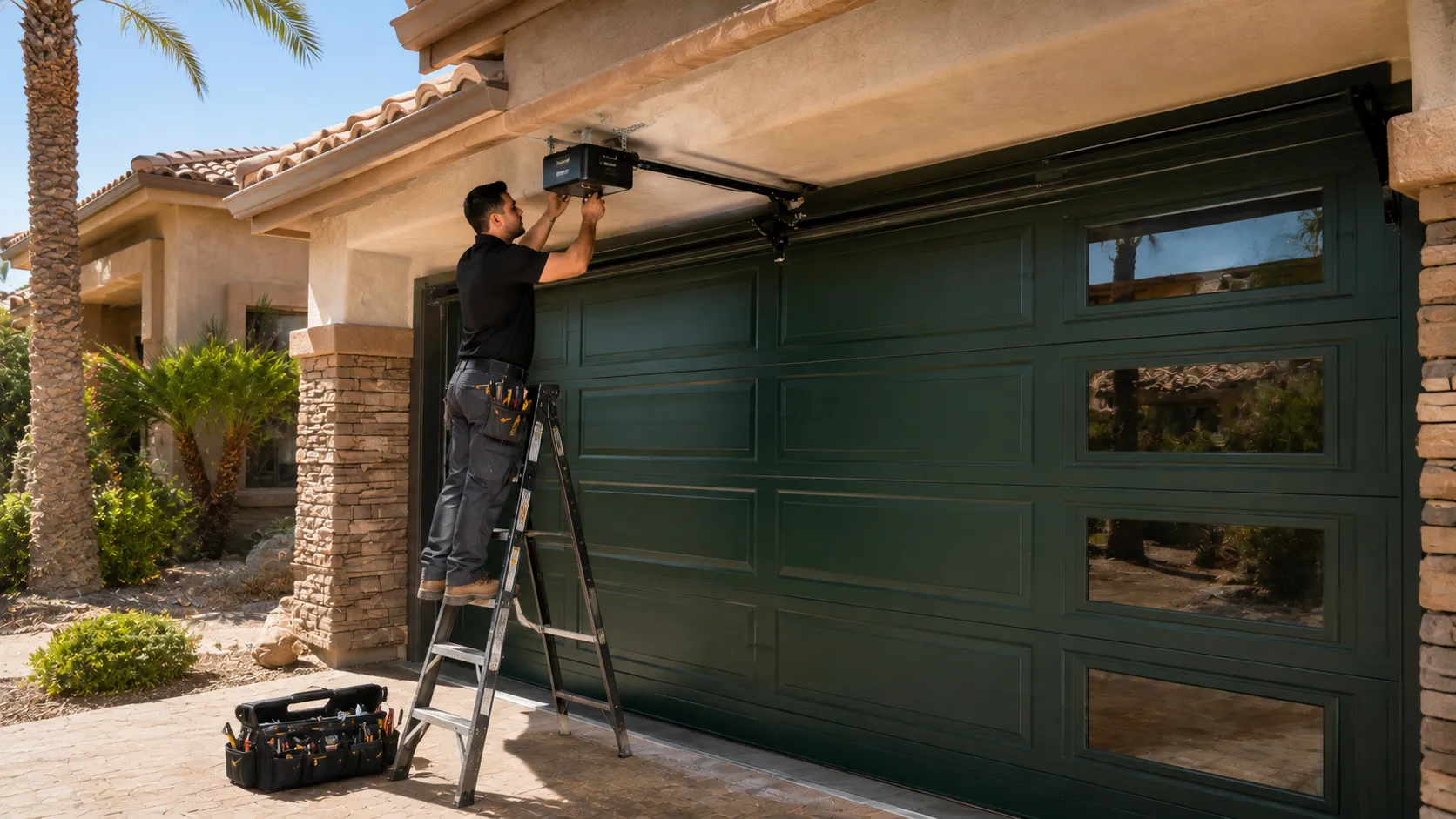
Because Hartford's stock leans 1980s-2000s, the doors we open up here are mostly steel sectional panels on torsion springs mounted above the opening, not the side-mounted hardware you'd find on an older house. That's good news for parts availability - torsion springs and standard track sizes for this era are stocked, not special-order.
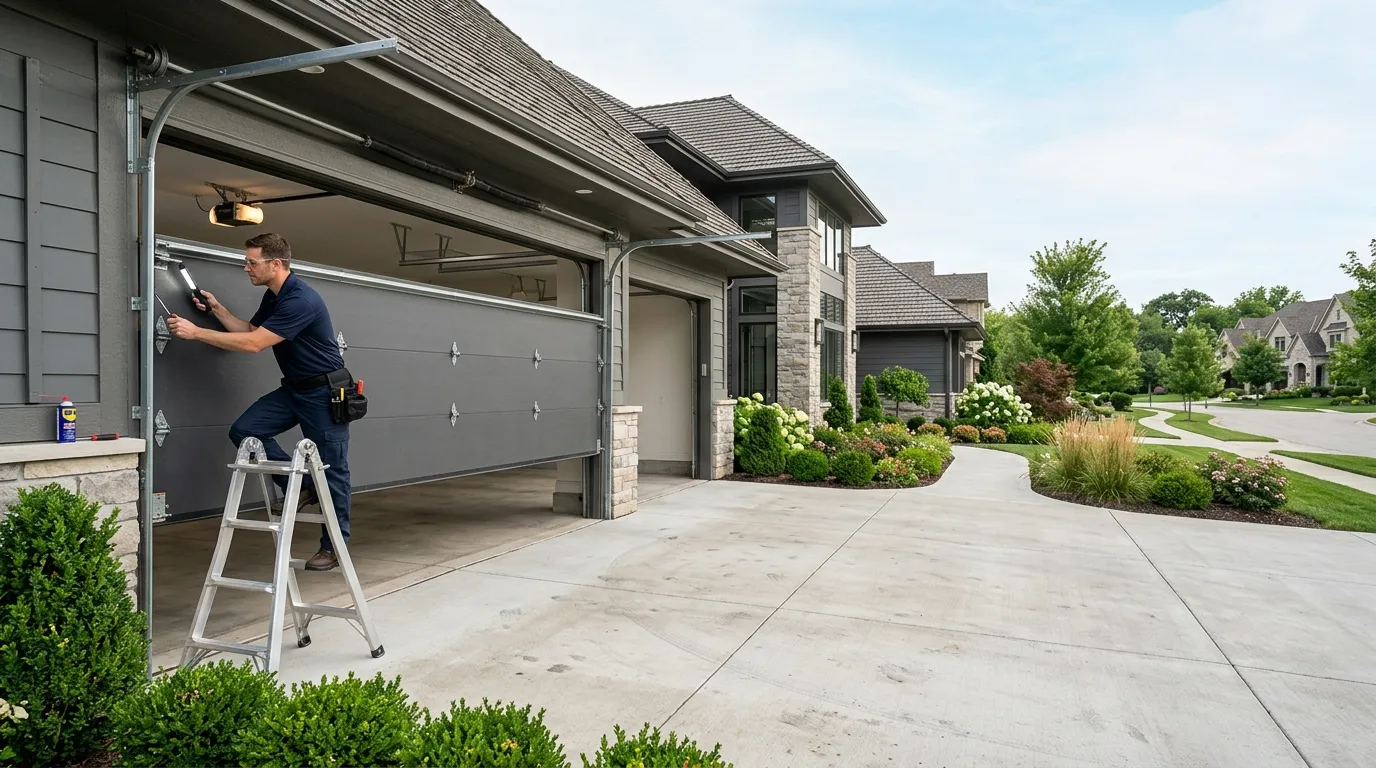
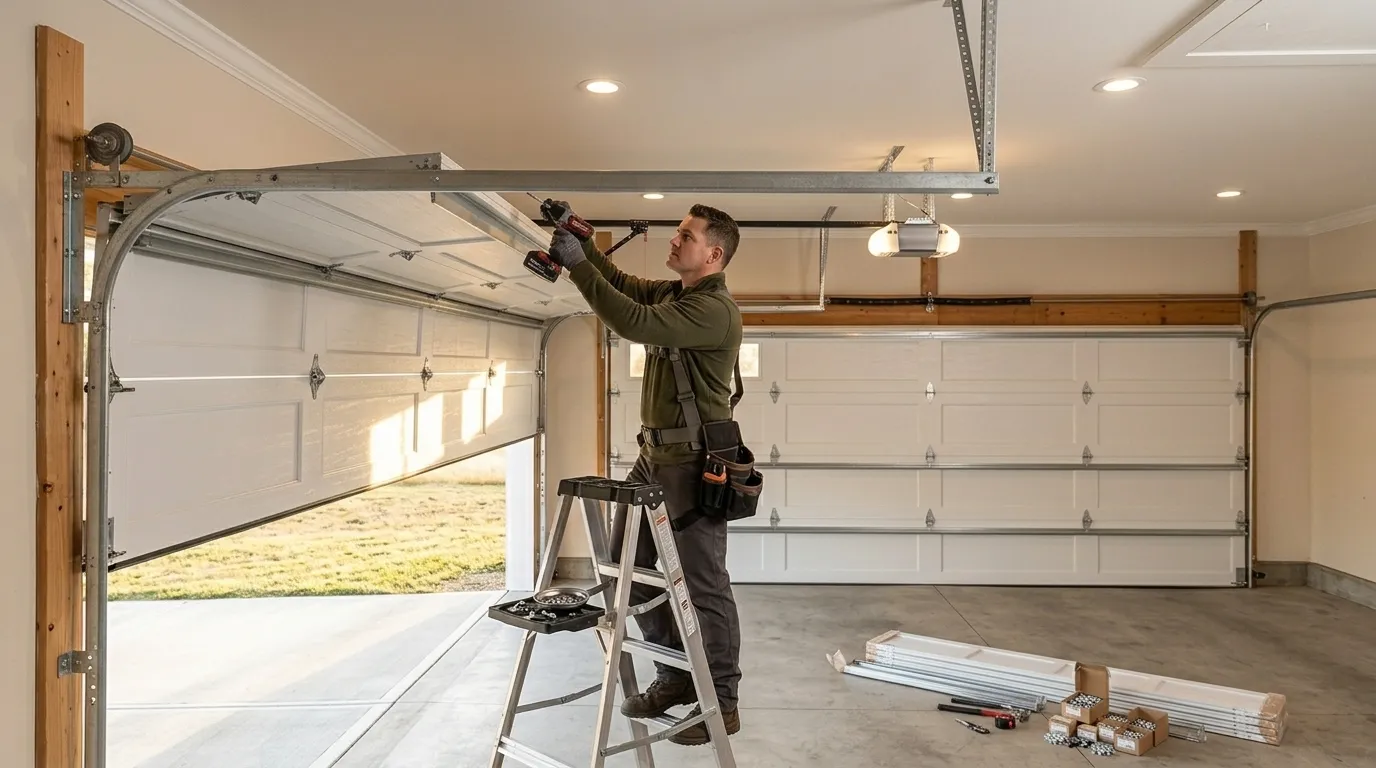
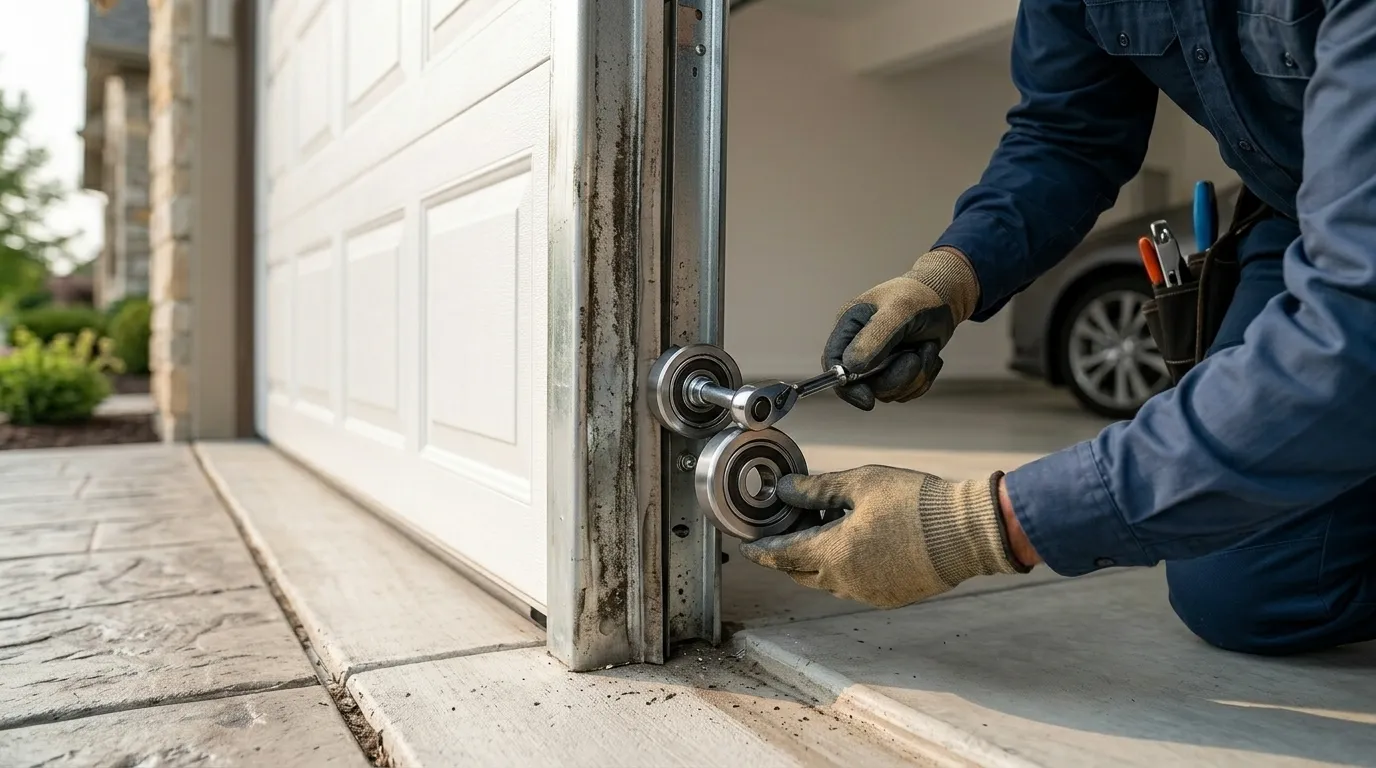
What fails on a 25-to-35-year-old door is predictable: the torsion spring reaches the end of its cycle count, rollers (especially the original nylon ones) crack or seize, and the opener - often the original chain-drive unit if the house hasn't been touched - starts skipping or grinding. Cold matters too. This area sits in a severe cold climate zone, and steel panels and springs both lose flexibility in deep cold, which is when a spring that's already near its limit finally lets go.
We don't see much of the old two-piece wood-panel doors or oddball 1960s track hardware here that we run into elsewhere in the service area - Hartford's stock is young enough that most of what we're replacing is standard-size springs, rollers, cables, and openers rather than hunting down parts for something the builder stopped making decades ago.
Timing on This Area
We run out of West Bend, about 12 miles from Hartford, so we're not sitting in town waiting for a call - routing and drive time factor into when we can get there on a given day. We don't advertise a fixed response window for this area; what we can tell you is that we build our day around the service area as a whole, and Hartford is a regular stop given its distance and call volume.
Cold-weather timing matters more here than people expect. Severe cold snaps are when torsion springs on aging doors are most likely to snap, since cold steel is less forgiving under tension - so winter tends to bring a run of spring calls in this area, concentrated in the older end of the 1980s-2000s stock.
If you're planning ahead rather than dealing with a break, the best time to have springs or rollers checked on a 20-plus-year-old door is before the first hard cold spell of the season, not during it.