The Problem
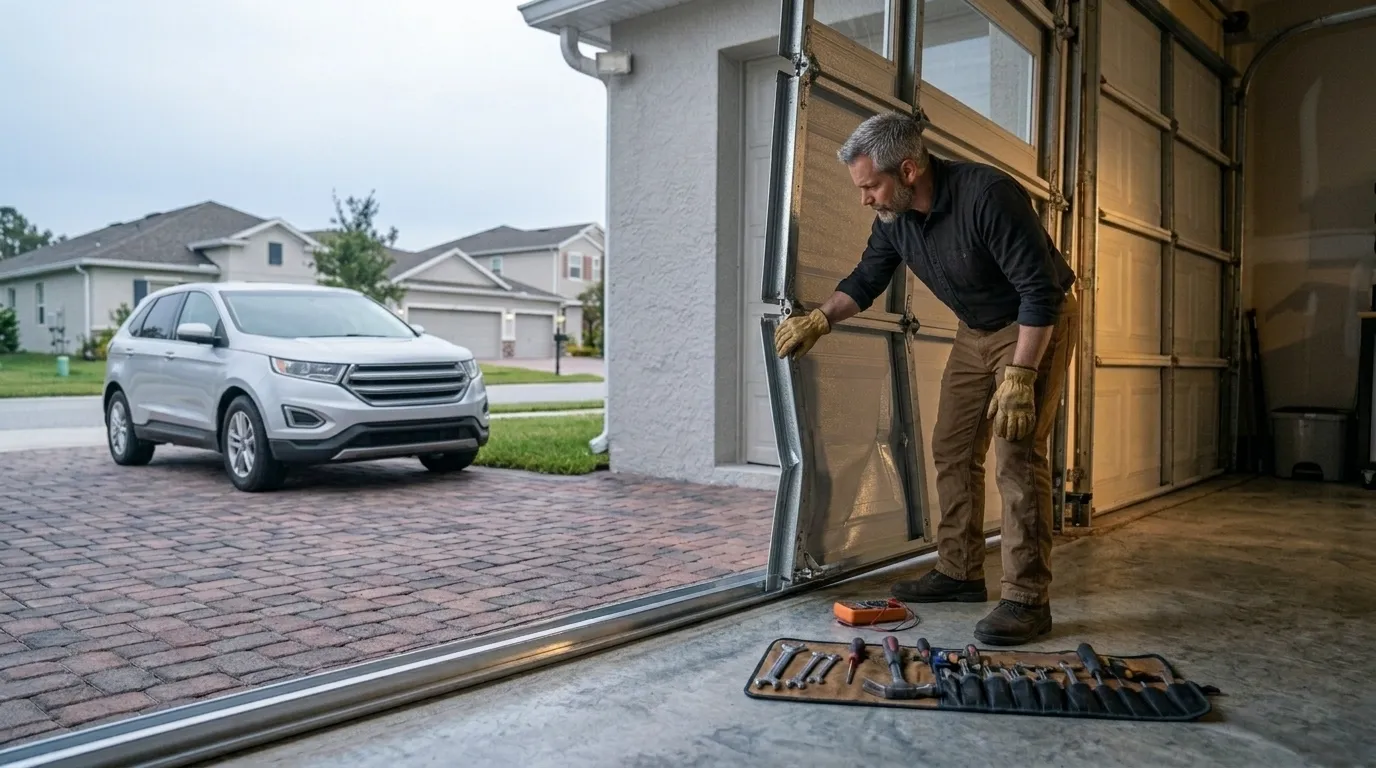
Walk most blocks in West Bend and you're looking at houses built between 1958 and 1999, with the bulk of that stock going up in the 1960s and 70s. That means a lot of doors on this side of town are original or close to it - steel sections with foam that's long past useful, hinges worn oval, and hardware sized for a door that's heavier than what gets sold today. When one of these doors starts binding or the spring lets go, the question isn't just "can this be fixed" - it's whether the door, track, and opener still match each other well enough that fixing one part doesn't just expose the next failure. A door from a 1976-era build was never designed around today's insulation expectations either, which matters more here than it would somewhere with a milder winter.
The Common Mistake
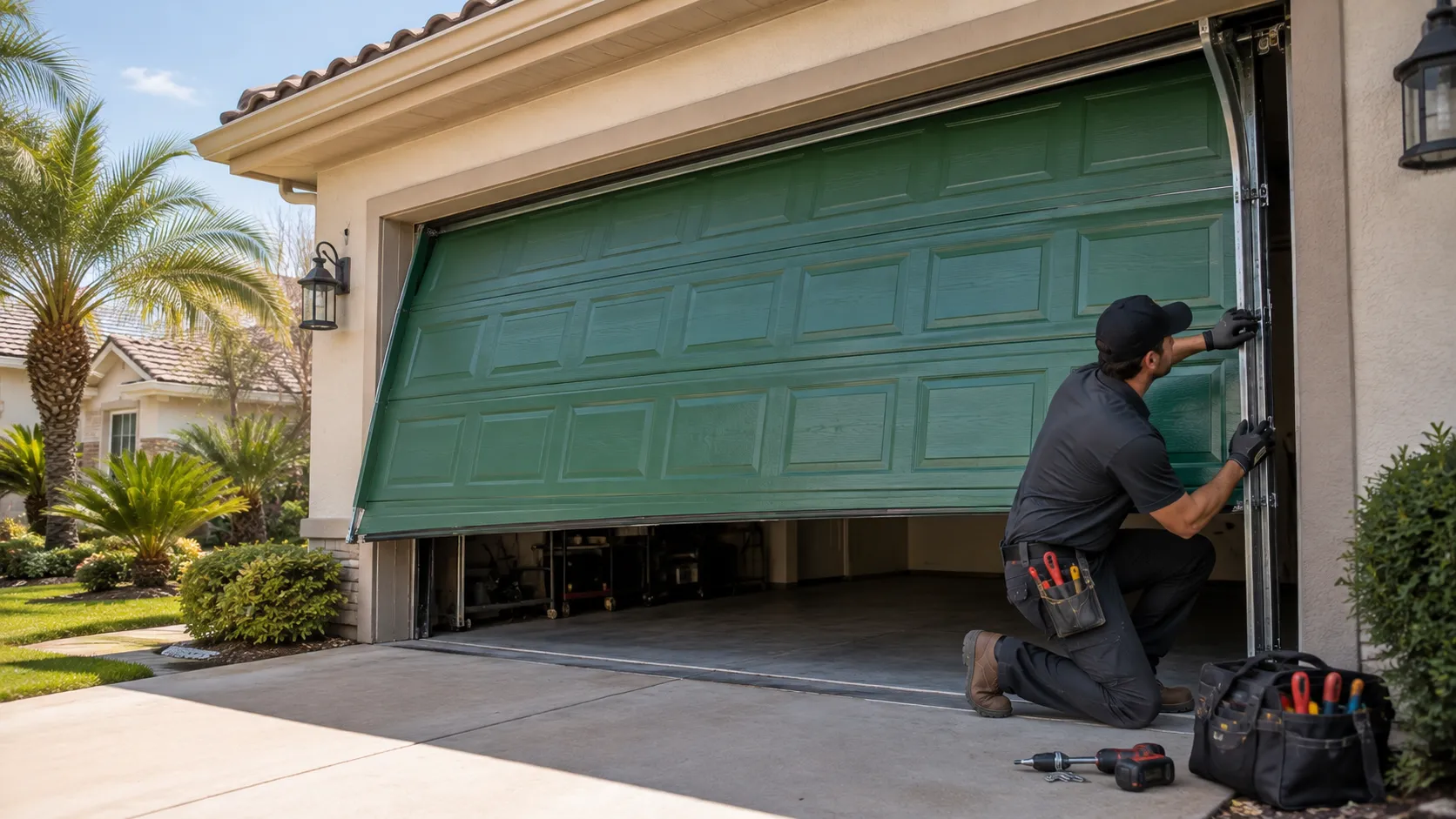
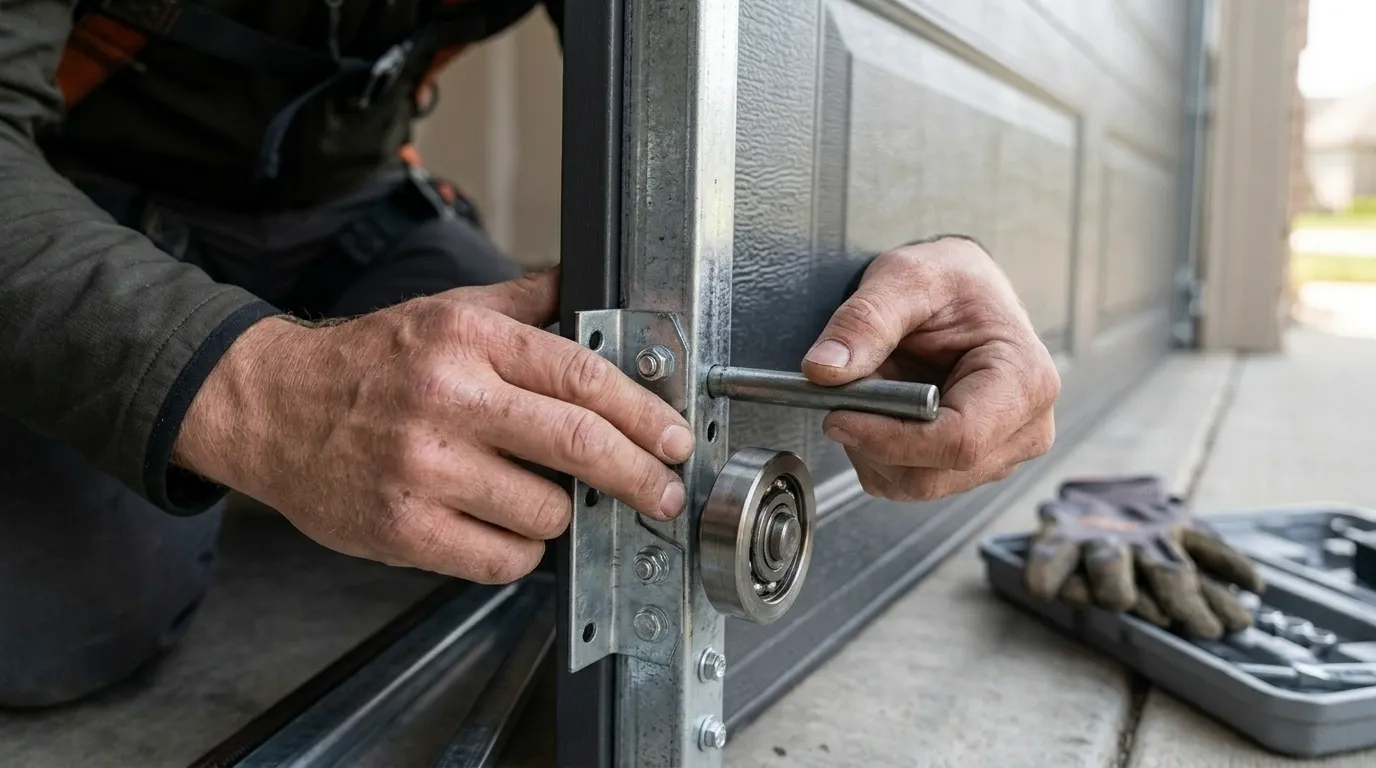
The mistake we see most is treating a torsion spring replacement as the whole job when the door is from that same 1958-1999 wave of construction. You put a new spring on 45-year-old rollers and a track that's been reshaped by decades of temperature swings, and within a season something else in that chain fails. On a door this old, the honest move is to look at the whole assembly - track alignment, roller wear, cable fray - before you commit to just the one repair. Swapping a single part on an otherwise tired system buys you a few months, not a few years.
What the Weather Here Does to It
West Bend sits in a severe cold climate band, and that changes what fails first on an old door. Steel sections contract in deep cold and expand again every thaw, so a panel that's flexed through forty-some winters develops stress cracks and seam gaps that a milder climate would never produce. Springs lose tension faster in cold, and worn rollers bind harder when grease has thickened overnight. On a house from the 1958-1999 build wave, the combination of original hardware and four decades of that freeze-thaw cycle is exactly why doors here fail in January more than any other month - and why a repair that would hold up fine in a warmer state doesn't always hold up here.