Why This Fails Locally
Most of the housing stock in West Bend went up between 1958 and 1999, with the median build year sitting around 1976. That matters more than people think, because a torsion spring has a fatigue life measured in cycles, not years, and a spring installed when the house was framed is still doing the lifting today in a lot of these homes.
Add the climate to that. West Bend sits in a cold-severe band, and steel behaves differently at 10 degrees than it does at 60. Cold steel is less forgiving under load - it doesn't flex the way it did when it was new, and a spring that's already near the end of its cycle count is far more likely to snap on a January morning than a mild afternoon in October.
Across the 37 named areas that make up this housing stock, most of it dates to the 1960s and 70s specifically, the exact window when torsion springs were commonly sized for lighter single-layer doors. A lot of those doors have since been swapped for heavier insulated steel doors without anyone upgrading the spring to match. That mismatch, plus age, plus cold, is the failure we see over and over.
The Symptom
The classic sign is a door that suddenly feels twice as heavy - you go to lift it by hand after the opener quits responding, and it barely moves. Sometimes there's a loud bang from the garage first, usually early morning when the metal is coldest and under the most tension.
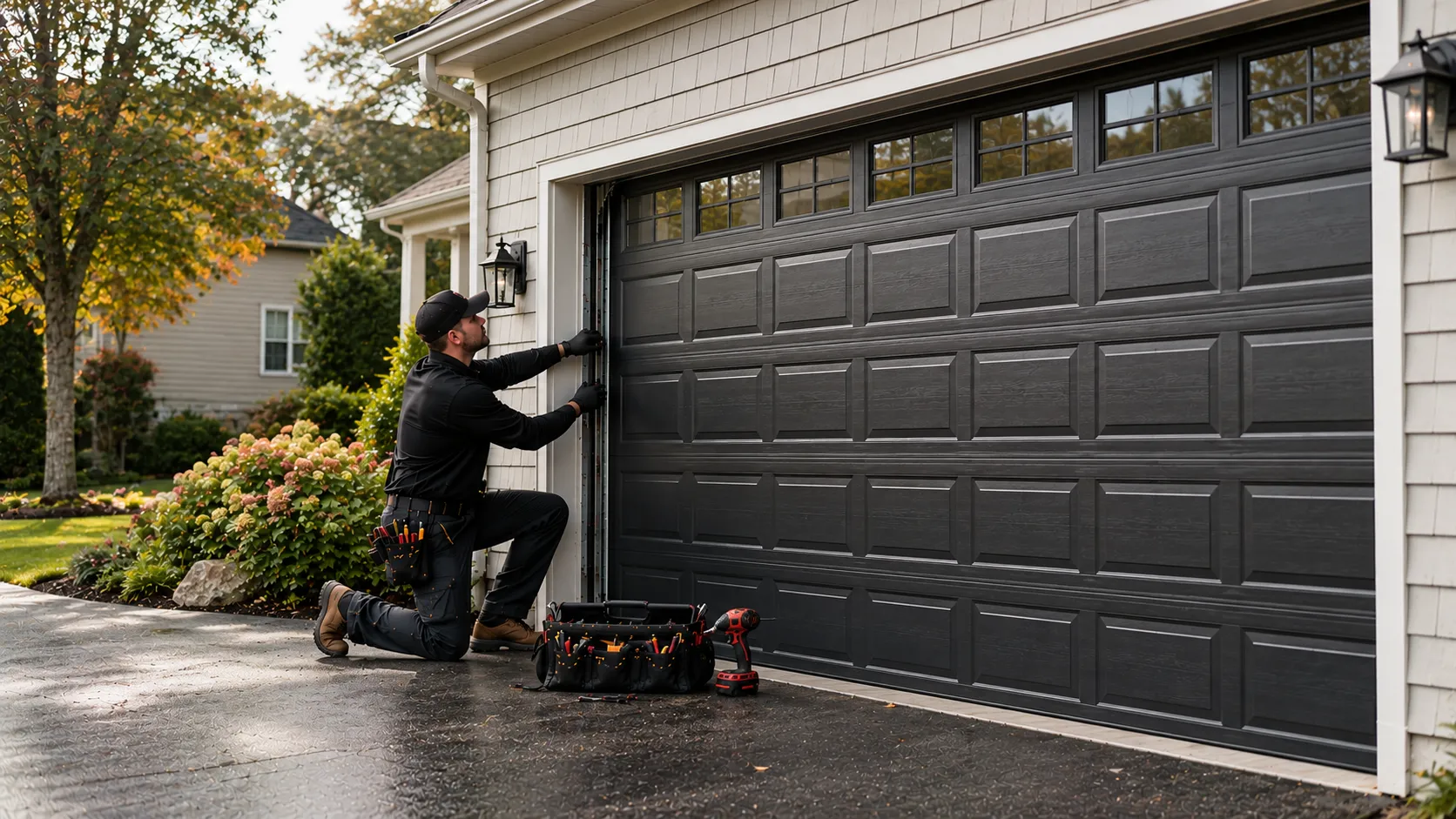
Look at the spring itself if you can see it above the door. A broken torsion spring usually shows a visible gap in the coil, sometimes with the two ends twisted apart. If both springs on a double door look original - same finish, same wear pattern - and one just went, the other is close behind it. That's not a sales pitch, it's just how coil fatigue works when two springs have carried the same load for the same number of years.
Don't confuse this with an opener problem. If the opener motor runs but the door doesn't move, or moves an inch and stops, that's tension, not electronics. Trying to force it with the opener can bend the track or strip the gears, so shut the opener off at the wall until the spring is looked at.
What The Repair Takes
The tech measures wire diameter, coil length, and inside diameter, then checks that against the door's actual weight - not the weight stamped at the factory twenty or forty years ago, but what the door weighs now with whatever hardware, insulation, or windows have been added since. That number decides which spring goes on, not a guess.
On a double door, standard practice is replacing both springs even if only one broke, for the reason above: matched age means matched wear. We'll tell you if yours is close enough in age and use to skip that, but on original hardware from the 1958-1999 build window, it's rare that the second spring has much life left in it either.
Winding the new spring to the correct number of turns is done with winding bars, not screwdrivers or drill attachments - the tension involved is enough to cause a serious injury if it slips. In cold weather the steel is stiffer and the margin for error is smaller, which is part of why this isn't a job to hand a family member a wrench for. Once it's wound and balanced, the door should lift with one hand and hold still at any height without drifting.