24/7 Emergency Service Open 7 days · 7am–8pm Serving West Bend, WI & nearby
(262) 401-2166
West Bend, WI

Weather Seals and Draughts on West Bend's Older Doors

Most West Bend garage doors date to the 1958-1999 building boom. Here's why draughts and failed seals show up so often on this stock, and what actually fixes them.

Weather Seals and Draughts on West Bend's Older Doors

The Problem

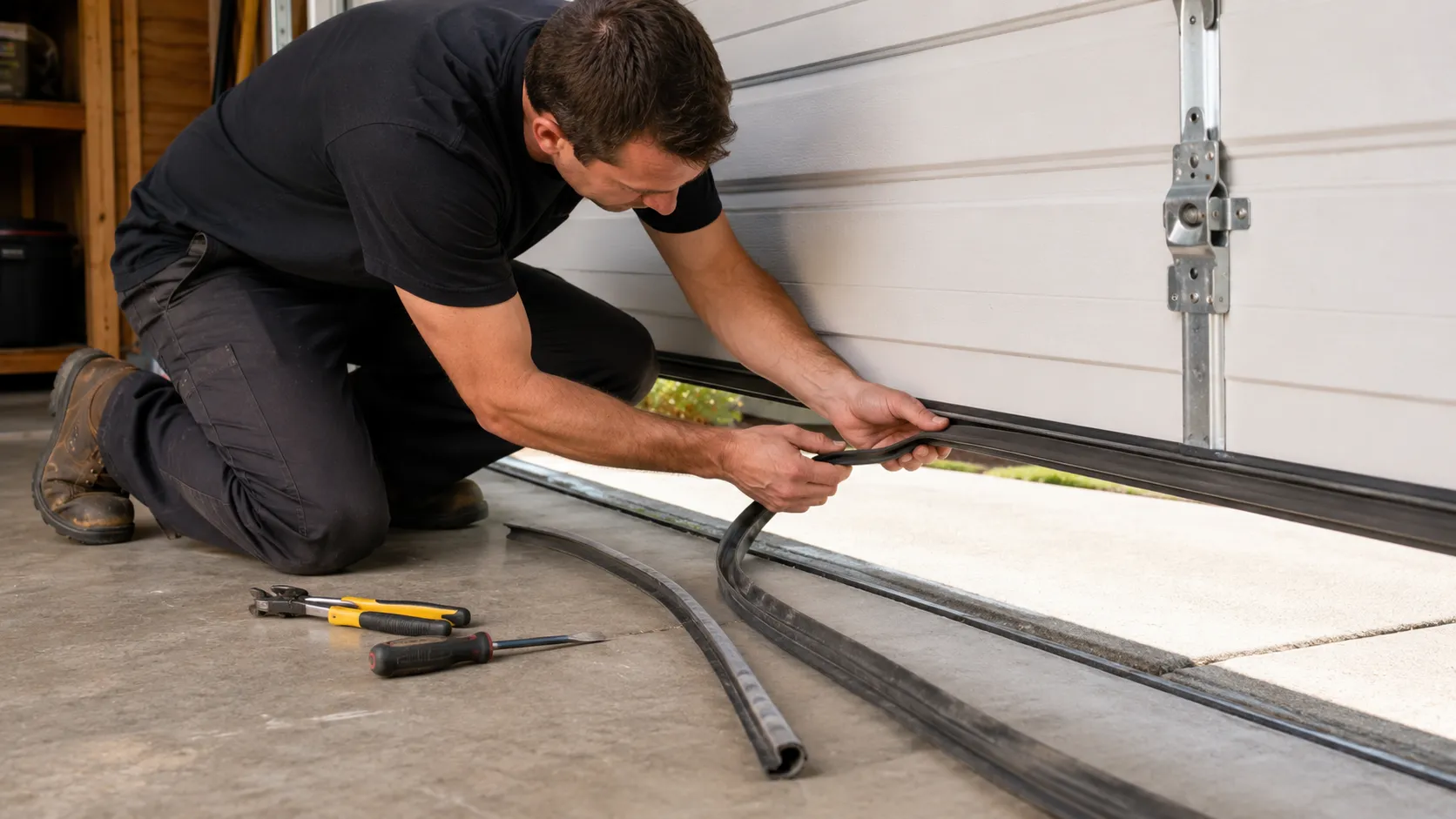
Walk into most garages in West Bend and you're standing under a door that's older than the last remodel. Housing here went up mostly between 1958 and 1999, with the median build year landing around 1976. That means a lot of doors, tracks, and bottom seals installed decades ago on original hardware that was never built for the winters this area actually gets. The seal at the bottom of the door - the rubber strip that's supposed to press flat against the slab - hardens, cracks, and pulls away from the concrete over time. Once that happens, cold air doesn't sneak in, it pours in. Same goes for the weather stripping along the sides and top of the panel, where vinyl gets brittle and shrinks back from the jamb it's supposed to seal against. Owners usually notice it as a cold spot near the garage door, frost on the inside of the panel, or a draft they can feel standing a few feet back. It's rarely the opener and rarely the springs. It's the seal doing exactly what fifty-year-old rubber does.

The Common Mistake

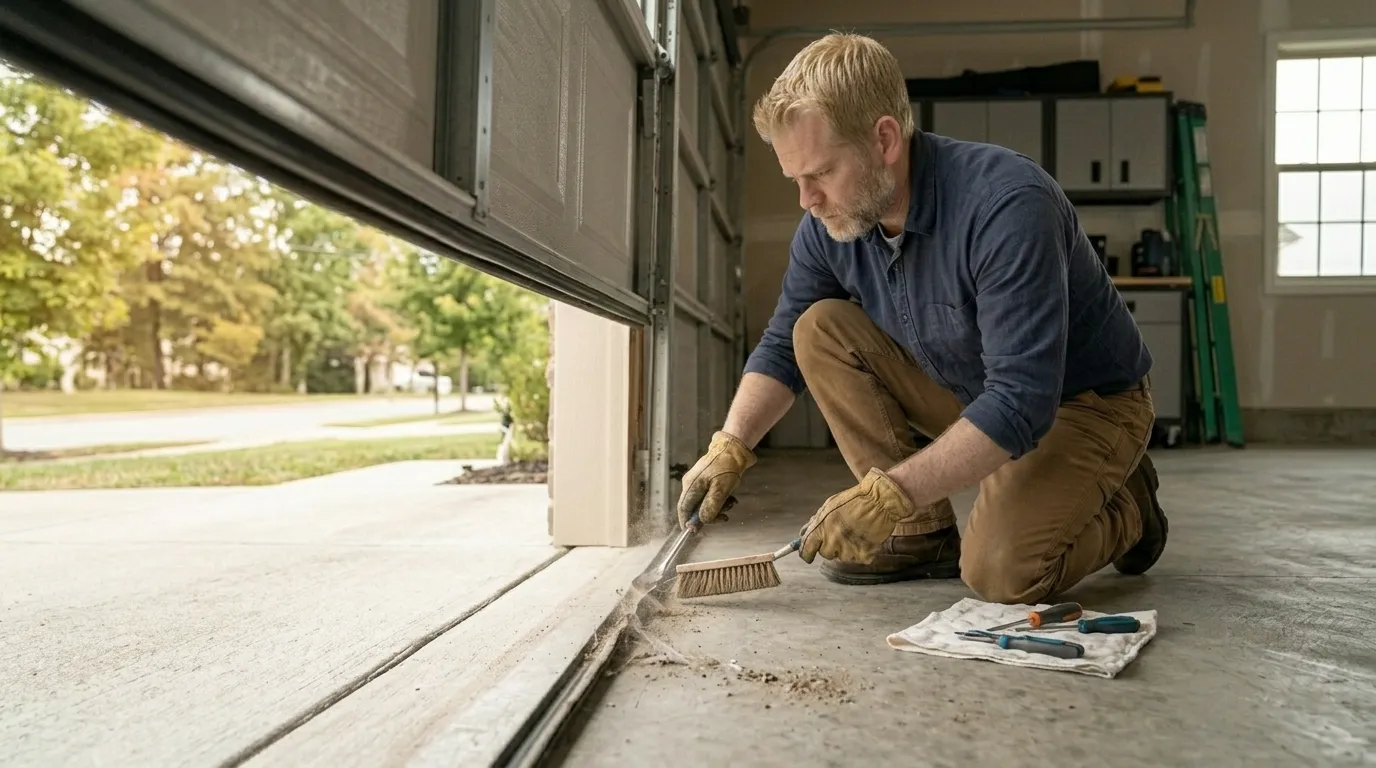
The mistake we see most in West Bend is caulking or foam-spraying around a door instead of replacing the seal itself. It looks like a fix for a season, then the caulk cracks in the cold and you're back where you started, except now there's caulk stuck to the slab. The other common mistake is swapping in a generic seal strip without matching the track and threshold gap on that specific door - a lot of these older 1970s-era units have slightly different bottom astragal channels than what's sold off the shelf today, so a seal that doesn't seat right just curls and lets air through anyway within a month. On a house built in that mid-1970s window, the garage slab has often settled or sloped slightly too, which throws off how flush a stock seal sits. Skipping that check is how people end up replacing the same weather seal twice in one winter and assuming the door itself is the problem when it's the fit.

The Cost of This Job

We don't post a flat number for seal and weather stripping work because the two variables that matter - which era of door you've got and how far off the slab has settled - aren't the same house to house, even two doors down. What we can tell you is that this is one of the lower-cost jobs we run compared to spring or opener replacement, and it's rarely worth putting off, since a failed seal doesn't damage anything on its own but it does drive up what you're paying to heat that garage all winter. Across the households we see in this area - most of them owner-occupied houses in a region with a median household income north of $88,000 - the calculation people land on is usually the same: fix the seal now, cheap, or keep losing heat through it every cold month until it's replaced anyway.

What the Weather Here Does to It

This area sits in a cold, severe climate band, and that's the whole reason seal failure shows up as often as it does. Rubber and vinyl don't fail from one bad night, they fail from the repeated swing - a stretch below freezing, a warm afternoon, back below freezing again - dozens of times a winter. That cycle is what makes a seal brittle years before it would wear out somewhere milder. On doors that trace back to the 1958-1999 building stock common across this area, the seal has usually already been through thirty or more of these freeze-thaw cycles before anyone thinks to check it. Once a seal cracks, cold air moving under a door doesn't just chill the garage - it pulls heat off any pipe or duct routed along that wall, which is its own separate problem in a climate this severe. The fix has to hold through that same cycle next winter, not just look sealed on install day.
How it works

From “it’s stuck” to “it’s fixed”

Tell us what’s wrong - West Bend garage door service

Tell us what’s wrong

Describe the symptom - won’t open, loud bang, opener runs but the door won’t move.

On-site diagnosis - West Bend garage door service

On-site diagnosis

A technician tests the door under power and by hand and finds what actually failed.

Clear, up-front plan - West Bend garage door service

Clear, up-front plan

You get the fix that’s needed and what drives the cost - before any work starts.

Repaired & tested - West Bend garage door service

Repaired & tested

The repair is done, the door is set true and tested, and the work area left clean.

Serving West Bend, WI - tell us what your door’s doing and we’ll take it from there.

How we work

What to expect

Diagnosis firstEvery visit starts by finding what actually failed - not a pre-written parts list.
The right part for the doorSprings and openers matched to the door’s weight and age, so the fix holds up.
Straight answersWhen a repair makes more sense than a replacement - or the reverse - you hear it plainly.
Clean, careful workTension released safely, hardware set true, the door tested under power before we leave.
Questions

Frequently asked

Straight answers about garage door repair in West Bend. Still unsure? Ask us directly.

How do I know if my seal is actually the problem and not just an old door?

Check where the bottom of the door meets the slab on a cold day. If you can see daylight, feel moving air, or find the rubber strip cracked and pulled away from the concrete, that's the seal, not the door itself. Frost forming in a line along the bottom panel is another clear sign. If the door still opens and closes smoothly otherwise, it's almost always just the seal.

Can I replace a garage door seal myself?

You can, and plenty of owners do on newer doors. On older stock from the 1960s-70s common around here, the bottom track and astragal channel don't always match a standard hardware-store strip, so it's worth measuring the channel width before buying. If the slab has settled unevenly, a DIY strip often won't seat flush no matter how it's cut.

Does a new seal actually cut my heating cost?

It won't show up as a line item on your bill, but a garage that used to run noticeably colder than the rest of the house will hold heat better once the draft under the door is gone. In a cold, severe climate like this one, that gap matters more than in milder regions, since the cold air is moving through more often and for more months.

Ready to get your garage door sorted?

Tell us what it’s doing and where you are in West Bend - we’ll take it from there.

Request a QuoteCall