The Problem
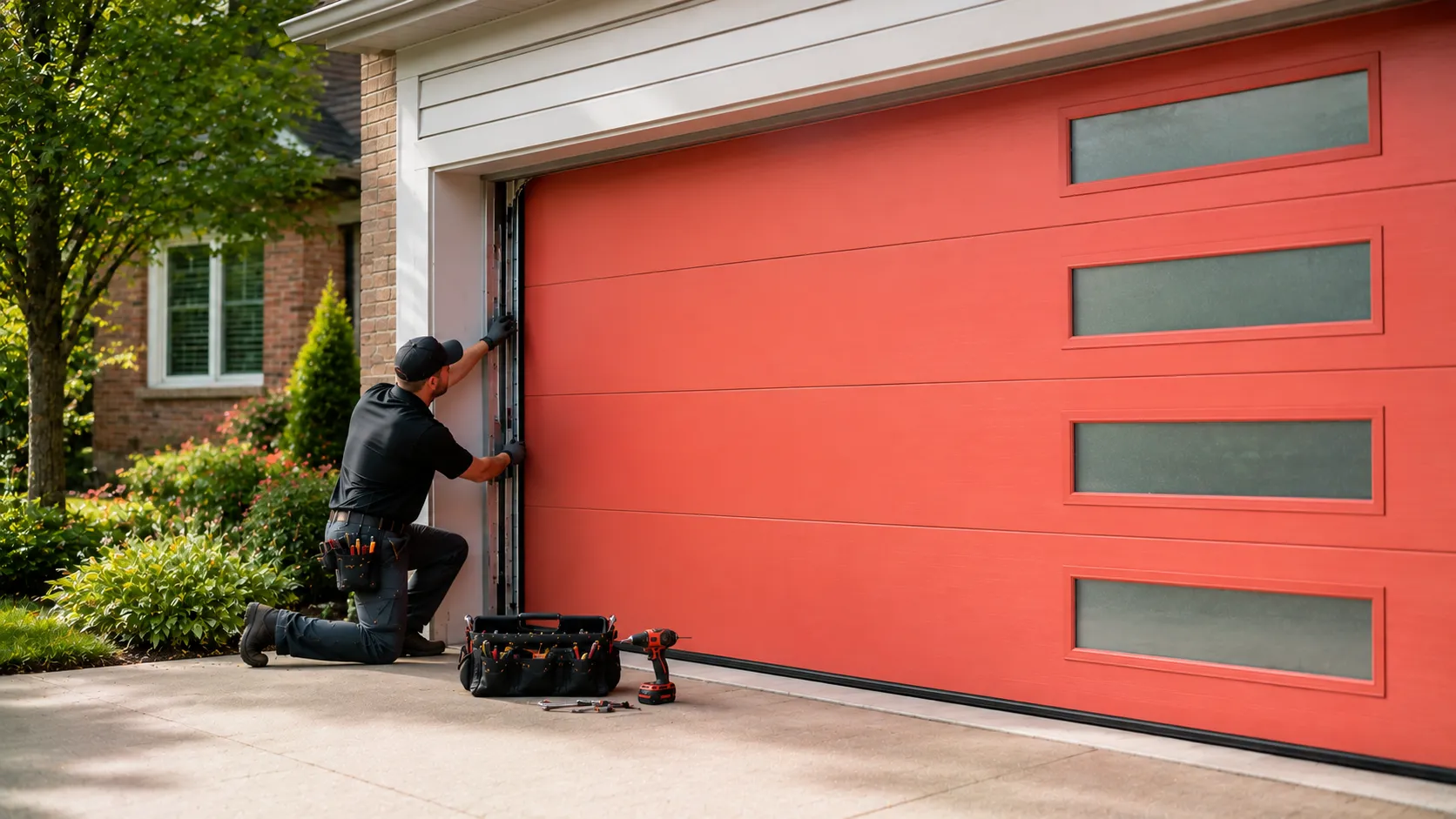
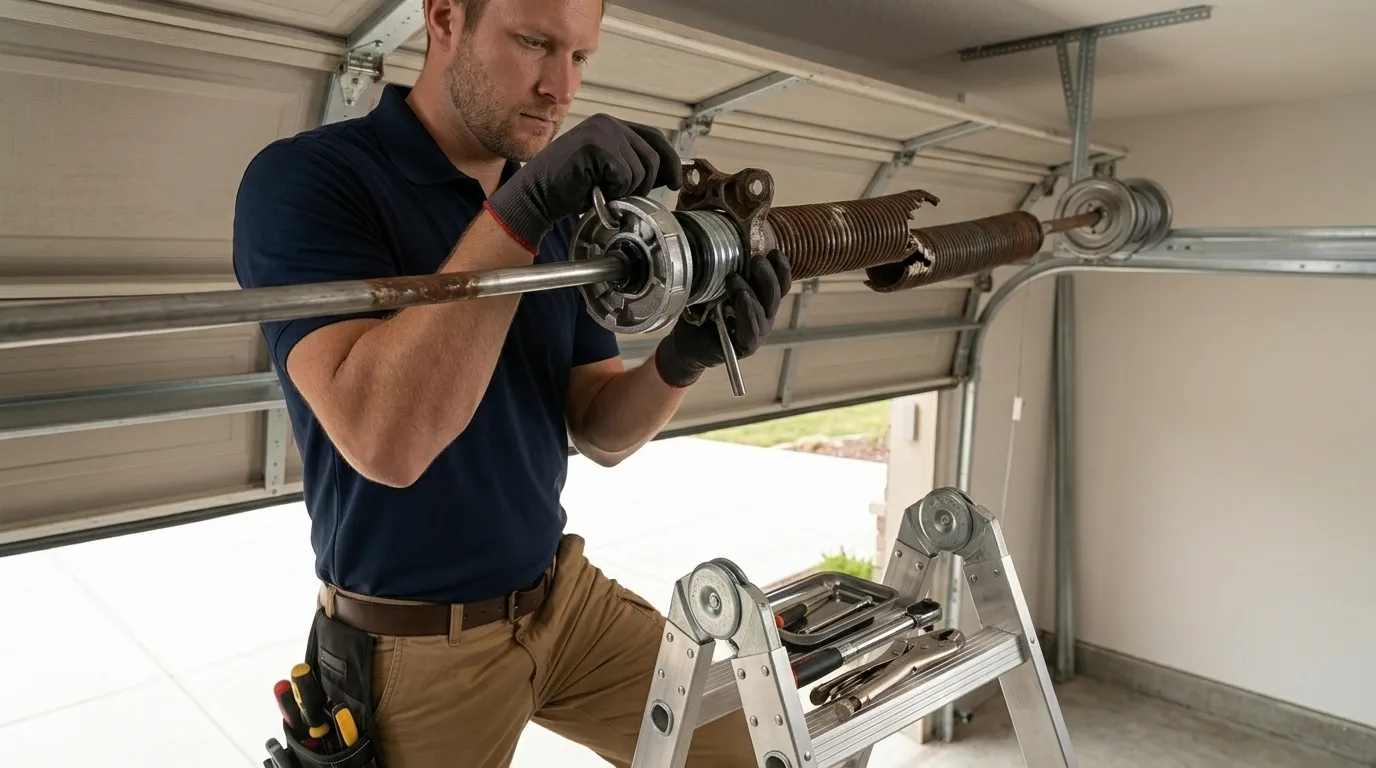
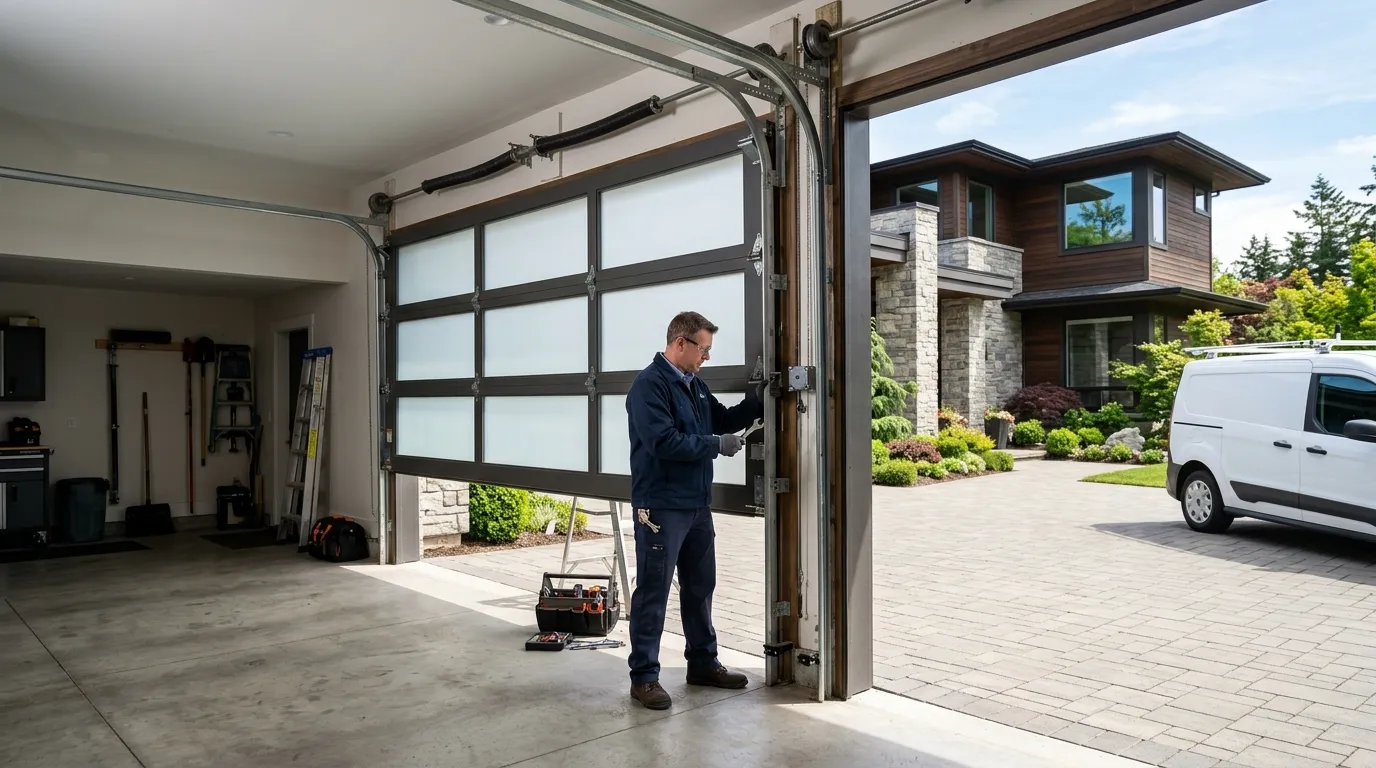
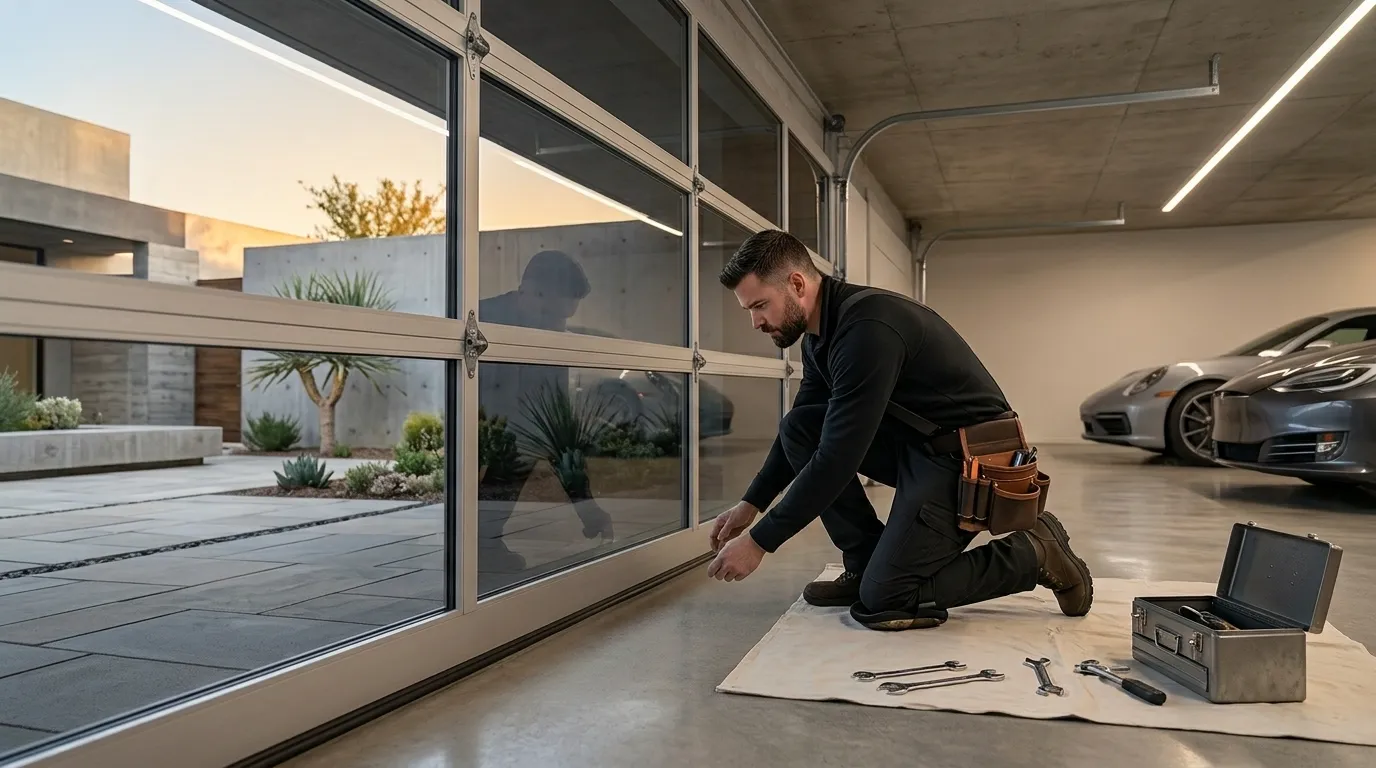
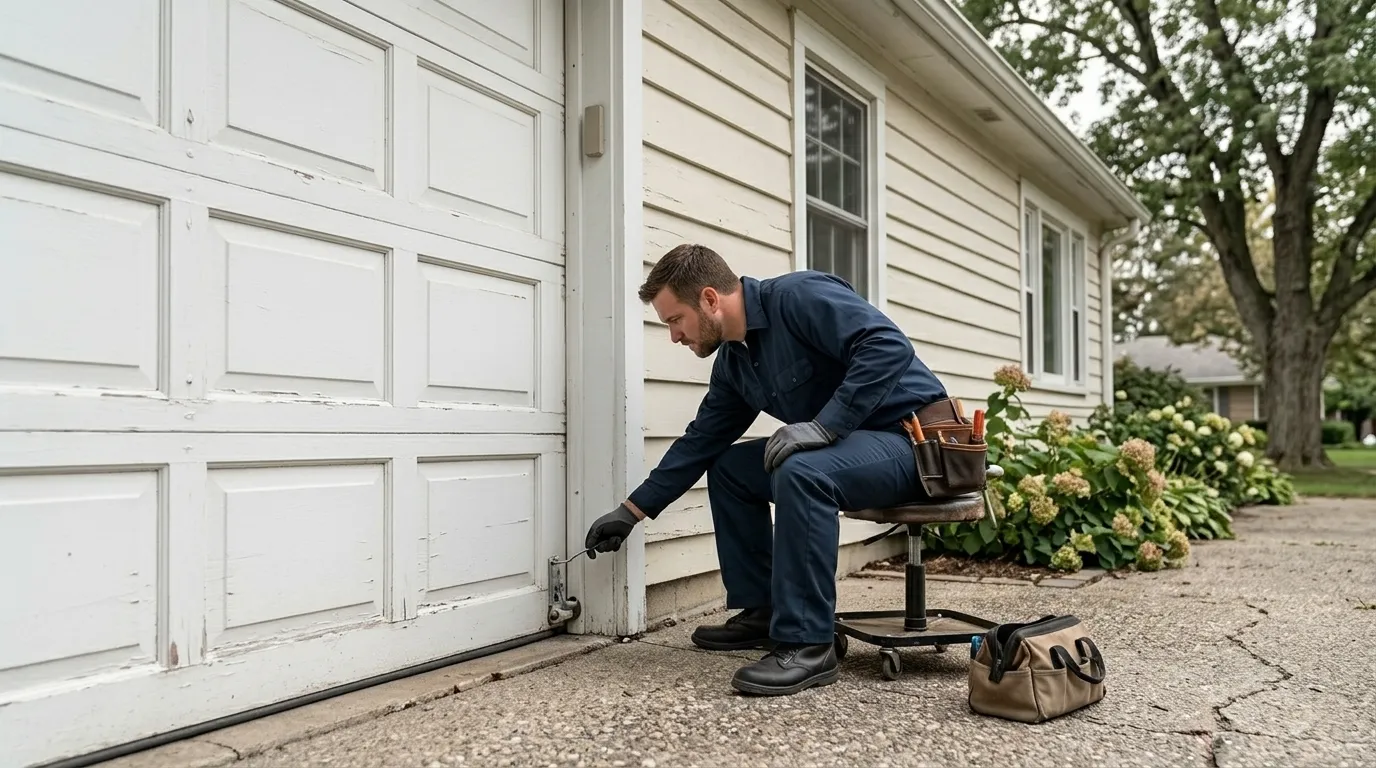
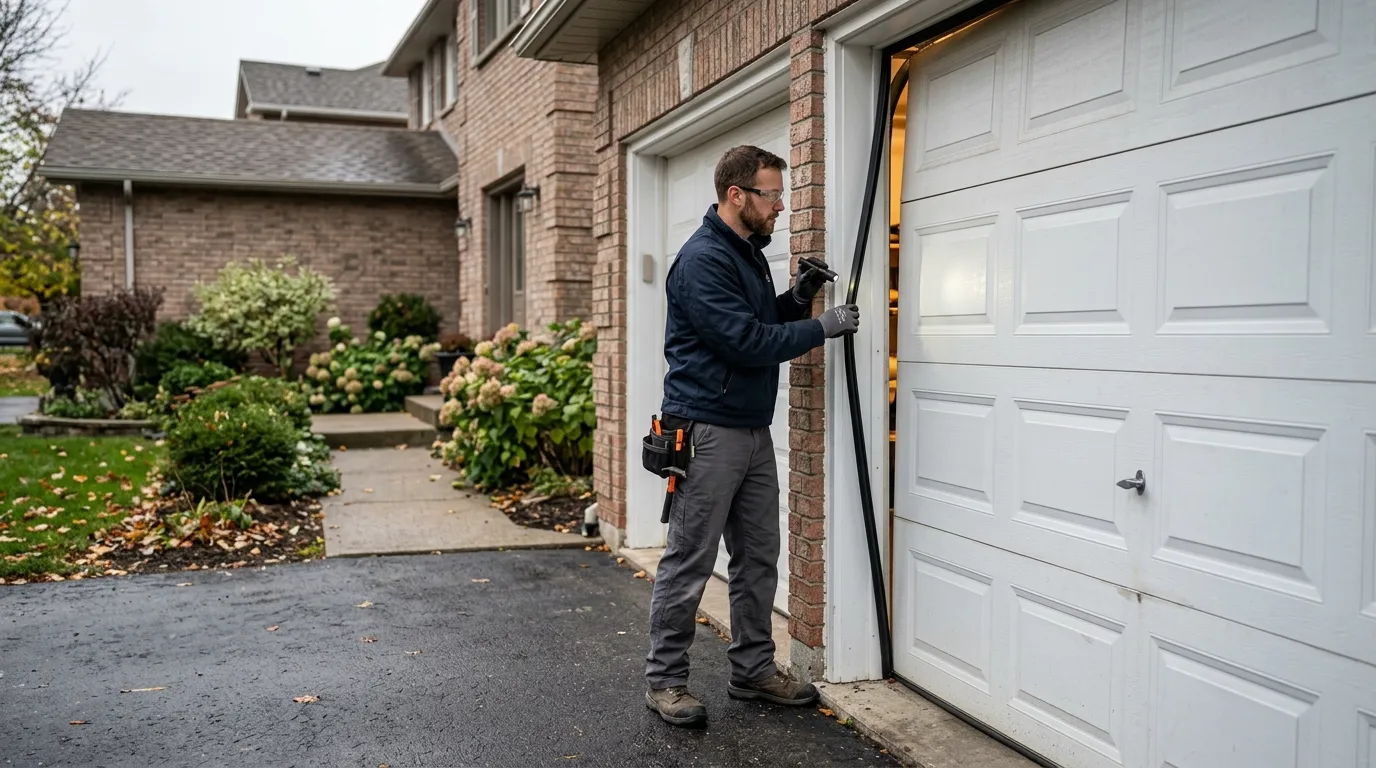
A garage door off its track almost never happens out of nowhere. It's the end point of a roller, hinge, or track alignment issue that's been getting worse for months. In West Bend, most of the housing stock went up between 1958 and 1999, with a median build year around 1976 across the 37 named areas that make up this service area. That means a lot of doors are still running on the original steel track from that era, or a replacement track hung to match hardware that's now 30 to 60 years old. Track brackets loosen in the wall stud over decades of door cycles. Rollers wear down and stop tracking true. Once a roller gets even a quarter inch out of alignment, the door starts binding on one side, and every open-close cycle after that makes it worse. Eventually the door jumps the track entirely, usually on the side with the weaker spring or the older roller. This isn't a defect in any one door - it's what happens to hardware from this build era after enough winters and enough cycles.
The Common Mistake
The mistake we see most is people trying to force the door back onto the track by hand, or worse, running the opener again to try to "pull it through." On a door from the 1960s-70s stock that's common in this area, the track is often thinner-gauge steel than what's used today, and forcing it bends the rail rather than reseating the roller. Once a track is bent, it has to be replaced in that section - it won't hammer straight and hold. The other common mistake is treating the off-track door as the whole problem instead of asking why it happened. If a roller failed or a bracket pulled loose, fixing just the visible symptom means the same failure repeats within a season, often on the opposite side once that hardware takes the extra load.
What the Weather Here Does to It
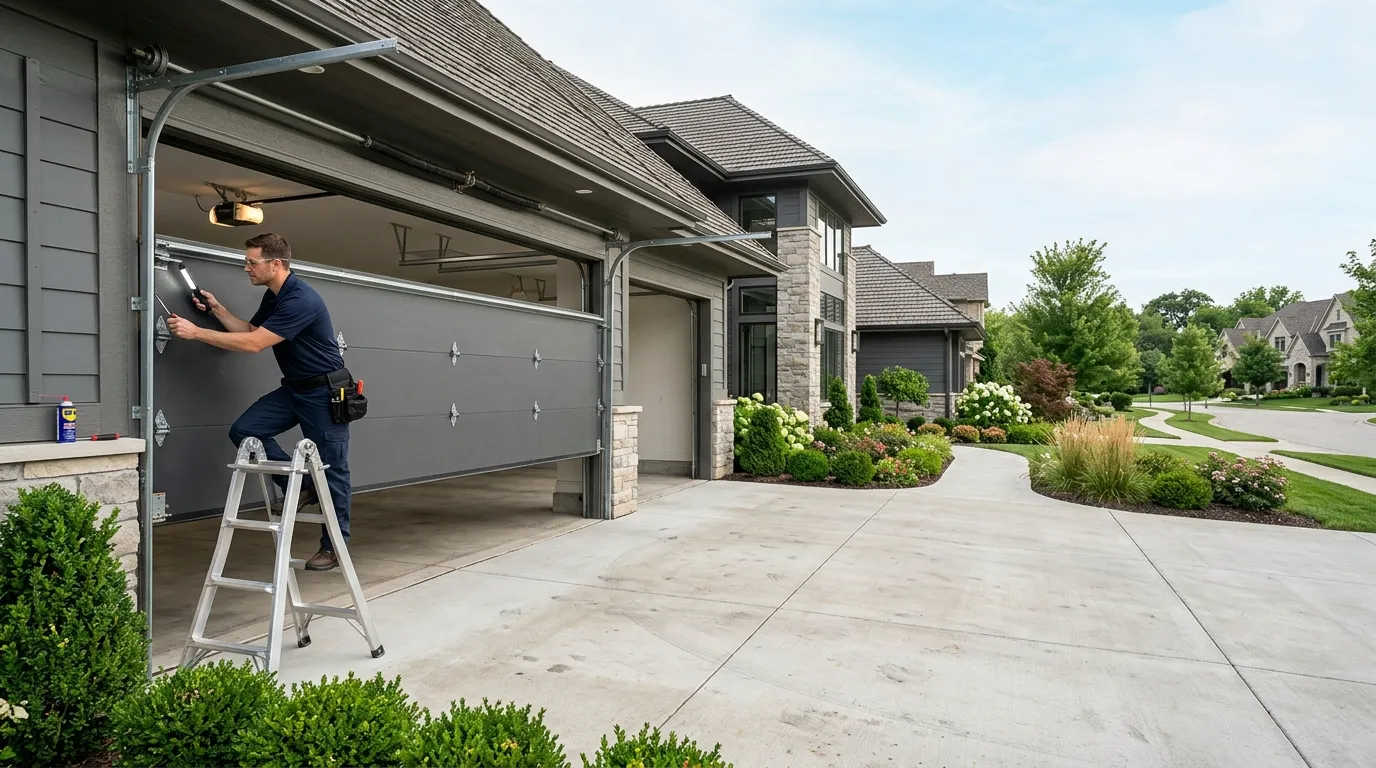
West Bend sits in a cold, severe winter climate band, and that matters more for this failure than most homeowners expect. Steel track contracts in deep cold, which changes clearance at every roller by a small but real amount. On hardware that's already got some age and looseness in the brackets - common in a housing stock with a median build year of 1976 - that seasonal contraction is often enough to push a marginal roller past the point where it tracks true. We see off-track calls climb in the coldest stretches of the year for exactly this reason: hardware that ran fine in October starts binding once temperatures drop and stay down. Lubricant also thickens in cold, adding drag right where the roller needs to glide freely. None of this means the door is failing - it means cold is finding the weak point that summer hid.