Why This Fails Locally
Most houses on this side of West Bend went up between 1958 and 1999, with a heavy concentration right around 1976. That's the era of the single-layer steel door - no foam core, thin skin, steel hinges rated for a much milder swing than what we actually get here. West Bend sits in a cold-severe climate band, and that matters more than people think. A door skin that isn't insulated contracts and expands every time the temperature drops overnight and climbs again by afternoon. Do that for forty-plus winters and the panel seams work loose, the bottom section rusts from condensation, and the track brackets pull slightly out of the jamb they were screwed into back when the house was framed. This isn't a defect. It's what a 1970s door does after five decades of Wisconsin cold. Across the 37 named areas that make up this service territory, the housing stock runs the same 1960s-70s vintage, so the same failure shows up house after house, not as a one-off.
The Symptom
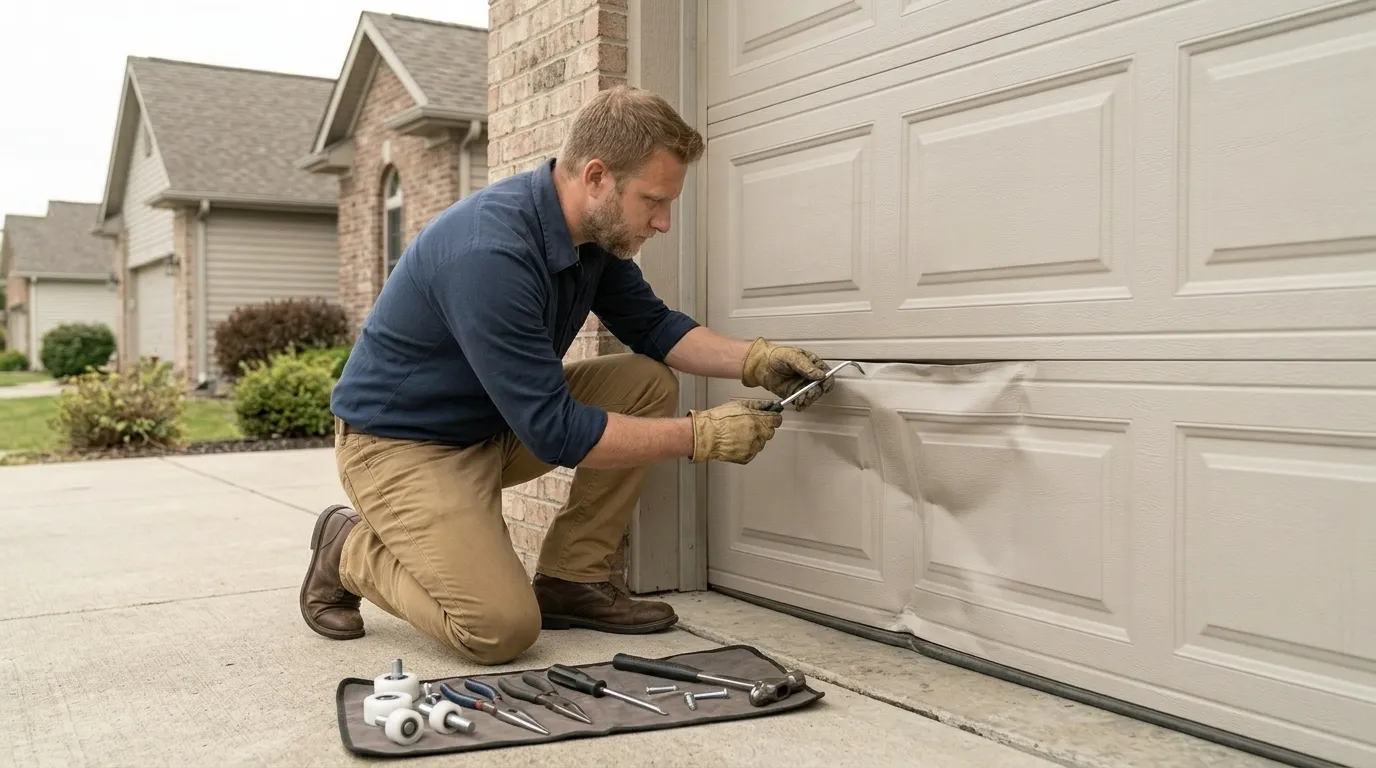
It usually starts small. The door doesn't seal flush at the bottom anymore, so you feel a draft standing in the garage on a January morning. Then the opener starts straining on the last foot of travel because the track has racked slightly out of square. Panels near the bottom show rust bubbling through the paint where condensation has sat against thin, uninsulated steel all winter. Some owners notice the door sagging visibly in the middle, which tells you the original panel material wasn't built to hold its shape once the reinforcement bracing starts to corrode. None of this is dangerous on day one. It becomes dangerous when the spring - already working harder to lift a door that no longer moves true in its track - finally lets go.
What the Repair Takes
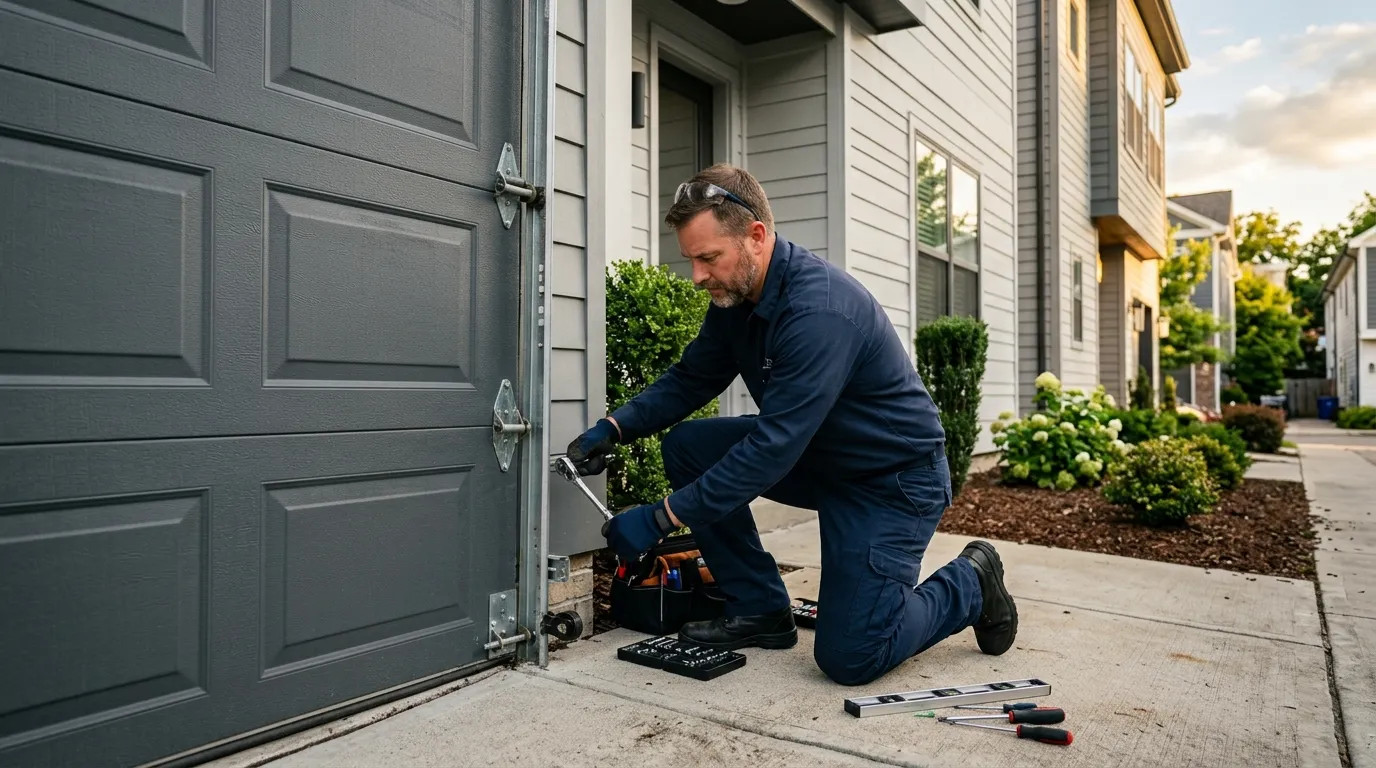
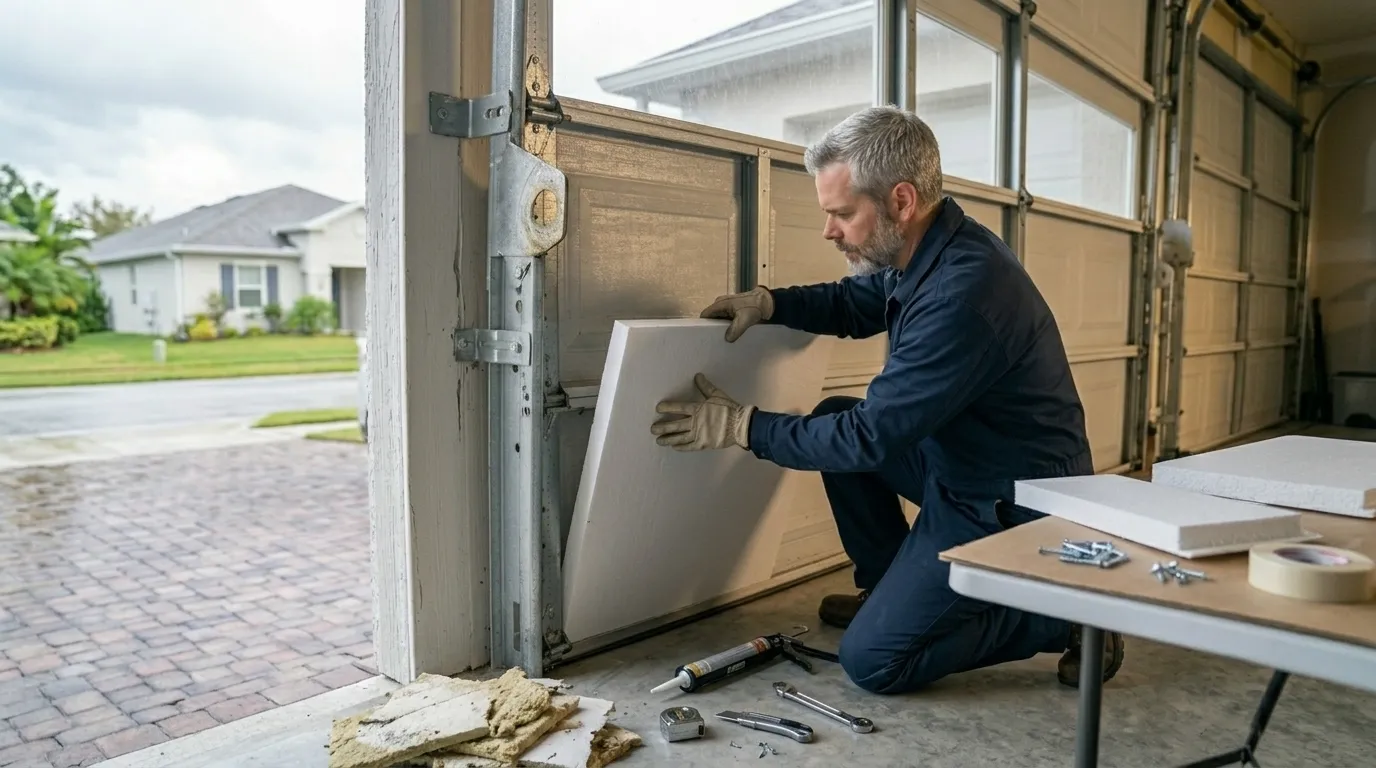
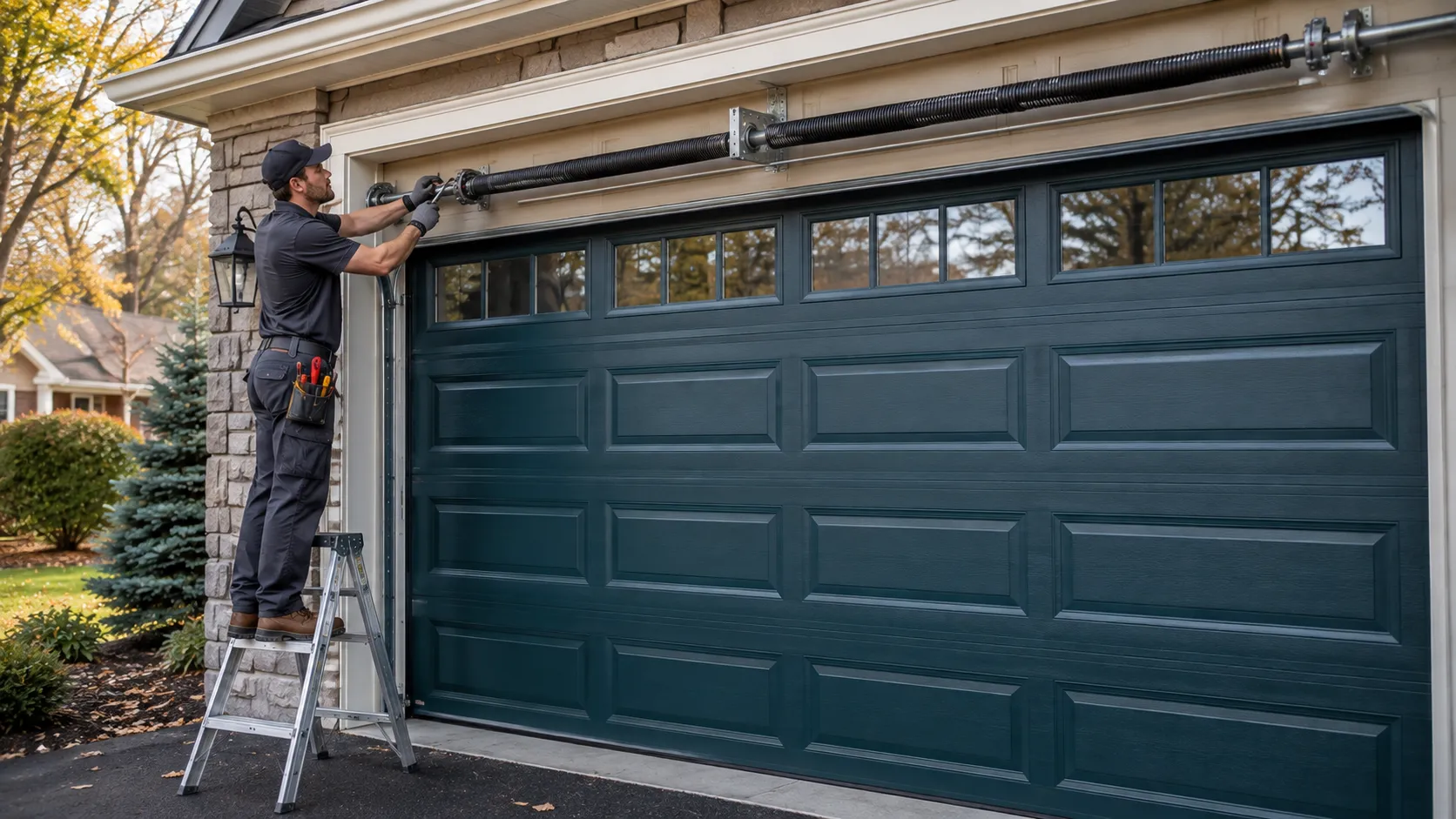
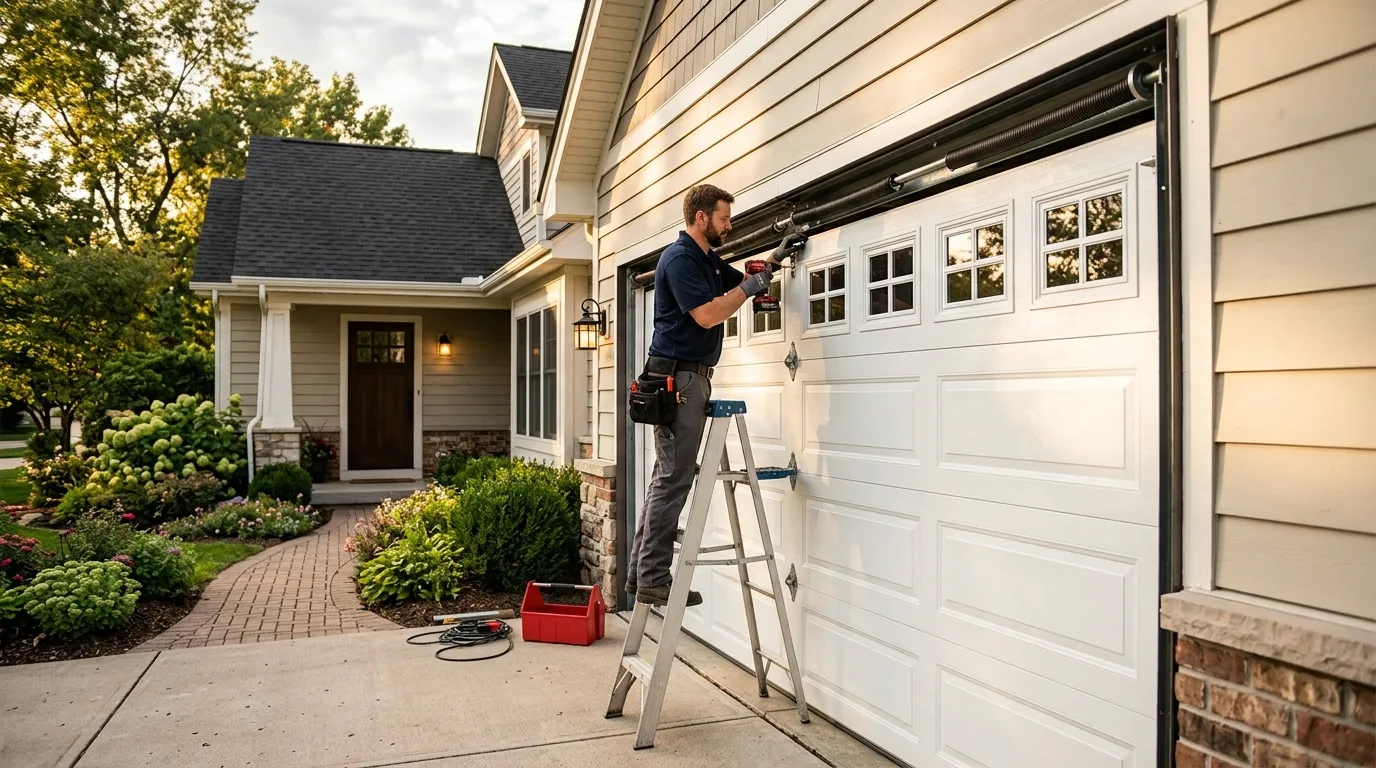
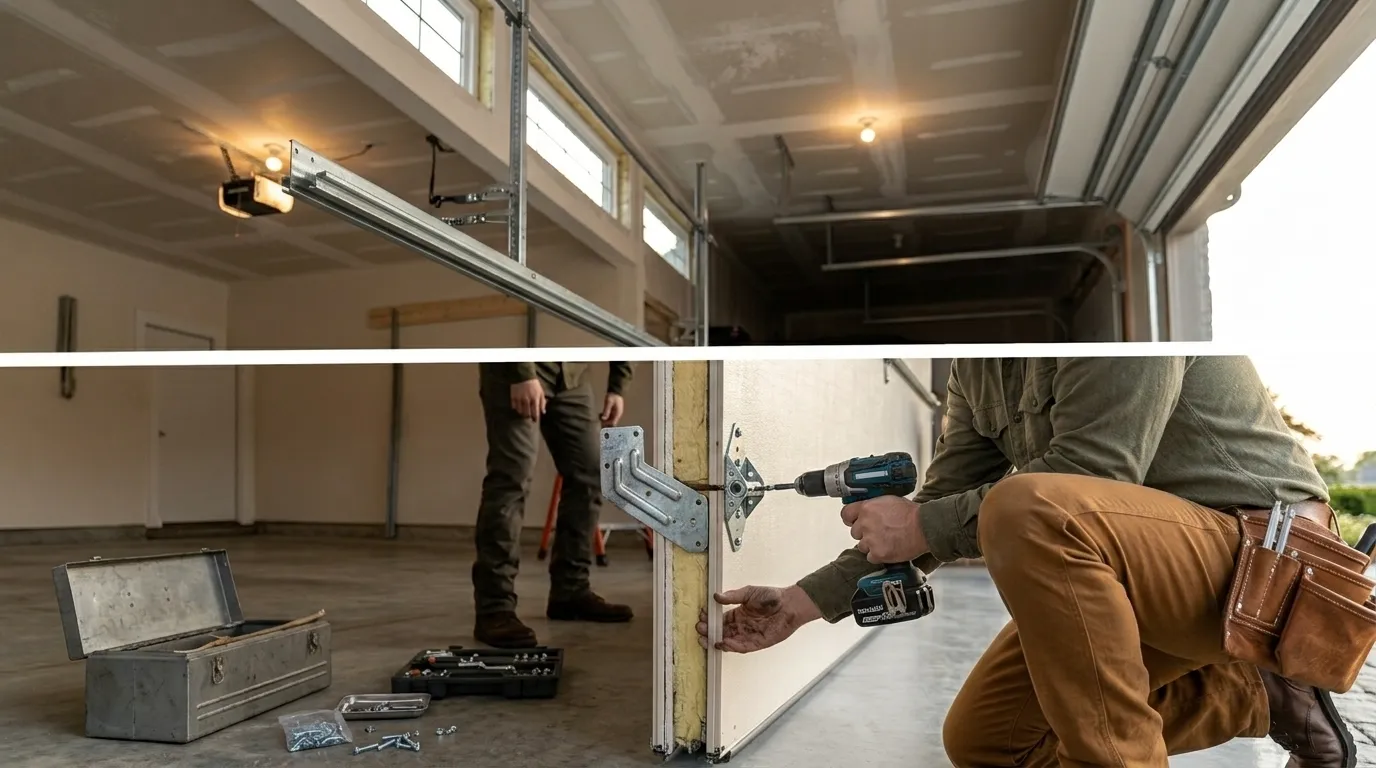
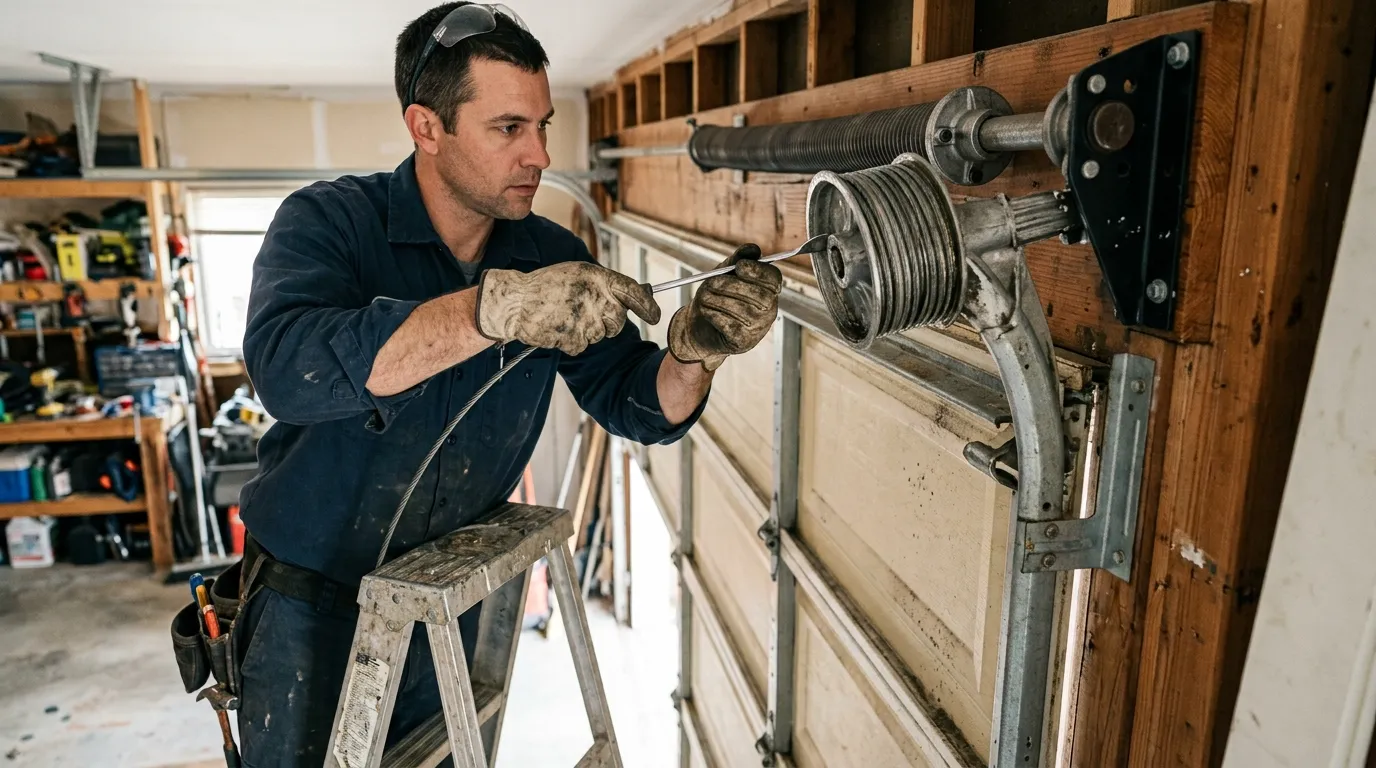
A full install means pulling the old track, checking the jamb for square (which, on a house from the 1958-1999 wave, it often isn't anymore after decades of settling), and setting new track plumb rather than just bolting to the old holes. We size the torsion spring to the actual door weight, not a generic chart, because an insulated replacement door weighs differently than the single-skin original it's replacing. Given the cold-severe climate here, we default to recommending an insulated door with a full perimeter seal - it's not required, but it's what holds up. One honest limit: we don't try to save a door where the frame itself has shifted more than a small amount out of square. At that point the labor to force a new door into a bad opening costs more than fixing the opening first, and we'll say so rather than force a fit that won't seal.