What Was Built Here
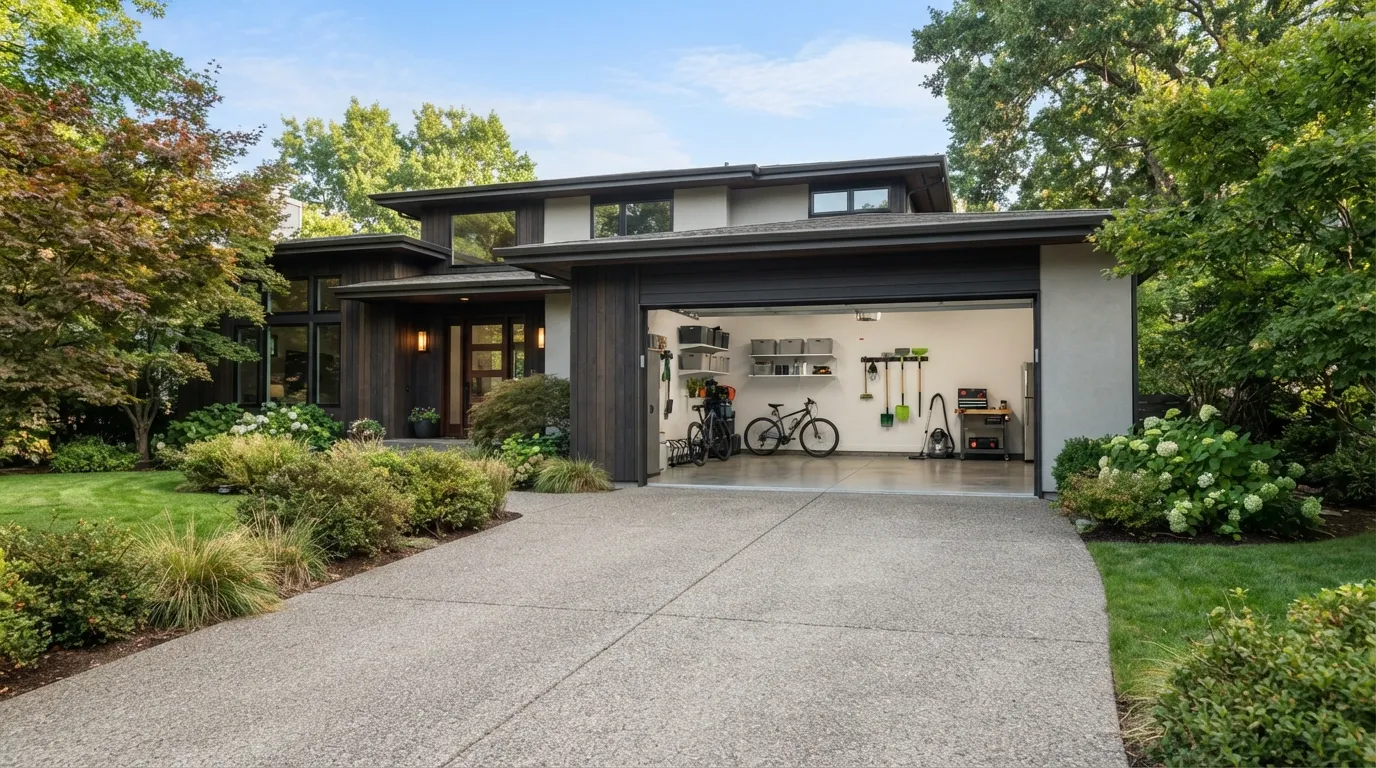
Brown Deer's houses center on 1970, a touch earlier than the median of 1976 across the wider West Bend Garage Door Pros service area, which runs from homes as old as 1958 up through 1999. That's a narrow window, and it matters: a neighborhood built out in a tight run of years tends to get the same builder-grade door on nearly every third garage, ordered in bulk from whatever supplier was cheapest that year. Across the broader service territory of 87,448 households and 45,839 owner-occupied houses, this pattern repeats block after block - it's not unique to Brown Deer, but it is pronounced here.
The climate band this area sits in is classified cold and severe, which means the doors installed in 1970 were built for a different set of expectations than what's sold today. Insulation wasn't standard. Steel gauges ran thinner. Weatherstripping was an afterthought bolted on after the fact rather than engineered into the panel. None of that made the doors bad - plenty are still running - but it does mean the hardware inside them is a specific generation, not a random mix.
How That Shows Up in the Door
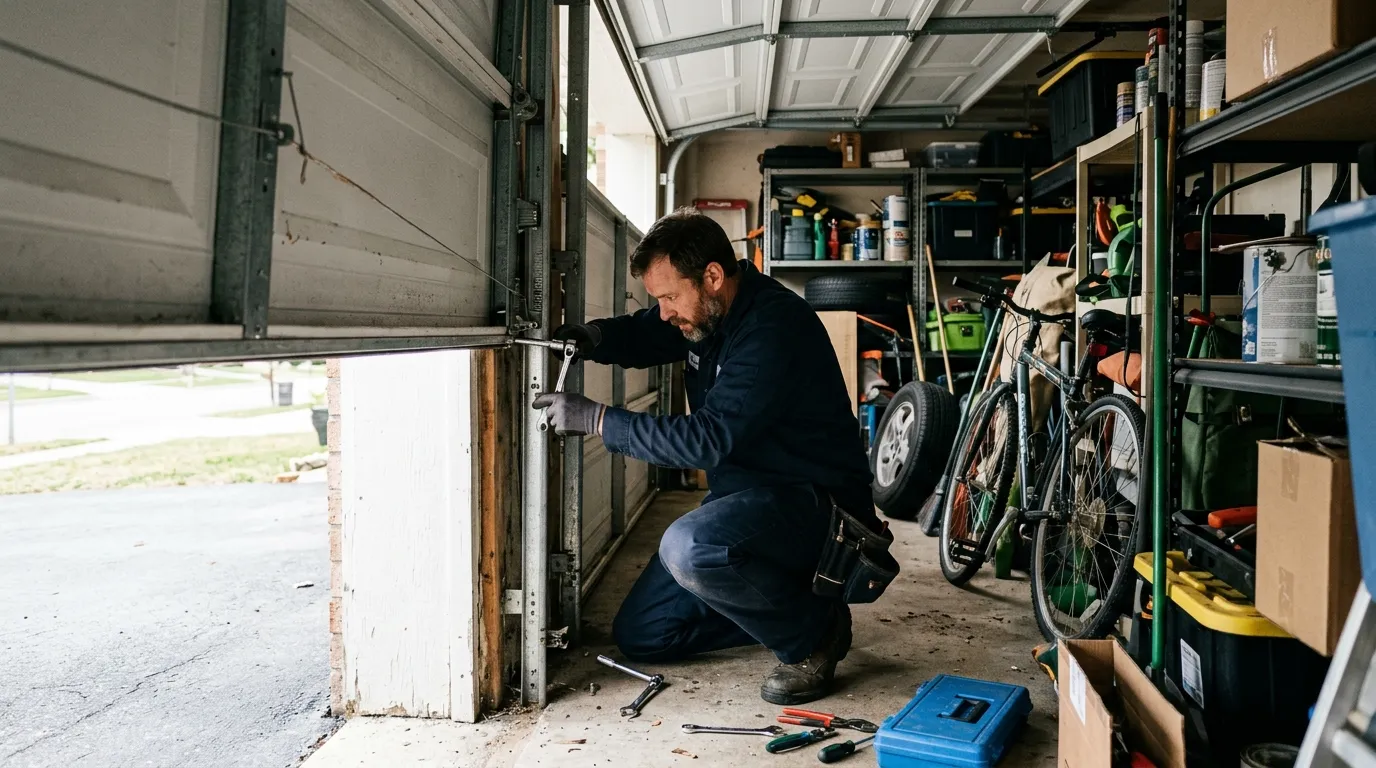
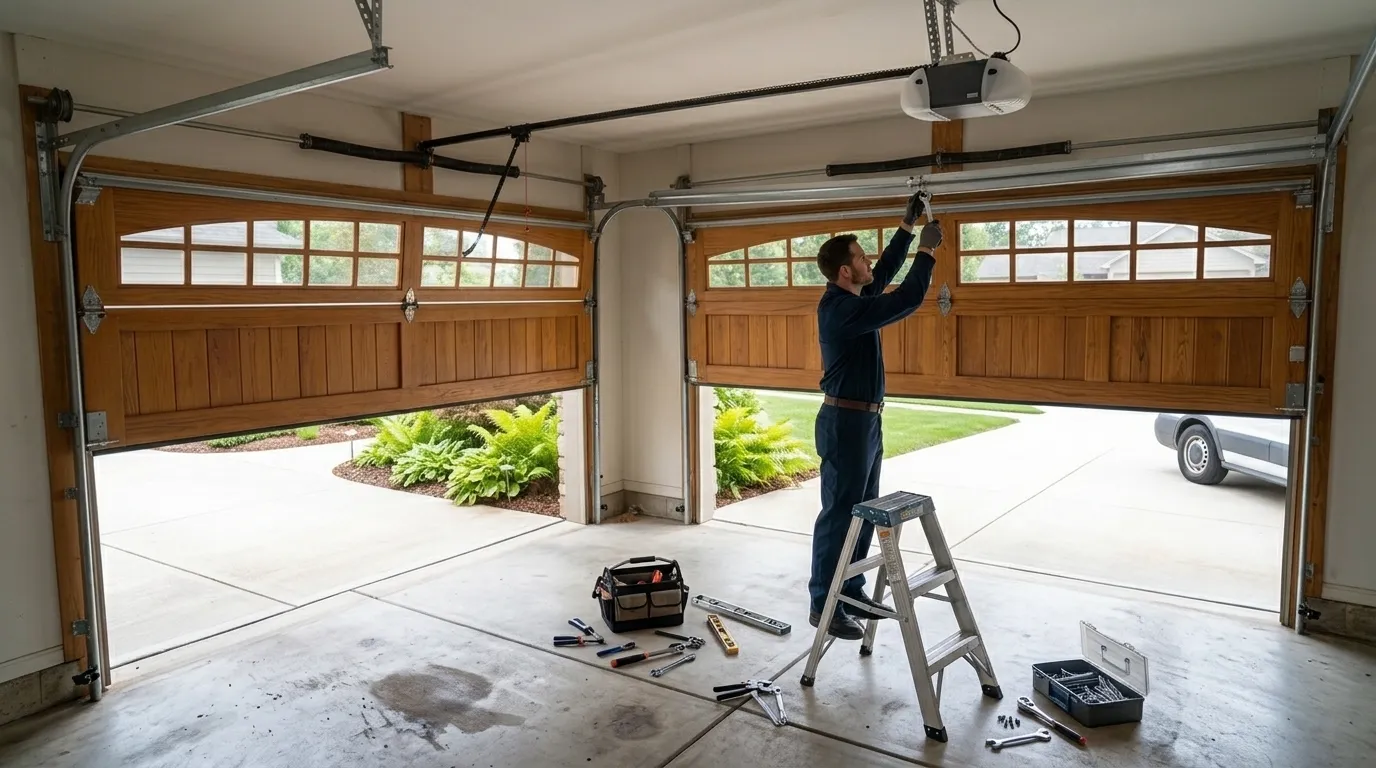
A door installed around 1970 almost always runs on a torsion spring sized for a heavier, uninsulated panel, mounted on a shaft that predates the safety cable most codes require now. When that spring lets go, it's not a small job - it's a two-inch or two-and-a-quarter torsion spring that isn't sitting on most trucks as a common stock item the way a modern 1-3/4 spring is.
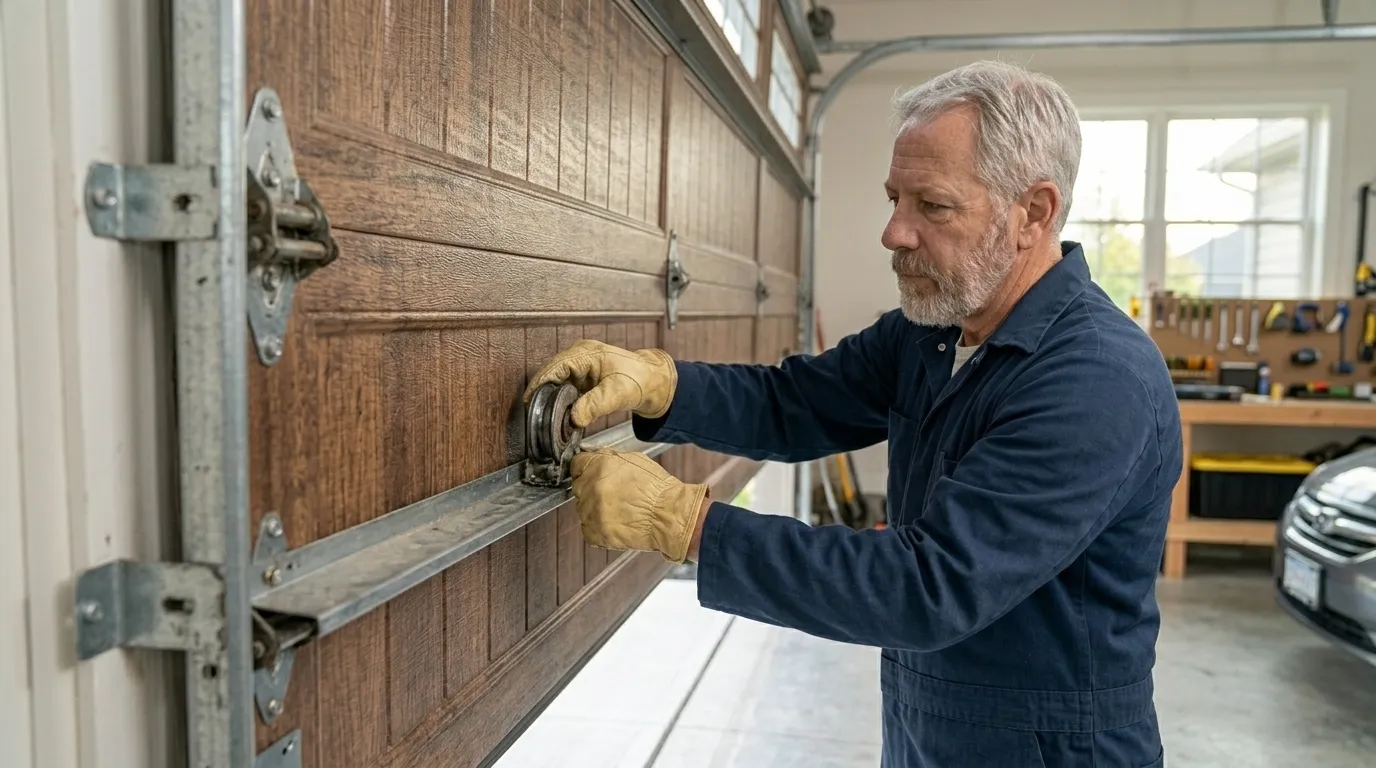
Cold and severe winters put extra stress on that older hardware. Steel contracts, lubricant thickens, and a track that was a hair out of alignment in July turns into a door that binds or jumps the roller in January. On a house from this era, we also see galvanized rollers that have gone out of round and hinges worn oval from decades of use - wear patterns that show up less on newer doors with sealed bearings.
One honest limitation: if the door itself is original steel from 1970 and the panel is dented or rusted through at the bottom, we're not going to chase down a matching replacement panel. At that point patching costs more in labor and lead time than it saves, and replacement is the straighter path.
Timing on This Area
Brown Deer sits about 20 miles from our shop in West Bend. We don't run a depot or a crew stationed here, so a job in this area gets built into the day's route rather than dispatched from around the corner. That's not a knock against the town - it's just the honest layout of how the truck moves.
Because the drive is a real factor, we plan Brown Deer stops rather than treat them as a same-day walk-in the way a closer call might be. If a spring breaks on a Tuesday morning, we're not promising an hour-two-hours-later fix; we're fitting it into that day's or the next day's route depending on what else is already on the board.
Parts for a 1970-era door - the two-inch torsion springs, obsolete track brackets, older jamb hardware - aren't always something we carry loaded on the truck for every visit, since they're less common than current stock sizes. When that's the case, we tell you upfront rather than showing up and discovering it on-site. It usually means a short order wait rather than a same-visit fix, and we'd rather say that plainly than promise a turnaround we can't back up.