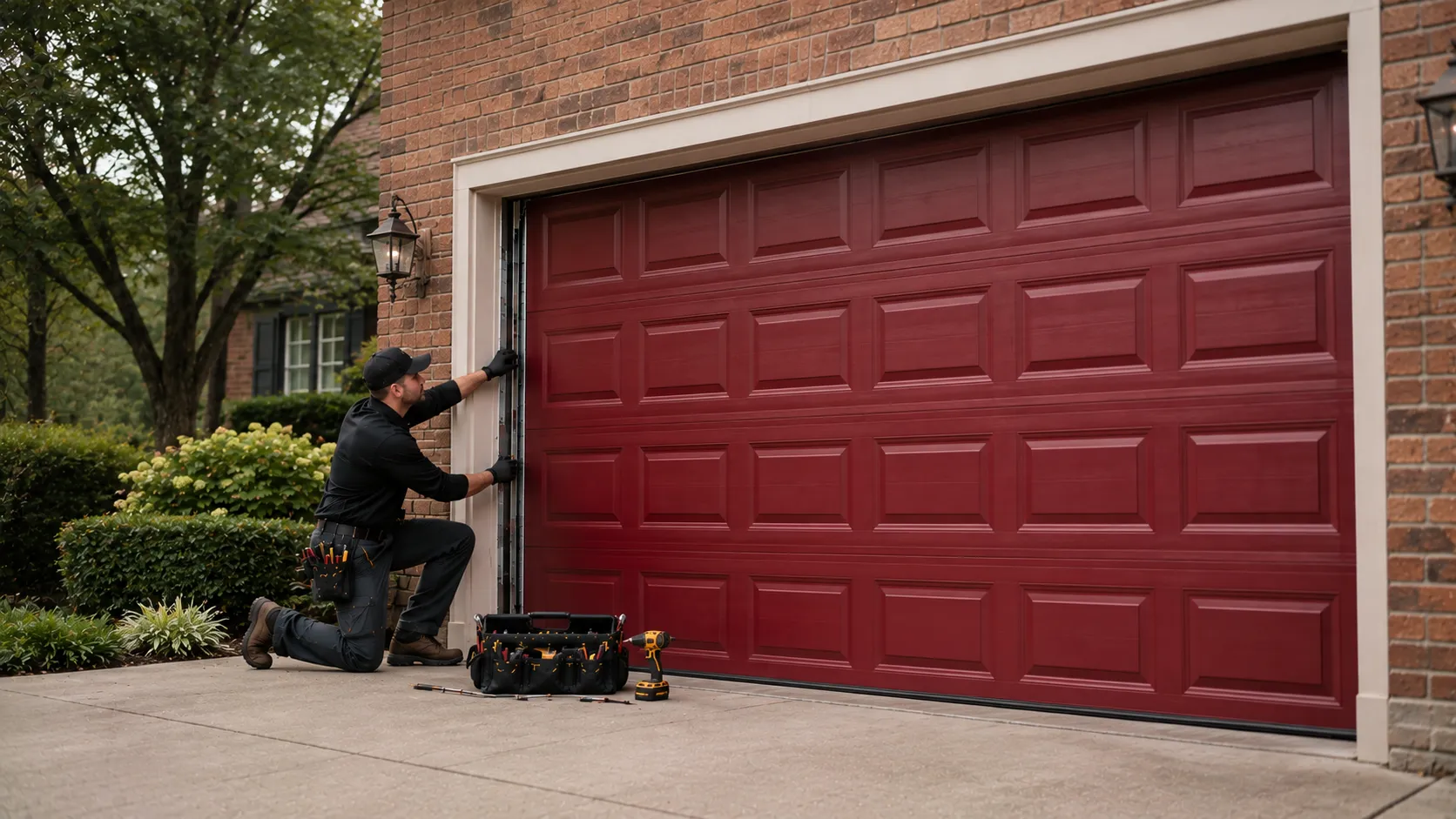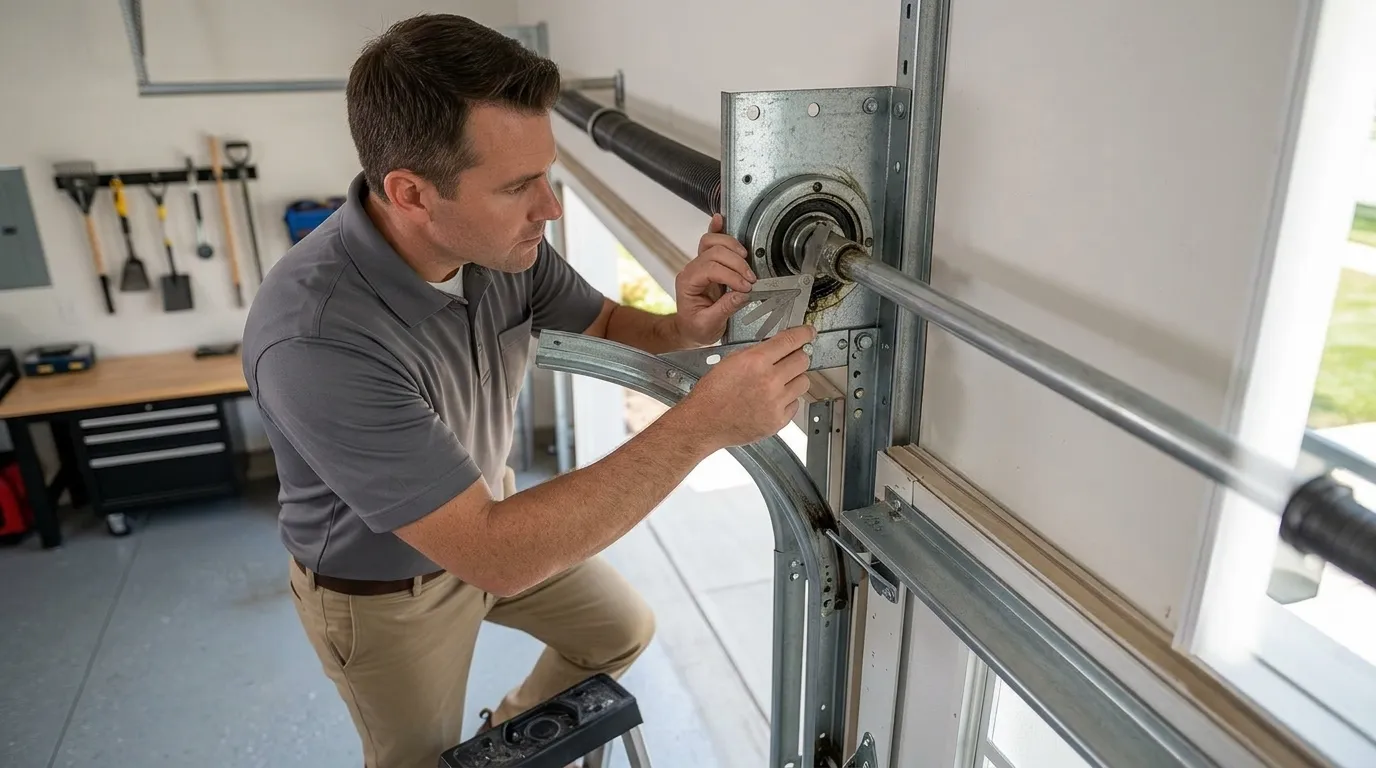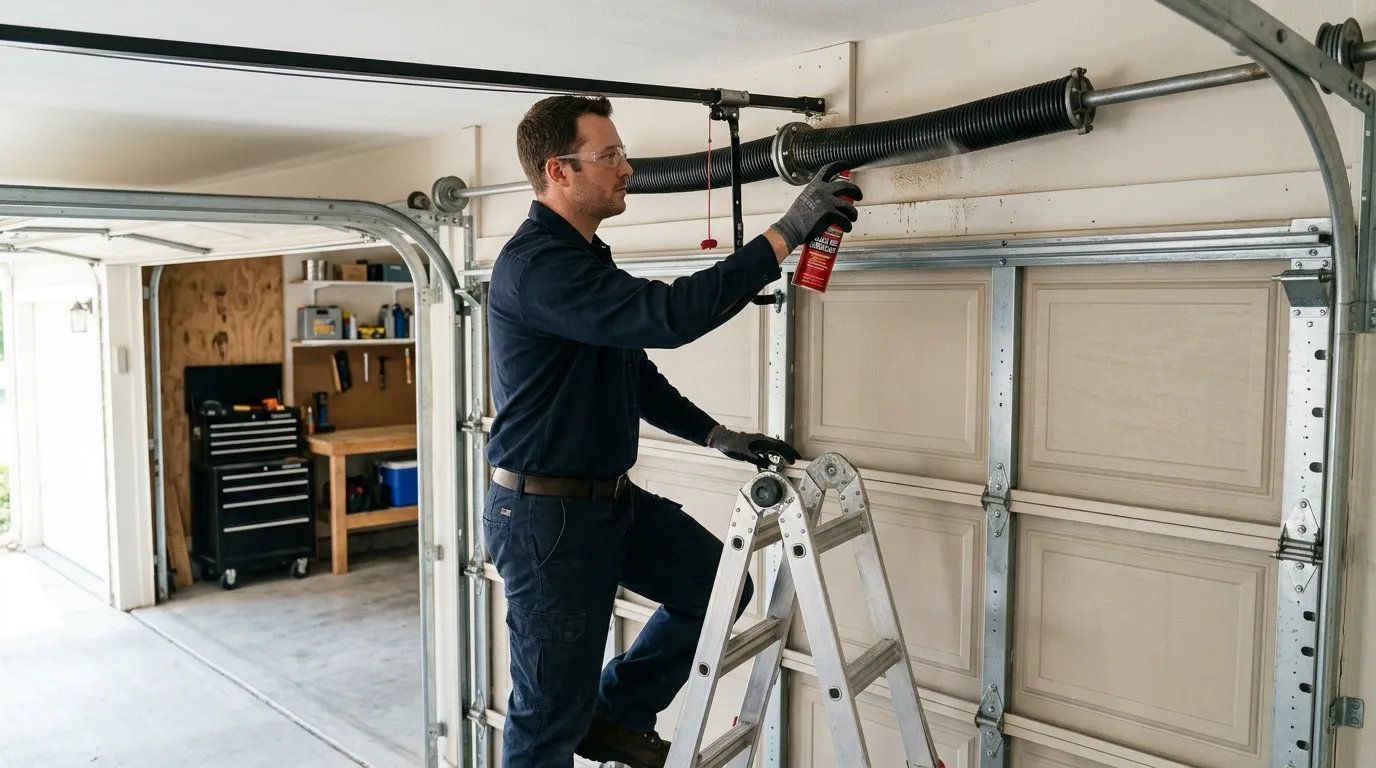
The Problem
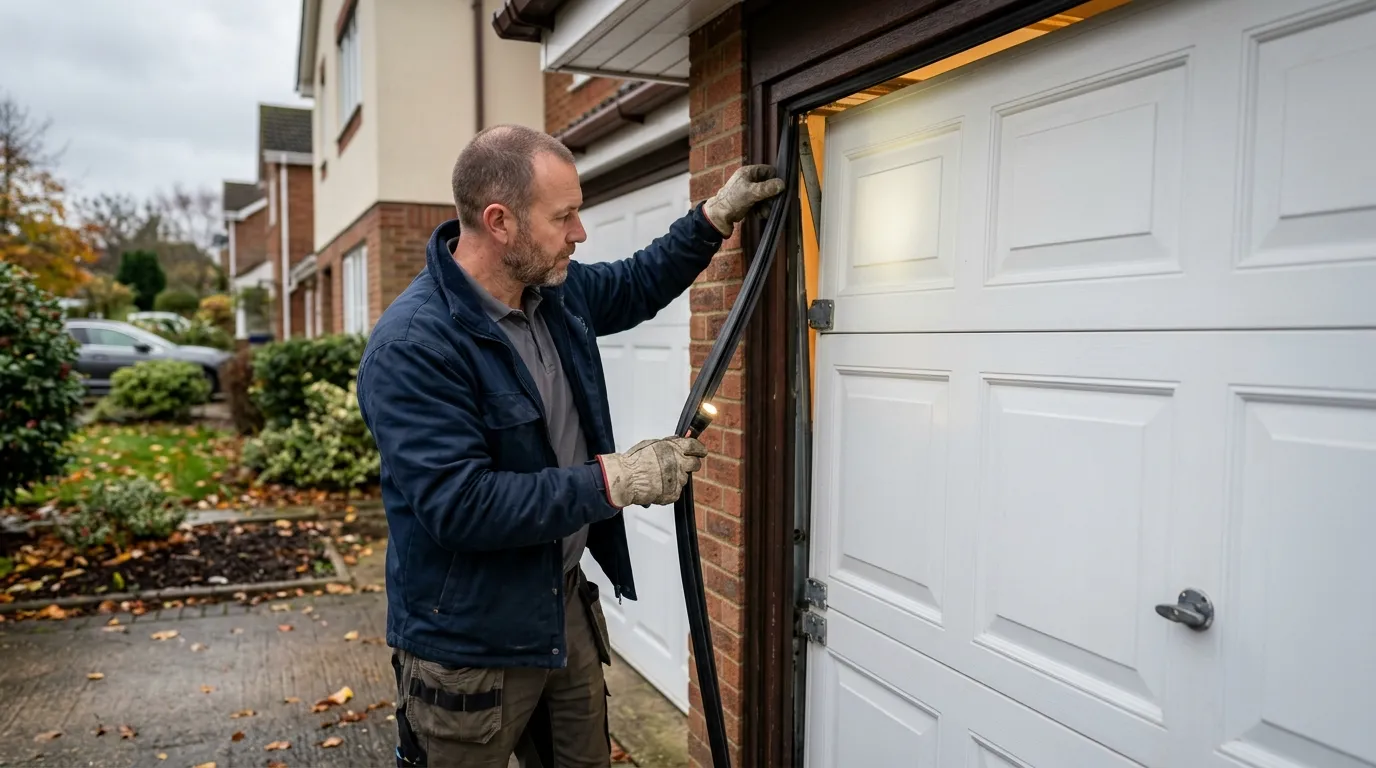
A garage door spring doesn't wear out gradually and then give you a warning. It holds tension for years, then one morning it's just gone, and the door weighs two hundred pounds in your hands. In West Bend, the pattern we see has less to do with age alone and more to do with what age plus cold does together.
Most houses in this service area were built between 1958 and 1999, with the median landing around 1976. That means a huge share of the doors still running on original or first-replacement hardware are somewhere between 25 and 65 years old. Torsion springs are rated for a number of open-close cycles, not years, but cold metal is more brittle metal, and a spring that's already near the end of its life doesn't need much of a push to fail outright.
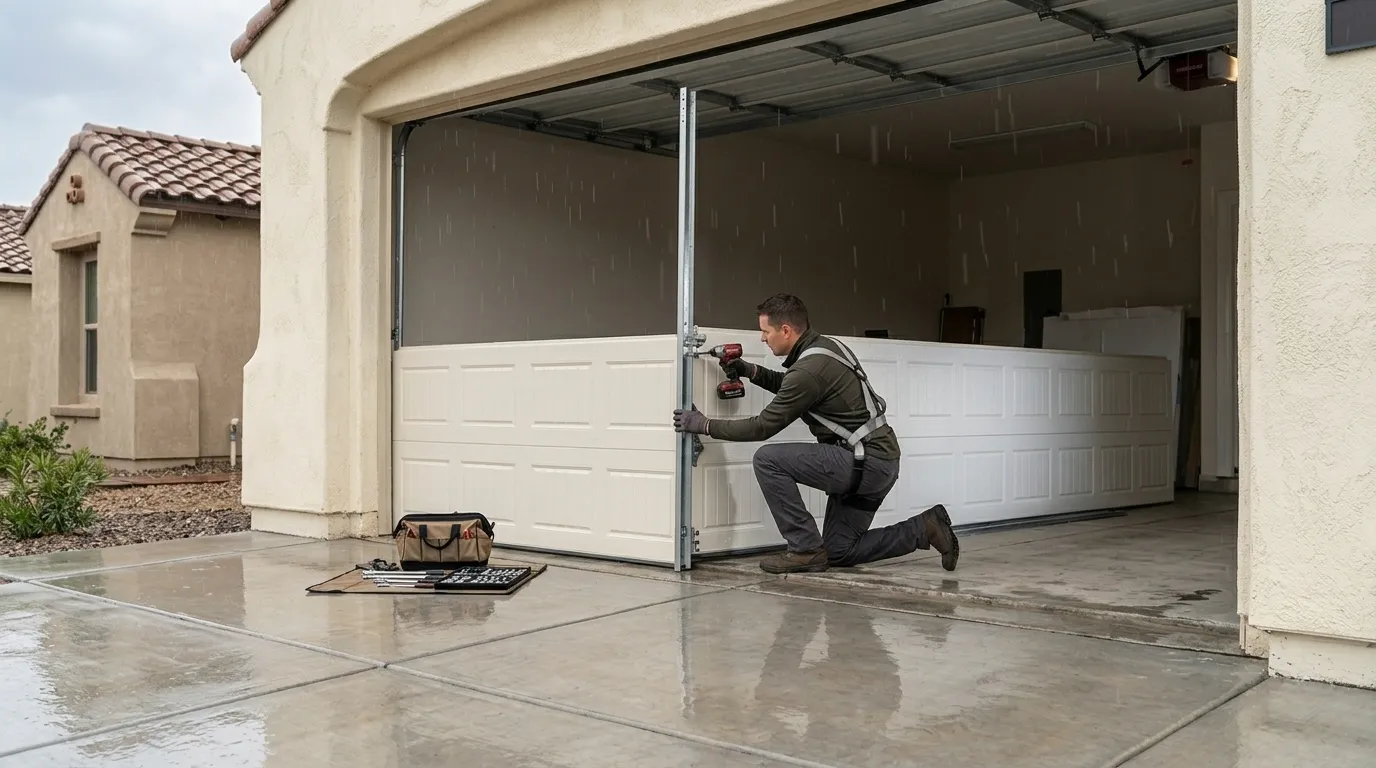
The failure itself is almost always sudden: a loud bang from the garage, the door stuck halfway, or a door that slams down instead of lowering under control. That last one is the dangerous version. Once a spring lets go, the opener is fighting the full weight of the door alone, and that's hard on the opener too.
The honest limitation here: we can't tell you a spring is about to go before it goes. There's no reliable early-warning sign short of a visible gap in the coil or a door that's started sagging on one side.
The Common Mistake
The mistake we see most in this area is replacing one spring and leaving the other. Doors run on a matched pair, and if one spring failed from age and fatigue, the second one is on the same clock. Homeowners in houses from the 1958-1999 build era are often replacing the original pair for the first time, which means both springs have logged the same decades of cycles and the same winters.
The second common mistake is treating a spring failure as an opener problem. If the door won't lift, or the opener strains and stalls, people sometimes assume the motor's dying and call about a new opener before anyone's looked at the springs. The opener is usually fine. It's just never been asked to lift a door with no spring assist, and it can't.
The third mistake, more specific to this climate band, is trying to force a stuck door open by hand in a cold garage. A frozen or half-broken spring under load can release suddenly, and a homeowner standing under it is the worst place to be. If the door won't move smoothly, the right move is to stop pulling on it, not to add more force.
We'd rather get a call about a door that's acting slightly off than a call after someone's gotten hurt trying to muscle it open.
What the Weather Here Does to It
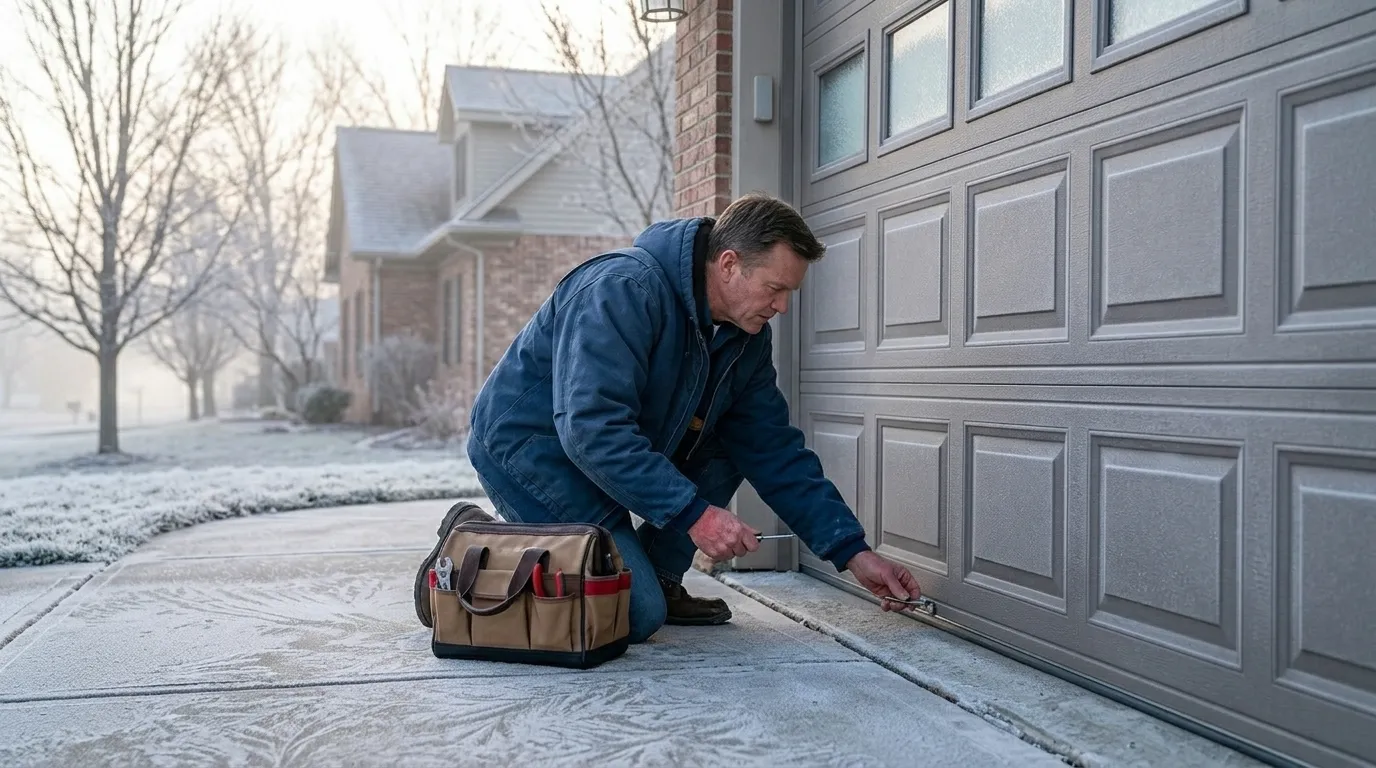
West Bend sits in a climate band rated cold-severe, and that's the piece that turns an aging spring into a broken one. Steel contracts as it cools, and a coil that's already fatigued from decades of cycles loses flexibility right when the garage temperature drops closest to outside air on a below-zero night.
That's the mechanism behind the classic call: a door that worked fine the evening before and won't budge the next morning. It's not usually the cold itself breaking a healthy spring. It's the cold finding the weak point in a spring that was already close to its limit, on a door that's been through 40-plus winters in a house built in the 1976 median era for this area.
Across the wider service area, we take calls the same way from Kewaskum, Slinger, and Allenton, all within eight miles of West Bend, when a hard cold snap hits and a run of older doors give out on the same night. It's less about any one house and more about a whole stretch of housing stock aging into its failure window at the same time the temperature drops.