What Was Built Here
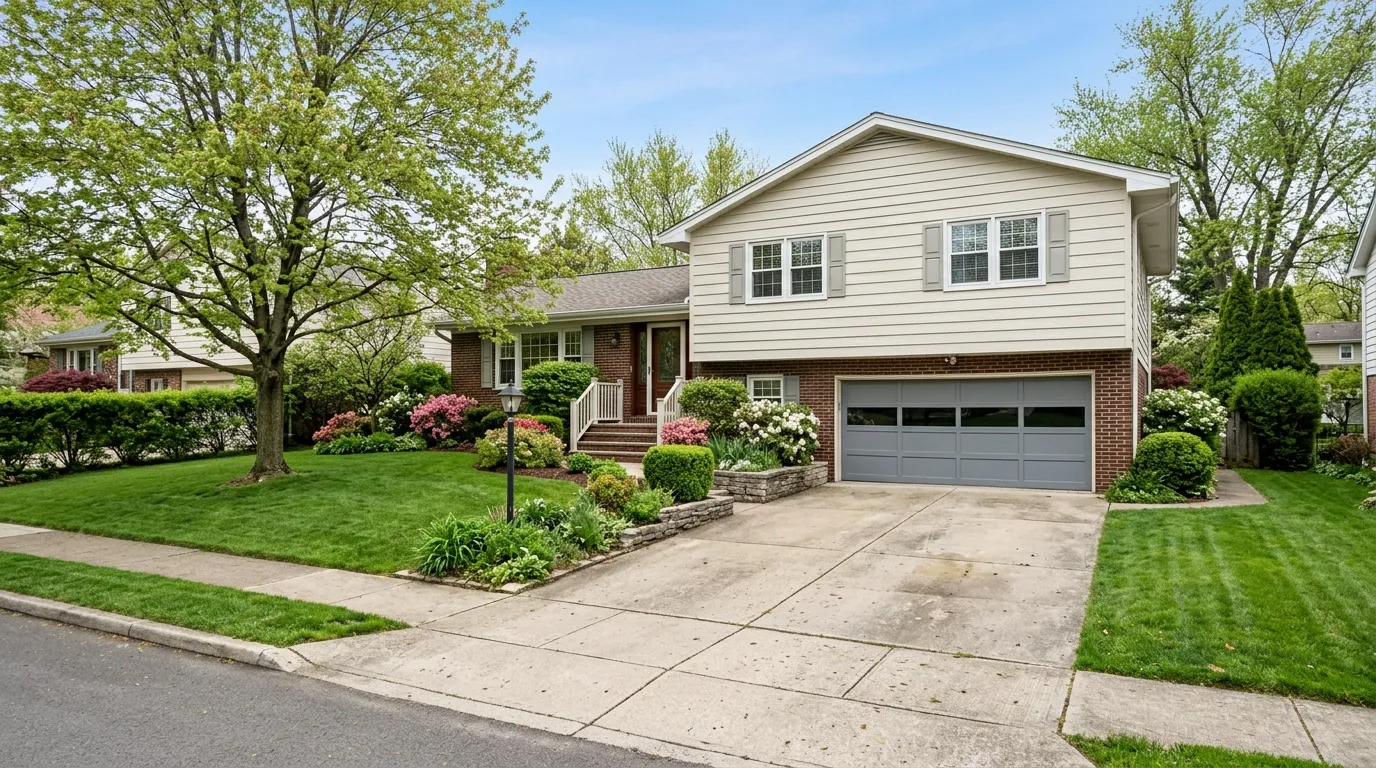
Neosho's houses cluster around 1973, which puts this pocket a full decade ahead of the broader service area's 1976 median build year. That's not a small difference. A door and opener installed in 1973 predates most of the safety-sensor requirements homeowners take for granted now, and it often still runs on the original steel track and hardware if nobody's touched it.
There are only about 290 households in Neosho, which makes it one of the smaller areas we cover out of the 87,448 households across the wider territory. That's part of why you won't find a company depot here - the volume of calls doesn't support one, and we're honest about that. What it does mean is a tighter, older cluster of homes built in a narrow window, which tends to produce the same handful of failures over and over rather than a wide mix.
Median household income in Neosho runs $79,375, noticeably below the $88,634 median across the full service area. That gap shows up in how people make repair decisions here - more requests to fix what's there before anyone talks about full replacement.
How That Shows Up in the Door
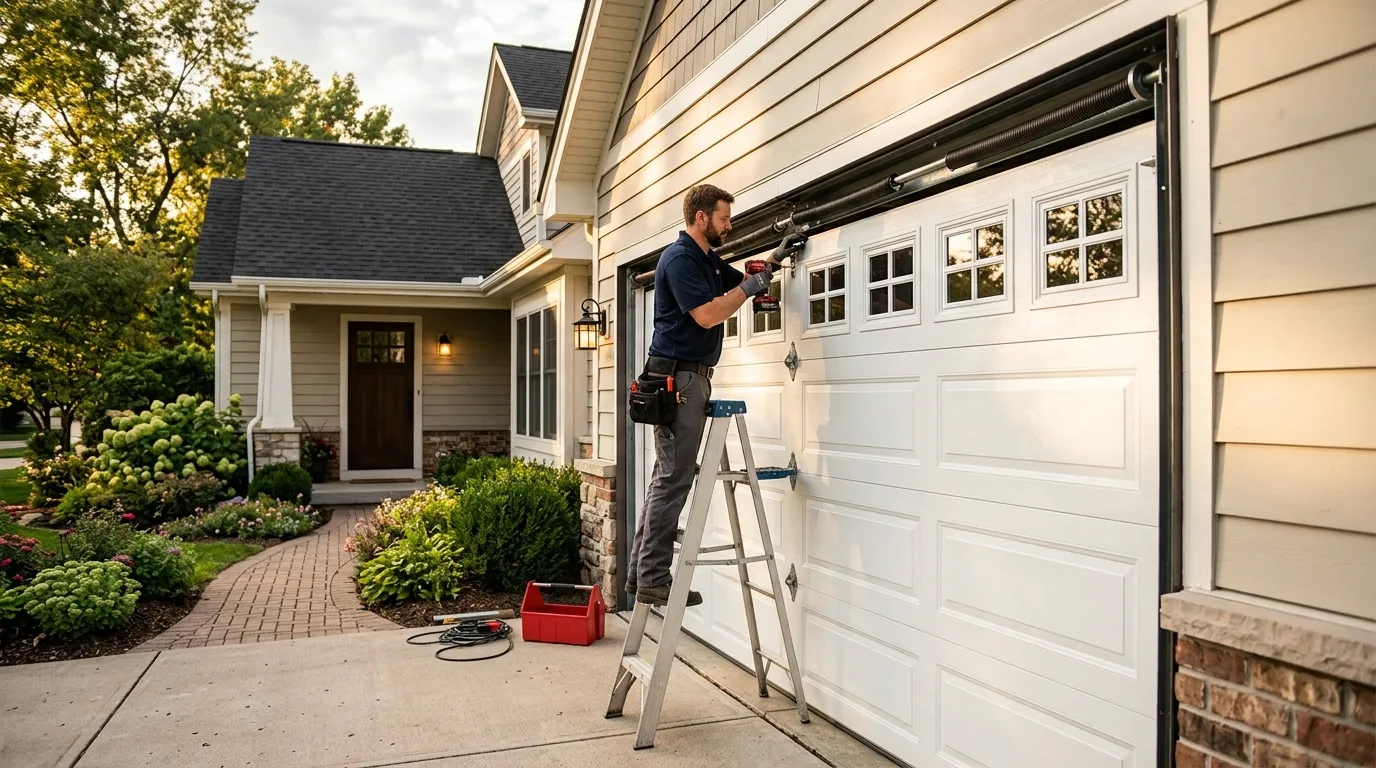
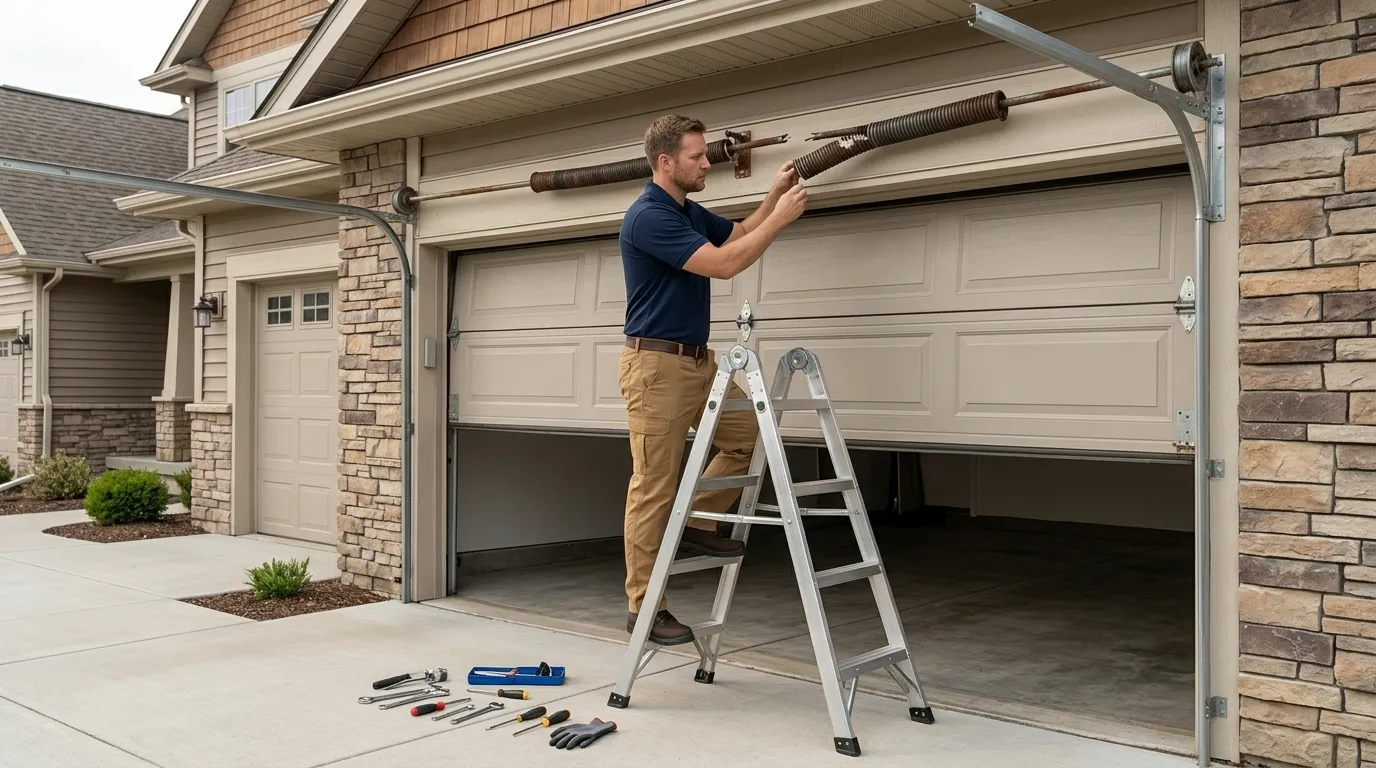
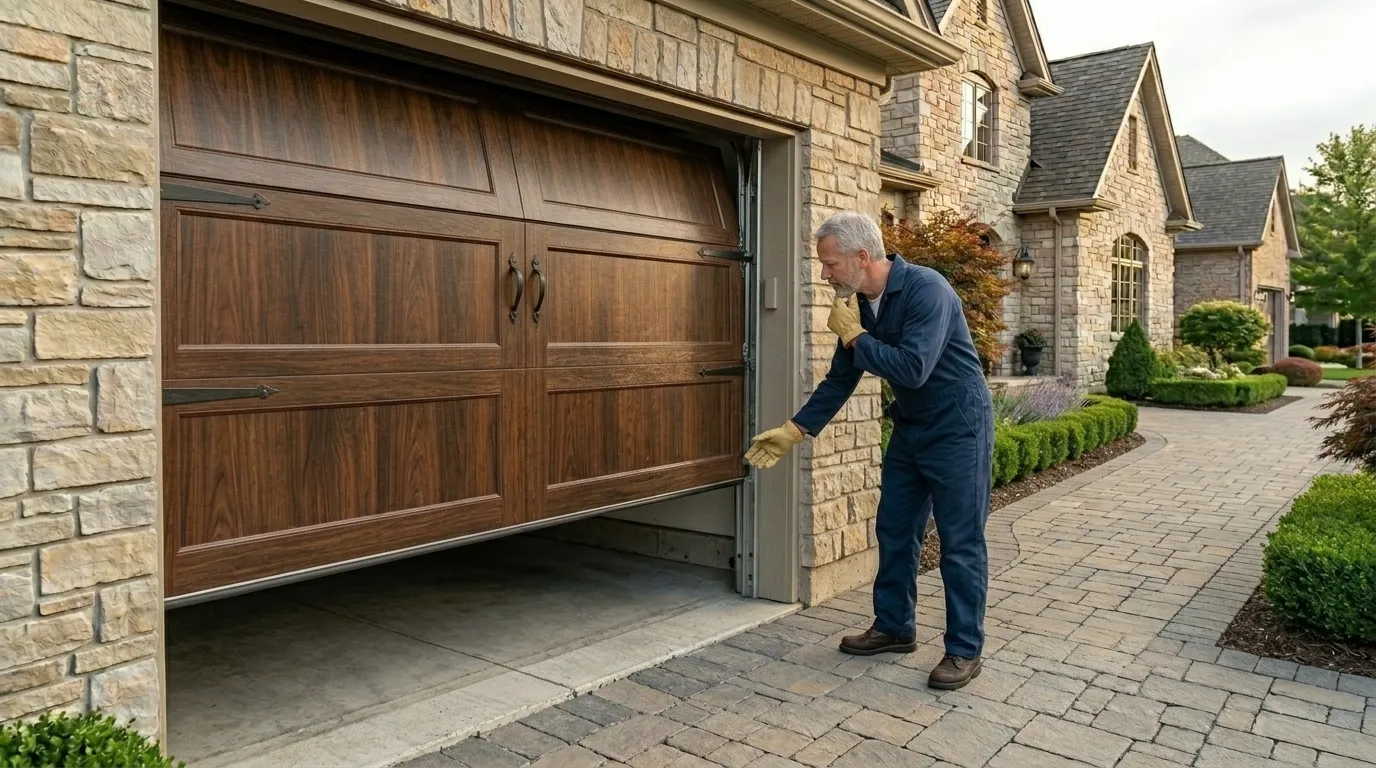
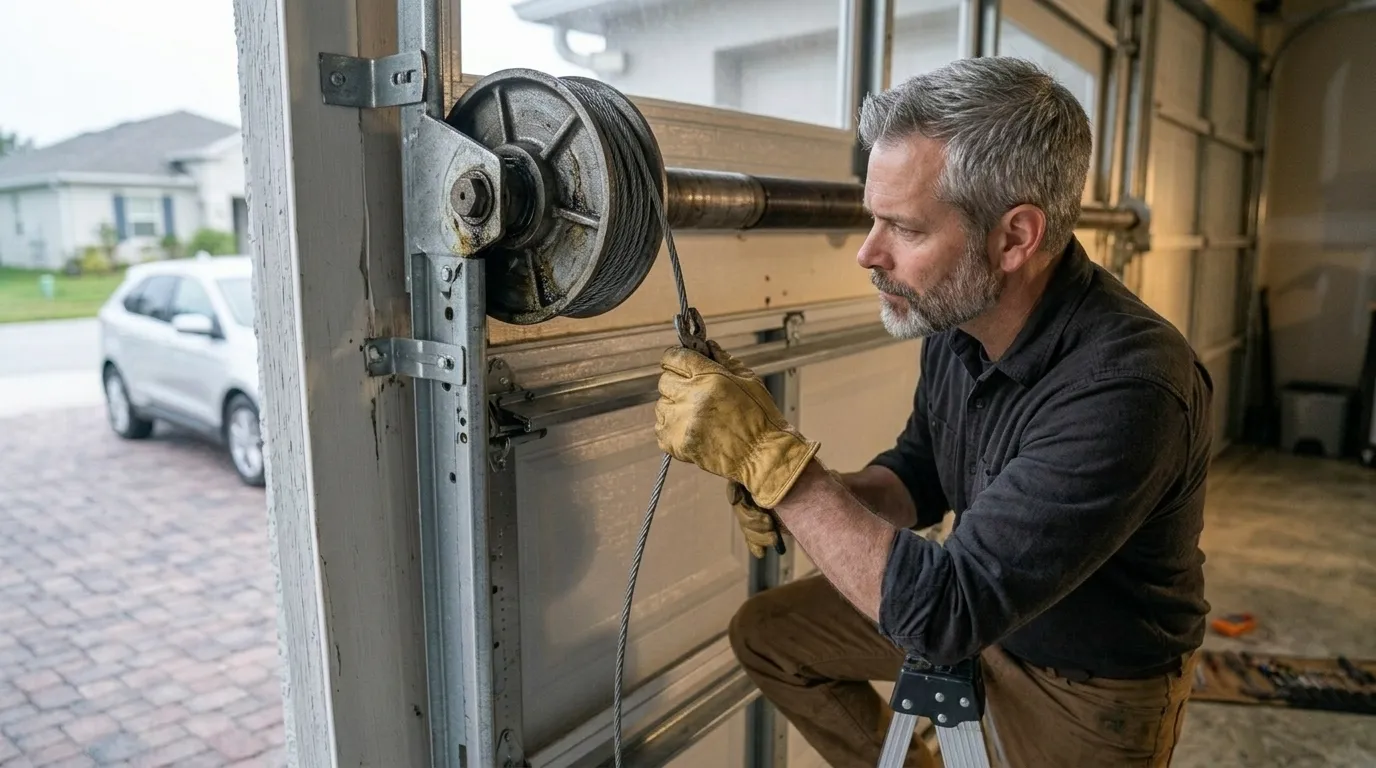
A door from the early 1970s in a severe-cold climate has been through fifty winters of expansion and contraction. Steel panels from that era are thinner than what's sold today, and the torsion springs sized for them were rated for lighter doors - swap in a heavier insulated replacement panel later and the old spring is suddenly undersized, which is a common mismatch we run into on 1973-vintage houses.
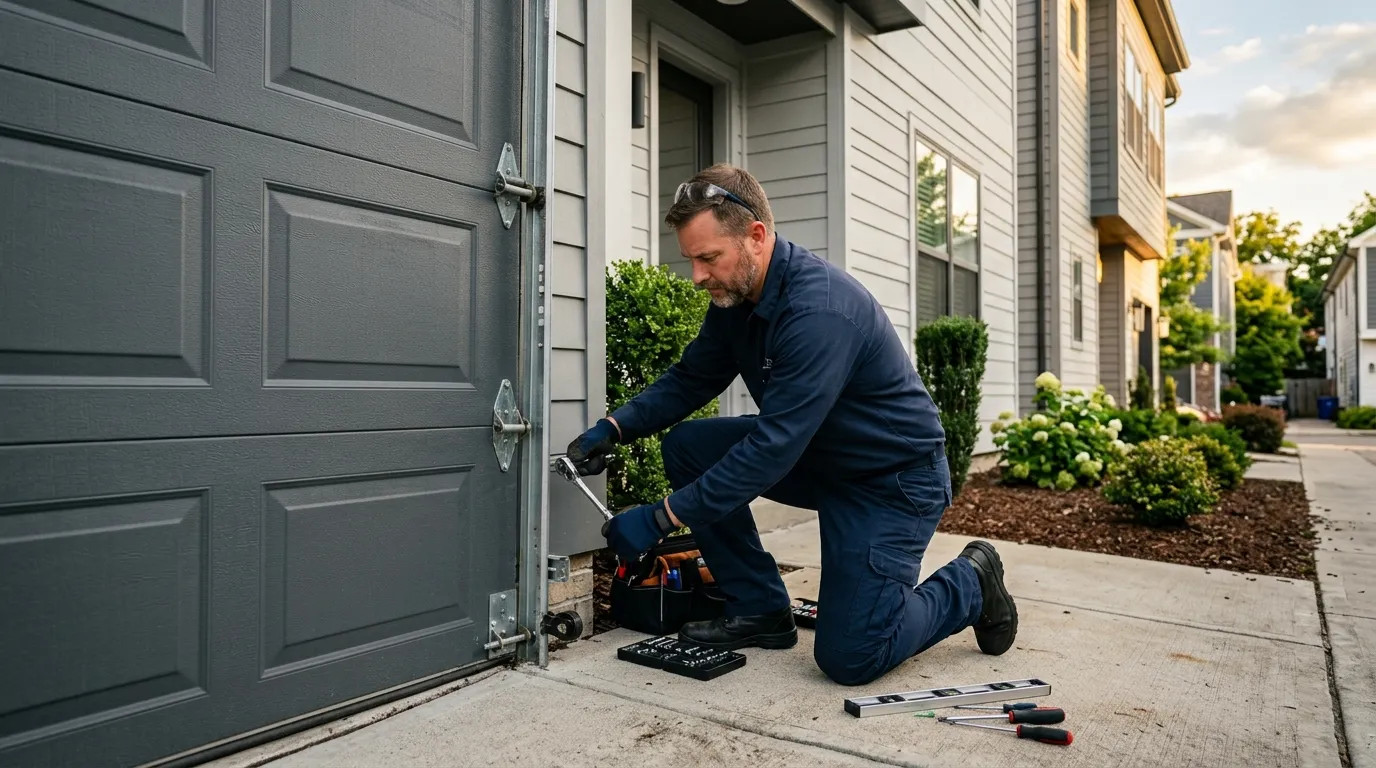
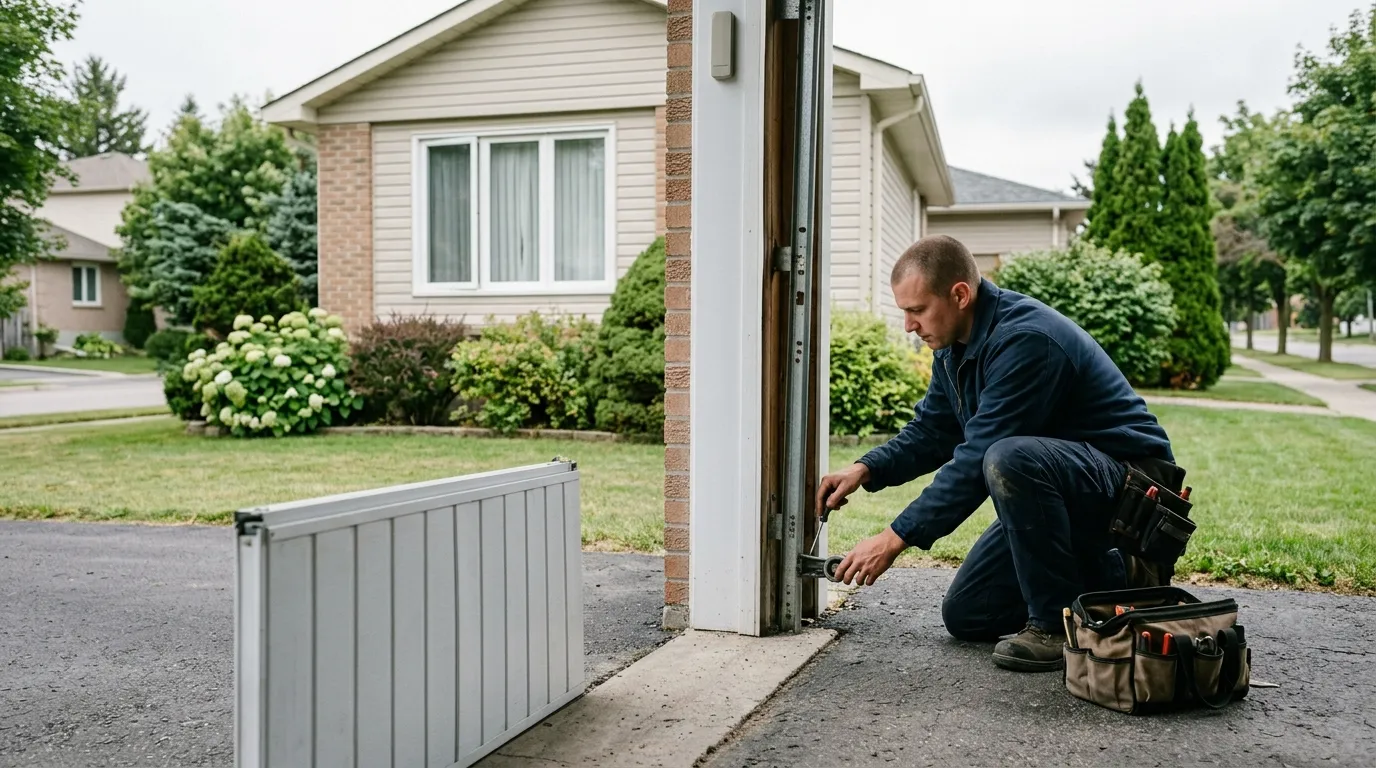
Track alignment is the other recurring issue. Original tracks from this build era were bolted to jambs that have shifted slightly over five decades of frost heave, which is normal in this climate band but adds up. The door still closes, but it binds on one side, and the opener strains against it every cycle until the gear set wears out early.
We don't assume every Neosho house has the same setup - some doors have already been replaced once or twice since 1973 - but the base year tells us what we're likely opening the panel to find before we even get there.
Timing on This Area
Neosho is about 19 miles from our shop in West Bend, farther out than closer stops like Trenton at 4 miles or Jackson at 7 miles. We don't run a depot or crew based in Neosho, and we won't pretend otherwise - every job here is a drive from West Bend, which we factor into scheduling rather than promise around.
Because it's a smaller area with only about 290 households, we're not rolling through Neosho on a fixed daily route the way we might in a denser part of the territory. That means it's worth calling ahead rather than expecting a truck to already be nearby. We still take the work seriously and get out there - the distance just means we plan the trip instead of squeezing it in on the way to somewhere else.