What Was Built Here
Saukville's housing stock skews older than most of the towns we cover out of West Bend. The median year built here lands around 1970, a good six years ahead of the wider service area's median of 1976. That's not a huge gap on paper, but it's the difference between early-1970s steel sectional doors and the slightly newer builds you find closer to town. With 653 households in this pocket, you're looking at a tight cluster of homes that mostly went up in the same building cycle, which means a lot of original garages never got upgraded past their first door and opener setup.
That matters for hardware. Homes from this era were often built with single-car or narrow two-car garages, steel frames set on wood jambs that have shifted over fifty-plus years, and headroom that doesn't always match what a modern opener bracket expects. When we get a call from this area, we're not guessing at what's behind the door - the build year tells us most of it before we even load the truck.
How That Shows Up in the Door
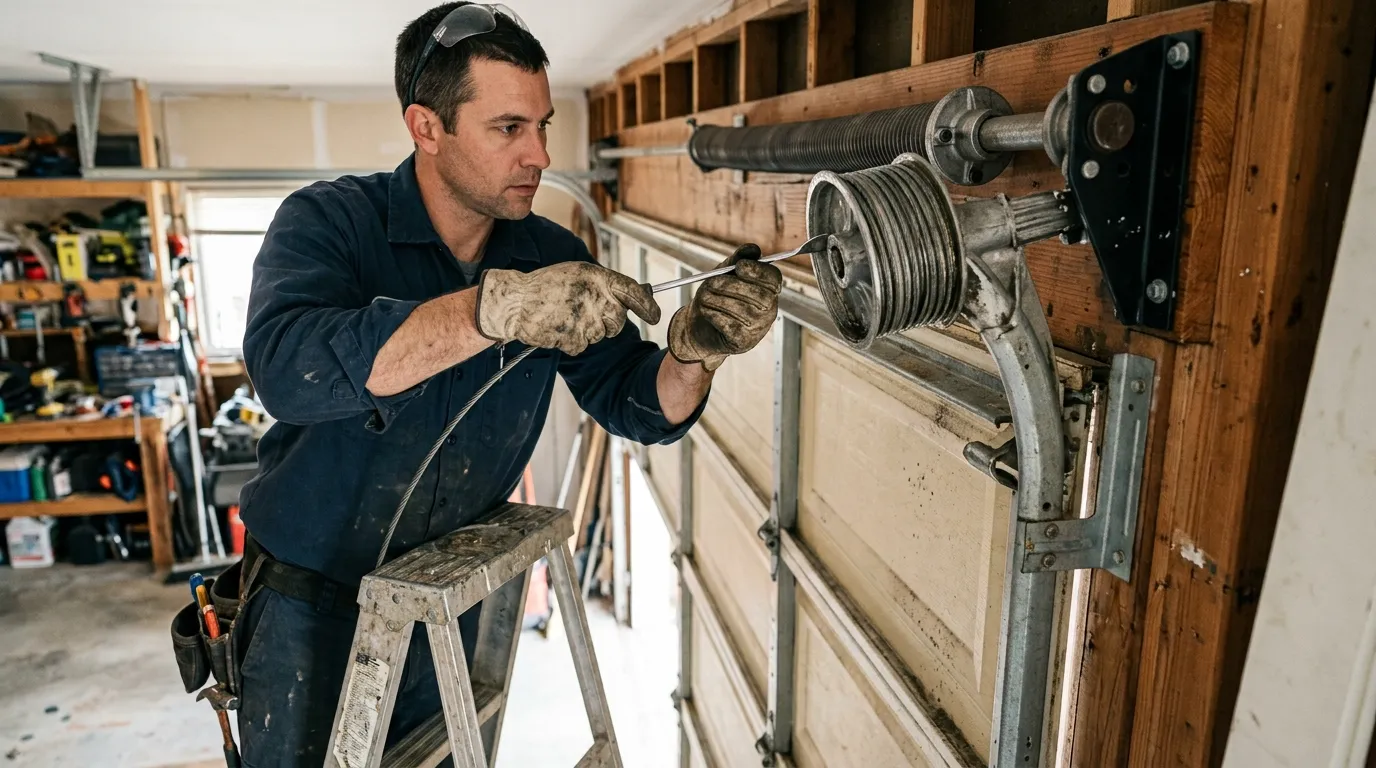
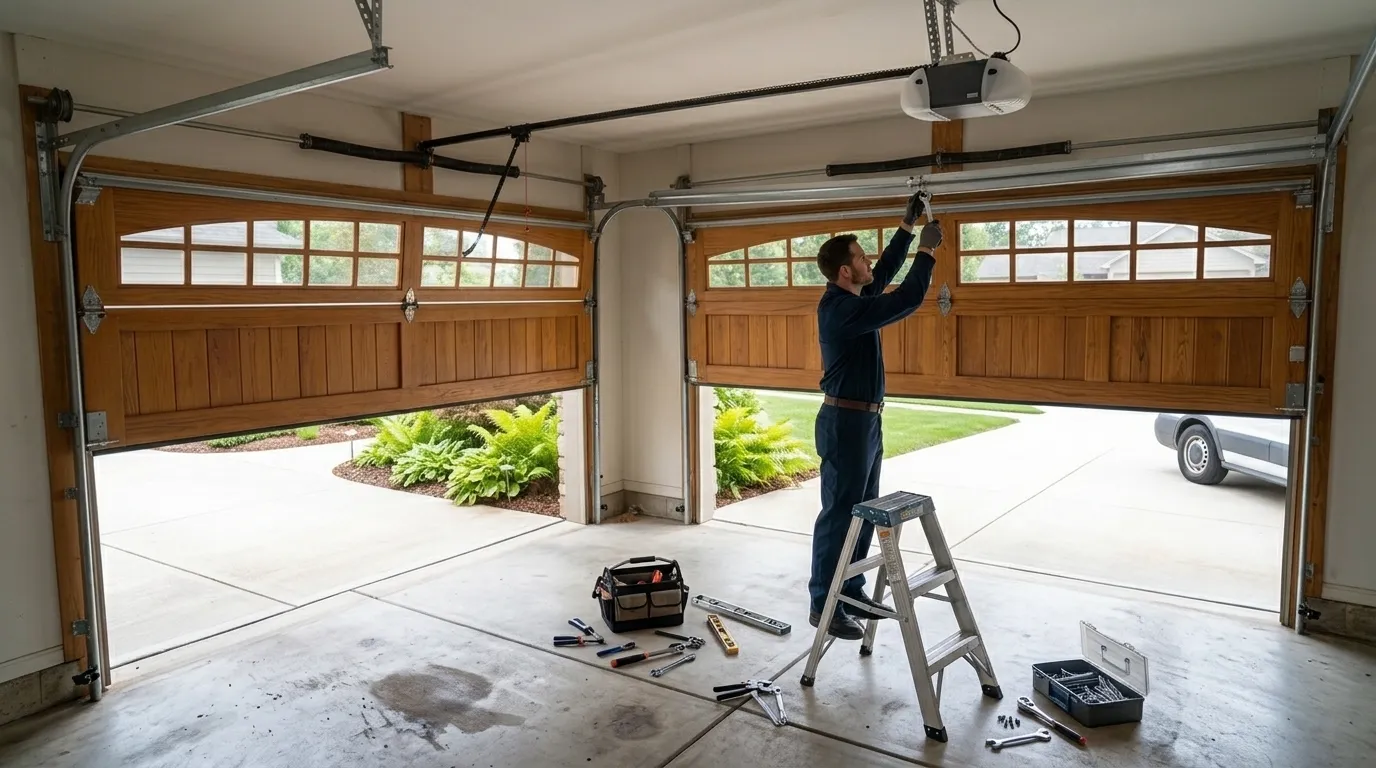
Doors from around 1970 were far more likely to run on extension springs mounted above the horizontal tracks than on a torsion bar over the header. Extension springs age differently - they stretch, they lose tension unevenly side to side, and without safety cables (which weren't standard yet on a lot of these installs) a broken one can whip loose instead of just dropping the door. If your door slams the last foot of travel or feels lopsided going up, that's usually what we find.
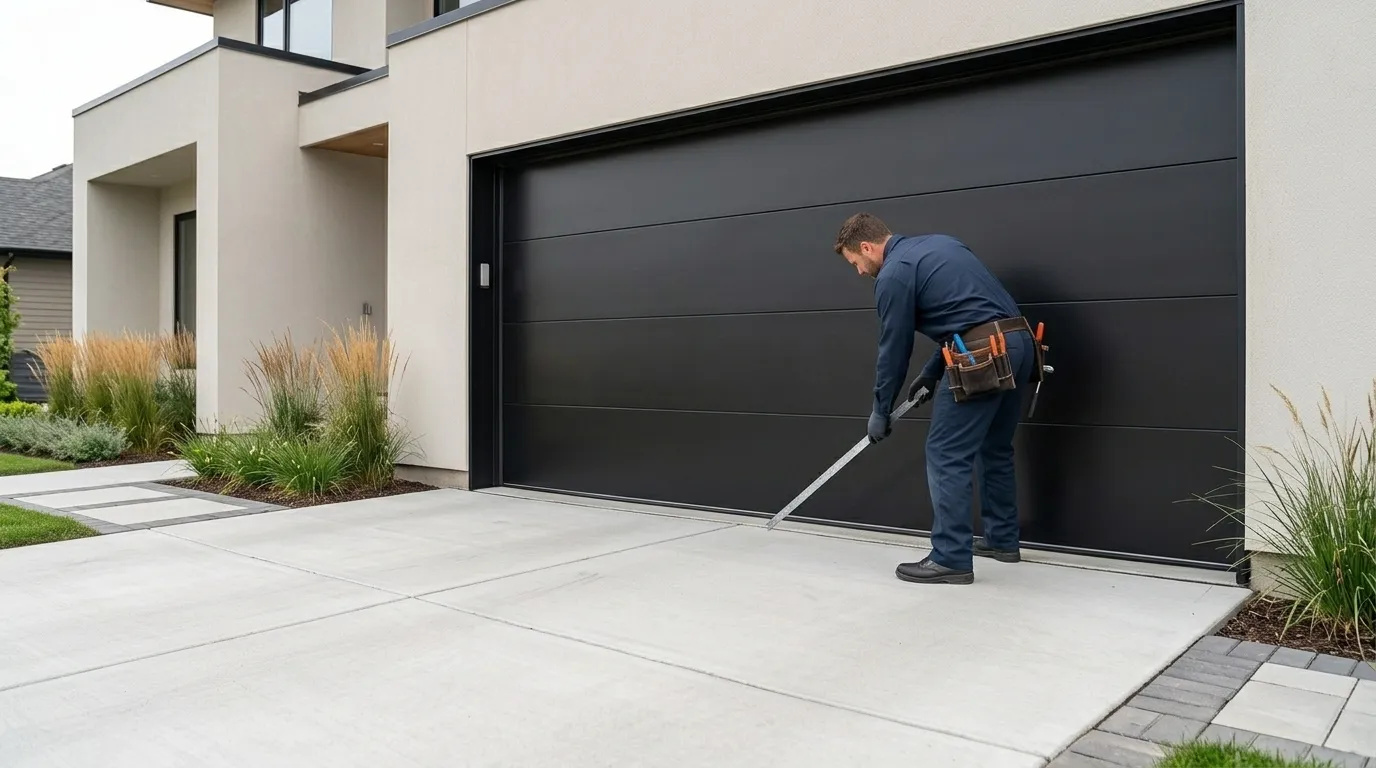
Track alignment is the other recurring issue. Fifty years of frost heave and foundation settling in this cold-climate region works on the track brackets the same way it works on the rest of the house. A door that used to run smooth and now grinds or binds partway up is often a track that's crept out of plumb, not a dead opener. We see this pattern often enough on Saukville-area calls that it's usually the first thing we check.
Timing on This Area
We run out of West Bend, about 10 miles from Saukville, so a call here isn't a same-block job the way it might be for a shop with a location closer in. That distance doesn't change what we bring to the door - the truck's stocked for extension-spring and torsion work either way - but it's worth knowing going in that we're driving out, not already around the corner.
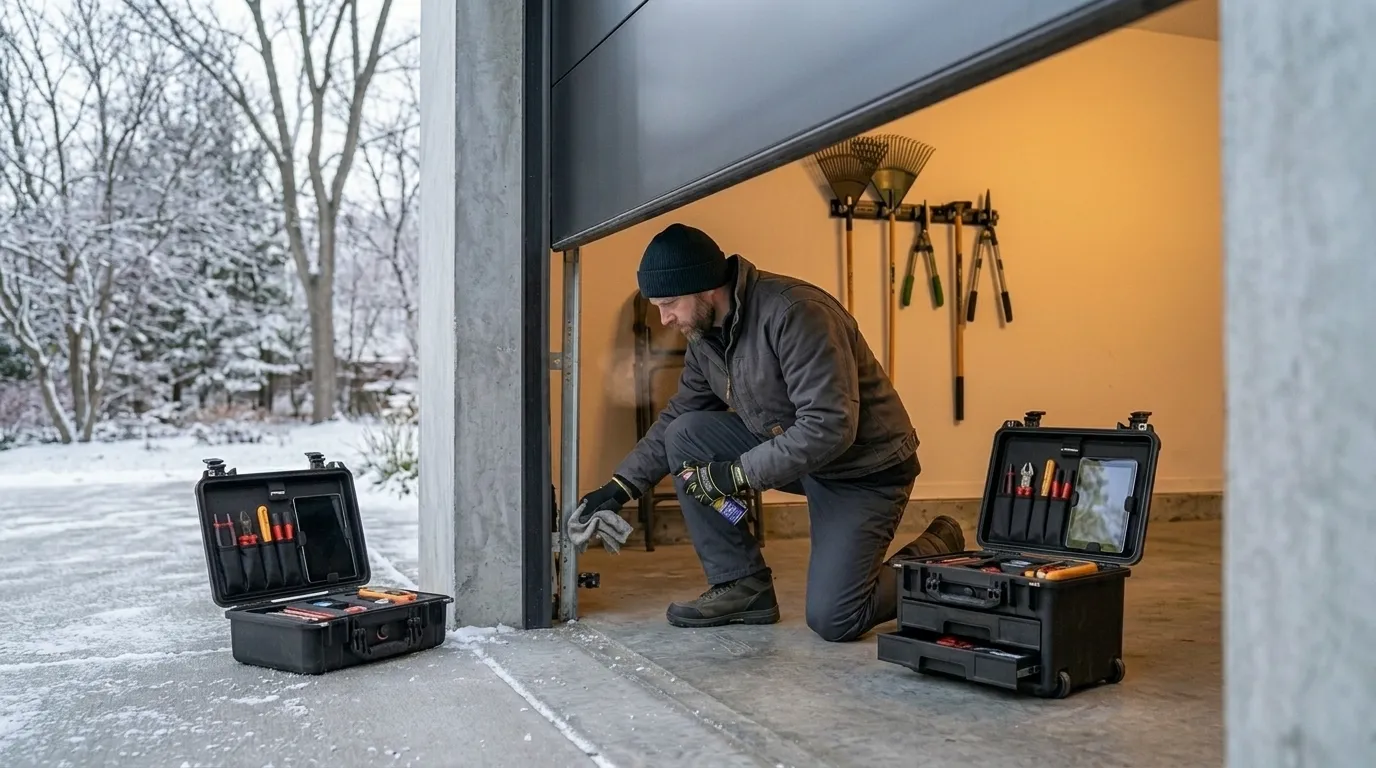
Winter is when the extension-spring failures in this area tend to cluster, since cold makes old steel more brittle right when the door's cycling more with shorter days and more coming and going. If you've got a door from the original build that's never had the springs replaced, that's worth getting ahead of before it fails on a sub-zero morning rather than after.