What Was Built Here
Slinger's housing stock skews newer than a lot of what we see across the rest of the service area. The median build year here lands around 1993, which puts most of the neighborhood in a different era than the 1958-1999 stock our whole territory covers, with a median of 1976 areawide. That gap matters more than it sounds. A house built in 1993 came with a garage door engineered for a different set of standards than one built in the 1960s or 70s - different track widths, different spring tension classes, different opener mounting.
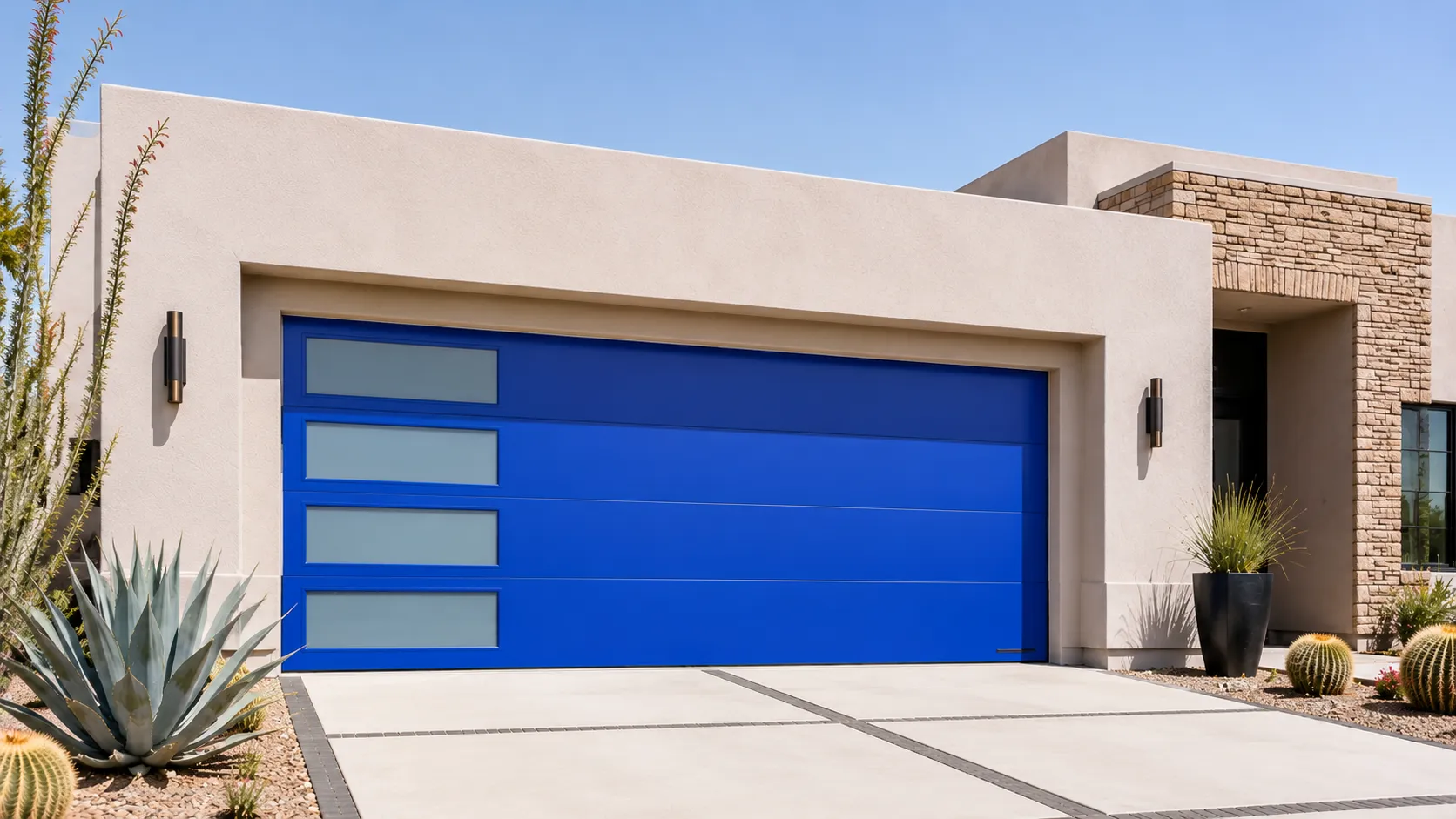
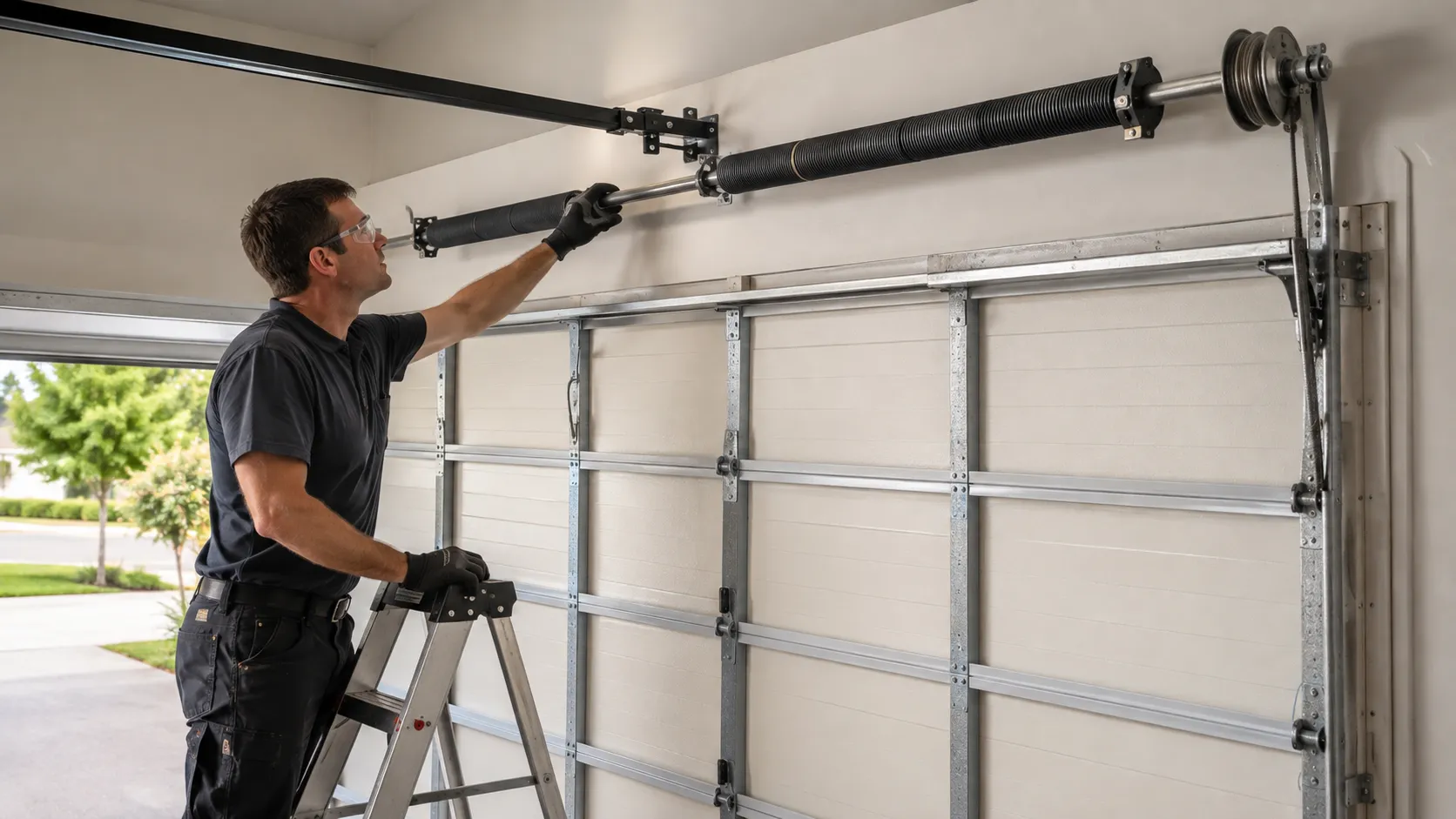
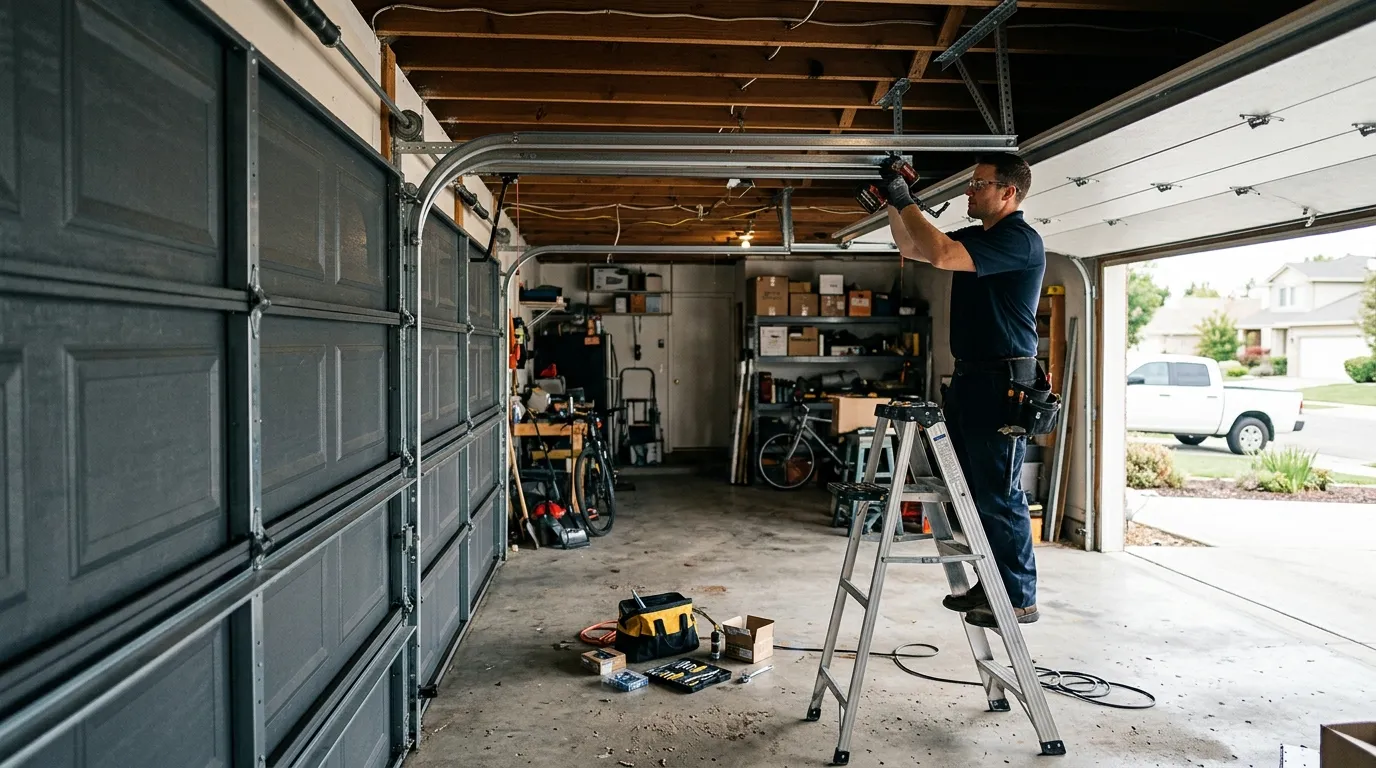
With about 2,636 households in Slinger and a median income of $99,457 - noticeably higher than the $88,634 median across the wider area - a lot of these garages went in with mid-grade steel sectional doors rather than the flat one-piece slab doors you'd find on an older 1960s ranch. Builders in the early 90s were already moving toward torsion spring systems as standard, not the older extension spring setups bolted along the side rails.
We don't have a breakdown of specific builders or subdivisions in Slinger, so we won't pretend to name streets or developments. What we can say is that the era itself tells us what's likely behind most of these doors, and it's noticeably different from the older stock nearby.
How That Shows Up in the Door
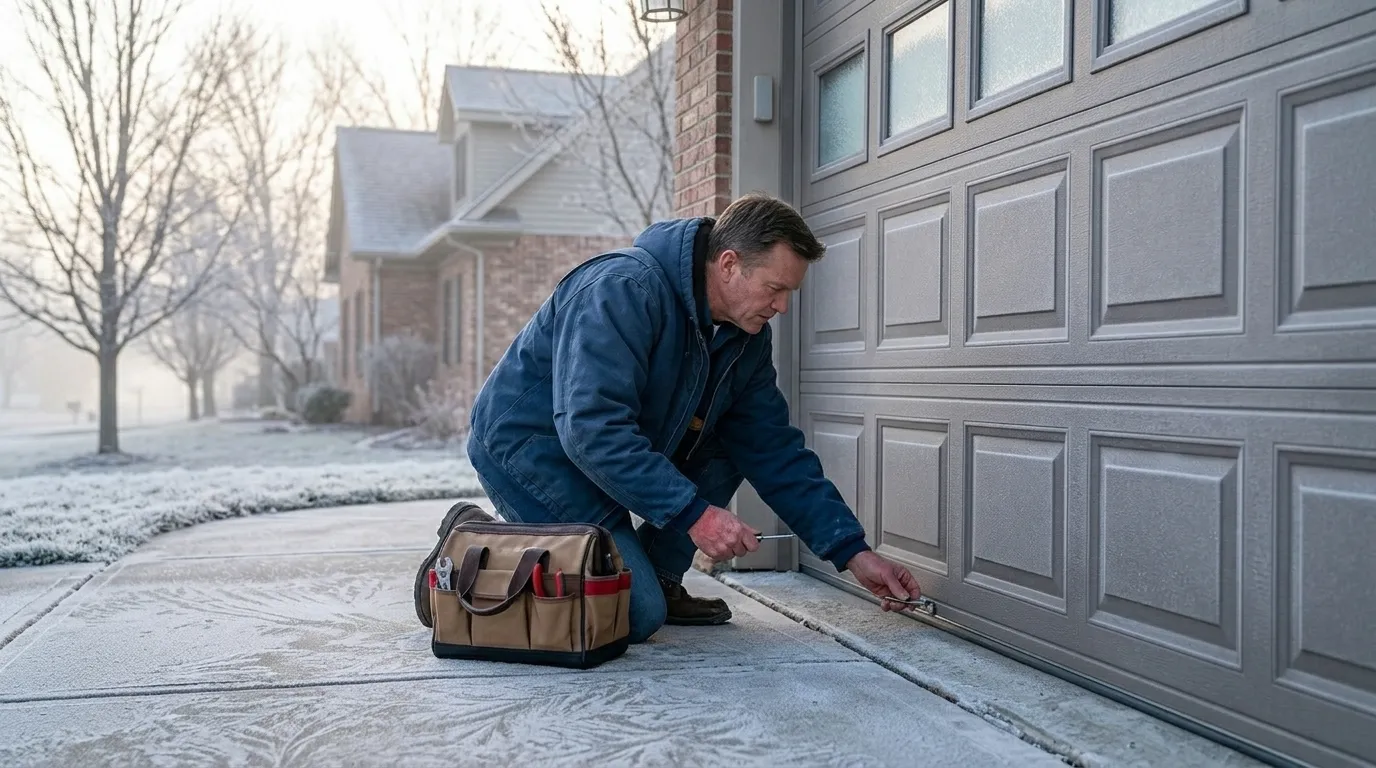
A door installed in the early-to-mid 1990s is old enough now to have worn through its first or second torsion spring, but it's not old enough to have the parts scarcity problems that plague a 1965 door. Torsion springs on a 20-30 year cycle in this climate band - which sits COLD and severe for our whole service area - fatigue from repeated cold-to-warm swings more than from age alone. Cold makes the steel brittle at the moment of highest stress, which is usually first use of the day.
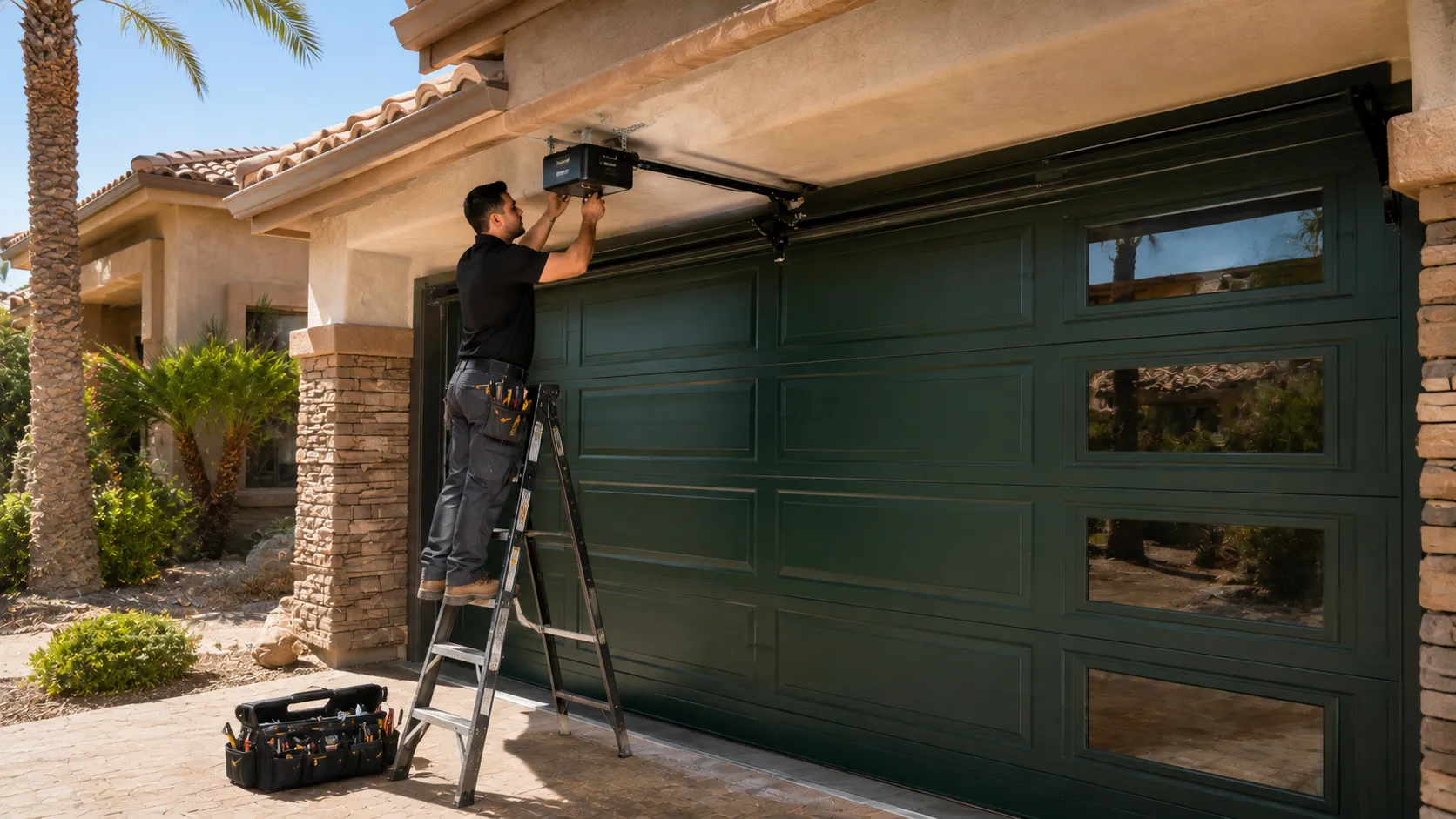
Openers from this era are a mixed bag. Some Slinger garages still run original chain-drive openers from the build year, which by now are well past a reasonable service life - not because the motor dies outright, but because the logic boards and safety sensors degrade in ways that are hard to diagnose without pulling the unit.
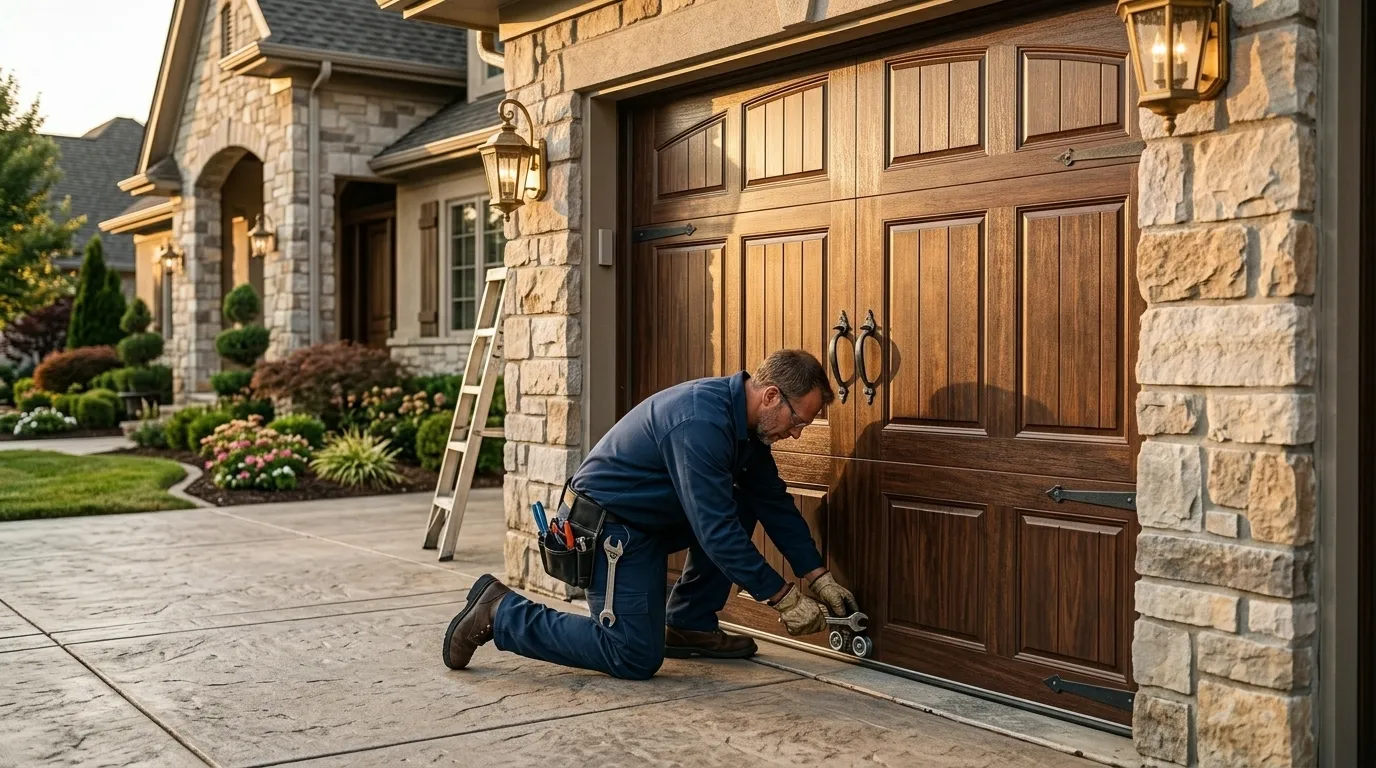
We don't see the same volume of one-piece slab doors or side-mounted hardware here that we do in the older parts of the territory. That's a good thing for repair speed, since steel sectional panels and torsion hardware from the 90s onward are common enough that parts aren't a struggle. Where we do run into trouble is rollers - nylon rollers from that era are often original, and 30 years of use with no lubrication leaves them cracked and loud, even if the rest of the door still runs fine.
Timing on This Area
We run out of West Bend, and Slinger sits about 7 miles out, which keeps travel time short on our end of most calls. We don't operate a depot or standing crew in Slinger itself - every job here is a truck coming from West Bend, same as the rest of our coverage.
Winter is when we see the spike in spring failures here, tied to that cold severe climate band the whole area sits in. A spring that's been fatiguing for years usually lets go on the first hard cold snap, not gradually. If you're hearing a loud bang from the garage on a cold morning followed by a door that won't move, that's almost always the spring, not the opener.
We don't carry every part for every opener brand on the truck at all times - some of the older logic boards from early-90s openers are on longer order times than the common torsion springs and rollers we stock for same-visit work. If your opener needs a specific board, we'll tell you upfront rather than guess at a timeline.